


Prevent Impaction: 4 Checks for Sand Use With Bearded Dragons
Use a four point checklist to decide when sand is safe for adult bearded dragons. Understand impaction risk, why feeding off the substrate matters, and...

Sand for bearded dragons is not safe by default. It’s a conditional option that only makes sense for healthy adult dragons in a tightly managed enclosure, never for hatchlings, juveniles, or sick animals. The core danger is impaction, small amounts of sand building up in the gut until it blocks digestion, and the two biggest safeguards are feeding your dragon off the substrate and keeping basking temperatures and hydration on point.
TL;DR:
- Sand can be safe only for healthy adult bearded dragons with proper husbandry and when fed off the substrate, not for juveniles, hatchlings, or sick animals.
- Only plain, washed quartz sand without additives or calcium content is a conditional option, and even then, it is best suited for well-managed, mature dragons.
- Most reptile sands, especially calcium sand, play sand, and scented or chemically treated varieties, pose high risks of impaction, dust irritation, and bacterial growth.
- Substrate management involves thorough rinsing, avoiding natural outdoor sands, and maintaining regular cleaning to prevent mold, odor, or health issues.
- Alternatives like ceramic tiles, paper towels, or bioactive soil with proper drainage are safer options and better suited for most life stages and health conditions.
Table of Contents
- Why Sand Can Be Risky: How Impaction and Other Harms Happen
- Which Sand Types Are Unsafe, and Is Any Sand Acceptable?
- When Can Sand Be Used Safely?
- How Do You Prepare and Maintain a Sand or Bioactive Setup?
- What Are the Safer Substrate Alternatives?
- What Behavioral Signs Mean a Dragon Is Eating Too Much Substrate?
- Does Sand Offer Enrichment Value Alternatives Don’t?
- What Bearded Dragon Owners Get Wrong About Sand
- Setting Up a Safer Habitat With Your Pet Supply Retailer
- Sources
- FAQ
Why Sand Can Be Risky: How Impaction and Other Harms Happen
Impaction happens gradually, not all at once. Every time your bearded dragon flicks its tongue at a cricket sitting on sand, or licks a stray grain while exploring, a little bit of substrate goes down. One grain means nothing. Hundreds over several weeks, especially in a dragon with sluggish gut motility, can compact into a mass that won’t pass on its own.
Sand causes trouble beyond blockages, too. Fine or dusty particles kick up into the air every time your dragon digs, and that dust settles into eyes and airways, causing irritation that looks a lot like a respiratory infection at first glance. Some sands clump when they get damp from water spills or waste, trapping bacteria and hidden mess that’s easy to miss during a quick visual check.
Substrate rarely acts alone. The Merck Veterinary Manual points to husbandry basics, correct temperatures, proper hydration, parasite control, as the primary levers for reptile health, with substrate as just one variable in the mix. A dehydrated, cold, or parasite-burdened dragon has weaker gut motility and a much harder time passing anything it swallows. That’s why two dragons on identical sand can have completely different outcomes.
Factors that stack the odds against a dragon on sand:
- Chronic dehydration, which thickens gut contents and slows passage
- Basking temperatures below the species’ preferred range, which weakens digestion
- Untreated parasites, which are common in dragons purchased from questionable sources
- Young age, since juveniles have narrower digestive tracts and hunt more aggressively
Which Sand Types Are Unsafe, and Is Any Sand Acceptable?
Not all sand carries equal risk, but most of what’s sold specifically for reptiles deserves a hard pass.
- Calcium sand or “calci-sand” tops the avoid list. Marketing claims that it’s digestible and safe if swallowed aren’t backed by veterinary guidance, and in practice it clumps when wet and causes both eye irritation and impaction.
- Play sand and very fine silica sand create the dust problem described earlier. The Spruce Pets notes that fine, uniform sands often cause respiratory and eye irritation before impaction even becomes a concern.
- Quartz or washed mineral sand is the closest thing to a defensible option, but only conditionally. Experienced-keeper guidance allows it for healthy adults under strict husbandry, never as a default choice for beginners.
- Dyed, scented, or chemically treated sands should be off the table entirely. Additives have no business in an enclosure where your dragon will lick the ground.
Read the bag. If it lists calcium carbonate, added color, or fragrance, put it back. Plain, washed, uncolored quartz sand is the only category worth a second look.
When Can Sand Be Used Safely?
Sand earns a place in the enclosure only after several boxes get checked, and never for a dragon still growing or recovering from illness.
- Life stage first. Only healthy adult bearded dragons are candidates. Hatchlings and juveniles have small, sensitive digestive tracts and a hunting drive that makes them ingest far more substrate. Keeper guidance is consistent on this point: loose substrate stays off the table until a dragon is fully grown and demonstrably healthy.
- Husbandry has to be dialed in. That means consistent basking temperatures in the correct range, a hydration routine that keeps stool normal, and a recent fecal check ruling out parasites. If you don’t have a reptile vet you trust, sand is not the moment to experiment.
- Change feeding behavior. Feed insects from a shallow dish or a separate tile square instead of tossing them onto the substrate. This one habit does more to cut ingestion risk than almost any product choice you could make.
- Watch for warning signs. A dragon that stops pooping for several days, strains without producing anything, or shows a visible bulge along its belly needs a vet visit, not a wait-and-see approach. Squinting, weeping eyes, or wheezing after digging sessions means it’s time to pull the sand and switch to a solid substrate immediately.
Pro Tip: Keep a feeding log for the first month on any new substrate. If you notice your dragon licking or biting at the sand outside of feeding time, that’s an early behavioral flag worth acting on before it becomes an impaction case.
How Do You Prepare and Maintain a Sand or Bioactive Setup?
Bagged sand isn’t ready to pour into a tank straight from the store. Rinse it thoroughly under running water until the runoff comes out clear, then let it dry completely before use, this removes dust and manufacturing residue that would otherwise stay suspended in the air. Never substitute sand collected from a beach or riverbed; untreated natural sand can carry parasites, mold spores, and unknown contaminants.
For bioactive or sand-soil setups, organic topsoil free of fertilizers and pesticides needs heat-sterilizing in an oven before mixing. Standard guidance calls for a drainage layer beneath the substrate to prevent standing moisture, plus a clean-up crew of isopods or springtails to manage waste. These setups reward experienced keepers and punish shortcuts; a bioactive mix without proper drainage turns into a damp, bacteria-friendly mess fast.
| Maintenance task | Frequency |
|---|---|
| Spot-scoop waste and uneaten food | Daily |
| Sift and check moisture level | Weekly |
| Full substrate replacement (non-bioactive) | Every few weeks |
| Fecal/parasite check with vet | Every several months |
A reef sand sifter makes the weekly sift far faster, and a media basket works well for building out a drainage layer in a bioactive tank. If you ever see mold, a persistent smell, or your dragon losing interest in basking, that’s your signal to pull the loose substrate and switch to something solid without waiting to see if it clears up on its own.
What Are the Safer Substrate Alternatives?
Most keepers, and every hatchling or sick dragon, are better served by a substrate that removes impaction risk from the equation entirely.
- Unglazed ceramic tile or slate is the standout option across nearly every top care guide. ReptiFiles recommends it for all life stages because it holds heat well for belly warming and wipes clean in seconds.
- Paper towels or plain newsprint are the go-to for hatchlings, quarantine setups, and any dragon recovering from illness, since they’re disposable and carry zero ingestion risk.
- Non-adhesive shelf liner gives a middle ground: cheap, cuttable to size, and easy to swap out during deep cleans.
- Bioactive soil is the advanced naturalistic route, but it demands the drainage and clean-up crew knowledge covered above. It’s not a beginner’s first setup.
What Behavioral Signs Mean a Dragon Is Eating Too Much Substrate?
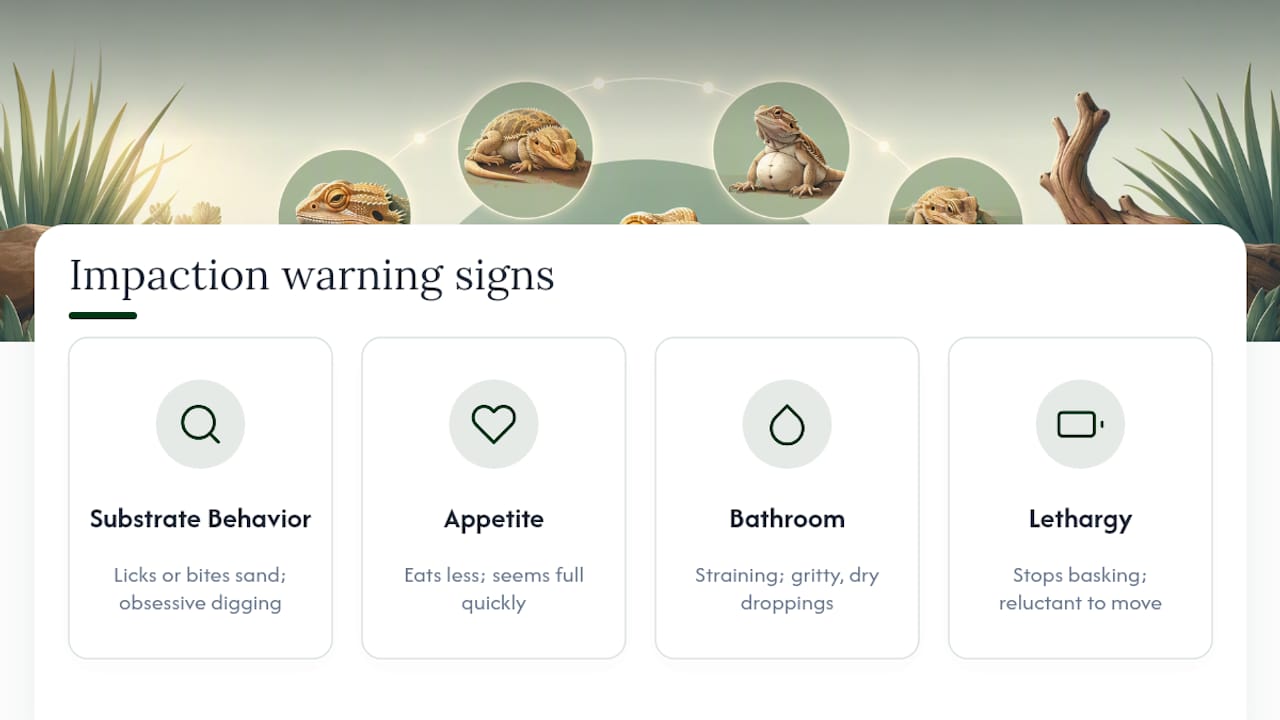
Watch how your dragon interacts with the ground, not just how it looks after the fact. A dragon that repeatedly licks or bites at sand outside of feeding, especially right after a substrate change, is investigating a new texture in a way that often turns into habitual ingestion. Digging behavior is normal in moderation, but obsessive digging paired with tongue-flicking at the substrate itself, rather than at prey sitting on top of it, is a pattern worth logging.
Appetite changes are another tell. A dragon that suddenly eats less, seems full after a few bites, or shows less enthusiasm at feeding time may already be carrying a partial blockage that’s dulling its hunger. Watch the tail base and belly for firmness or a visible bulge, a healthy dragon’s midsection should feel soft to light touch, not rigid.
Bathroom habits matter more than almost anything else you can observe. Straining without producing stool, going more than a week without a bowel movement, or passing stool that’s unusually dry and studded with visible grit all point toward accumulating substrate in the gut. Lethargy that shows up alongside any of these signs, a dragon that stops basking normally or seems reluctant to move, should push you toward a vet visit rather than a wait-and-watch approach. Impaction gets harder to treat the longer it sits, so behavioral vigilance during the first few weeks on any loose substrate matters more than people expect.
Does Sand Offer Enrichment Value Alternatives Don’t?
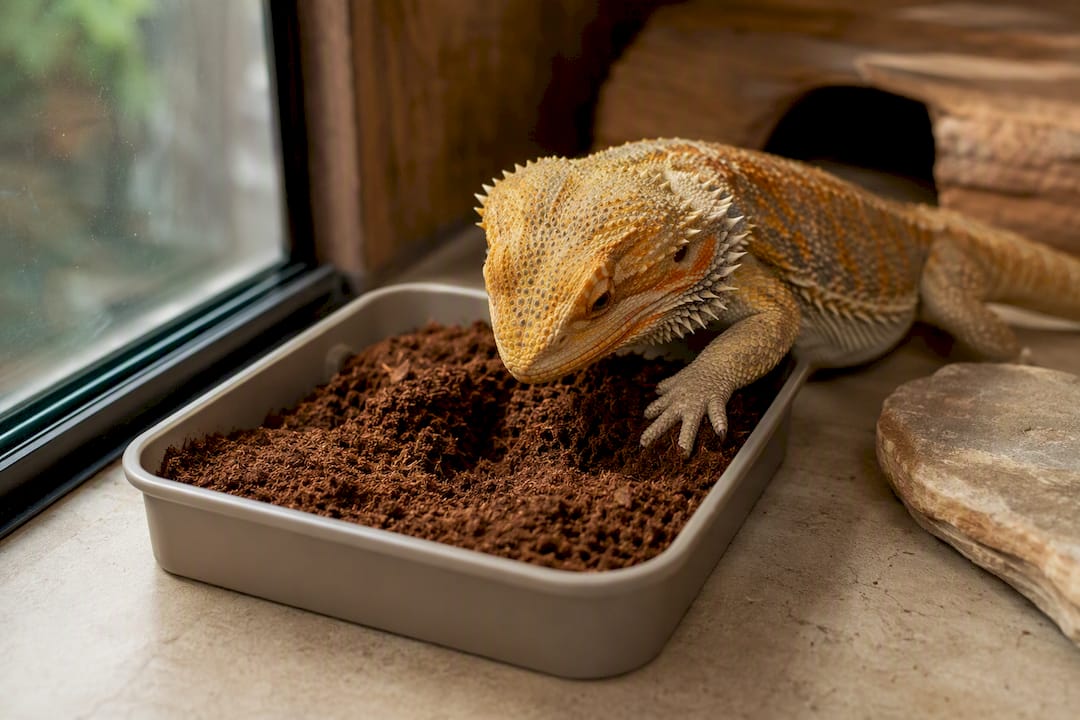
Digging is a real, natural behavior for bearded dragons, and loose substrate is the only setup that lets them express it fully. Watching a dragon dig a shallow pit to thermoregulate or dig deeper in preparation for brumation or egg laying (in females) is one of the more compelling arguments keepers make for sand over tile.
That said, enrichment doesn’t have to come from ingestion risk. A dragon on tile can still get digging behavior through a dedicated dig box filled with a safer material, coconut fiber or organic topsoil in a contained bin that gets removed after use, rather than covering the entire enclosure floor. This gives the behavioral outlet without turning the whole habitat into a substrate your dragon is licking at every day.
Bioactive setups split the difference for keepers with the experience to manage them. A well-built bioactive tank offers digging, foraging, and naturalistic texture variety all at once, but that enrichment value only holds up if the drainage and clean-up crew systems mentioned earlier are actually in place. An enrichment win on paper becomes a health risk fast if the setup itself is neglected.
What Bearded Dragon Owners Get Wrong About Sand
Most of the sand debate online treats it as a yes-or-no question, and that’s exactly why the discussion stays so polarized. Browse any long-running reptile forum thread on the topic and you’ll find keepers swearing by decades of sand use right alongside horror stories of emergency vet visits. Both camps are usually telling the truth about their own dragon. What they’re missing is that substrate is rarely the sole variable.
Here’s what I think gets underweighted: feeding off-substrate matters more than the substrate itself. A dragon on quartz sand that’s always fed from a dish and kept properly hydrated is probably safer than a dragon on paper towel that’s dehydrated and living in a tank ten degrees too cold. That’s not an argument for sand, it’s an argument for treating husbandry as the real variable and substrate as secondary. If you’re not confident you can nail hydration, temperature, and feeding discipline every single day, tile removes the guesswork and the risk in one move. Default to tile unless you can genuinely check every box on the adult, healthy, well-monitored list.
— Timothy
Setting Up a Safer Habitat With Your Pet Supply Retailer
Whichever substrate you land on, the accessories around it are what make daily husbandry manageable instead of a chore you dread. A good pet supply retailer stocks small-animal and reptile care essentials that support recommended habits such as feeding off-substrate, keeping enclosures clean, and providing safe enrichment.
If you’re building a dig box or a bioactive layer, a mushroom cage helps contain plant roots and decor without letting your dragon dig them loose, and biodegradable waste bags make daily spot-cleaning simple. For the small mammals and other pets sharing your home, Walnut Creek Pet’s range goes well beyond reptile care: the Kaytee Natural Snack with Superfoods Sweet Potato & Cranberry and Carrot & Apple Blend make solid single-ingredient treats, the Oxbow Enriched Life Timothy Lollipop and Woven Hideout add real enrichment value, and the A&E Loofah Chew Toy gives small pets something safe to gnaw on. Cat owners will find single-ingredient options too, including Dave’s Naturally Healthy Shredded Chicken Dinner, Dave’s Chicken & Whitefish, and Acana Adult Chicken and Turkey Indoor Entree. Browse the full reptile and small animal supply catalog to find the setup that fits your dragon’s exact stage and needs.
Sources
- Management and husbandry of reptiles — Merck Veterinary Manual
- Bearded Dragon Substrate & Bedding: Best and Worst | TheBeardie
- Bearded Dragon Substrate Guide: Safe Options, Impaction Risks & the Loose vs. Solid Debate | ExoPetGuides
- Bedding and substrate options for pet reptiles — The Spruce Pets
FAQ
What Is the Safest Sand for Bearded Dragons?
Plain, washed quartz sand with no additives, dye, or calcium content is the safest option, and even that carries risk unless your dragon is a healthy adult fed off the substrate.
Can I Use Regular Play Sand for My Bearded Dragon?
No. Play sand and other fine, uniform sands produce dust that irritates eyes and airways, making it a poor choice regardless of life stage.
What Kind of Dirt Can I Put in My Bearded Dragon Tank?
Organic topsoil free of fertilizers, pesticides, and perlite works for bioactive setups, but it needs heat-sterilizing first and should sit over a proper drainage layer.
Will Bearded Dragons Eat Sand?
Yes, often accidentally while hunting insects placed directly on the substrate, which is why feeding from a dish or tile is one of the most effective ways to cut ingestion risk.


