


95–97% vs 60–75%: Vet-Backed Freeze-Dried or Dehydrated Dog Food for Dog Owners
Vet-backed, practical comparison of freeze-dried (95–97% nutrient retention) vs dehydrated (60–75%). Learn cost, prep time, safety, and when to use each.

Freeze-dried dog food usually wins on nutrient retention, holding onto roughly 95 to 97 percent of a food’s original nutrients compared to 60 to 75 percent for dehydrated diets, but it costs more and carries raw-diet handling risks that dehydrated food mostly avoids. Dehydrated food is often the more budget-friendly, forgiving choice for everyday feeding. Before switching either way, confirm the product says “complete and balanced” per AAFCO, and talk to your vet if your dog is a puppy, senior, or immunocompromised. The rest of this guide breaks down exactly why the numbers land where they do.
TL;DR:
- Freeze-dried dog food retains about 95 to 97 percent of nutrients, making it significantly more nutrient-dense than dehydrated diets, which retain 60 to 75 percent.
- Rehydration time for freeze-dried food is typically under 3 minutes, compared to 15–30 minutes needed for dehydrated formulas, affecting daily feeding schedules.
- Freeze-dried products often cost more per pound but are more calorically dense, allowing for smaller serving sizes that can offset higher prices.
- Both formats pose raw-diet pathogen risks, so proper handling, storage, and vet consultation are essential for puppies, seniors, or immunocompromised dogs.
- Selecting the right type depends on your dog’s health, routine, and budget, with freeze-dried better suited for quick prep and palatability, and dehydrated for economical, steady daily feeding.
Table of Contents
- Dehydrated Dog Food vs. Freeze Dried: A Quick Comparison
- What Freeze-Drying and Dehydration Actually Do to the Food
- How Prep, Texture, and Cost Play Out at Home
- Handling Raw-Style Foods Safely
- How to Choose Between Dehydrated and Freeze-Dried
- Where Walnut Creek Pet Lands on This Debate
- Popular Brands and Where to Find Them
- The Real Trade-Off Nobody States Plainly
- Ready to Try Freeze-Dried? Here’s Where to Start
- Sources
- FAQ
Dehydrated Dog Food vs. Freeze Dried: A Quick Comparison
If you’re standing in an aisle (or scrolling a product page) trying to decide, here’s how the two formats stack up on the factors that actually change your day-to-day feeding routine:
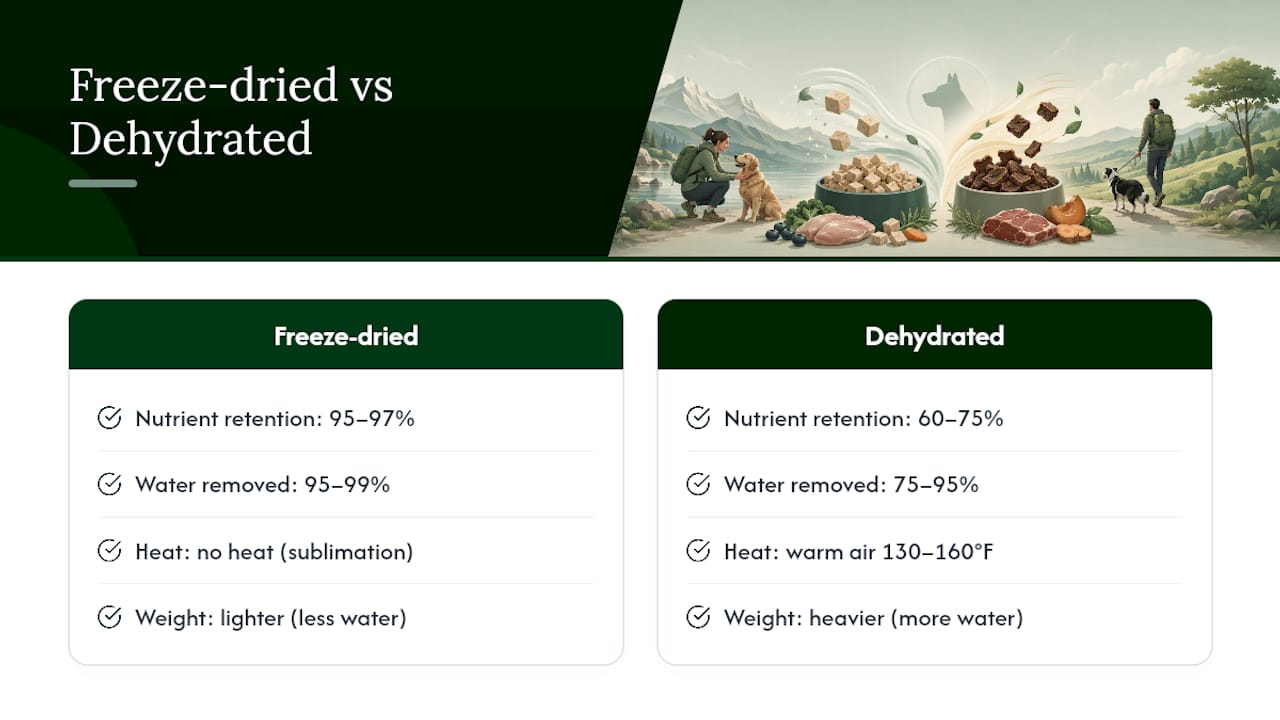
- Nutrient retention: Freeze-dried preserves about 95 to 97 percent of nutrients; dehydrated retains closer to 60 to 75 percent because heat degrades some vitamins and enzymes.
- Prep and rehydration time: Freeze-dried food typically rehydrates in 1 to 3 minutes; dehydrated food often needs 5 to 20 minutes or longer to soften fully.
- Texture and palatability: Freeze-dried tends to taste closer to raw meat and hooks picky eaters faster; dehydrated has a chewier, jerky-like bite many dogs still enjoy.
- Shelf life: Both last a long time unopened (often a year or more), but opened bags of either format should be used within the manufacturer’s stated window, usually a few weeks to a couple of months.
- Cost: Freeze-dried generally costs more per pound than dehydrated, sometimes significantly so.
- Safety and handling: Freeze-dried carries raw-style pathogen concerns; dehydrated’s heat exposure reduces (though doesn’t eliminate) some of that risk.
What Freeze-Drying and Dehydration Actually Do to the Food
The difference between dehydrated dog food and freeze-dried comes down to how each process pulls water out of raw ingredients, and that method decides how much nutritional value survives.
Dehydration works like a low, slow oven. Food sits in warm air, typically between 130°F and 160°F, until most of the moisture evaporates. That heat is exactly what shrinks nutrient retention: some vitamins and enzymes break down under sustained warmth, which is why dehydrated diets land in that 60 to 75 percent retention range.
Freeze-drying skips heat almost entirely. Ingredients get frozen solid, then placed in a vacuum chamber where the ice converts directly into vapor without ever passing through a liquid state, a process called sublimation. No heat means far less damage to fragile compounds, which is why freeze-dried products commonly retain 95 to 97 percent of their original nutrients.
There’s a moisture-removal difference too. Freeze-drying typically removes 95 to 99 percent of water content, while dehydration removes somewhere between 75 and 95 percent. That gap affects more than nutrition. It also explains why freeze-dried food is lighter, crumblier, and often more calorically dense per scoop than its dehydrated counterpart.
How Prep, Texture, and Cost Play Out at Home
Numbers on a label are one thing. Feeding your dog every day is another, and this is where the two formats really diverge.
- Rehydration time. Freeze-dried meals are usually ready in under 3 minutes with a splash of water, while dehydrated formulas often need 15 to 30 minutes to soften completely, which matters if you’re feeding on a tight morning schedule.
- Water temperature. Warm (not hot) water speeds up rehydration for either format, but check the bag first. Some manufacturers specifically warn against hot water because it can cook the surface and change the texture.
- Texture preference. Seniors with dental issues or picky eaters often do better with freeze-dried once it’s rehydrated into a softer, more raw-like consistency. Dehydrated food keeps more chew, which some dogs love as a topper texture and others struggle with.
- Storage and shelf life. Unopened, freeze-dried products can last a long time in the pantry, often a year or more depending on packaging, but once you break the seal, use it within the window printed on the bag.
- Cost per feeding. Because freeze-dried food is more calorically dense, you often feed a smaller volume per meal than you’d expect, which offsets some of the higher per-pound price, though it rarely closes the gap entirely.
Handling Raw-Style Foods Safely
Neither freeze-drying nor dehydration sterilizes food completely. Both processes can leave pathogens like Salmonella or Listeria present, and freeze-dried products in particular are treated much like raw diets from a food-safety standpoint since they skip the heat step that would kill bacteria.
A few habits cut most of that risk down to size:
- Wash your hands and sanitize bowls, scoops, and countertops after every feeding.
- Keep raw or rehydrated portions away from surfaces used for human food prep.
- Refrigerate any rehydrated food you don’t use right away, and toss leftovers per the package’s “use within” guidance.
- Store dry product in a sealed container away from heat and humidity.
Some brands run their freeze-dried products through high-pressure processing (HPP), which knocks down microbial loads significantly. It’s a genuine safety improvement, but HPP doesn’t guarantee elimination of every pathogen, particularly spore-forming bacteria that can survive high pressure.
Pro Tip: If you have a puppy, a senior dog with a weaker immune system, or young kids and elderly family members in the house, run any raw-style freeze-dried switch by your vet first. It’s a five-minute conversation that heads off a much worse week.
How to Choose Between Dehydrated and Freeze-Dried
Picking a format isn’t really about which one is “better” in the abstract. It’s about matching the format to your dog and your routine.
- Check your dog’s life stage and health. Puppies, seniors, and dogs with compromised immune systems need extra caution around raw-style freeze-dried foods; ask your vet before switching.
- Decide how you’ll use it. A main food, a meal topper, or a travel-friendly backup each favors different products. Freeze-dried toppers boost palatability on kibble your dog is bored with; dehydrated works well as a shelf-stable staple.
- Set a realistic budget. Freeze-dried generally costs more per pound, so weigh that against how much of your dog’s diet it will actually replace.
- Think about storage and prep time. If mornings are rushed, the 1 to 3 minute rehydration of freeze-dried beats waiting 20 minutes for dehydrated food to soften.
- Read the label carefully. Look for an AAFCO “complete and balanced” statement, a clear feeding guide, and specific sourcing (not vague terms like “meat meal” with no species named). No nutrient statement, no feeding instructions, or unclear sourcing are all red flags worth walking away from.
Where Walnut Creek Pet Lands on This Debate
We generally recommend freeze-dried as a topper, travel food, or nutrient boost rather than the sole diet for every dog, mainly because of the cost and the extra handling care raw-style products deserve. Dehydrated earns its place as a steady, budget-conscious staple. Some pet supply companies focus on single-ingredient and organic options because simpler ingredient lists mean fewer surprises and fewer things that can go wrong nutritionally. Some also donate a portion of profits to no-kill shelters.
Popular Brands and Where to Find Them
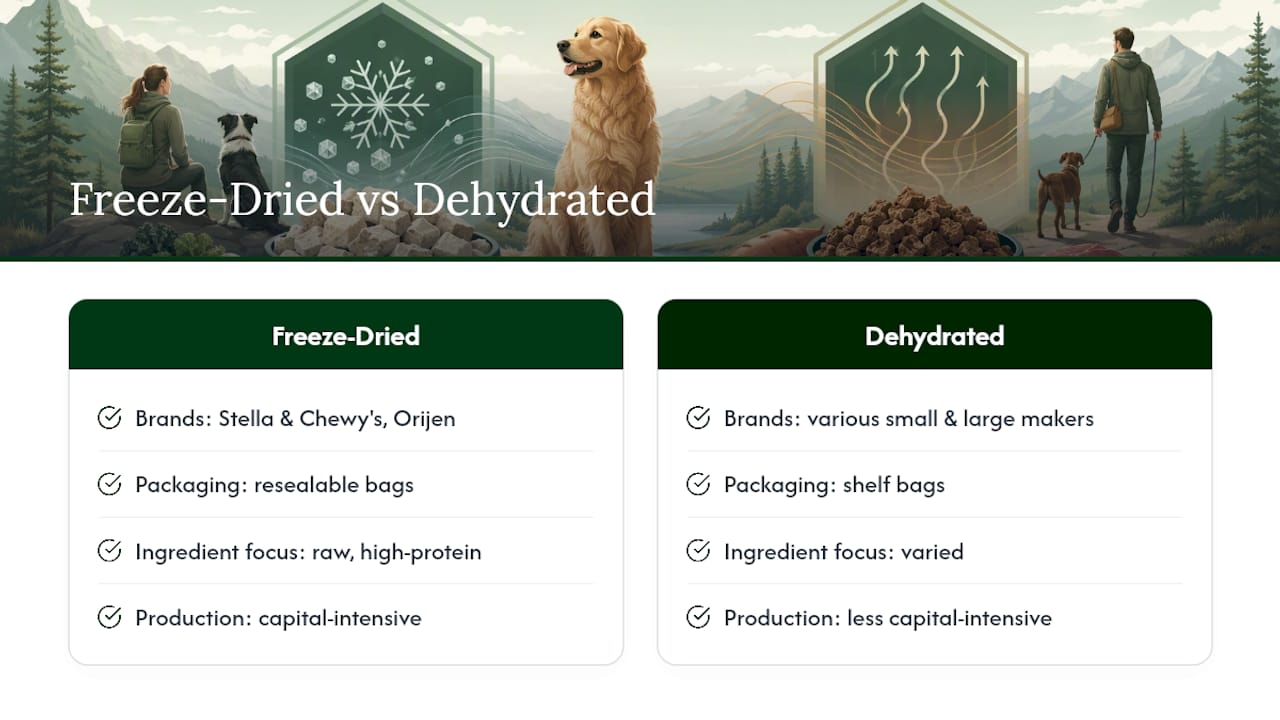
Walk through the freeze-dried and dehydrated aisle of any well-stocked pet retailer and a handful of names show up again and again. Stella & Chewy’s built its reputation on freeze-dried raw meal mixers and treats, often sold in resealable bags meant to be sprinkled over kibble or rehydrated into a full meal. Orijen takes a similar approach with its freeze-dried bites, leaning on high-protein, regionally sourced ingredients that read more like a butcher’s list than a typical ingredient panel. Dehydrated options come from a wider mix of smaller and larger manufacturers, since the process is generally less capital-intensive than freeze-drying equipment.
Availability has grown quickly over the past few years. What used to be a niche, boutique-pet-store category now sits on shelves at large retailers and ships easily through online sellers. That’s good news for variety, but it also means quality varies more than it used to. A recognizable brand name on the bag doesn’t automatically mean a stronger nutrient profile or safer handling. It’s still worth reading the actual label, the AAFCO statement, and the sourcing details rather than assuming a familiar logo settles the question.
Stocking both formats side by side isn’t unusual for owners who like flexibility: dehydrated as the everyday base, freeze-dried kept on hand for picky days, travel, or as a high-value topper.
The Real Trade-Off Nobody States Plainly
Most articles on this topic present freeze-dried as the obvious upgrade and stop there. That’s not wrong on nutrition, but it skips the part that actually matters for most households: nutrient retention percentages don’t mean much if the format doesn’t fit how you actually feed your dog.
A senior dog owner juggling a rushed morning routine benefits more from freeze-dried’s 3-minute prep than from squeezing out an extra few percentage points of vitamin retention. Meanwhile, a multi-dog household feeding large volumes daily will feel dehydrated’s lower cost per pound far more than any nutritional edge freeze-dried offers.
The conventional advice treats this as a nutrition contest with one winner. It isn’t. It’s a fit question. Prioritize your dog’s specific health needs first, your household’s realistic handling habits second, and only then weigh the nutrient numbers. Skip that order and you’ll end up with an expensive bag of freeze-dried food sitting half-used in the pantry because rehydrating it never fit your schedule.
— Timothy
Ready to Try Freeze-Dried? Here’s Where to Start
If the nutrient math above has you leaning toward freeze-dried, the easiest way in is as a topper or travel food rather than a full diet overhaul on day one. Walnut Creek Pet carries several options built for exactly that kind of transition, and every purchase puts 10% of profits toward no-kill shelters.
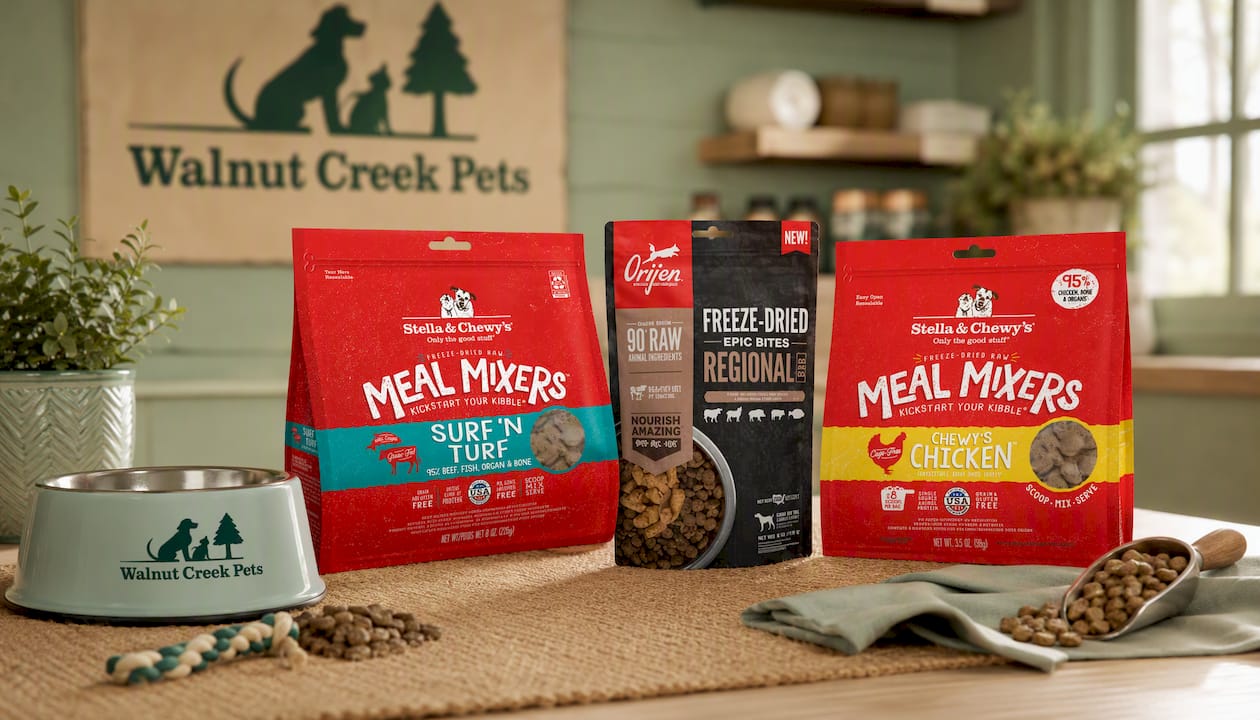
The Stella & Chewy’s Freeze Dried Meal Mixers Surf & Turf works well sprinkled over kibble for dogs bored with their current food, since a small amount goes a long way given how calorically dense freeze-dried meals tend to be. For dogs that do better with a single, simple protein, the Orijen Regional Red Epic Bites travel well in a bag with no refrigeration needed, making them a solid pick for road trips or boarding stays. And if you’re feeding multiple dogs or want a larger supply on hand, the Stella & Chewy’s Freeze Dried Meal Mixers Chicken, 8oz stretches further per bag.
Always follow the feeding instructions on the bag, and check the AAFCO complete and balanced statement before making any option your dog’s primary food. Browse the full lineup of freeze-dried and topper products to find the right fit for your dog’s size and routine.
Sources
- Does freeze drying remove nutrients? — EnWave
- Freeze-Dried Dog Food vs. Dehydrated Dog Food — Union Lake Veterinary Hospital
- Freeze-Dried Food For Dogs: The Pros and Cons | PetMD
FAQ
Do veterinarians recommend freeze-dried dog food?
Many vets consider freeze-dried food a nutrient-dense option worth discussing, but most also recommend checking AAFCO complete and balanced labeling and talking through your specific dog’s health before switching, especially for puppies or immunocompromised dogs.
What are the disadvantages of freeze-dried food?
The main downsides are higher cost per pound, raw-style pathogen risks since the food isn’t cooked, and the need for careful handling and storage compared to traditional kibble.
Which freeze-dried dog food is the healthiest?
The healthiest option is one carrying a clear AAFCO complete and balanced statement, named protein sources, and transparent processing details rather than any single brand; single-ingredient or simply formulated products tend to have the fewest hidden fillers.
What is the healthiest dry food to feed your dog?
There’s no single “healthiest” dry food across all dogs, but the strongest picks share named protein sources, an AAFCO nutrient statement, and minimal fillers, whether that’s a quality kibble, dehydrated formula, or freeze-dried option matched to your dog’s life stage.


