


Prevent Dog and Cat Fights: 3-3-3 Rule and 5–10 Minute Sessions
Follow a shelter backed, phased plan—separation, scent swapping, short barrier meetings and the 3-3-3 rule—to build calm dog and cat coexistence and avoid...

Introduce dogs and cats slowly, using separation, scent swapping, and staged, supervised meetings. Never force contact. Start today by setting up a cat-safe room with food, water, a litter box, and hiding spots, then keep the two animals fully apart until you know how each one reacts to the other’s smell. Expect this to take anywhere from a few days to several months.
TL;DR:
- Most pairs need several weeks to months to establish a peaceful coexistence, with cats setting the overall pace and dogs signaling readiness loudly.
- Complete separation, scent swapping, and gradual barrier interactions are essential to prevent aggressive escalation and achieve calm dynamics.
- Introductions should end with mutual indifference, where each animal comfortably eats, uses the litter box, and shows no signs of fixation or stress.
- Professional help is advisable if aggressive behaviors persist or escalate despite following the phased steps and slow pacing.
- Proper equipment, like secure harnesses and individual feeding setups, significantly increases the chance of a safe, calm transition.
Table of Contents
- Preparing Your Home Before Introducing Dogs and Cats
- Phase 1: Separation and Scent Swapping
- Phase 2: Introducing Dogs to Cats Through a Barrier
- Phase 3: Leashed, Supervised Face-to-Face Meetings
- Phase 4: Moving Toward Unsupervised Time Together
- Warning Signs You Shouldn’t Ignore
- How Long Does It Take? The 3-3-3 Rule Explained
- When to Call In a Professional
- Why Walnut Creek Pet Backs This Approach
- The Peaceful Coexistence Standard
- Building Your Introduction Starter Kit
- Sources
- FAQ
Preparing Your Home Before Introducing Dogs and Cats
Every successful introduction starts before the animals ever see each other. The home needs two things: a fortress for the cat and a job for the dog.
The cat’s safe room should feel like a self-contained apartment, not a timeout box. Give it vertical space (a cat tree or wall shelf), a litter box, food and water bowls placed away from each other, a scratching post, and at least one place to hide completely from view. Cats regulate their own stress by climbing and hiding, and a dog can’t do either, so installing cat trees or shelves the dog cannot reach gives your cat control over the interaction from day one.
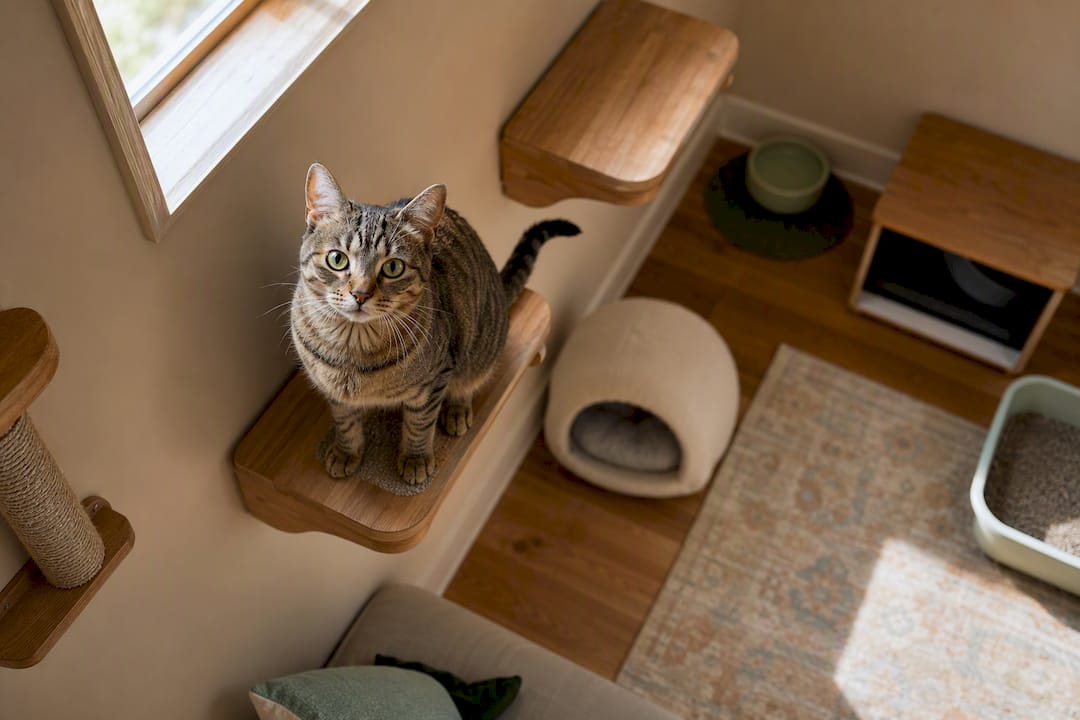
The dog needs a parallel setup: a crate or exercise pen where calm behavior gets rewarded, plus enrichment that keeps its brain busy when it’s not focused on the cat.
Before any contact begins, gather:
- A hardware-mounted baby gate (pressure-mounted gates get pushed through by determined dogs)
- A well-fitted harness with a 4 to 6-foot leash
- Nail trimmers, so a startled cat’s swipe does the least possible damage
- Puzzle feeders or slow feeders for both animals
- Small, low-distraction training treats for quick rewards
Pro Tip: During early barrier sessions, place a high-value treat on each side at the same time, close enough that both animals can see and smell the other pet getting rewarded. This builds a “good things happen when you’re around” association before they’ve even met.
Phase 1: Separation and Scent Swapping
Complete separation for at least a week is the foundation of a phased introduction, and skipping it is the single most common reason introductions fail. The animals should not see, smell through a crack, or physically access each other’s space during this window.
Here’s the scent-swap sequence to run daily:
- Rotate bedding between the two animals’ spaces so each gets used to sleeping near the other’s scent.
- Rub a soft cloth on your dog’s cheek and shoulder area, then place it near the cat’s food bowl (not on top of it).
- Do the same in reverse with a cloth carrying the cat’s scent, placing it near the dog’s resting area.
- Swap towels or small blankets every two to three days rather than washing them immediately.
- Watch how each animal responds: sniffing with loose body language, or eating and using the litter box normally nearby, are the green lights you’re waiting for.
If either animal growls, hisses, refuses to eat near the scented item, or shows stiff, fixated body language, don’t move forward. Continue swapping scents until the reaction softens. Rushing past a strong negative scent reaction is how a two-week plan turns into a two-month setback. If the reaction doesn’t soften after another week, that’s your cue to loop in a professional rather than push ahead on your own.
Phase 2: Introducing Dogs to Cats Through a Barrier
Once both animals are neutral or curious about each other’s scent, it’s time for supervised visual contact, still with a solid barrier between them. A hardware-mounted baby gate works well for this, and a tall exercise pen or a glass door are both solid alternatives, as long as the barrier is sturdy enough that a determined dog can’t push through or a cat can’t slip under.

Keep these sessions short. Five to ten minutes, two or three times a day, works better than one long session that lets tension build. Reward calm behavior on both sides, glancing at the other animal and looking away, lying down, or simply ignoring each other counts as a win.
A few tactics make these sessions smoother:
- Feed both animals on their own sides of the barrier at the same time, so mealtime becomes linked to the other pet’s presence.
- Offer a puzzle feeder to whichever animal gets bored or fixates first.
- Keep a leash on the dog even behind the gate, so you can calmly redirect without a physical struggle.
If either pet won’t settle after several sessions, or one starts barking, lunging, or hiding again, step back to scent swapping for a few more days before trying visual contact again.
Phase 3: Leashed, Supervised Face-to-Face Meetings
This is the phase where most owners get impatient, and it’s exactly where patience matters most. The dog stays on a harness and leash. The cat stays loose, with a clear escape route to a perch, another room, or under furniture the dog can’t reach.
Run the first meeting like this:
- Position yourself between the animals, not hovering over either one, and keep the dog’s leash loose. A tight leash raises a dog’s arousal and can read as tension to a cat, so treat the leash as a backup, not a restraint.
- Use a marker word or clicker the moment the dog looks away from the cat voluntarily, then reward instantly with a treat.
- If the dog fixates, stiffens, or won’t break eye contact, redirect with a “look” or “leave it” cue you’ve already practiced separately beforehand.
- Give the cat a puzzle feeder or a quiet corner if it seems more interested in food than fleeing. That’s actually a good sign.
- End the session while things are still calm, ideally after two or three minutes of neutral or positive behavior, rather than waiting for something to go wrong.
A crate or a tether can help manage an especially excitable dog during these early sessions, but never use a barrier that traps the cat in a corner with no way out.
Pro Tip: End every session on a win, even a small one. If the last thing your cat and dog experience together is calm, it’s easier to start the next session on the same footing.
Phase 4: Moving Toward Unsupervised Time Together
Readiness looks like boredom, not excitement. If both animals eat normally, use the litter box without hesitation, and stop fixating on each other during supervised time, they’re likely ready for short unsupervised stretches.
Start small. Leave the room for five or ten minutes with gates still in place as a backup, and use a phone camera or pet monitor if you have one. Increase duration gradually over days, not all at once.
If something goes wrong, a scuffle, a chase, a yelp, separate the animals calmly without yelling, check both for scratches or bite marks, and go back to the previous phase for several days before trying again. One bad afternoon doesn’t erase the mont
Warning Signs You Shouldn’t Ignore
Not every hiss or bark means failure. But some signals mean you need to slow down immediately:
- Intense, prolonged staring or a stiff, frozen body posture from the dog aimed at the cat
- Lunging, snapping, or barking that doesn’t stop with redirection
- A cat that hides for days, stops eating, or stops using the litter box
- Swatting with claws out repeatedly, rather than an occasional warning hiss
A single hiss or swat during an early meeting is normal cat communication, not a crisis. Escalating aggression that repeats across multiple sessions is different.
After any scuffle, separate the animals calmly, check both for injury, and give everyone a decompression period of three to six days before attempting contact again. If the same aggressive pattern shows up across several attempts despite slowing down, that’s a sign this pairing may need a formal behavior plan, or in rare cases, may not be a safe permanent match without professional intervention.
How Long Does It Take? The 3-3-3 Rule Explained
The 3-3-3 rule offers a rough guideline: a short initial period of feeling overwhelmed and hiding, a few weeks of settling into a routine, and a few months before an animal is truly comfortable in a new home or with a new housemate. It’s a guideline, not a guarantee.

Some pairs click within days. Most take several weeks to a few months working through the phases above. A smaller number never become best friends but reach a workable peace. All three outcomes count as success if the goal is coexistence, not forced affection.
When to Call In a Professional
Contact a certified trainer or feline behavior consultant if you see repeated aggressive incidents, intense predatory fixation from the dog, or a cat that stays withdrawn for weeks despite slow pacing. Professionals often catch early escalation signals that owners miss, like subtle body stiffening before a lunge.
A veterinary behaviorist can also rule out pain or illness driving unusual aggression or hiding. Before a consult, jot down when incidents happen, what triggered them, and how each animal reacted, that timeline helps the professional build a plan faster.
Why Walnut Creek Pet Backs This Approach
Walnutcreekpet built this guide around the same phased, cat-paced protocols that shelters and veterinary behavior groups recommend, because a rushed introduction creates problems that last years, not days.
Beyond the guide, Walnutcreekpet’s own model supports the animals behind these introductions directly: 10% of profits go to no-kill shelters, and new adopters get discounts on the organic and single-ingredient products the company focuses on. That matters here because products that make introductions safer, such as harnesses, puzzle feeders, single-ingredient training treats, and elevated cat furniture, are commonly recommended and available without additive-heavy fillers found in many mass-market alternatives.
For pet parents managing a shelter dog with an unknown history around cats, or a cat that’s never shared space with a dog, the care guides available on the site walk through the exact staging described above, alongside product picks built for exactly this transition.
The Peaceful Coexistence Standard
Most advice on this topic quietly assumes the end goal is friendship, a dog and cat curled up together on the couch. That’s the wrong target for most households, and chasing it is what causes owners to rush phases they shouldn’t.
The research behind this guide points somewhere more useful: peaceful coexistence, where both animals can occupy the same home without stress, is the real success metric. A dog and cat who simply ignore each other from across the room, eat their meals in peace, and never trigger a chase are a success story, even if they never touch noses.
What gets underrated is how much the cat’s pace should dictate the entire timeline. Dogs signal readiness loudly, tail wags, relaxed panting, easy distraction. Cats signal readiness quietly, through eating habits, litter box use, and whether they choose to enter a room voluntarily. Owners who watch the dog for cues and treat the cat as an afterthought are the ones who end up restarting from scratch at week six.
If you take one thing from this guide, let it be this: slow down when the cat tells you to, not when you get impatient.
— Timothy
Building Your Introduction Starter Kit
A handful of the right products make every phase above easier to run, though no product replaces patience or a slow pace.

For leashed meetings, a well-fitted harness matters more than most owners expect, since a poorly fitted collar lets an excited dog slip free at exactly the wrong moment. The Kaytee Comfort Harness with Stretchy Stroller gives you secure, comfortable control during those early face-to-face sessions. For rewarding calm behavior on both sides of the gate, single-ingredient treats work best because they’re easy to dose in small amounts without upsetting a nervous stomach, and the Wholesomes Rewards Classic Variety Biscuits cover a range of flavors for dogs who get bored of the same reward. Keep feeding stations separate and calm with a stainless steel coop cup that clamps securely to a crate or pen. Litter placement also matters more than people think during this transition; partners like Litter Room offer solid litter solutions worth pairing with a dedicated cat safe room.
Ready to gear up? Browse Walnutcreekpet’s harness and training supplies and start Phase 1 with the right equipment already in place.
Sources
- Introducing Dogs and Cats: The Complete Guide | San Diego Humane Society
- Introducing Dogs to Cats | American Humane
- Introducing cats and dogs | International Cat Care
- How to introduce a cat to a dog | Preventive Vet
- Cat to Dog Introductions That Actually Work | Cincinnati Animal CARE
FAQ
How long does it take a dog to get used to a cat?
It varies widely. Some pairs settle into calm coexistence within a couple of weeks, while most take several weeks to a few months working through separation, scent swapping, and supervised meetings. A small number of pairs never fully bond but still reach peaceful, safe coexistence.
What is the 3-3-3 rule for cats?
The 3-3-3 rule is a rough timeline: 3 days of adjustment and hiding, 3 weeks of settling into a routine, and 3 months before a cat feels fully secure in a new situation. It’s a general guideline, not a fixed schedule every cat will follow exactly.
What not to do when introducing a dog to a cat?
Never force face-to-face contact before completing scent swapping and barrier sessions, and never leave them unsupervised before both animals show calm, indifferent behavior. Avoid holding the cat or dragging either animal toward the other, since that removes the escape option that keeps a cat calm during early meetings.
How long will it take for a cat to get used to a new dog?
Cats generally set the pace, and signs of adjustment show up as normal eating, regular litter box use, and calm or indifferent body language around the dog’s scent or presence. This can take anywhere from a few days for an easygoing cat to several months for one that’s naturally more anxious or has had a bad experience with dogs before.
Can dogs and cats really get along?
Yes, most dogs and cats can reach peaceful coexistence when introductions follow a slow, phased approach that prioritizes the cat’s comfort over speed. Full affection isn’t guaranteed for every pair, but calm, safe cohabitation is achievable for the large majority of households that follow the staged process.


