


A to Z Safety Checklist for Plants Toxic to Dogs
A quick A to Z safety checklist for plants toxic to dogs, six urgent steps to take in the first hour after ingestion, and simple dog-proofing fixes backed...

Yes, dozens of plants sitting in living rooms and backyards right now can poison a dog. Sago palm, oleander, azalea, yew, and spring bulbs like daffodils and tulips rank among the most dangerous, capable of causing liver failure, seizures, or heart arrhythmias. If you suspect your dog ate any part of a plant, don’t wait for symptoms. Call your veterinarian or ASPCA Animal Poison Control at 888-426-4435 right away.
TL;DR:
- The toxicity of plant parts varies; seeds, bulbs, and roots often contain higher toxin concentrations than leaves or flowers.
- Fast decontamination within 24 hours improves survival chances for dogs poisoned by the most dangerous plants, especially sago palms.
- Small dogs are at higher risk of severe symptoms from the same plant ingestion than larger dogs because toxicity scales with body weight.
- Most plant poisonings occur in spring and fall, driven by seasonal bulb planting, autumn crocus, and holiday plants, with regional variation affecting risk.
- Prevention strategies like elevating or fencing toxic plants and using safe chews can significantly reduce accidental ingestions.
Table of Contents
- Common Plants Toxic to Dogs: A Quick Reference List
- Signs of Plant Poisoning in Dogs, by Body System
- What To Do If Your Dog Ate a Plant Right Now
- Preventing Plant Poisoning: Dog-Proofing Your Home and Yard
- Why We Cite ASPCA, UC Davis, and AAHA on This Topic
- How the Plant Part Your Dog Ate Changes the Risk
- What Happens at the Vet: Diagnostics and Treatment After Plant Ingestion
- The Long-Term Risks After Plant Poisoning
- Seasonal and Regional Patterns in Plant Poisoning Risk
- Does Dog Size or Breed Change Plant Toxicity Risk?
- A Personal Note on Why Prevention Beats Panic
- Redirect the Chewing Instinct With Safer Options
- Sources
Common Plants Toxic to Dogs: A Quick Reference List
Some plants toxic to dogs cause a mild stomachache. Others can cause fatal poisoning in dogs within a short time frame. The difference usually comes down to the toxin involved and which part of the plant got eaten.
Here’s a working list of the offenders you’re most likely to encounter, whether they’re growing in a garden bed or sitting on a windowsill:
- Sago palm — Every part is toxic, but the seeds contain cycasin, which triggers rapid liver failure. This is widely considered the most dangerous common landscaping plant for dogs.
- Oleander — Contains cardiac glycosides that disrupt heart rhythm; a few leaves can be fatal to a small dog.
- Azalea and rhododendron — Grayanotoxins cause vomiting, weakness, and in severe cases cardiac collapse; the Colorado State University poisonous plants database notes that ingesting roughly 0.2% of a dog’s body weight in leaves can produce clinical signs.
- Yew — Nearly every part contains taxine alkaloids; sudden death from cardiac failure is possible even without earlier symptoms.
- Daffodil and tulip bulbs — The bulb carries far more toxin than the leaves or flowers, causing intense GI upset and, in large amounts, cardiac effects.
- Lilies — True lilies (Lilium species) are extremely dangerous to cats and cause significant GI distress in dogs, though the kidney failure risk is more cat-specific.
- Autumn crocus — Causes GI bleeding and can lead to bone marrow suppression days after ingestion.
- Foxglove — Contains digitalis compounds that affect heart function similarly to oleander.
- Castor bean — The seeds contain ricin, one of the more potent plant toxins a dog can encounter.
- Aloe vera — Generally mild, but saponins in the gel can cause vomiting and diarrhea.
- Hydrangea — Contains cyanogenic compounds concentrated in the leaves and flower buds.
The UC Davis Toxic Plant Garden catalogs many of these with plant-specific symptom notes, and it’s worth bookmarking if you garden or bring home new houseplants often.
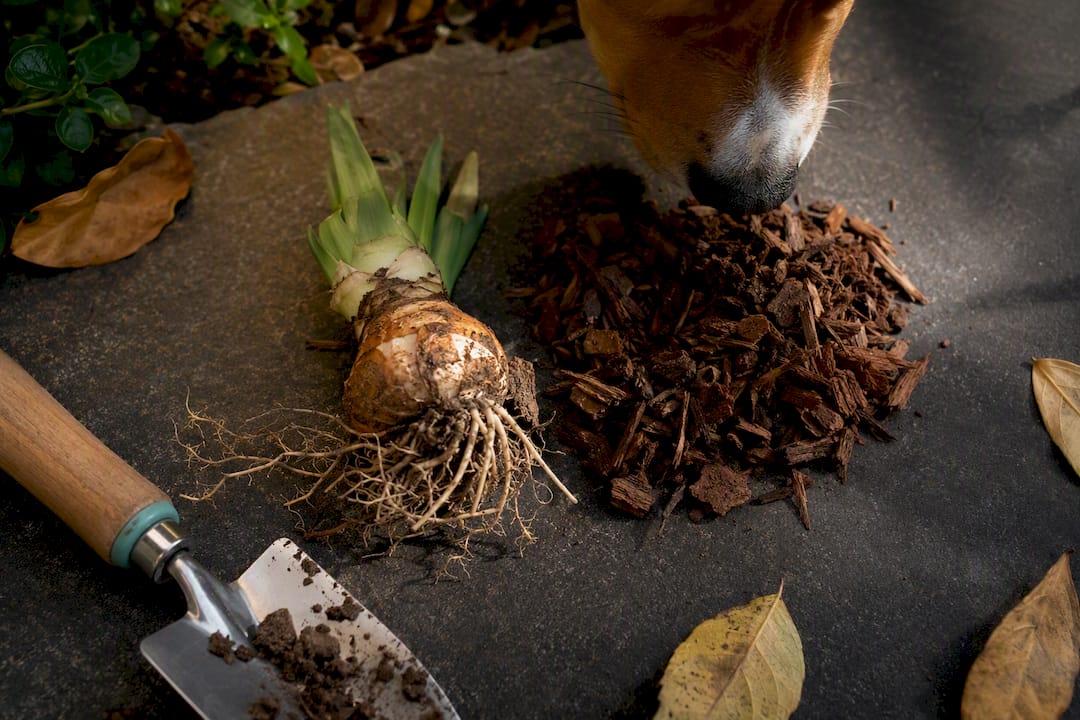
Bulbs deserve a special warning. Toxins concentrate more heavily in bulbs than in leaves or flowers on most spring-flowering plants, and dogs that dig near fertilized beds often unearth them out of curiosity, not hunger. And it’s not just the plants: cocoa mulch smells like chocolate to a dog’s nose and contains the same theobromine that makes chocolate dangerous.
Signs of Plant Poisoning in Dogs, by Body System
Symptoms depend heavily on which toxin your dog encountered. Grouping them by system helps you recognize what you’re dealing with faster.
- Gastrointestinal: vomiting, drooling, diarrhea, loss of appetite (the most common and often earliest sign)
- Neurologic: tremors, disorientation, seizures, weakness
- Cardiac: irregular heartbeat, collapse, pale gums
- Hepatic or renal: jaundice, increased thirst, lethargy that develops over one to several days
Timing matters as much as the symptom itself. Sago palm poisoning is a good example of why: a dog might vomit within hours, seem to stabilize, then develop liver failure two or three days later as cycasin does its damage internally.
Survival odds improve significantly when decontamination and supportive care start within the first 24 hours of sago palm ingestion. Waiting to see if symptoms “get better on their own” is the single most common mistake owners make, and it’s often the costliest one.
What To Do If Your Dog Ate a Plant Right Now
The first hour after suspected ingestion matters more than almost anything you’ll do afterward. Work through this in order:
- Move your dog away from the plant and remove any remaining leaves, berries, or bulb fragments from reach.
- Identify the plant. Take a photo or clip a small sample, including any part your dog may have chewed. If you’re unsure of the species, a clear photo lets a vet or poison control specialist identify it faster than a description.
- Note the details: how much was eaten, roughly when, and your dog’s current weight.
- Call your veterinarian or ASPCA Animal Poison Control at 888-426-4435 immediately. The Pet Poison Helpline is another 24-hour option if your regular vet’s office is closed.
- Do not induce vomiting unless a professional tells you to. Some toxins cause more damage coming back up, and some plants have sharp or fibrous parts that can injure the esophagus on the way out.
- Prepare to transport your dog if instructed. Bring the plant sample, note the time of ingestion, and call ahead so the clinic can prep for decontamination.
Pro Tip: Save the poison control number in your phone right now, not after something happens. Fumbling to find a number while your dog is drooling and panicked wastes minutes you don’t have.
Preventing Plant Poisoning: Dog-Proofing Your Home and Yard
Prevention beats emergency treatment every time, and most of it comes down to placement and habit rather than expensive fixes.
Indoors, hanging baskets and high shelves keep houseplants out of reach far more reliably than hoping your dog loses interest. Outdoors, raised beds and simple fencing around ornamental plantings do the same job. Avoid cocoa mulch entirely, and store fertilizers, pesticides, and bone meal in sealed containers. Bone meal in particular tends to attract dogs to dig right where you’ve planted bulbs.
- Elevate or fence off known toxic plants rather than removing your entire garden
- Skip cocoa mulch in favor of cedar or pine bark
- Bury bulbs deep and avoid bone meal fertilizer near plantings
- Keep a dedicated chew rotation going so boredom doesn’t send your dog looking for something green to gnaw on
A tired, mentally engaged dog chews on fewer things it shouldn’t. Rotating in elk antler chews gives dogs a durable outlet, and pairing that with structured containment strategies for outdoor access cuts down on unsupervised garden wandering altogether.
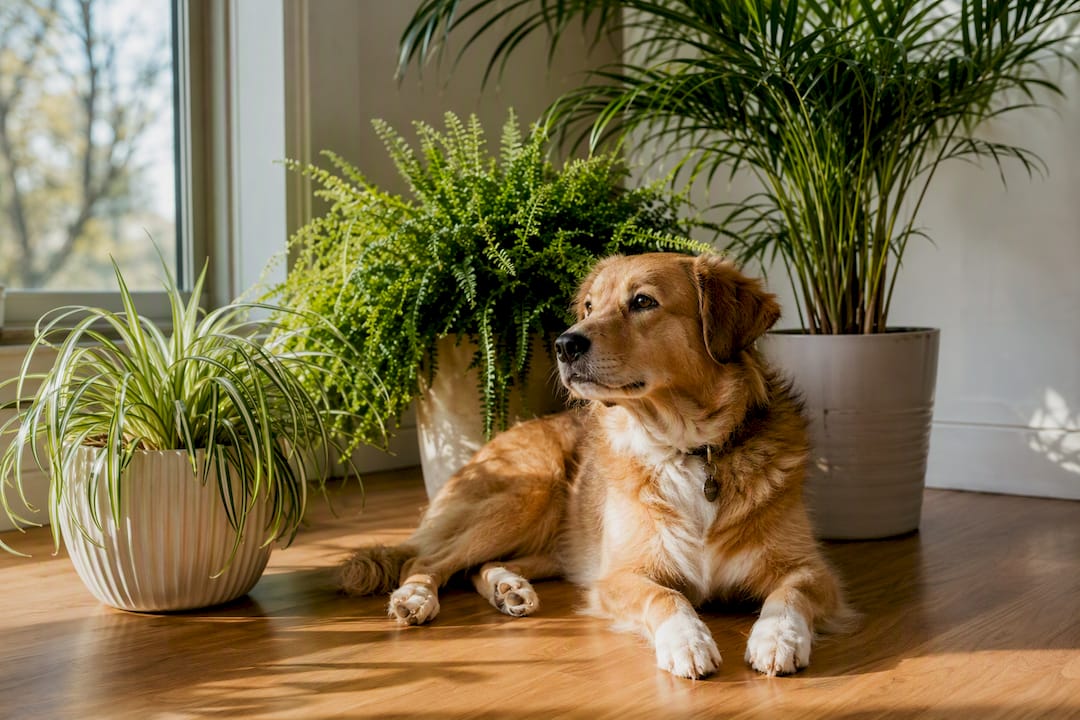
If you want to add greenery without the risk, spider plants, Boston ferns, and areca palms are commonly listed as safe options for homes with dogs and cats. But “non-toxic” isn’t the same as “fine to eat by the pound.” Even AAHA-approved safe plants can trigger vomiting and diarrhea if a dog eats enough of one, and thorny or fibrous non-toxic plants can still cause mechanical injury going down.
Pro Tip: Keep a small “safe snack” rotation on hand so your dog has an obvious, appealing alternative to the fern on your side table. A treat that smells better than a houseplant wins that competition every time.
Why We Cite ASPCA, UC Davis, and AAHA on This Topic
Walnutcreekpet builds its safety guidance around veterinary-backed sources rather than guesswork, because a wrong answer on plant toxicity has real consequences. The recommendations here draw on the ASPCA’s poison control database, UC Davis’s Toxic Plant Garden, and AAHA’s pet-safe gardening guidance. That same safety-first approach shapes the single-ingredient, organic products Walnutcreekpet stocks, including a portion of profits donated to no-kill shelters.
How the Plant Part Your Dog Ate Changes the Risk
The same plant can be mildly irritating or genuinely dangerous depending on which part your dog swallowed. Toxins rarely distribute evenly through a plant. They tend to concentrate wherever the plant is trying hardest to defend itself, which is usually seeds, bulbs, or roots.
Sago palm illustrates this well: the leaves are toxic, but the seeds contain far higher concentrations of cycasin, the compound responsible for the liver damage that makes this plant so dangerous. A dog that chews a frond might get an upset stomach; a dog that cracks open and eats a seed is facing a medical emergency.
Bulb plants follow a similar pattern. Daffodil and tulip flowers cause mild drooling and stomach upset, but the bulb itself packs a much higher toxin load, which is why dogs that dig up and chew bulbs tend to get sicker than dogs that just nibble a fallen petal.
Roots can behave differently still. Some plants store toxins in root tissue specifically to deter burrowing animals, meaning a dog digging in a flower bed faces different exposure than one grazing on leaves above ground. When you call poison control, mentioning exactly which part your dog ate, leaf, stem, seed, bulb, or root, helps the specialist gauge severity far faster than a general plant name alone.
What Happens at the Vet: Diagnostics and Treatment After Plant Ingestion
Veterinary clinics work through plant poisoning cases in a fairly consistent order. First comes stabilization: checking airway, breathing, and heart rate, especially with cardiotoxic plants like oleander or foxglove where arrhythmias can develop quickly.
Once your dog is stable, the clinic moves to identification. This is where your photo or plant sample earns its keep. Veterinarians often can’t identify a plant from symptoms alone, and guessing wrong wastes time on the wrong treatment. The UC Davis veterinary toxicology approach emphasizes accurate identification before targeted treatment begins.
Decontamination typically follows if the ingestion happened recently enough. This might mean inducing vomiting under controlled clinical conditions (never at home without direction) or administering activated charcoal to bind remaining toxin in the gut.
Supportive care depends on the specific poison. Sago palm cases often require hepatoprotective medications and aggressive IV fluids to support the liver through the crisis. Cardiotoxic exposures may need heart rhythm monitoring and medication. Bloodwork gets repeated over days, not hours, because liver and kidney damage from some plants doesn’t show up on the first panel.
The Long-Term Risks After Plant Poisoning
Surviving the acute crisis doesn’t always mean your dog walks away unaffected. Some plant toxins leave lasting damage even after the emergency passes.
Sago palm poisoning is the clearest example. Dogs that survive the initial liver crisis can develop chronic liver disease, requiring lifelong dietary management and monitoring. Liver tissue has some regenerative capacity, but severe damage from cycasin exposure can outpace it.
Autumn crocus poisoning carries a different long-tail risk: bone marrow suppression that doesn’t show up until days after the GI symptoms resolve. This delayed effect catches owners off guard because it looks like recovery followed by an unrelated new problem.
Cardiac toxins like those in oleander and yew can leave a dog with ongoing arrhythmia risk even after the acute poisoning resolves, particularly in dogs with pre-existing heart conditions. Repeat cardiac workups become part of that dog’s routine care going forward.
The practical takeaway: recovery from acute plant poisoning isn’t the finish line. If your dog ingested a hepatotoxic or cardiotoxic plant, ask your vet about a follow-up bloodwork schedule even after symptoms clear, since some damage only becomes visible over weeks.
Seasonal and Regional Patterns in Plant Poisoning Risk
Plant poisoning cases aren’t spread evenly across the calendar. Spring brings a spike tied directly to bulb plants; daffodils and tulips emerge right as dogs are eager to be outside digging after a long winter indoors. Easter lilies add another spring-specific risk, since they’re a common gift plant that shows up in homes that don’t normally have lilies around.
Fall introduces its own hazard with autumn crocus blooming and, in many regions, cocoa mulch getting refreshed on garden beds for the season. Winter holiday plants like poinsettia, holly, and mistletoe cluster poisoning calls around December, though poinsettia’s reputation is somewhat overstated. It typically causes mild GI upset rather than the severe reactions people expect.
Regional variation matters too. Sago palms grow outdoors year-round in warmer climates like the Southeast and Southwest, making them a constant landscaping hazard there, while in colder regions they mostly show up as houseplants, still dangerous, but with less year-round outdoor exposure. Oleander is common in Southern California and Gulf Coast landscaping, areas where it thrives outdoors, while it stays a container plant elsewhere. Knowing what grows locally, not just what’s toxic in general, sharpens your prevention plan more than any generic list.
Does Dog Size or Breed Change Plant Toxicity Risk?
Size matters more than breed when it comes to plant poisoning, mostly because toxicity scales with dose relative to body weight. A Chihuahua that eats three azalea leaves faces a much higher relative dose than a Great Dane eating the same three leaves, which is why small-breed dogs often show symptoms faster and more severely from identical exposures.
Breed-specific sensitivities do exist, though they’re less about the plant toxins covered here and more about drug metabolism differences (herding breeds and certain sensitivities to specific medications, for instance). For garden and houseplant toxins, there’s no strong evidence that specific breeds process cycasin, grayanotoxins, or cardiac glycosides differently from one another.
Puppies and senior dogs deserve extra caution regardless of breed. Puppies are curious chewers with lower body weight, so a “small” ingestion is proportionally larger for them. Senior dogs with existing liver or kidney compromise have less physiological reserve to handle a toxic load that a healthy adult dog might tolerate better. If you’re bringing home a new puppy, treat plant-proofing as part of the same setup as puppy-proofing electrical cords and cabinets.
A Personal Note on Why Prevention Beats Panic
Most plant poisoning cases I’ve read about share a common thread: an owner who didn’t know a specific plant was dangerous until it was too late. That’s not carelessness. It’s an information gap that’s genuinely fixable in an afternoon. Walk your yard once with a real toxic-plant list in hand, and you’ll likely find something worth moving. Share this guide with another dog owner. It costs nothing and might save a vet bill, or a dog.
— Timothy
Redirect the Chewing Instinct With Safer Options
A dog that’s occupied with the right chew rarely goes looking for the wrong plant. Walnutcreekpet built its catalog around single-ingredient, organic products specifically so you’re not choosing between “safe” and “something my dog actually wants.”

Start with a rotation that gives your dog something better to do than investigate the garden bed. Elk antler chews hold up to serious chewing and last far longer than most rawhide alternatives, while turkey chips work well as a high-value redirect treat during training. New adopters can start with the Puppy Packs 'n Snacks starter pack, built specifically for early training and habit redirection.
If you keep small animals alongside your dog, the Kaytee Clean and Cozy bedding helps manage odor and mess in shared spaces, the Marshall Pet Ferret Daily Spritz keeps surfaces clean where plant debris and animal waste might mix, and Kaytee Fiesta papaya treats give you a safe reward option for training small pets away from chewing hazards too. Browse the full Walnut Creek Pet catalog to build a chew and training rotation that fits your household, and every order supports the company’s ongoing donations to no-kill shelters.
Sources
- Toxic and Non-Toxic Plants — ASPCA
- Toxic Plant Garden — UC Davis School of Veterinary Medicine
- Azalea (Rhododendron) — Poisonous Plants Database, Colorado State University
- Pet-safe garden plants — AAHA


