


3 Humane Steps to Cat Proof Your Garden Without Harm
Protect your beds humanely: layer barriers, use one deterrent, and build enrichment. Tactics from OSU Extension plus Walnut Creek Pets picks.

The most reliable way to build a cat proof garden is layering three tactics: a physical barrier that blocks entry, a humane deterrent that reinforces it, and enrichment that redirects cats somewhere better. According to OSU Extension, netting and fence overhangs form the backbone, while motion-activated sprinklers close the gaps. Walnut Creek Pets stocks the safe-zone gear that rounds out the rest.
TL;DR:
- Physical barriers like netting and fencing should be at least 6.5 to 7 feet tall with an inward tilt to prevent cats from jumping over.
- Plants such as lilies, tulips, azaleas, and oleander are highly toxic to cats, while safe options include zinnias, sunflowers, and spider plants.
- Motion-activated sprinklers are the most reliable humane deterrent, but scent repellents like citrus and coffee grounds are inconsistent and often washed out by rain.
- Enrichment zones, such as designated digging patches, perches, and cat grasses, are more effective long-term solutions than relying solely on deterrents.
- Securing outdoor space with layered tactics and providing safe, enriching alternatives can keep cats away from garden beds without resorting to punishment or harsh chemicals.
Table of Contents
- Physical Barriers That Actually Stop Cats
- Which Plants Are Actually Dangerous to Cats?
- Do Motion Sprinklers and Scent Deterrents Really Work?
- Designing a Garden Cats Actually Want to Use Elsewhere
- What Does Garden Cleanup and Budgeting Actually Look Like?
- Walnut Creek Pets: Safety First, Products Second
- Training Cats to Avoid Garden Beds Consistently
- How Do Seasons Change Cat Behavior in the Garden?
- An Editorial Take on Humane, Practical Cat Deterrence
- Shop Safe Zone Essentials for a Cat Friendly Yard
- Sources
Physical Barriers That Actually Stop Cats
Barriers do the heavy lifting in any cat safe landscaping plan. Everything else, scent sprays, ultrasonic gadgets, sprinklers, works better once a cat physically cannot reach the soil in the first place. Skipping this step and going straight to deterrents is the most common mistake gardeners make, and it’s why so many “solutions” fail after two weeks.
Ground netting done right. Lay black bird netting flat over flower beds, raised about 1 to 2 inches above the soil surface, according to OSU Extension’s guidance on protecting gardens from cats. That gap creates an unstable surface cats dislike walking on, but it’s low enough that seedlings and perennials push through as they grow. Secure the edges with landscape staples every 12 to 18 inches so wind and curious paws don’t lift a corner.
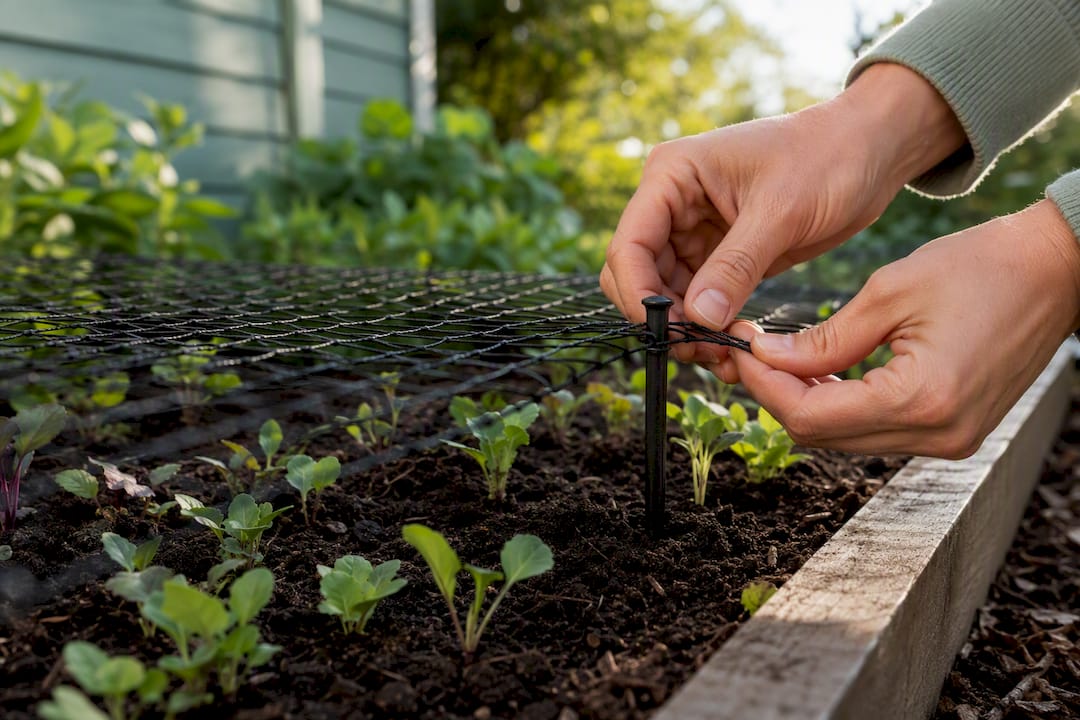
For beds that need faster protection, flat chicken wire pinned directly to the soil works almost as well and lasts longer outdoors. Some gardeners also lay plastic garden edging vertically around bed perimeters, since cats dislike digging near a hard, unstable lip.
Fencing and the jump problem. Cats can clear roughly a vertical leap around 1.8 meters in a single bound, so a standard fence under that height is not a strong barrier for them. Extension guidance recommends a total barrier height of 6.5 to 7 feet, ideally with the top 18 inches tilted inward at a 45-degree angle. That inward lean is what actually defeats the jump. Trim back any branches, trellises, or furniture within leaping distance of the fence line. Cats use these as launch points, and a perfectly good fence means nothing if a woodpile sits three feet away.
Catios worth the investment. A catio, an enclosed outdoor cat patio, makes sense when you have an indoor cat who wants supervised outdoor time without free-roaming access to your beds. Basic builds use welded wire mesh over a wood frame, run 6 to 10 feet long, and attach to a window or door for easy access. Ventilation matters more than owners expect. Solid walls trap heat, so mesh or slatted sides on at least two faces keep airflow moving in summer.
Materials checklist for a basic DIY catio:
- Pressure-treated lumber for the frame
- Galvanized welded wire mesh, half-inch gauge
- Weatherproof screws and hinges
- A door or window access panel
- Roofing material rated for outdoor use
Rough cost bands for barrier work:
- Netting and landscape staples: $15 to $40 per bed
- Chicken wire and edging: $30 to $90 for a mid-size yard
- Fence overhang retrofit (materials only): $100 to $400
- Professionally built catio: $500 to $3,000 depending on size
Pro Tip: Walk your fence line at cat height, literally crouch down, and look for gaps, low branches, or stacked objects a cat could use as stairs. Extension researchers call these “launch points,” and closing them matters more than adding fence height.
Which Plants Are Actually Dangerous to Cats?
True lilies top the danger list. Every part of a lily, Lilium species, is toxic enough that ingestion can trigger acute kidney failure in cats within three days, according to the ASPCA’s plant database. If you suspect a cat has chewed on any lily, treat it as an emergency and call a vet or poison control immediately rather than waiting for symptoms.
Other plants that belong nowhere near a cat friendly garden:
- Tulips and daffodils (bulbs are the most concentrated toxin)
- Azaleas and rhododendrons
- Oleander
- Autumn crocus
- Sago palm
If you already have these planted, you don’t necessarily need to rip everything out overnight. Fence them off, move potted versions out of reach, or relocate them to a side yard the cat doesn’t access.
On the safer side, the ASPCA lists zinnias, echinacea, sunflowers, Boston fern, and spider plant as non-toxic options for cat friendly plants. That said, “non-toxic” only means it won’t poison a cat, not that a cat won’t shred it out of curiosity. Some ASPCA-cleared species still cause mild vomiting if a cat eats a large quantity, so keep an eye on any new addition for the first few weeks.
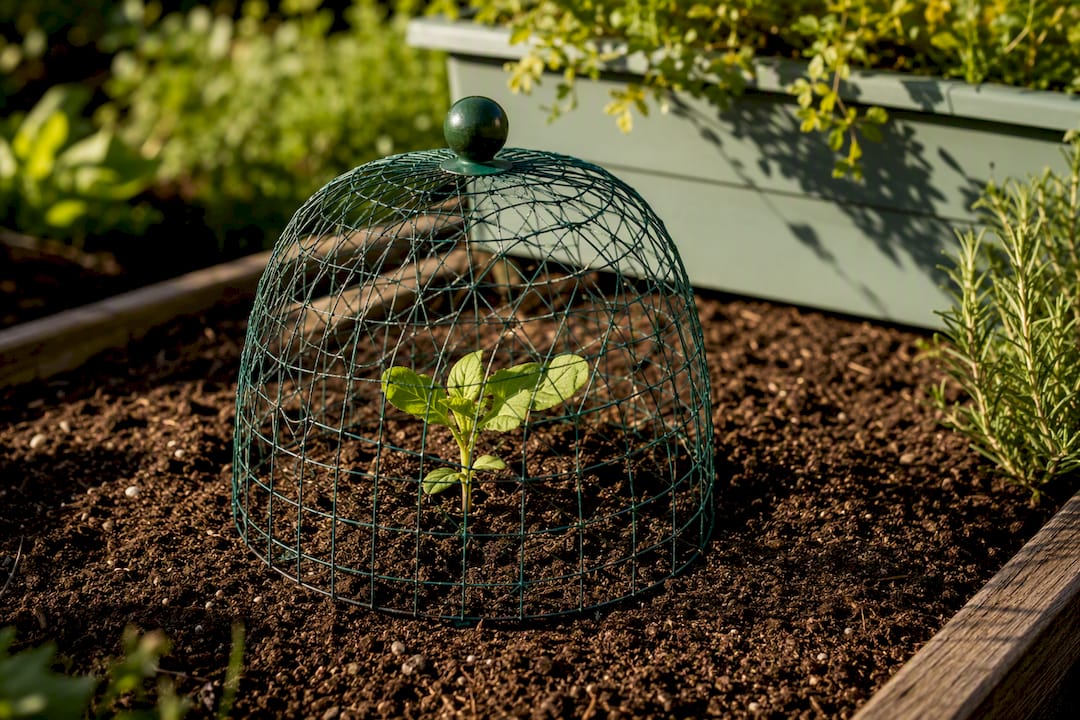
Practical placement beats hoping for the best. Hang delicate or expensive plants in baskets, use elevated plant stands for anything a cat likes to bat at, and reserve ground-level beds for the toughest, least appealing species. A small protective cage or cloche over a prized seedling, similar to a mushroom cage, can save a plant during its most vulnerable early weeks.
Do Motion Sprinklers and Scent Deterrents Really Work?
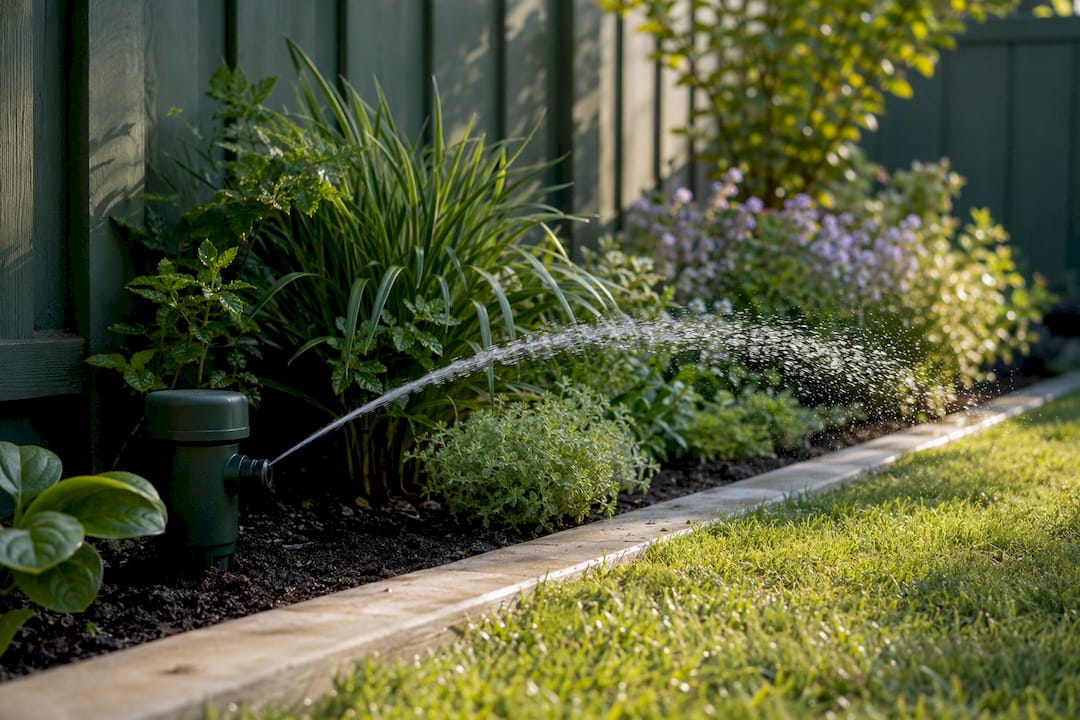
Motion-activated sprinklers are the most consistently effective humane deterrent available. Some devices sense cats up to about 40 feet away and fire a short burst of water that startles the cat without causing any harm, per OSU Extension. Place the sensor at knee height, angled across the bed you’re protecting, and keep it away from windblown branches or a bird feeder that will trigger constant false alarms.
Ultrasonic devices are a mixed bag. Some cats visibly avoid the frequency; others ignore it completely. Treat these as a $20 to $40 experiment rather than a guaranteed fix, and position the unit at the entry point rather than the center of the bed.
Scent-based repellents, citrus peels, coffee grounds, essential oil sprays, get recommended constantly online, and results vary wildly:
- Citrus peels work for a few days at best, then need replacing.
- Coffee grounds are widely repeated as a fix but are unreliable and can be hazardous if a cat ingests a large amount, according to Catster’s review of deterrent effectiveness.
- Essential oil sprays marketed for pets, like an oil-based learning aid spray, should always be checked against feline-specific safety guidance before use, since cats process certain oils very differently than dogs.
Rain washes out most scent deterrents within a day, so if you live somewhere wet, skip straight to mechanical options.
Pro Tip: Test any new deterrent on one bed for a week before buying enough for the whole yard. A method that works brilliantly on your neighbor’s cat might do nothing for yours.
Designing a Garden Cats Actually Want to Use Elsewhere
Redirecting a cat’s attention works better long term than fighting it at every bed. This is the core of cat friendly garden ideas that actually hold up: give the cat something better to do than dig up your dahlias.
- Build vertical territory. A log, a low shelf, or a simple wooden perch gives outdoor and visiting cats somewhere to survey the yard that isn’t your seed bed.
- Offer shelter. A covered spot, even just a board propped against a fence, gives cats shade and a place to retreat that competes with the shelter your flower bed accidentally provides.
- Create a designated digging patch. A sandbox-style area filled with loose sand, placed away from plants, gives cats an approved outlet for a completely natural behavior.
- Plant cat grass or catnip in that same zone. Cats gravitate toward it, which pulls attention away from your ornamentals.
- Remove loose, diggable soil from vulnerable beds. Dense groundcover, mulch pinned down with stones, or tight plant spacing gives a cat nothing to dig into.
This is the piece that most “how to deter cats in garden” advice skips entirely. Deterrents fight the symptom. Enrichment fixes the reason the cat showed up in the first place, and once you have another cat’s designated spot working, the sprinkler in your flower bed barely needs to fire at all.
What Does Garden Cleanup and Budgeting Actually Look Like?
Finding cat waste in a bed calls for quick action. Remove solid waste immediately with a scoop or biodegradable waste bag, then flush the area with water. If urine has soaked into soil where you plan to grow food crops, it’s worth testing pH before replanting, since repeated marking can shift soil chemistry in a small area over time.
Compost and mulch carry their own risks. Cocoa bean mulch is genuinely dangerous and should never go near a yard cats or dogs access, according to VCA Hospitals. Keep compost bins sealed, and never compost cat feces, it can carry parasites that survive typical home composting temperatures.
Budget realistically:
- DIY netting, staples, and edging: $10 to $200
- Motion sprinklers or ultrasonic devices: $50 to $300
- Catios or professional-grade fencing: $500 to $3,000+
Call in a professional if intrusions continue after a month of layered effort, if wildlife (raccoons, opossums) is also using the same gaps, or if your perimeter has too many angles for DIY fencing to seal cleanly.
Walnut Creek Pets: Safety First, Products Second
Walnutcreekpet built its catalog around one filter: does this product genuinely support a pet’s health and safety, not just its owner’s convenience. That same filter applies to garden safety advice. Ten percent of profits go to no-kill shelters, which means every product recommendation here also does double duty supporting cats without homes yet.
Three items from the catalog fit directly into a cat proof garden plan. The Kaytee Rabbit Hi-Corner Litter Pan works well as a designated outdoor toilet area near a catio or patio, giving a cat an approved spot instead of your flower bed. The Kaytee Clean & Cozy bedding lines a sheltered catio corner or indoor safe zone comfortably. And for households running a broader homestead setup, the Oxbow Garden Select mouse and rat food shows the range of the catalog beyond cat-specific gear. Check individual product pages for exact measurements before buying.
Training Cats to Avoid Garden Beds Consistently
Consistency matters more than intensity when you’re trying to shift a cat’s habits. A sprinkler that fires every single time beats an owner who occasionally shoos the cat away, because cats learn from patterns, not scattered punishment.
Positive redirection works better than confrontation. Every time you catch a cat heading for a protected bed, guide it toward the digging patch or perch instead, and reward that choice with a treat or attention. Over a few weeks, most cats build a genuine preference for the approved spot, especially once catnip or cat grass is established there.
Avoid anything that creates fear or pain as a training method. Spray bottles aimed directly at a cat, loud noise devices, or anything that startles violently can create anxiety that shows up as other behavior problems, spraying indoors, aggression, hiding. The goal is redirection, not punishment.
Timing matters too. Cats are creatures of routine, so if a cat visits your beds at dawn or dusk, that’s when your sprinkler or presence needs to be active. A deterrent that only runs midday misses the actual problem window entirely.
Give any new system two to three weeks before judging it. Cats test boundaries repeatedly before a new pattern sticks, and pulling a deterrent early because “it’s not working yet” is the single most common reason DIY setups fail.
How Do Seasons Change Cat Behavior in the Garden?
Spring digging spikes hard. Freshly turned, workable soil in vegetable beds and new plantings looks and feels exactly like an ideal litter spot to a cat, so this is the highest-risk season for new intrusions. Get netting down before you plant, not after.
Summer brings a different pressure: shade and cool soil. Cats seek out damp, shaded beds during hot afternoons, which means watering schedules matter. A bed you water in the early morning stays cool and inviting through midday, exactly when a cat is looking for relief.
Fall reduces pressure somewhat as gardens die back, but leaf litter and mulched beds still offer soft digging surfaces. This is a good window to reinforce barriers before winter, when frozen ground naturally reduces cat interest anyway.
Winter is typically the quietest season for garden intrusion, but it’s also when indoor time increases and enrichment matters most. A cat with no outdoor digging patch and no vertical territory indoors during winter months often redirects that energy toward houseplants instead, so keep the design and enrichment principles running year round, not just during growing season.
An Editorial Take on Humane, Practical Cat Deterrence
Most advice on this topic treats cats like a pest problem, which is exactly backward. The extension research and veterinary guidance both point the same direction: barriers first, safety second, deterrents third, and punishment nowhere on the list. That order gets reversed constantly in casual advice, where scent sprays and spray bottles get top billing because they feel active and immediate.
What’s underrated is enrichment. Giving a cat a digging patch and a perch does more long-term work than any sprinkler, because it removes the motivation instead of just blocking the behavior. A cat with nowhere better to go will keep testing your barriers indefinitely.
What’s overrated is the search for one perfect repellent. There isn’t one. Every reliable source points to combinations, not silver bullets, and readers who keep hunting for a single magic product usually give up on the whole project out of frustration. Start with netting and fencing, add one deterrent, build one enrichment zone, and expect to adjust as you learn what your specific yard and cats respond to.
— Timothy
Shop Safe Zone Essentials for a Cat Friendly Yard
If you’re setting up a designated cat area alongside your garden protection, a few practical products make the transition smoother for everyone. Walnutcreekpet built its catalog around safety-first, single-ingredient standards, so you’re not stuck reading ingredient lists trying to guess what’s actually in a product.
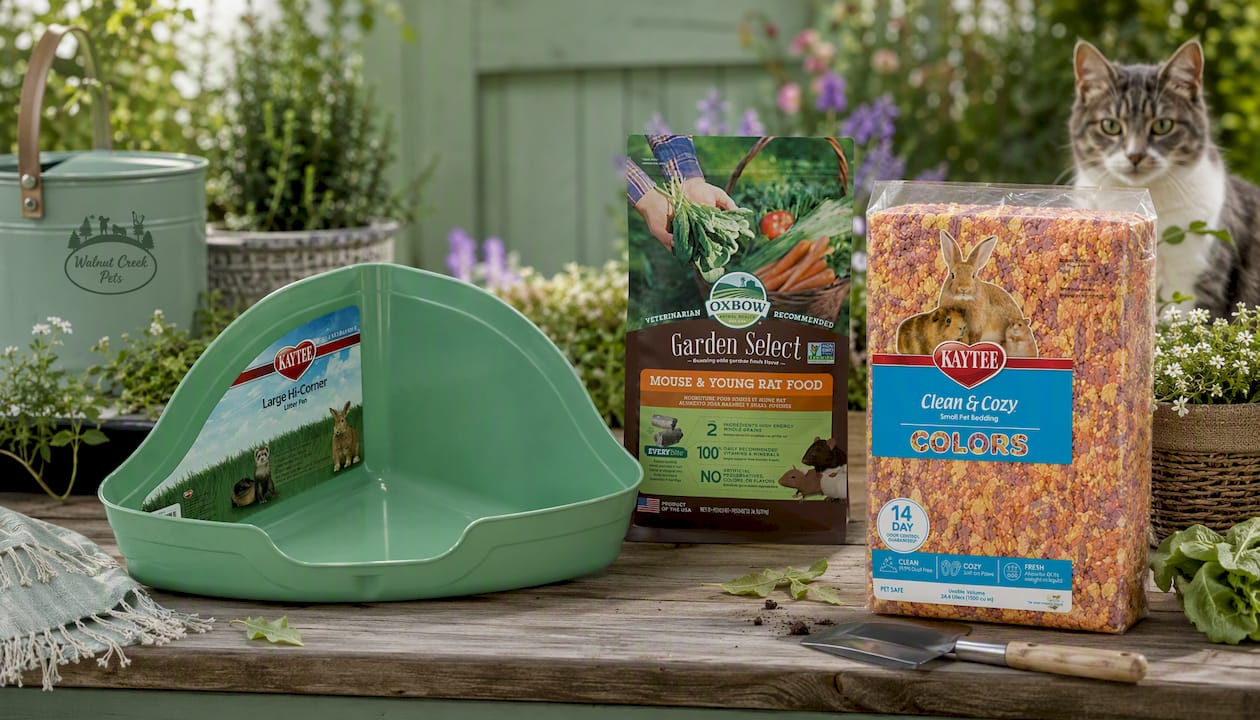
The Kaytee Rabbit Hi-Corner Litter Pan fits neatly into a catio corner or covered patio area, giving your cat an obvious, approved toilet spot away from your beds. Pair it with Kaytee Clean & Cozy bedding for a sheltered resting corner that stays warm through cooler months. And if you’re running a broader homestead setup with small animals alongside your cats, the Oxbow Garden Select food line rounds out the catalog’s small-pet range.
Spring planting season moves fast, and barrier materials tend to sell out early once everyone’s beds go in at once. Check current stock on the Walnut Creek Pets store and get your safe zone set up before digging season hits full swing.
Sources
- Protecting your garden from cats | OSU Extension Service
- ASPCA: Cats and plants
- Creating a cat-safe oasis | VCA Hospitals


