


Avoid Lilies: Cat Safe Houseplants and Vet Backed Emergency Steps
Grow houseplants safely with cats. See ASPCA non toxic picks, why true lilies can be fatal even in tiny amounts, and vet backed emergency steps.

Yes, you can absolutely fill your home with houseplants and still keep your cat safe. It just takes picking the right species and skipping the wrong ones entirely. The one rule that matters more than any other: never bring true lilies (Lilium or Hemerocallis) into a home with a cat. Beyond that, safer bets include African violets, spider plants, Boston ferns, orchids, many palms, and several succulents.
TL;DR:
- True lilies pose an immediate risk of fatal kidney failure in cats, even after tiny exposure such as grooming or vase water contact.
- Many common houseplants, like Boston ferns and spider plants, are confirmed non-toxic, but placement and prevention measures are still necessary.
- Using hanging planters, heavy pots, and cat deterrent sprays significantly reduces the risk of cats damaging or ingesting potentially dangerous plants.
- Recognizing and avoiding high-risk plants such as sago palm, oleander, and autumn crocus is crucial for a safe indoor environment.
- Always verify each plant against the ASPCA list before purchase to prevent accidental poisoning and ensure a pet-safe home.
Table of Contents
- What Makes a Houseplant Safe for Cats?
- Houseplants Toxic to Cats: What to Keep Out of Your Home
- How to Pet-Proof Your Houseplants
- What to Do If Your Cat Eats a Toxic Plant
- Why This Guide Reflects Real Pet-Care Standards
- The One Thing Most Plant Guides Get Backwards
- Shop Smarter for a Pet-Safe Home
- Sources
- FAQ
What Makes a Houseplant Safe for Cats?
A plant earns “cat safe” status when the ASPCA’s toxic and non-toxic plant database confirms it contains no compounds known to cause organ damage, severe poisoning, or death in cats. That’s the standard we use for every plant on this list. But here’s what a lot of plant guides gloss over: non-toxic doesn’t mean edible in any quantity. Veterinary researchers at the University of Wisconsin School of Veterinary Medicine point out that even a plant with a clean toxicity record can cause vomiting or a mechanical blockage if your cat treats it like a salad bar. Non-toxic is your floor, not your finish line. Good placement and a watchful eye still matter, even for the safest species.
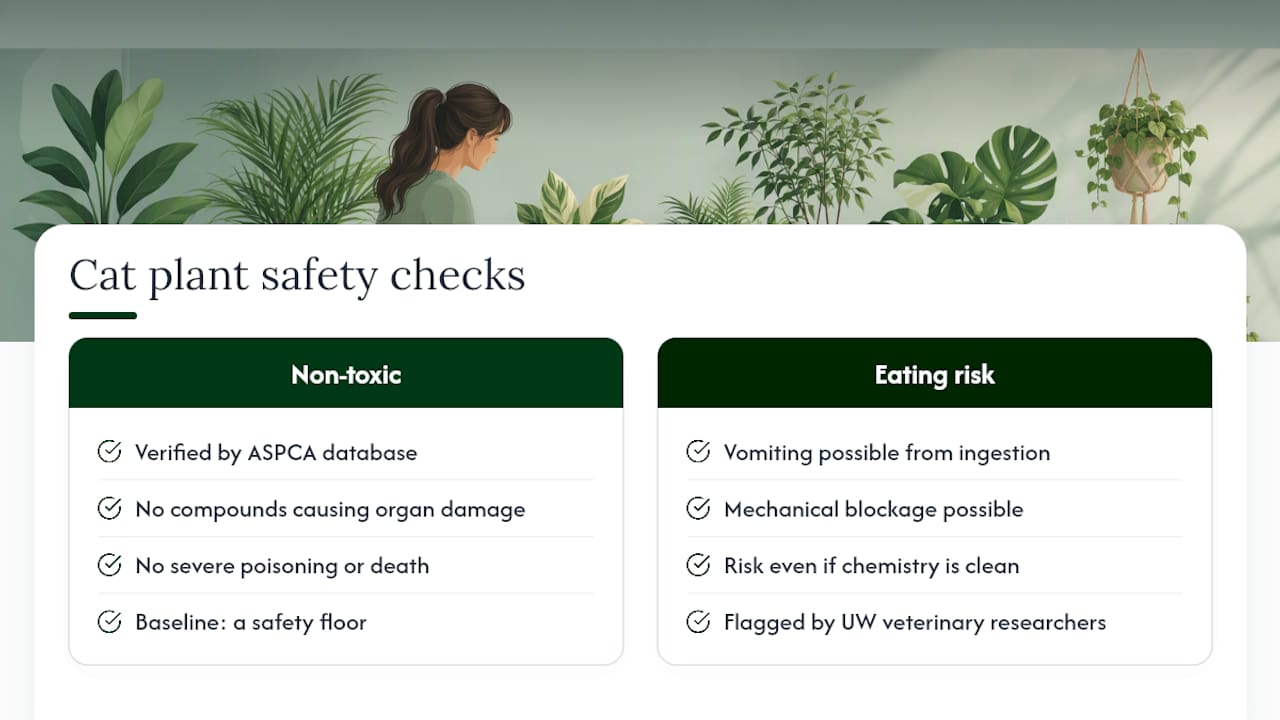
Below, we’ve organized cat-friendly houseplants by the light they need, since that’s usually what determines where you’ll actually put them.
Low-Light Picks for Dim Corners and Bathrooms
These plants tolerate the kind of indirect, low light you find in hallways, bathrooms, and north-facing rooms. They’re also good picks if you’re short on windowsills your cat can’t reach.
- Boston fern (Nephrolepis exaltata) — Confirmed non-toxic and genuinely lush. It wants humidity, which makes it a natural bathroom plant. Keep it consistently moist; it sulks fast when it dries out. Some cats treat the fronds like feather toys, so expect a little shredding even though there’s no poisoning risk.
- Parlor palm (Chamaedorea elegans) — One of the most forgiving palms for low light and a common apartment pick. It grows slowly, which is handy if you want a plant that doesn’t outpace your shelf space. No known toxic compounds, but the fronds can feel sharp against skin, so place it where a curious paw won’t get scratched.
- Bird’s nest fern (Asplenium nidus) — A textural, glossy alternative to Boston fern that handles even dimmer light. It prefers to stay slightly moist and hates direct sun scorching its leaves.
- Cast iron plant (Aspidistra elatior) — Nearly indestructible and a great choice if you’ve killed everything else. It tolerates neglect, low light, and dry spells better than almost any other houseplant on this list.
- Peperomia (various species, including Peperomia obtusifolia) — Compact, easy, and safe. Good for shelves and bathroom counters where a cat might still be able to reach.
Medium-Light Picks for Living Rooms and Offices
Most homes have plenty of medium, indirect light. These species are the workhorses of a cat-friendly indoor garden.
- Spider plant (Chlorophytum comosum) — Probably the single most recommended cat-safe houseplant, and for good reason. It’s nearly impossible to kill, propagates itself with little “babies” you can pot separately, and cats often seem drawn to nibbling the grassy leaves without any ill effect. Hanging baskets keep the trailing foliage out of easy reach if you’d rather not share.
- African violet (Saintpaulia) — A compact flowering plant that’s genuinely non-toxic and blooms indoors for months at a time. It wants bright, indirect light and dislikes water on its fuzzy leaves, so water from below.
- Calathea (various species, including Calathea orbifolia) — Known for dramatic patterned leaves that fold up at night. Completely safe for cats, but it’s fussy about humidity and will brown at the edges in dry air.
- Areca palm (Dypsis lutescens) — A bigger statement plant for a living room corner, and one of the safest palms you can buy. It also does real work filtering indoor air, which is a nice bonus in a house full of pets.
- Ponytail palm (Beaucarnea recurvata) — Not a true palm, and completely non-toxic. It stores water in its trunk, so it’s forgiving if you forget to water it for a couple of weeks.
- Prayer plant (Maranta leuconeura) — A colorful, low-drama choice that’s safe for cats and thrives in the same medium light most living rooms already provide.
- Friendship plant (Pilea involucrata) — Small, safe, and easy to propagate if you want to share cuttings with other pet-owning friends.
- Hens and chicks (Sempervivum tectorum) — A rare succulent that made the ASPCA’s non-toxic list. It needs bright light and minimal watering, and its rosette shape makes it a fun, low-maintenance addition to a sunny sill.
- Haworthia (various species) — A small, hardy succulent that’s safe and nearly foolproof, good for beginners who still want the succulent look without the toxicity risk of aloe or jade.
Bright-Light Picks for Sunny Windows
If you’ve got south-facing windows flooding a room with light, these are the cat-safe options worth the real estate.
- Orchids (Phalaenopsis and most other common varieties) — Elegant, long-blooming, and non-toxic to cats. They need bright, indirect light and a specific watering rhythm (soak and drain, don’t keep them wet), but they reward the effort with blooms that last for weeks.
- Money tree (Pachira aquatica) — A braided-trunk statement plant that’s safe for cats and tolerates a range of light levels, though it does best with strong indirect sun.
- Bamboo palm (Chamaedorea seifrizii) — Another safe palm, slightly bigger than the parlor palm, good for filling out a bright corner without any toxicity concerns.
- Christmas cactus (Schlumbergera) — Despite the name, it’s not a true cactus and carries no toxicity risk for cats. It blooms with minimal fuss around the holidays and tolerates the kind of bright, indirect light most homes get near a window.
- Burro’s tail (Sedum morganii) — A trailing succulent with plump, safe leaves that looks great in a hanging planter. The leaves detach easily if handled roughly, so it’s better suited to a spot your cat can look at but not bat at.
Pro Tip: Hanging planters do double duty for bright-light plants. They keep trailing succulents like burro’s tail and string-of-pearls-style plants out of paw range while still catching the sun near a window.
A few of these plants also happen to be genuinely fun for cats rather than just tolerated. Spider plant and cat grass (more on that below) are the closest things to a “cat toy that also looks nice in a pot.” If you want a plant your cat actually engages with instead of one it simply ignores, start there.
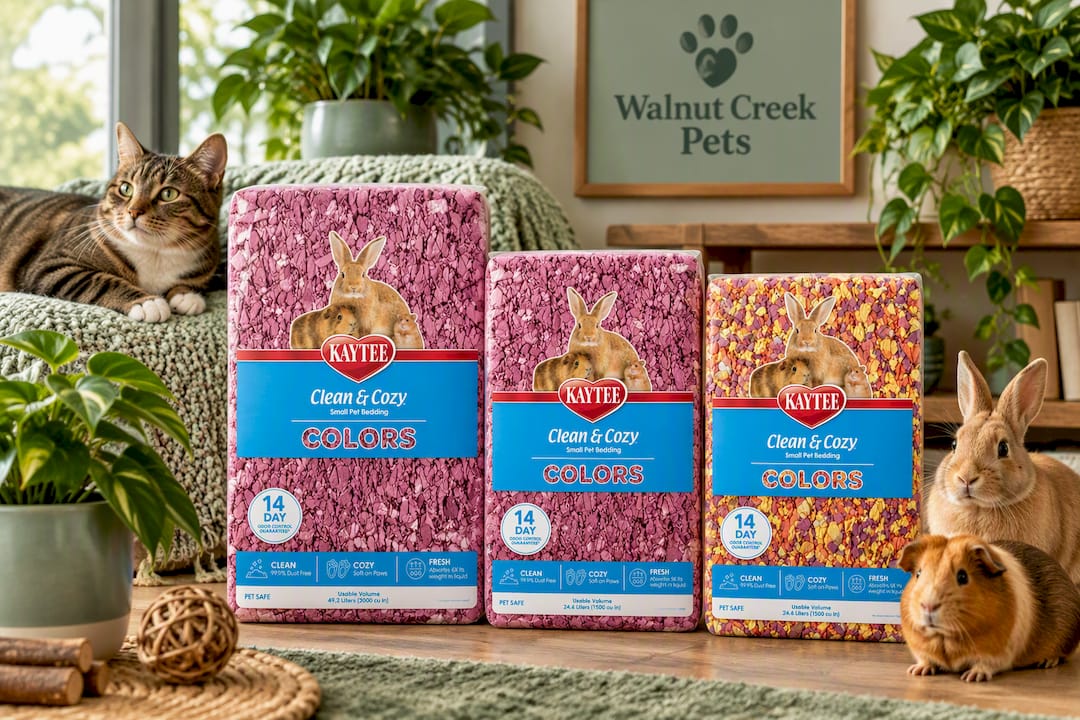
For plant care support that doubles as a general pet-comfort upgrade, Walnutcreekpet carries a few products worth knowing about, even though they’re bedding items rather than plant tools: the Kaytee Clean & Cozy Colors Small Pet Bedding Plum 49.2L, the Kaytee Clean & Cozy Colors Small Pet Bedding Plum 24.6L, and the Kaytee Clean & Cozy Colors Small Pet Bedding Sunset 24.6L. They’re built for small-animal habitats, not plant beds, but if your home has a mixed household of cats and small critters, keeping their bedding clean and low-dust is one more piece of the pet-safe home puzzle.
Houseplants Toxic to Cats: What to Keep Out of Your Home
Lilies deserve their own warning, separate from every other toxic plant on this list, because the danger isn’t proportional to the dose. With most toxic plants, a small nibble causes mild GI upset and a bigger dose causes bigger problems. Lilies don’t follow that curve.
The number that should stop you at the flower shop: according to the FDA, even a tiny amount of true lily exposure, including pollen brushed off on fur during grooming or a sip of vase water, can trigger fatal acute kidney failure in a cat. There is no known safe threshold. Symptoms often don’t show up for hours, and by the time vomiting, lethargy, and loss of appetite appear, kidney damage may already be underway. The Pet Poison Helpline treats any lily ingestion as an emergency requiring immediate veterinary contact, not a wait-and-see situation.
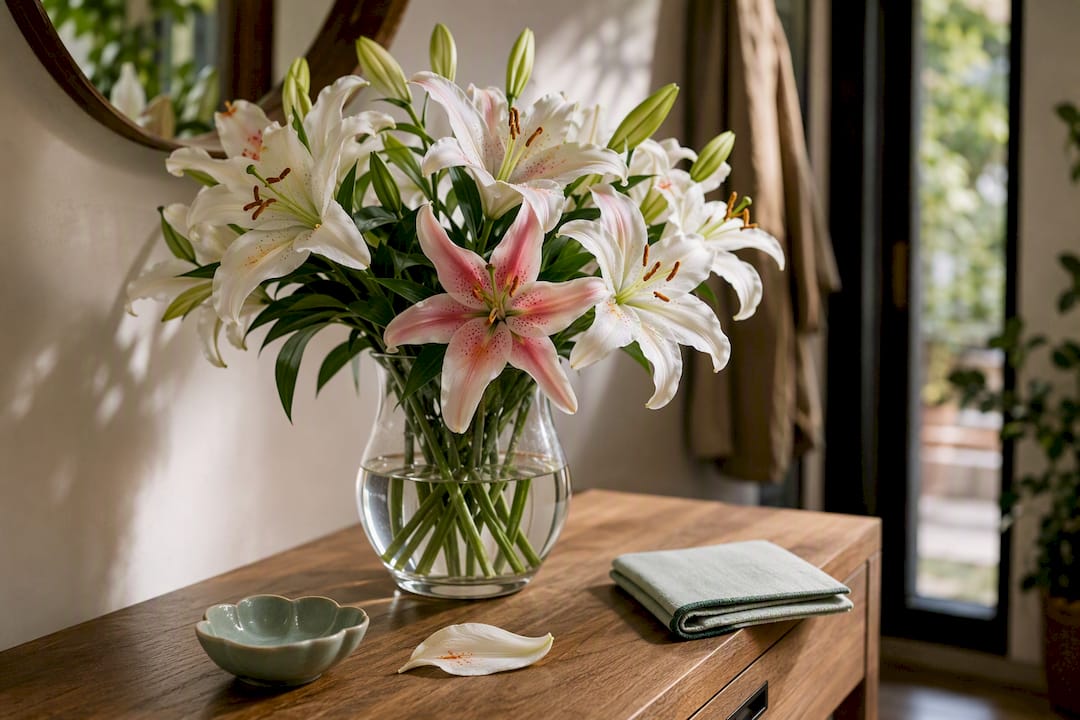
The tricky part is that “lily” gets used loosely at flower shops. Daylilies (Hemerocallis) carry the same fatal kidney risk as true lilies (Lilium species, including Easter lilies, tiger lilies, and Asiatic lilies). Peace lilies and calla lilies are a different story: they cause oral irritation from oxalate crystals, which is unpleasant but not life-threatening. That distinction gets lost in casual conversation, so when in doubt, treat anything with “lily” in the name as off-limits until you’ve confirmed the genus.
Other high-risk plants worth memorizing:
- Sago palm (Cycas revoluta) — Every part is toxic, but the seeds are the most concentrated. It causes liver failure and is one of the most dangerous ornamental plants sold in garden centers.
- Oleander (Nerium oleander) — Contains cardiac glycosides that disrupt heart rhythm. Common in outdoor landscaping in warmer climates, which makes it a risk for cats with outdoor access.
- Autumn crocus (Colchicum autumnale) — Causes severe GI bleeding and organ damage; often confused with the far less dangerous spring crocus.
- Philodendron and pothos — Contain insoluble oxalate crystals that cause intense mouth and throat irritation, drooling, and swelling. Painful, but rarely fatal on their own.
- Dieffenbachia (dumb cane) — Same oxalate mechanism as philodendron; the irritation is usually severe enough that cats stop eating it after the first bite.
Two quick habits protect you here. First, before buying any bouquet, scan it for lily-shaped flowers, six petals fanning out from a trumpet-shaped base, long protruding stamens, before it ever comes near your door. Second, when you shop at a garden center, check the plant’s tag against the ASPCA plant list on your phone before it goes in your cart, not after it’s already sitting on your coffee table.
How to Pet-Proof Your Houseplants
Choosing safe species solves most of the risk, but placement solves the rest. A cat determined to dig in a pot or chew a leaf will find a way, unless you make it genuinely inconvenient.
- Go vertical. Hanging planters and high shelves keep plants out of jumping range for most cats, though a determined climber can still surprise you. Pair height with distance from furniture a cat could use as a launch pad.
- Weight the pot and top-dress the soil. Extension horticulture research recommends heavier pots and a layer of decorative pebbles or mulch over the soil surface. This does double duty: it stops tipping and makes digging a lot less rewarding.
- Close the door on problem rooms. If a room has your riskiest plants, or your most persistent digger, a closed door beats any deterrent spray.
- Try a safe taste deterrent. Bitter apple sprays are widely used to discourage chewing without harming the plant or the cat, though results vary by individual animal.
- Redirect with cat grass or catnip. Giving your cat its own patch of wheat, oat, or barley grass, or a catnip plant, gives it something better than your fern to chew on.
- Consider faux plants strategically. Silk or high-quality plastic replicas remove the toxicity question entirely, but skip cheap plastic that shreds into small, swallowable pieces. If a fake plant has berries, buds, or small clip-on parts, treat it like a choking hazard.
- Introduce new plants gradually. Place a new plant somewhere semi-supervised for the first week or two and watch how your cat reacts. Persistent nibbling, not curiosity sniffing, but repeated chewing, is your cue to relocate the plant permanently rather than hope the behavior fades.
Pro Tip: Motion-activated air canisters or double-sided tape strips around a pot’s base work well for cats that are food-motivated by soil digging rather than leaf chewing. The startle factor tends to break the habit faster than sprays alone.
If you’d rather sidestep the whole plant-versus-paws dynamic in certain rooms, Litter Room offers cat furniture and enclosure options that give your cat its own vertical territory, which takes some of the pressure off your plant shelves entirely.
What to Do If Your Cat Eats a Toxic Plant
Speed matters more than almost anything else here, especially with lilies. Don’t wait to see if symptoms appear before acting.
Do this immediately:
- Remove your cat from the plant and take the plant out of reach.
- Note the exact time of exposure as closely as you can estimate it.
- Photograph the plant (leaves, flowers, and any tag) so you or a vet can identify it quickly.
- Collect a small sample of the plant material if it’s safe to grab a leaf or petal.
- Do not induce vomiting unless a vet or poison control specifically instructs you to; some plant compounds cause more damage coming back up.
Have this information ready when you call:
Your cat’s weight, age, and any existing medical conditions, plus a clear timeline of when the exposure happened and what symptoms have appeared since. The plant photo and sample speed up identification enormously; the University of Illinois Veterinary Medicine poisonous plant program notes that a photo alone often lets a vet narrow down the toxin category before your cat even arrives at the clinic.
Who to call:
- ASPCA Animal Poison Control Center: (888) 426-4435. Staffed 24/7 by veterinary toxicologists; a consultation fee typically applies.
- Pet Poison Helpline: (855) 764-7661. Also 24/7, also fee-based, and specifically experienced with lily cases.
- Your local emergency vet. Call ahead so they know you’re coming and what plant is involved.
Red flags that mean go now, don’t wait: vomiting, drooling, lethargy, tremors, loss of appetite, or collapse. With true lilies specifically, symptoms of kidney failure can escalate within 24 to 72 hours of exposure, and by the time your cat looks obviously sick, treatment options narrow fast. If there’s any chance a lily was involved, call before symptoms even show up.
Why This Guide Reflects Real Pet-Care Standards
Walnutcreekpet exists because we believe pet safety shouldn’t be guesswork, and that shows in how we built this guide. We pulled every plant recommendation from the ASPCA’s toxic and non-toxic plant database rather than secondhand blog lists, and we cross-checked the emergency guidance against Pet Poison Helpline protocols.
That same standard runs through everything we sell. If your household includes birds alongside your cat, our parrot biotics blend reflects the same single-ingredient philosophy we apply across the catalog. And if a curious cat ever slips out during a plant-related scramble, our QR pet identification kit is worth having on hand before you need it, not after.
The One Thing Most Plant Guides Get Backwards
Most cat-safe plant guides lead with the pretty list and bury the lily warning three paragraphs down, treating it as one more bullet point among many. That ordering is backwards. The lily risk isn’t a footnote; it’s the single fact that should shape every purchasing decision you make at a nursery or flower shop, because it’s the one plant category where “just a little exposure” can still mean a trip to the emergency vet.
The second thing conventional advice underplays: pet-proofing tactics matter almost as much as species selection. A non-toxic plant that gets shredded, dug up, or knocked over daily isn’t a solved problem, it’s a maintenance headache that eventually gets the plant thrown out anyway. Placement, weighted pots, and a redirect option like cat grass do as much real-world work as the plant list itself.
If you take one thing from this guide, let it be this: check every plant against the ASPCA list before it enters your cart, not after it’s already on your windowsill. Prevention here is genuinely simpler than treatment.
— Timothy
Shop Smarter for a Pet-Safe Home
Walnutcreekpet built its catalog around the same principle behind this guide: verify first, then bring it home. We’re not a garden center, but we are the place pet owners turn to when they want single-ingredient food, safe supplements, and home-comfort products vetted for actual pet safety rather than marketing claims. If you’re setting up a mixed household with cats and small animals, our Kaytee Clean & Cozy bedding line gives small pets a comfortable, low-dust habitat that pairs naturally with a cat-safe plant setup elsewhere in the room. Browse the Kaytee bedding in the Sunset colorway or the smaller 24.6L Plum size, and check out our full All Cat supply range to round out a home that’s genuinely built around what your pets need.
Sources
Bookmark these before you need them, not during an emergency. The ASPCA toxic and non-toxic plant list is the fastest way to check any plant by name. The FDA’s lily advisory explains the specific renal-failure mechanism in plain language. Pet Poison Helpline’s lily page and the University of Illinois poisonous plant program round out identification and emergency protocol.
For calls: ASPCA Animal Poison Control at (888) 426-4435 for general toxicology support, and Pet Poison Helpline at (855) 764-7661, especially useful for time-sensitive lily cases.
- Lovely lilies and curious cats: A dangerous combination | FDA
- Toxic and Non-Toxic Plant List — Cats | ASPCA
- Pet-safe plants: What to know and what to grow | UW School of Veterinary Medicine
- Lilies Is Toxic To Cats | Pet Poison Helpline
- Growing indoor plants with pets (extension publication)
FAQ
What Plants Can I Get if I Have a Cat?
Spider plant, African violet, Boston fern, most orchids, and palms like the areca or parlor palm are all confirmed non-toxic choices according to the ASPCA plant database. Match the plant to your available light, and skip anything from the lily family entirely.
What Smell Calms Cats?
Catnip and silvervine are the most reliable scents for triggering a relaxed or playful response in most cats, and growing catnip indoors doubles as a safe redirect plant. Lavender and chamomile are sometimes cited as calming, but they should be used cautiously and never as a substitute for products designed specifically for cats.
What Are Some Cat-Friendly Plants I Can Put in My Bathroom?
Boston fern and bird’s nest fern both thrive in the humidity a bathroom naturally provides, and both are non-toxic to cats. Peperomia also works well on a bathroom shelf if you want something more compact.
Which Houseplants Are Not Good for Cats?
True lilies (Lilium and Hemerocallis species) are the most dangerous, capable of causing fatal kidney failure from even minor exposure, according to the FDA. Sago palm, oleander, autumn crocus, philodendron, pothos, and dieffenbachia are also unsafe and should be kept out of any home with a cat.


