


ASPCA Verified Plants for Dog Owners, Petscaping and Emergency Steps
Find ASPCA verified, pollinator friendly plants, petscaping layout tips, and clear emergency steps if a dog eats a plant. Call ASPCA Poison Control at...

Stick with ASPCA-verified favorites like sunflowers, zinnias, basil, rosemary, roses, and Boston fern, and your garden can stay lush without putting your dog at risk. The single biggest rule: check the scientific name before you buy, and steer clear of sago palm, oleander, toxic bulbs, and cocoa mulch, all of which send more dogs to the vet than people expect. If your pup ever eats something questionable, photograph the plant and call ASPCA Animal Poison Control right away.
TL;DR:
- Most safe plants like sunflowers, zinnias, and herbs thrive in full sun or shade and can tolerate light foot traffic without damage.
- Always verify the scientific name on plant tags, as common names like “lily” can refer to both harmless and toxic species.
- Keep high-risk plants such as sago palm, oleander, and bulbs like tulips and daffodils behind a secure fence to prevent accidental ingestion.
- Use groundcover options like hens-and-chicks and ornamental grasses that withstand trampling and reduce the risk of poisoning from bulbs or toxic plants.
- Store mulch, compost, and fertilizers securely, and supervise your dog near new or recently planted beds to prevent accidental ingestion of harmful substances.
Table of Contents
- Dog-Friendly Garden Plants for Every Corner of the Yard
- Petscaping: Design Your Garden Around Your Dog’s Habits
- Plants and Materials That Belong Behind a Fence
- Growing Herbs and Vegetables Without the Guesswork
- Verify Before You Plant, Act Fast If Something Goes Wrong
- A Note From Timothy on Gardening With Dogs
- Stock Your Yard for Safe, Supervised Garden Time
- Sources
- FAQ
Dog-Friendly Garden Plants for Every Corner of the Yard
You don’t have to choose between a pretty garden and a safe one. The plants below are verified as non-toxic to dogs by the ASPCA’s plant database, and each one earns its place for a reason beyond just being “safe.” Some feed pollinators, some shrug off a curious nose, and some tolerate the occasional paw print without sulking.
Always double-check the botanical name on the plant tag before you plant. Nursery staff sometimes label similar-looking plants under the same common name, and cultivars can vary. “Lily” alone covers dozens of species, some perfectly fine and others seriously dangerous, so the genus and species on the tag matter more than the pretty picture on the pot.
Sunny annuals and perennials:
- Sunflowers (Helianthus) – tough, tall, and a magnet for bees and finches.
- Zinnias (Zinnia spp.) – bloom all summer and hold up to light foot traffic.
- Marigolds (Tagetes) – natural pest deterrent with a strong scent dogs usually avoid chewing.
- Snapdragons (Antirrhinum) – cool-season color that reseeds easily.
- Coral bells (Heuchera) – shade-tolerant foliage that survives being brushed past.
- Nasturtiums (Tropaeolum) – edible flowers that add peppery color to salads and beds alike.
- Asters (Symphyotrichum spp.) – late-season pollinator support with sturdy stems.
- Coreopsis (Coreopsis spp.) – drought-tough and low-maintenance for busy dog runs.
- Bee balm (Monarda didyma) – draws hummingbirds and tolerates poor soil.
Herbs worth planting near the patio:
- Rosemary (Salvia rosmarinus) – woody, durable, and useful in the kitchen.
- Basil (Ocimum basilicum) – fast-growing and easy to replace if nibbled.
- Sage (Salvia spp.) – drought-tolerant with a scent most dogs leave alone.
Shade, container, and groundcover options:
- Boston fern (Nephrolepis exaltata) – classic porch plant, non-toxic if a frond gets sampled.
- Spider plant (Chlorophytum comosum) – nearly indestructible and easy to propagate.
- Hens-and-chicks (Sempervivum) – low groundcover that handles light trampling.
- Ornamental grasses – add movement and texture without the risk of thorns.
Shrubs and flowering standouts:
- Roses (Rosa spp.) – yes, roses make the safe list, though thorns still call for placement away from play zones.
- Camellia (Camellia spp.) – glossy, shade-loving, and a good privacy screen.
The ASPCA’s plant list is a helpful starting reference, not a complete catalog, so treat it as your first stop rather than your last.
Petscaping: Design Your Garden Around Your Dog’s Habits
Choosing safe species solves half the problem. The other half is layout, and that’s where Penn State Extension’s petscaping guidance earns its reputation. A well-planned garden anticipates where your dog actually walks, not where you wish they walked.
- Map a dog route first. Watch your dog’s natural path along fence lines or toward favorite sniffing spots, then plant around it instead of forcing them to detour through your beds.
- Raise the beds. Raised beds and slight set-backs from walkways cut down on trampling and give root systems breathing room.
- Skip the thorns near high-traffic edges — for more on outdoor pet safety, see our tips on flea and tick prevention. Choose thornless rose cultivars or soften border plantings with low, sturdy groundcovers where dogs brush past daily.
- Rethink your mulch. Cocoa mulch smells appealing to dogs but carries real risk, so cedar or dyed wood chips are the safer call along beds and paths.
- Lock up the compost and fertilizer. Secure bins and store bags where dogs can’t nose their way in, since these ground-layer materials cause more emergency calls than most flowering plants.
- Supervise anything new. Watch your dog around freshly planted beds for the first week or two, and give any chemical treatment its labeled re-entry interval before letting your dog back on the lawn.
Pro Tip: Give your dog a designated “sniff zone,” like a mulched corner with pet-safe plants, so they have somewhere to explore without needing to wander through your prized flower bed.
Plants and Materials That Belong Behind a Fence
Some plants are dangerous enough that “keep an eye on it” isn’t good enough advice. Sago palm, oleander, azalea and rhododendron, foxglove, and autumn crocus all rank among the highest-risk landscape plants ASPCA tracks, and bulbs like daffodil, tulip, and hyacinth concentrate their toxins right where a digging dog is most likely to find them.
- Sago palm – every part is toxic; ingestion can cause liver failure.
- Oleander – affects the heart even in small amounts.
- Azalea and rhododendron – common in older landscaping and easy to overlook.
- Foxglove and autumn crocus – garden favorites with serious cardiac or multi-organ effects.
- Daffodil, tulip, and hyacinth bulbs – the bulb itself is far more concentrated than the leaves or flowers.
Even common landscape shrubs like boxwood carry documented toxicity risk, which is exactly why matching the scientific name on the tag to a verified list matters more than trusting a familiar-looking hedge.
Growing Herbs and Vegetables Without the Guesswork
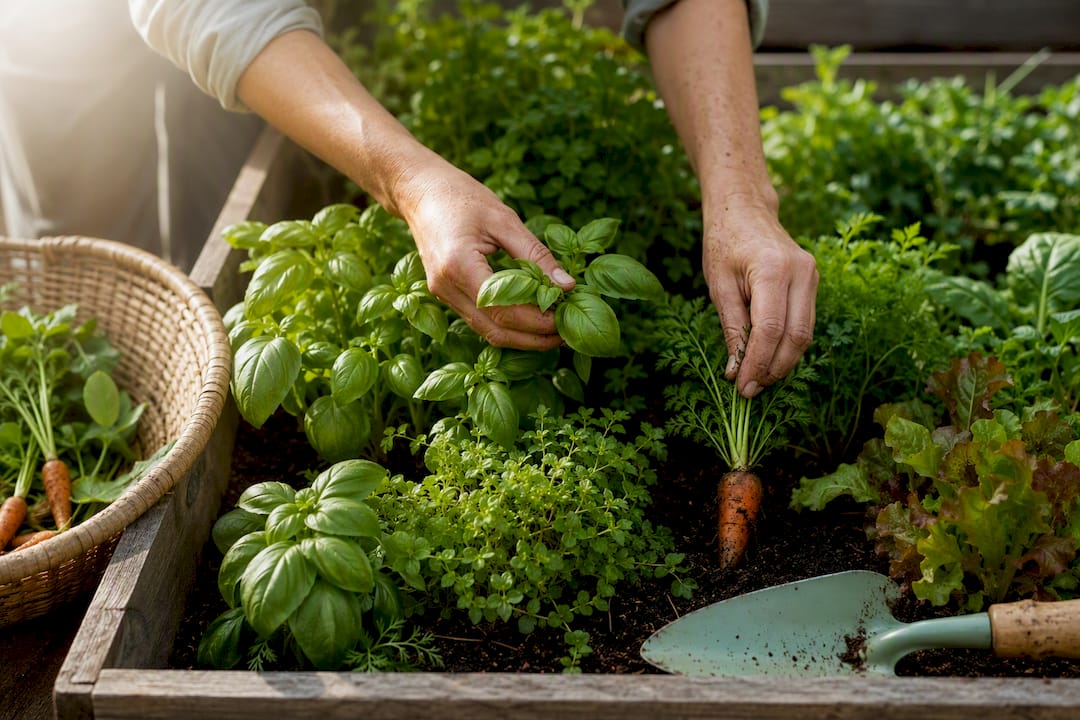
An edible bed doesn’t have to sit off-limits. Basil, rosemary, thyme, carrots, and plain cooked pumpkin are all considered safe additions for dogs, and many double as training treats straight off the vine.
The exclusion list matters just as much: skip onions, garlic, chives, grapes, raisins, and large quantities of tomato leaves, all common vegetable-bed neighbors that don’t belong anywhere near a dog’s reach.
- Use raised beds or containers to keep root vegetables and alliums out of easy digging range.
- Cover seedlings with wire cloches until they’re established and less tempting to paw at.
- Supervise harvest time, since a dropped tomato or bean pod is often what starts the trouble.
- Keep compost bins sealed. Moldy scraps and onion peels tossed in the pile are a bigger hazard than the vegetables growing nearby, echoing Penn State Extension’s warning that ground-layer waste often outranks the plants themselves as a risk.
Verify Before You Plant, Act Fast If Something Goes Wrong
Before anything goes in the ground, photograph the nursery tag and confirm the genus and species against the ASPCA database. If you can’t find a match, a local extension office can identify it from your photo. Check your USDA hardiness zone too, since a plant that struggles in your climate is more likely to get chewed out of stress or neglect.
- Confirm the scientific name, not just the common one.
- Match the plant to your hardiness zone before buying.
- Store mulch, compost, and chemicals away from paws.
- If ingestion happens, call ASPCA Animal Poison Control at 888-426-4435 or your vet, bring a plant sample or photo, and note the time and amount eaten.
Cocoa mulch alone has caused vomiting in roughly half of the dogs reported in poisoning cases, a reminder that ground cover deserves the same scrutiny as the plants themselves.
A Note From Timothy on Gardening With Dogs
Safety in the garden isn’t about giving up color or variety. It’s about knowing which plants earn a spot and which ones don’t belong within reach of a curious nose. At Walnutcreekpet, that same philosophy runs through everything we stock and every care guide we publish, along with the 10% of profits we send to no-kill shelters. Send us your plant-ID questions. We’re happy to help, especially if you just adopted your first dog.
— Timothy
Stock Your Yard for Safe, Supervised Garden Time
Once your beds are planted and your dog routes are mapped, the next step is making sure garden time doubles as training time. Shelves are built around single-ingredient, natural products to help pet owners know what’s in the bag, which matters just as much outdoors as it does at the food bowl.
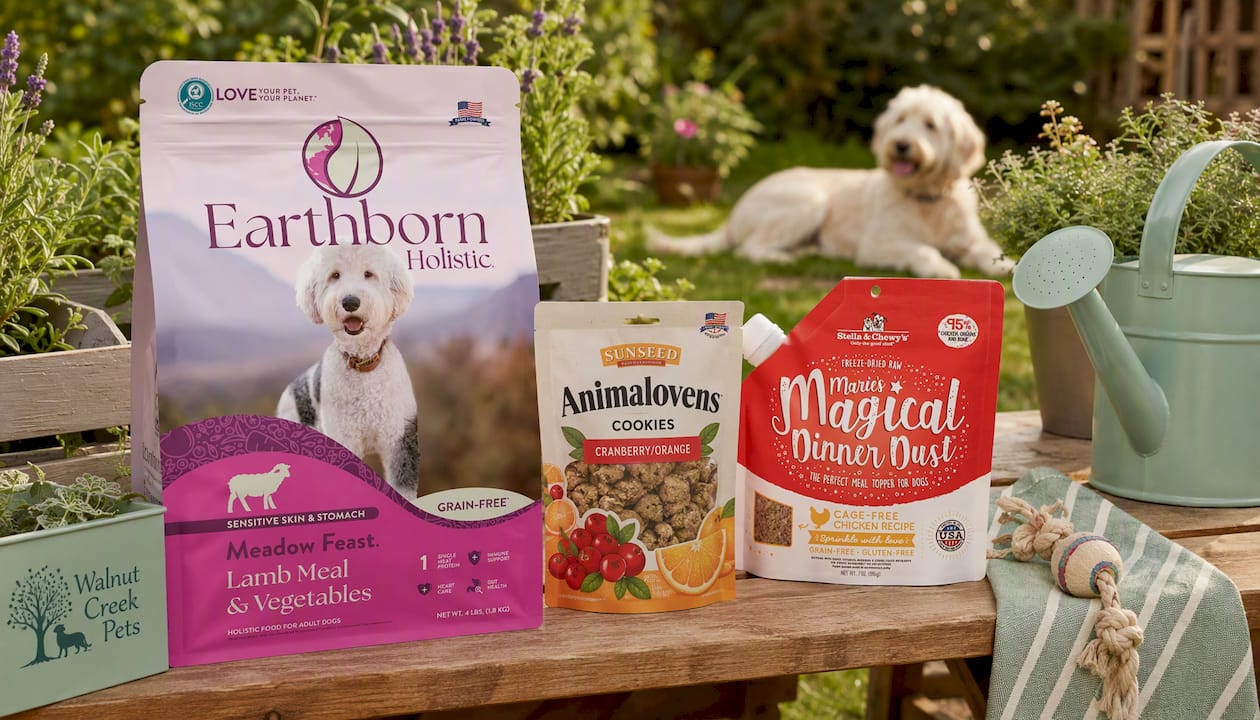
For daily meals that support the same overall health you’re protecting with careful plant choices, Earthborn Grain Free Meadow Feast Dry Dog Food is a solid grain-free option. For garden supervision sessions where you want your dog focused on you instead of the flower bed, small rewards work wonders. Try the Sunseed Animalovens cranberry and orange cookies for training bites, or sprinkle Stella & Chewy’s freeze-dried chicken topper over a bowl as a reward after a well-behaved walk through the beds. Browse the full lineup and place your first order today.
Sources
For ongoing verification, keep these on hand: the ASPCA’s dog plant list, Penn State Extension’s petscaping guide, Poison Control’s mulch guidance, the AKC’s garden tips, and the USDA Plant Hardiness Zone Map.
- Toxic and Non-Toxic Plant List — Dogs | ASPCA
- Petscaping: Creating a Pet-Friendly Garden - Penn State Extension
- How safe are boxwood plants? | Poison Control
FAQ
What garden plants are best with dogs?
Sunflowers, zinnias, marigolds, snapdragons, roses, and herbs like basil and rosemary all rank among the ASPCA’s verified non-toxic plants. Always confirm the scientific name on the tag before buying, since common names can cover both safe and toxic species.
What landscape shrubs and bushes are safe for dogs?
Camellia and thornless rose cultivars are both good choices for dog-friendly shrubs, offering color and privacy without the risk profile of sago palm or oleander. Avoid azalea and rhododendron, which are common in older landscaping but rank among the highest-risk plants for dogs.
What vegetables are safe to grow with dogs?
Carrots and plain pumpkin are generally safe, along with herbs like basil and thyme grown nearby. Skip onions, garlic, and grapes entirely, and keep compost bins sealed since spoiled scraps pose more risk than the growing plants themselves.
How do I make a garden smell nice while keeping it dog-friendly?
Rosemary, sage, and marigolds add fragrance without the toxicity risk of many ornamental flowers. Skip cocoa mulch even though its chocolate scent is appealing. It contains theobromine and has caused vomiting in exposed dogs, so cedar or dyed wood chips are the safer, still-fragrant alternative.
What should I do if my dog eats an unknown plant?
Photograph the plant and note the time and amount eaten, then call ASPCA Animal Poison Control at 888-426-4435 or your veterinarian right away. Don’t induce vomiting unless a professional specifically instructs you to.


