


Dog Owners: 15 Minute DIY Paw Balm and Vet Safe Wax vs Butter Use
Learn when to use wax vs butter, make a 15 minute DIY paw balm, and shop vet safe, lick safe formulas to protect and heal your dog's pads.

Paw balm works, but only when the type matches the problem: barrier waxes protect healthy pads from hot pavement, salt, and ice, while penetrating butters and ointments heal pads that are already cracked or peeling. Most owners grab the first tub they see. If your dog’s paws are still smooth, look for a wax-based barrier balm. If they’re dry, cracked, or flaking, you need a moisturizing butter or ointment, whether store-bought or a simple DIY paw balm made at home.
TL;DR:
- Wax-based barrier balms are suitable for prevention and protect against hot pavement, salt, and ice, but need reapplication before each outdoor excursion.
- Moisturizing butters and ointments are best for repairing cracked, dry, or peeling pads, with quick absorption and minimal residue.
- Look for paw balms with simple, recognizable ingredients and avoid synthetic fragrances, parabens, and tea tree oil due to toxicity risks.
- Proper application includes cleaning the paws, using a small amount, massaging the pads and between toes, and waiting several minutes before walking.
- DIY paw balms using common kitchen ingredients can be effective for prevention, but a veterinarian-approved product is safer for ongoing or severe issues.
Table of Contents
- What Are the Different Types of Dog Paw Balm?
- How Do You Choose a Safe, Effective Paw Balm?
- How Do You Apply Dog Paw Balm the Right Way?
- How Do You Make Your Own Dog Paw Balm at Home?
- How Does Walnut Creek Pet Support a Full Paw-Care Routine?
- What Should You Know About the Author’s Perspective on Paw Care?
- Where Can You Learn More About Dog Paw Care?
- Ready to Round Out Your Dog’s Paw-Care Kit?
- Sources
What Are the Different Types of Dog Paw Balm?
Not every product labeled “paw balm” does the same job, and that mix-up is why so many owners feel like they wasted their money. There’s a real, functional split between products built to sit on top of the pad and products built to soak into it, and understanding that distinction between waxes and butters changes how you shop.
Wax-based barrier balms are thick, often heavy on beeswax, and behave almost like a raincoat for paw pads. They sit on the surface and block contact with irritants: rock salt, de-icing chemicals, scorching asphalt, sharp gravel, or snow that packs between the toes. Think of it less as skincare and more as a shield you apply before your dog walks into a hostile environment. Because wax stays on top rather than absorbing, it tends to leave more residue on floors and furniture, and it needs reapplication before every risky outing rather than on a set schedule.
Butter and ointment balms lean on ingredients like shea butter, coconut oil, or vitamin E, and they’re formulated to soak into cracked, dry, or peeling skin. These are the healing balms, not the protective ones. They absorb faster, leave less mess, and work best on pads that are already damaged from winter salt, summer heat, or plain old dryness. The trade-off is that they offer less physical protection during actual exposure, since much of the product disappears into the skin within minutes.
Here’s how the two categories break down side by side:
- Wax barrier balms: best for prevention before walks on salted sidewalks, hot pavement, or rough terrain; slower to absorb; more surface residue; reapply before each exposure.
- Butter/ointment balms: best for healing pads that are already cracked, dry, or peeling; faster absorption; minimal residue; typically applied daily until pads recover.
- Hybrid formulas: some products blend a light wax with moisturizing oils, aiming for partial protection and partial repair, though they rarely excel at either task the way a dedicated formula does.
A quick way to remember it: wax stops damage from happening, butter fixes damage that already happened. If your dog’s pads look and feel normal but you’re heading into a salted parking lot or a blacktop driveway in July, reach for the wax. If you’re noticing flaking skin, small cracks, or your dog licking at their feet more than usual, a butter-based healing balm is the better call.
How Do You Choose a Safe, Effective Paw Balm?
The label tells you almost everything you need to know, if you know what to look for. Start by identifying the balm’s stated purpose: protection, healing, or both. A product marketed purely as a “winter barrier” is not designed to repair existing cracks, and a rich healing butter won’t hold up against three hours on hot asphalt.
Beyond purpose, scan for these label cues before you buy:
- Ingredient transparency: a short, recognizable list (beeswax, shea butter, coconut oil, vitamin E) beats a long chain of unpronounceable additives.
- Lick-safety claims: dogs will lick their paws no matter what you apply, so the product should explicitly state it’s safe if ingested in small amounts.
- Vet-formulated or microbiome-friendly language: these phrases signal the maker considered skin barrier health, not just texture and scent, and they matter more for dogs with recurring paw issues.
- No synthetic fragrance: added scent contributes nothing to healing and increases the odds of a reaction on already-irritated skin.
Some ingredients deserve a hard pass regardless of how nice the packaging looks. Tea tree oil is a common offender. It shows up in “natural” pet products because it smells clean and has mild antimicrobial properties, but it’s toxic to dogs in concentrated form and has no business in something they’ll lick off their own feet. Synthetic fragrances add no therapeutic value and are a frequent trigger for contact irritation on skin that’s already compromised. Parabens, used as cheap preservatives, carry the same “why risk it” logic. None of these are worth the marginal shelf-life or scent benefit they offer.
Pro Tip: Flip the product over and read the ingredient list before the marketing claims on the front. A balm that leads with “all natural” in bold letters but buries a fragrance blend near the bottom is telling you something.
There’s also a texture trade-off worth understanding before you commit to a tub. Thicker waxes protect longer but track across your floors and furniture. Lighter balms absorb fast and leave your dog’s paws feeling normal again within the hour, but that speed means you’ll be reapplying more often if you’re using one for ongoing protection rather than healing.
Dogs with allergies or chronically sensitive skin need extra caution here. A balm that’s perfectly fine for most dogs can trigger redness, excessive licking, or swelling in a dog with a sensitivity to a specific oil or preservative. If you notice those signs after a new product, stop using it immediately. And if paw pads show persistent bleeding, swelling, discharge, or other signs of infection, balm alone isn’t the answer. That’s a veterinary visit, not a shopping decision.
How Do You Apply Dog Paw Balm the Right Way?
Getting the balm on the paw is the easy part. Getting your dog to tolerate the process, and getting the timing right, is where most owners stumble.
- Clean and dry the paw first. Wipe away dirt, salt residue, or moisture with a damp cloth, then dry thoroughly. Balm applied over grime traps irritants against the skin instead of protecting it.
- Use a small amount. A pea-sized dab per paw is usually enough for most dogs. More product doesn’t mean more protection; it just means more mess on your floors.
- Massage it into the pad and between the toes. Focus on the pads themselves and the skin between toes, where cracking and salt buildup are most common.
- Distract and reward immediately after. A high-value chew or treat redirects attention away from licking off what you just applied. A long-lasting chew, like an elk antler chew, buys you the several minutes of absorption time you actually need.
- Let it sit before walking on hard floors. A few minutes of downtime prevents the balm from tracking across tile or hardwood.
Frequency depends on the goal. For prevention, applying a few times per week before risky walks is usually enough for healthy pads. For active healing of cracked or peeling pads, daily or twice-daily application may be effective, tapering off once the skin visibly recovers. If you’re not seeing improvement after a week or two of consistent care, or if cracks deepen or bleed, that’s your signal to call a vet rather than keep layering on more balm.
Keeping paws clean between applications matters more than most guides mention. Dog booties or socks during particularly salty or icy walks reduce how much irritant reaches the pad in the first place, cutting down on how often you need to treat damage after the fact. A quick paw wipe after every outdoor session, rain or shine, removes debris before it has a chance to work into small cracks.
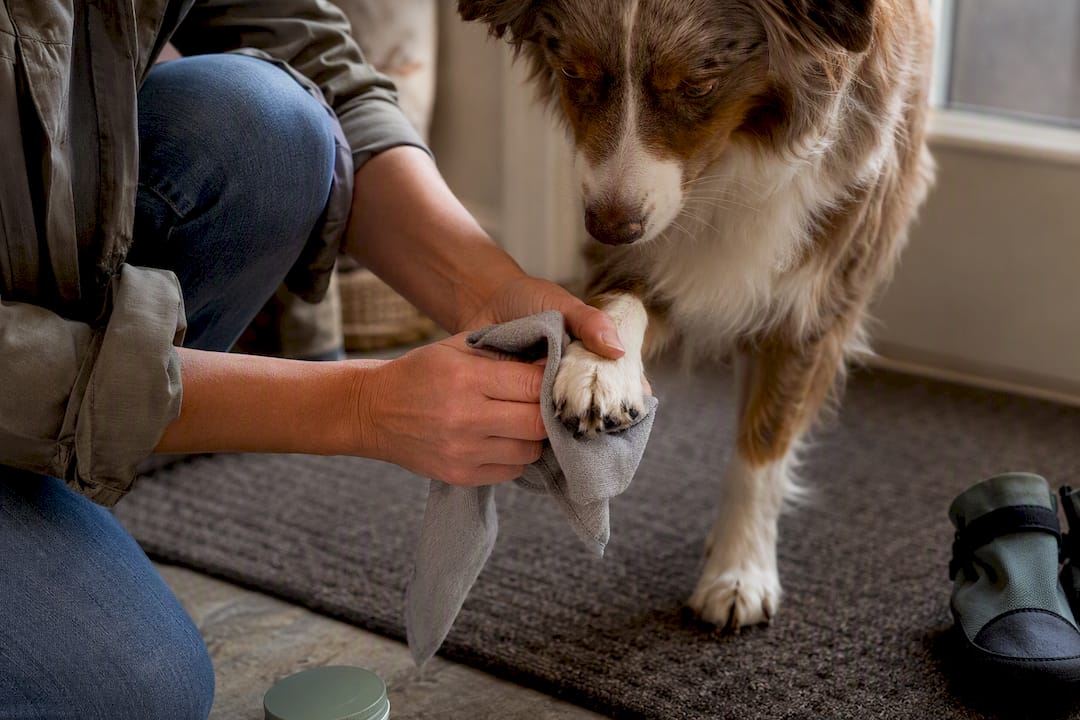
Pro Tip: If your dog associates paw handling with something unpleasant, start conditioning them during calm moments at home, not right before a walk when they’re already amped up. A calming chew fifteen minutes before a grooming session can take the edge off.
How Do You Make Your Own Dog Paw Balm at Home?
A DIY paw balm gives you full control over what touches your dog’s feet, and it takes about fifteen minutes to make. The American Kennel Club’s recipe is the version most owners reach for because it’s short, uses ingredients already found in most kitchens or medicine cabinets, and doesn’t require any special equipment.
- Combine carrier oils with shea or coconut butter. Olive oil, coconut oil, or sunflower oil each work as a base; shea butter adds body and extra moisturizing power.
- Add beeswax for structure. Beeswax is what turns liquid oils into a balm that holds its shape at room temperature instead of melting into a puddle.
- Melt everything together using a double boiler. Low, gentle heat prevents scorching the oils and keeps the mixture smooth.
- Pour into small tins or empty lip-balm tubes while still warm. This is also the moment to double check nothing separated during melting; stir if needed before it sets.
- Let it cool completely before sealing and storing. A fully hardened balm won’t leak or shift shape in your bag or cabinet.
A batch made this way generally keeps for several weeks to a couple of months when stored in a cool, dry spot away from direct sunlight, since natural oils and butters don’t have the shelf stability of commercial preservatives. Label the tin with the date you made it so you’re not guessing later.
A few substitution notes worth knowing before you start:
- Coconut oil can fully replace shea butter if that’s what you have on hand; both offer similar moisturizing properties.
- Sunflower oil is a lighter alternative to olive oil for dogs with sensitive stomachs who might lick more than intended.
- Skip essential oils entirely, especially tea tree oil, even in tiny “just for scent” amounts. There’s no upside worth the risk.
DIY makes the most sense when you want a simple, ingredient-transparent option for everyday prevention and you’re comfortable making small batches regularly. A commercial vet-formulated balm becomes the safer choice when your dog has an existing skin condition, a known allergy, or paw damage that isn’t responding to basic home care. In those cases, a product designed and tested for that specific problem beats a kitchen-counter formula.
How Does Walnut Creek Pet Support a Full Paw-Care Routine?
Paw balm is one piece of a bigger routine, and the products around it matter almost as much as the balm itself. Keeping paws clean, keeping your dog distracted during application, and giving damaged pads time to rest all support the healing or protection the balm is doing.
A few catalog staples fit naturally into that routine:
- Stella & Chewy’s Freeze Dried Meal Mixers Surf & Turf Dog Food works well as a high-value topper you can use to reward a dog who sits still through a full paw check and balm application.
- Kaytee Lava Bites Small Animal Chews support the small-animal side of a household where multiple pets are recovering or being cared for at once.
- Kaytee Clean and Cozy Small Animal Bedding gives small animals a comfortable, odor-controlled resting spot, useful for any pet in your home dealing with its own recovery period.
- Pumpkin & Honey Chew Sticks offer a gentle, soft option for distraction during shorter application sessions.
- Turkey chips work as a single-ingredient reward for dogs on limited diets who still need incentive during paw handling.
The catalog is built around organic, natural, and single-ingredient products because pet parents deserve to know exactly what’s going into (and onto) their animals, whether that’s food, a chew, or a treat used to make paw care easier. Ten percent of profits go directly to no-kill shelters, so every purchase that supports your dog’s paw-care routine also supports animals still waiting for one. If you’re putting together a full recovery or prevention kit and aren’t sure what pairs well with your current products, consider seeking guidance for pairing products effectively.
What Should You Know About the Author’s Perspective on Paw Care?
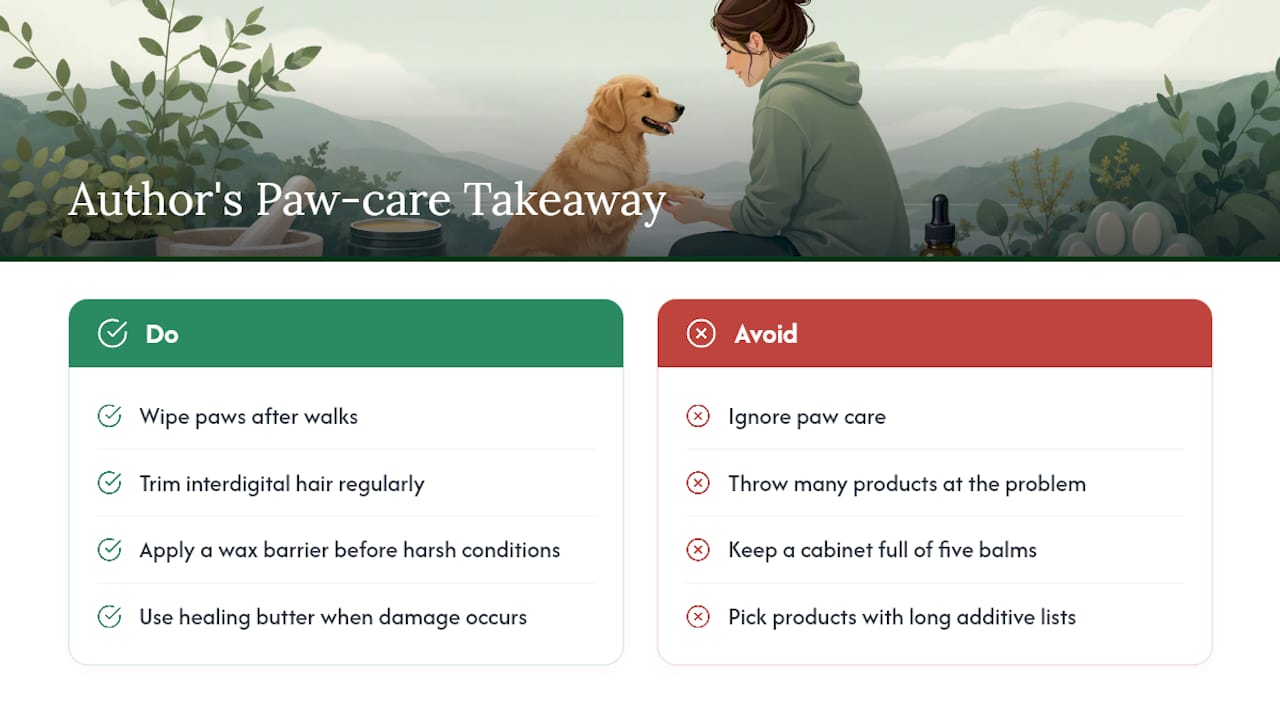
Timothy [author credentials placeholder] has spent years watching pet owners overcomplicate paw care by either ignoring it entirely or throwing every product on the shelf at the problem. The truth sits in the middle: most dogs need a wax barrier before harsh conditions and a healing butter when damage already happened, not a cabinet full of five different balms.
What gets underestimated is how much a basic routine, wiping paws after walks and trimming interdigital hair, does before balm even enters the picture. Balm patches a problem faster when the groundwork is already there. Walnut Creek Pet’s approach, favoring single-ingredient and organic products across its catalog, reflects the same philosophy that should guide paw balm shopping: fewer, better ingredients beat a long list of additives every time. If you’ve got questions about pairing products for your dog’s specific situation, the customer support team is there to help you figure it out.
— Timothy
Where Can You Learn More About Dog Paw Care?
The AKC’s paw balm recipe is the go-to source for a tested DIY formula. The wax versus butter breakdown clarifies which type solves which problem. Sploot Vets’ medical team page outlines when paw issues need veterinary attention rather than home care. Treeline Review’s roundup of commercial balms shows how reviewers group products by purpose. If your dog’s paw problems persist or worsen despite consistent care, talk to your veterinarian before trying another product.
Ready to Round Out Your Dog’s Paw-Care Kit?
Balm handles the paw itself, but a full recovery or prevention routine usually needs a few more pieces: something to reward good behavior during application, something comfortable for a resting pet, and food that supports overall skin and coat health from the inside. The catalog is specifically built around organic, natural, and single-ingredient options, so you’re not stuck cross-referencing ingredient lists across multiple brands while your dog waits with a sore paw.
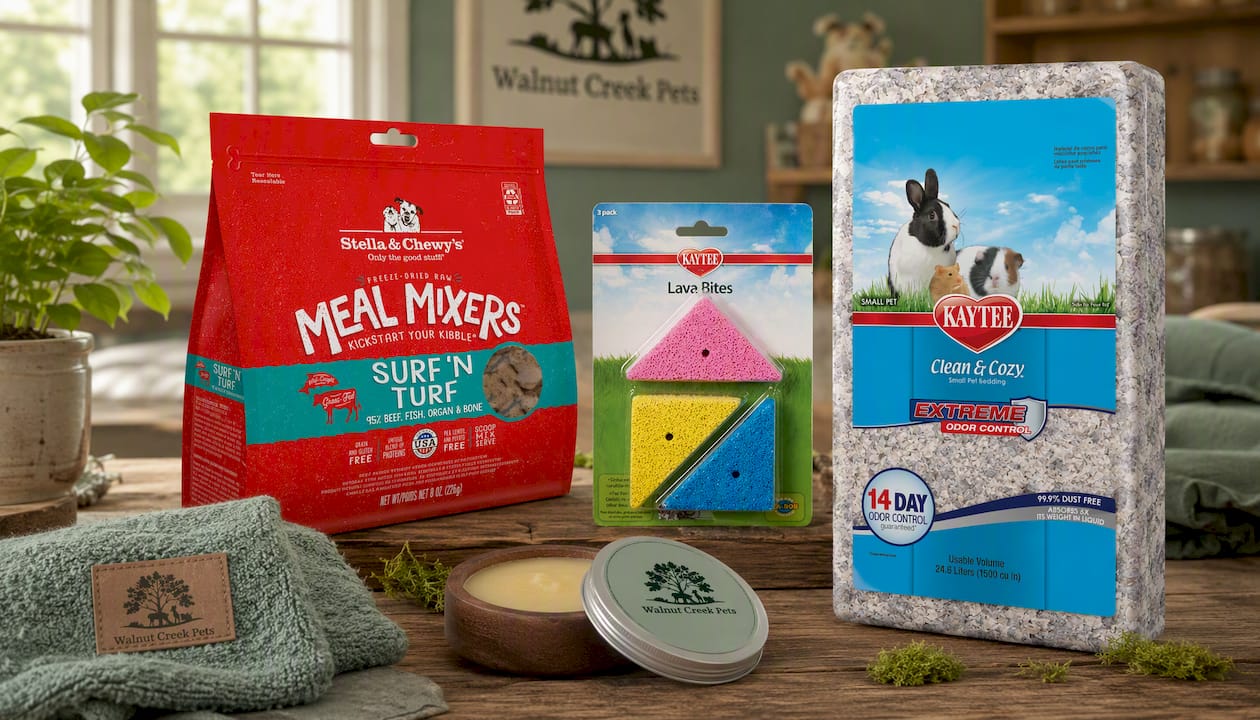
Start with a protein-rich topper to reward paw-care sessions, and browse the full catalog for the cleaning wipes, chews, and comfort items that round out your routine. If you’re not sure what pairs best with your dog’s specific needs, reach out to customer support and get a straight answer before you buy.
Sources
- How to Make Your Own Dog Paw Balm – American Kennel Club
- Dog paw balm vs wax vs butter — what’s best for dogs
- Sploot Vets medical team (Dr. Jessica Apted, DVM)
- Best Dog Paw Balms of 2026


