


Two Minute Rule: Match Goldfish Food Types to Body Shape
Match goldfish food to body shape, prevent swim bladder, and learn safe prep for vegetables, gel, and freeze dried treats. Practical rotation and feeding...

Base your goldfish’s diet on high-quality sinking pellets or gel food, then rotate in blanched vegetables and a weekly protein treat like freeze-dried brine shrimp. Fancy, round-bodied goldfish do better on slow-sinking pellets or gel food since they gulp less air, while slim-bodied common and comet goldfish tolerate floating flakes just fine. The rest comes down to portion control and knowing which extras actually help.
TL;DR:
- Goldfish require sinking pellets or gel food for fancy varieties and can handle flakes if they are slim-bodied species.
- Feeding should be based on the fish’s body shape, life stage, and water temperature, with overfeeding significantly harming water quality and health.
- Proper preparation of vegetables, freeze-dried proteins, and gel foods is essential to prevent digestive issues and maximize nutrient absorption.
- Most goldfish deaths result from overfeeding and poor water quality, making portion control and water changes critical for health.
- Discounting one-size-fits-all advice, matching food shape and sink rate to the fish’s anatomy is more effective than chasing high-protein labels.
Table of Contents
- Goldfish Food Types: Pellets, Flakes, Gel, and More
- How to Choose the Right Food for Your Goldfish
- How Often to Feed Goldfish and How Much
- Preparing Vegetables, Gel Food, and Freeze-Dried Proteins
- Safety Risks: Overfeeding, Water Quality, and Foods to Avoid
- Why Trust This Goldfish Feeding Guide
- Blanching, Soaking, and Gel Prep Done Right
- The Real Problem With Most Goldfish Feeding Advice
- Where to Find Quality Goldfish Food and Supplements
- Sources
Goldfish Food Types: Pellets, Flakes, Gel, and More
Every goldfish diet options lists start with the same six categories, and each one serves a different purpose in the tank.
Sinking pellets are the closest thing to a universal staple. They deliver concentrated nutrition in a form that doesn’t force fish to gulp air at the surface, which matters most for round-bodied fancy varieties prone to swim bladder trouble.
Floating flakes work fine for slim, fast-swimming goldfish like comets and shubunkins that feed near the surface naturally. Fancy breeds struggle with flakes because the up-and-down feeding motion pulls in air along with the food.
Gel foods have become popular with serious hobbyists because they let you mix protein, vegetables, and supplements into one slow-sinking block. According to Aquamarinepower, gel foods reduce air ingestion and suit slow-moving fancy goldfish especially well.
Live and frozen foods (bloodworms, daphnia, brine shrimp) supply concentrated protein and mimic natural foraging behavior, though they carry a small parasite risk if sourced from unreliable suppliers.
Freeze-dried treats offer the same protein punch with a longer shelf life, but they need to be rehydrated before feeding.
Vegetables like blanched peas, zucchini, and spinach add fiber that keeps digestion moving and helps prevent constipation.
- Sinking pellets: best all-around staple, low air-ingestion risk
- Floating flakes: fine for slim-bodied goldfish, riskier for fancies
- Gel food: customizable, slow-sinking, good for picky or fancy fish
- Live/frozen protein: high nutrient density, occasional use
- Freeze-dried treats: convenient, need soaking before serving
- Vegetables: fiber source, prevents digestive blockages
How to Choose the Right Food for Your Goldfish
Run through this checklist before you commit to a staple food:
- Check body shape. Fancy varieties (Ranchu, Oranda, Fantail) need slow-sinking pellets or gel food. Slim-bodied comets and shubunkins handle flakes and standard pellets without issue.
- Consider life stage. Juveniles need smaller pellet sizes and more frequent small meals to support growth.
- Watch water temperature. Warmer water speeds metabolism and appetite; cooler water slows both.
- Account for bioload and filtration. A heavily stocked tank with modest filtration calls for smaller, less frequent portions regardless of food type.
On the nutrition side, feeding trials cited by the SRAC fact sheet on goldfish dietary requirements indicate a minimum dietary protein requirement and an optimum energy-to-protein ratio; balance matters more than specific raw protein percentages. Too much protein relative to energy wastes nutrients and adds ammonia load; too little lipid slows growth. Look for a pellet or gel food that lists protein in the high 20s to low 30s percent range on the label.
Pro Tip: If your goldfish spits out pellets and then eats them again a minute later, that’s normal foraging behavior, not rejection. Only worry if food sits untouched for more than five minutes.
How Often to Feed Goldfish and How Much
The simplest portion rule in any goldfish feeding guide: feed only what your fish can finish in about two minutes. Anything left after that is excess, and excess is where problems start.
- Adult goldfish: feed 2 to 3 times daily in water above 68°F
- Juveniles: smaller portions, 3 times daily, to support faster growth
- Cold water (below 60°F): cut back to once daily or every other day
- Below 50°F: many keepers stop feeding entirely until temperatures rise
Temperature drives this schedule directly. Research on fish physiology shows that metabolism and feeding needs slow substantially in colder water, and feeding a summer-sized portion in winter water just means more waste sitting in the tank. Overfeeding at any temperature is the single most common goldfish-keeping mistake. If you notice cloudy water, a film on the surface, or fish looking bloated and sluggish, cut portions in half for a few days and do a 25% water change to reset water quality.
Preparing Vegetables, Gel Food, and Freeze-Dried Proteins
Preparation determines whether these foods help or hurt your fish.
- Peas: Remove the shell after boiling or microwaving for 60 to 90 seconds, then mash or cut into pieces small enough for your fish’s mouth.
- Zucchini and spinach: Blanch for 2 to 3 minutes until slightly softened, then cool before dropping it in. Raw vegetables are harder to digest and can cause blockages.
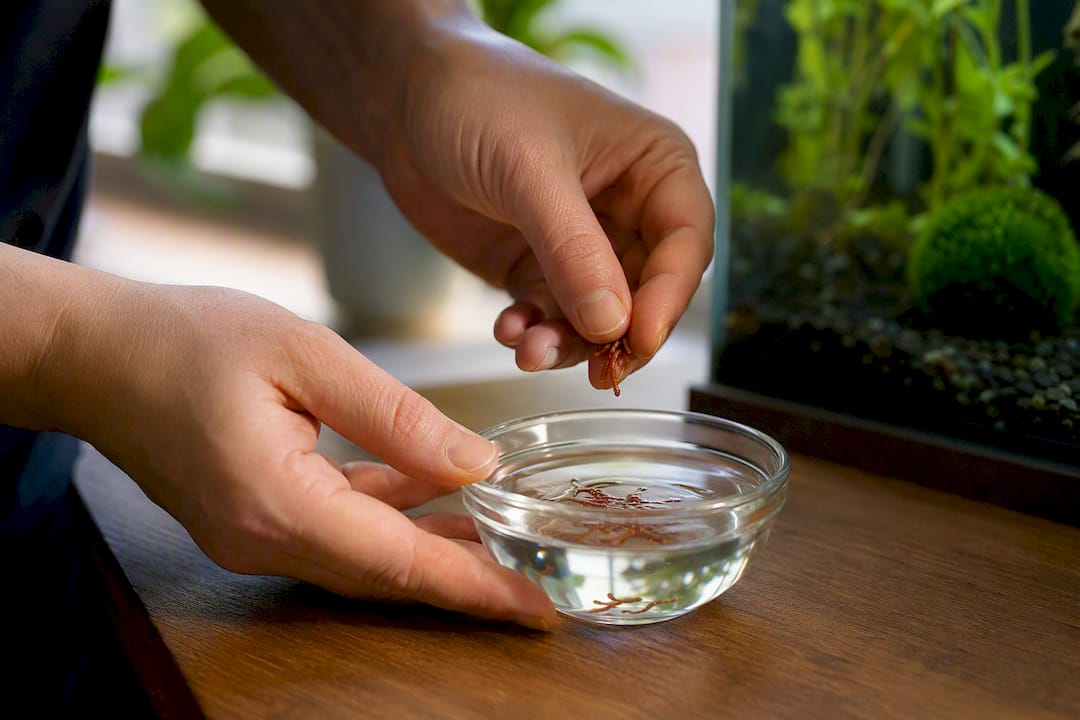
- Freeze-dried foods: Soak in a small cup of tank water for 5 to 10 minutes before feeding. Skipping this step lets the food expand inside the fish’s gut instead of in the cup, which can trigger digestive distress.
- Gel food: Follow the package ratio closely. Overly firm gel is hard to bite into; overly soft gel disintegrates and clouds the water. Cut into bite-sized cubes and only offer what will be eaten in one sitting.
Safety Risks: Overfeeding, Water Quality, and Foods to Avoid
Overfeeding causes more goldfish deaths than any single disease. Leftover food decomposes, spikes ammonia and nitrite, and depletes oxygen, creating exactly the stressed conditions that let infections take hold. The same research on metabolism and environmental effects that explains cold-weather feeding slowdowns also confirms that excess feeding directly drives poor water quality and illness, regardless of season.
Avoid these categories entirely:
- Bread, crackers, or anything seasoned or salted
- Raw meat and dairy products
- Onions, garlic, and other alliums
- Uncooked hard vegetables that risk choking or blockage
If you spot a bloated, floating, or listless fish, the likely culprit is constipation or overfeeding. Skip feeding for 24 to 48 hours, offer a blanched pea once appetite returns, and run a 25% to 30% water change to bring ammonia back down.
Why Trust This Goldfish Feeding Guide
This guide draws on peer-reviewed metabolism research and established aquaculture nutrient studies rather than guesswork, because goldfish health depends on getting the basics right.
Walnutcreekpet built its catalog around organic, natural, and single-ingredient products, and donates 10% of profits to no-kill shelters. That same standard applies across its full product range, which covers dogs, cats, and small animals alongside aquatic supplies. Timothy, the author of this guide, drew on Walnutcreekpet’s care guides and community feeding resources while researching this piece. Explore the freeze-dried protein options in the catalog if you’re building out a rotation for any pet in your home, not just your fish.
Blanching, Soaking, and Gel Prep Done Right
Getting preparation right is less about following a recipe and more about understanding why each step exists. Blanching vegetables isn’t just about softening them for smaller mouths. It also breaks down cell walls, making nutrients more accessible and cutting the risk of the food swelling inside your fish rather than in the water.
Soaking freeze-dried foods works on the same principle. Dry bloodworms or brine shrimp absorb water fast, and if that absorption happens after your goldfish swallows the food instead of before, you’re looking at potential digestive impaction. Five minutes in a small dish of tank water solves this completely, and it costs you nothing but a little patience.
Gel food prep rewards precision. A common mistake is cutting pieces too large. Fancy goldfish with small, downturned mouths need bite-sized cubes, not chunks they have to tear apart. Store extra gel food in the refrigerator for up to a week, or freeze portions for longer storage. Thaw only what you’ll use that day, since refreezing degrades texture and can make the food crumble apart in the water instead of holding its shape.
The Real Problem With Most Goldfish Feeding Advice
Most feeding advice treats goldfish like one species with one diet. That’s the core mistake. A fancy Ranchu and a slim-bodied comet have different anatomy, different swimming behavior, and different vulnerability to swim bladder disease, yet plenty of pet store advice hands both the same tub of floating flakes.
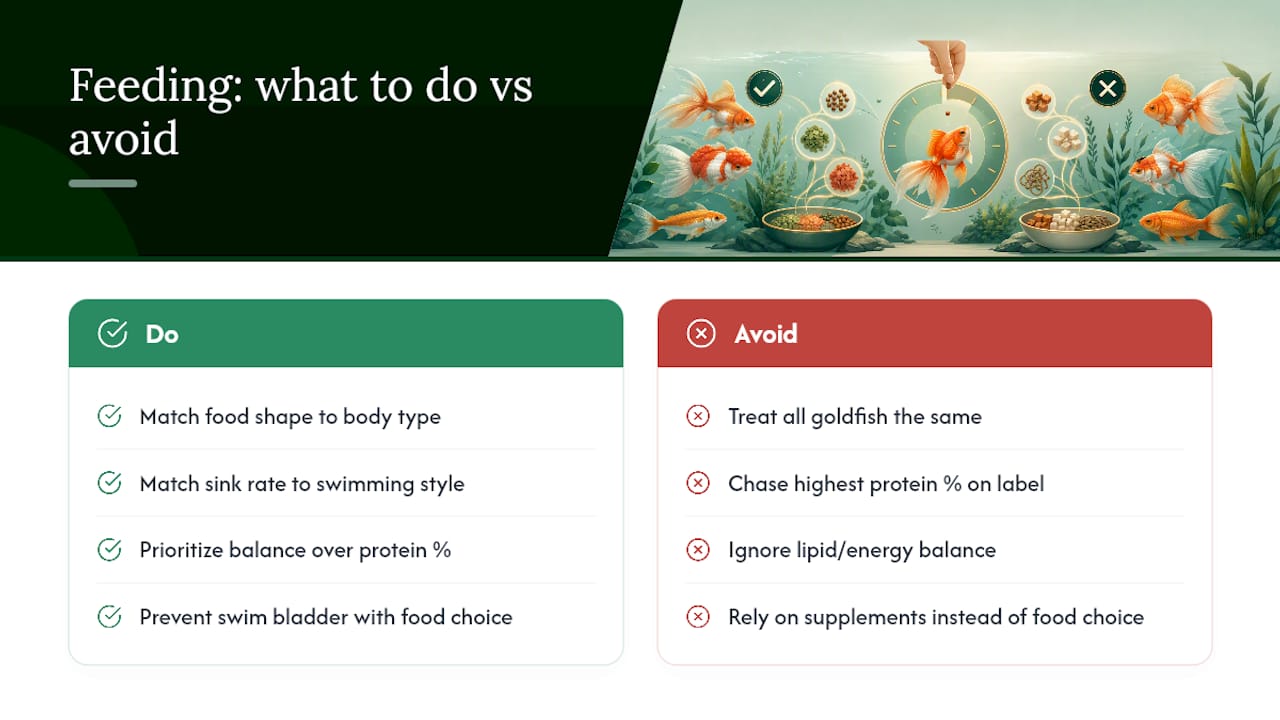
The nutrient numbers matter less than hobbyists think, too. Chasing a pellet with the highest protein percentage on the shelf ignores the energy-to-protein ratio that actually predicts healthy growth. A goldfish fed 40% protein pellets isn’t necessarily better off than one fed 30% protein pellets with the right lipid balance. Balance beats bragging rights on the label every time.
What I’d prioritize first: match food shape and sink rate to your fish’s body type before worrying about brand or ingredient list. That single decision prevents more swim bladder cases than any supplement ever will.
— Timothy
Where to Find Quality Goldfish Food and Supplements
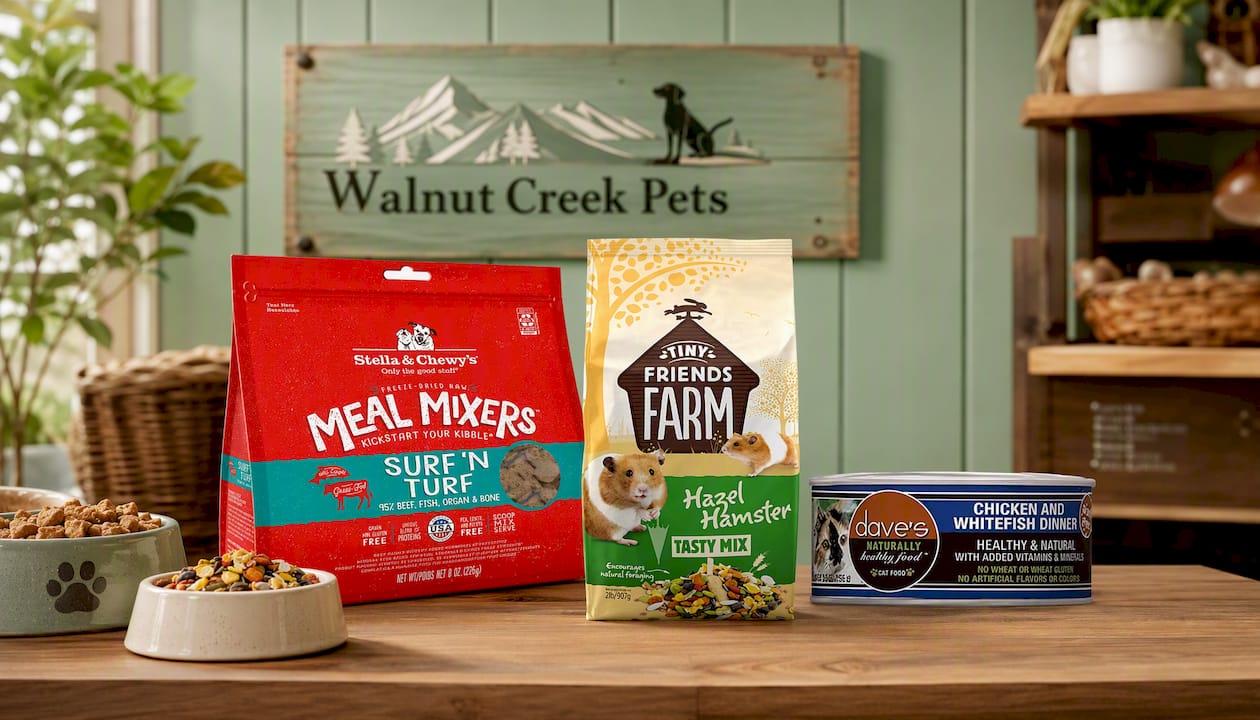
The catalog includes natural, single-ingredient freeze-dried proteins and specialty formulas that fit into a rotation-based feeding routine, whether supplementing a goldfish tank or feeding other household pets. The same commitment to transparent ingredients that shows up in options like freeze-dried lamb liver runs through the whole catalog, including dog, cat, and small-animal lines like the Stella & Chewy’s Freeze Dried Meal Mixers Surf & Turf, the Tiny Friends Farm Hazel Hamster Tasty Mix, and Dave’s Naturally Healthy Chicken & Whitefish Cat Food.
Every purchase helps support ongoing donation programs benefiting no-kill shelters, so stocking up on treats also supports animals waiting for homes. Browse the full product catalog to find single-ingredient proteins and supplements suited to whatever pets share your home with your goldfish.
Sources
- PMC article on fish metabolism and environmental effects
- Dietary protein and lipid requirements of golden shiners and goldfish (SRAC / MS State fact sheet)
- A Complete Detailed Goldfish Feeding Guide


