


Adult Guinea Pigs Need Unlimited Timothy or Orchard Grass Daily
Hay by life stage for guinea pigs: give adults unlimited timothy or orchard grass; reserve alfalfa for under 6 months, pregnancy, or recovery. Includes...

Most adult guinea pigs should eat high-quality timothy or orchard grass hay every single day, with unlimited access, no exceptions. Alfalfa hay is the one big exception, and it’s for a narrow group: pigs under six months old, pregnant or nursing sows, or animals recovering from illness who need extra calories. Whatever hay you choose, it can’t stand alone. Guinea pigs need a daily vitamin C source too, since they can’t produce it themselves.
TL;DR:
- Adult guinea pigs should have unlimited access to timothy or orchard grass hay, while alfalfa is only suitable for pigs under six months, pregnant, or nursing.
- The quality of hay depends on proper harvesting cuts, storage conditions, and freshness, with second cut timothy being the most balanced for daily feeding.
- Feeding too much alfalfa to adults increases the risk of bladder stones, while low-fiber diets can lead to slow gut motility and health decline.
- Rotating hay types weekly and introducing new hay gradually helps maintain interest and prevents dietary disruptions.
- Pairing hay with vitamin C–fortified pellets is essential, as hay alone does not provide all necessary nutrients for adult guinea pigs.
Table of Contents
- Guinea Pig Hay Types Explained: Timothy, Orchard, Meadow, and More
- How Hay Cuts and Storage Affect Quality
- Feeding Guinea Pigs by Life Stage and What Goes Wrong
- Shopping, Rotating, and Introducing New Hay Safely
- Where Walnutcreekpet Fits Into Your Hay Routine
- An Editorial Take on Getting Hay Right
- Pairing the Right Hay With the Right Pellet
- Sources
Guinea Pig Hay Types Explained: Timothy, Orchard, Meadow, and More
Walk into a feed store and you’ll find a wall of hay bags, all claiming to be the best thing for your guinea pig. They’re not interchangeable, and picking the wrong one for the wrong life stage causes real health problems down the line.
Timothy hay is the gold standard for adult guinea pigs, and for good reason. It hits the sweet spot between fiber, protein, and calcium: moderate protein and low calcium, compared to alfalfa’s much higher protein and calcium levels. That fiber content does double duty. It keeps the gut moving and wears down teeth that grow continuously throughout a guinea pig’s life. Timothy hay is the everyday standard because it delivers what an adult pig needs without the calcium overload that comes with legume hays. Second cut is the usual sweet spot for daily feeding, balancing stem fiber against palatability.
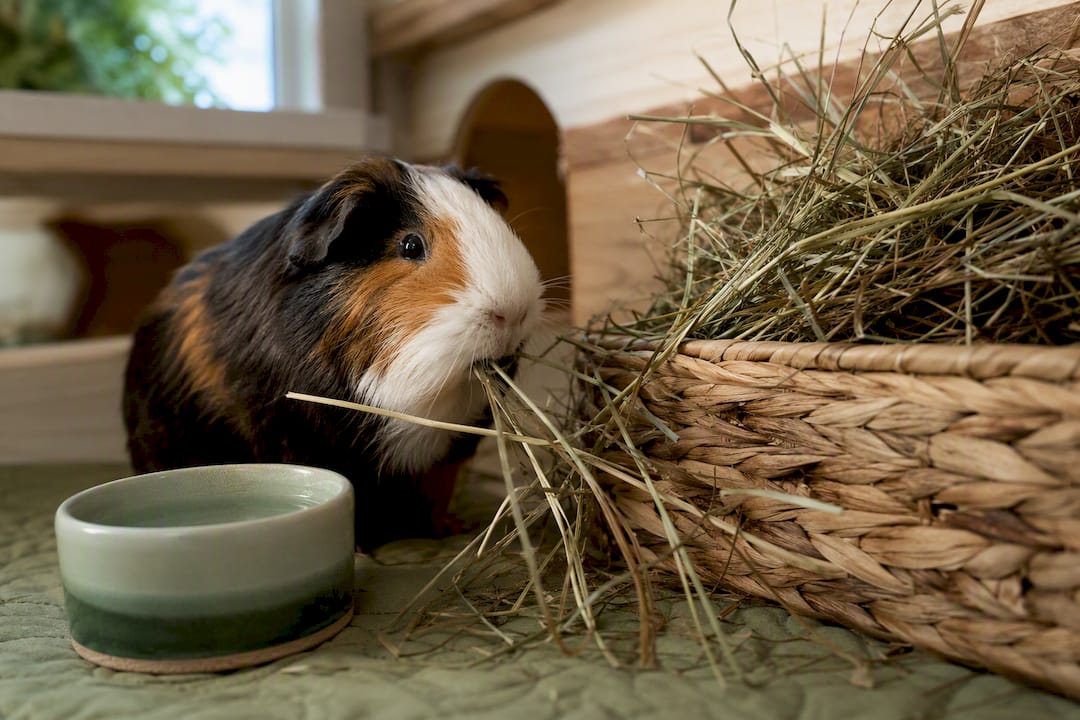
Orchard grass is timothy’s closest cousin nutritionally, but the texture is softer and less prickly. If your guinea pig turns its nose up at coarse timothy stems, or if you’re the one who ends up sneezing every time you open the bag, orchard grass solves both problems. It’s an equally safe daily staple, and some owners rotate it with timothy just to keep things interesting for a picky eater.
Meadow hay is a mixed bag, literally. It’s a blend of grasses, clover, and sometimes wildflowers, and the nutrient profile shifts depending on where and when it was harvested. That variability makes it a poor choice as your sole daily hay, but a good one for rotation and enrichment. Think of it as the produce aisle of hay: interesting, varied, but not something you build a whole diet around.
Oat hay and rye hay work best as occasional additions rather than staples. Oat hay in particular still has some seed heads attached, which guinea pigs tend to love picking through. Use these more like a treat than a foundation. Teff and bermuda grass hay are specialty options some owners reach for when managing a pig with weight issues or sugar sensitivity. Bermuda tends to run higher in fiber and lower in sugar than orchard or timothy, which can matter for an overweight pig.
Botanical blends mix dried herbs, flowers, and other plants into a base hay for enrichment. They’re genuinely useful for stimulating a bored eater, but treat every blend with suspicion until you’ve checked the ingredient list. Confirm each herb is actually safe for guinea pigs and skip anything scented or treated with preservatives you can’t identify.
Alfalfa hay deserves its own paragraph because it’s the one owners get wrong most often. It’s a legume, not a grass, and that changes everything about how it should be used. The high calcium and protein content that makes it perfect for a growing baby or a nursing sow is exactly what makes it risky for a healthy adult fed long term. Give an adult guinea pig unlimited alfalfa for months, and you’re setting up conditions for bladder sludge and stones. It’s not a daily hay for grown pigs. It’s a targeted tool for specific life stages, full stop.
A quick reference for the main types:
- Timothy: daily staple for adults, moderate protein, low calcium, firmer texture
- Orchard grass: daily staple alternative, similar nutrition to timothy, softer texture
- Meadow hay: rotation and variety, nutritionally inconsistent, good enrichment value
- Oat/rye: occasional treat use, seed heads add interest
- Teff/bermuda: specialty use for weight or sugar management
- Alfalfa: high protein and calcium, reserved for babies, pregnant/nursing sows, or recovery diets
How Hay Cuts and Storage Affect Quality
Hay gets harvested in cuts throughout the growing season, and the cut number tells you a lot about texture and fiber content. First cut is the coarsest and highest in fiber, with more mature stems and seed heads. It’s great for adults who need the dental workout but can be too rough for seniors or fussy eaters. Second cut is softer, greener, and the most commonly recommended option for daily feeding since it balances fiber against palatability. Third cut is the softest and leafiest, low in fiber, and best suited to seniors with dental issues or notoriously picky pigs, but it shouldn’t replace a fibrous hay entirely.
Here’s a quick routine for checking hay quality before you buy or before you feed it:
- Look at the color. It should be green to golden green, never brown or gray.
- Smell it. Fresh hay smells sweet and grassy. Musty or sour smells mean mold.
- Check for dust. Give the bag a gentle shake. A cloud of dust means poor storage or an older harvest.
- Look for a mix of stems, leaves, and seed heads rather than a pile of broken fragments.
- Squeeze a handful. It should feel dry and springy, never damp or clumped together.
Store hay in a cool, dry spot away from direct sunlight, ideally in a breathable bag rather than a sealed plastic bin that traps moisture. Chicken coop bedding that’s safe for hay storage areas is worth the same scrutiny: keep hay separate from anything treated with chemicals or pesticides, and never store it near cleaning supplies.
Pro Tip: Buy hay in smaller batches more often rather than one giant bag that sits for months. Fresh hay loses nutritional punch and palatability the longer it’s exposed to air, even when stored well.
Feeding Guinea Pigs by Life Stage and What Goes Wrong
Adult guinea pigs need unlimited access to grass hay, full stop. It should make up the majority of their diet by volume, with a measured scoop of pellets and a small daily helping of fresh vegetables rounding things out. A diet heavy on pellets and light on hay is a common mistake, and it’s the fastest route to the health problems below.
Life stage changes the plan:
- Babies under 6 months: feed alfalfa freely alongside grass hay to support rapid growth.
- Transition period: start mixing in timothy or orchard around 4 months, aiming for a full switch to grass hay by 6 months.
- Pregnant or nursing sows: alfalfa again, for the same reason: the extra protein and calcium support gestation and milk production.
- Adults: unlimited timothy or orchard grass, no regular alfalfa.
- Seniors: softer cuts like third-cut timothy or orchard, sometimes mixed with a bit of coarser hay to keep some dental wear going.
The risks of getting this wrong are not minor. Extended alfalfa feeding in adults raises calcium intake to levels linked with bladder sludge and stones, a painful condition that often requires surgery. On the flip side, diets low in fiber slow gut motility, and a guinea pig with a stalled gut can decline within a day or two. Vitamin C deficiency is its own separate risk, since guinea pigs can’t make the vitamin internally and need it daily from bell peppers, leafy greens, or a fortified pellet.
Call a vet right away if you notice blood in the urine, a sudden refusal to eat, unusual lethargy, or a drop in fecal output. Any one of those can signal a stone, gut stasis, or something else that won’t resolve on its own.
Shopping, Rotating, and Introducing New Hay Safely
Buying hay well and switching it over gradually prevents most of the problems owners run into.
- Check the harvest date or packaging freshness if the seller lists one, and buy from a source that’s transparent about it.
- Favor second-cut timothy or orchard grass for everyday feeding, saving first cut for pigs that need extra fiber and third cut for seniors.
- Introduce a new hay gradually by mixing a handful with the current supply over a week or two rather than swapping cold.
- When weaning off alfalfa around 6 months, reduce the proportion week by week while increasing timothy or orchard.
- Rotate timothy and orchard grass on a weekly basis to keep things interesting without changing the nutritional baseline.
For a stubborn eater, try warming the hay slightly (body temperature, not hot) to bring out its smell, mix in a small amount of a preferred hay, or scatter it in a few different spots around the enclosure rather than one bowl. Foraging boxes and hay racks turn mealtime into a small project, which most guinea pigs find far more engaging than hay sitting in a pile.
Pro Tip: If your guinea pig ignores a new hay entirely for more than two or three days, don’t force it. Go back to the previous hay and reintroduce the new one more slowly, mixed at a lower ratio.
Where Walnutcreekpet Fits Into Your Hay Routine
This catalog centers on organic, natural, and single-ingredient products, which matters when trying to avoid unknown additives in hay-adjacent products like pellets and treats. A portion of profits supports no-kill shelters. Every complementary product is selected with the question in mind: does this support a hay-first diet, or work against it?
An Editorial Take on Getting Hay Right
The advice that gets guinea pigs into trouble isn’t wrong exactly, it’s incomplete. Owners hear “guinea pigs need hay” and stop there, without absorbing that the type and life stage matter just as much as the quantity. Alfalfa gets treated as a blanket good because it’s protein rich and pigs love it, when the truth is it’s a life-stage tool that becomes a liability the moment a pig turns into a healthy adult.
The bigger blind spot is vitamin C. Owners obsess over hay type and forget that hay alone, no matter how good, doesn’t cover a nutrient guinea pigs can’t make themselves. A perfect hay routine paired with no vitamin C source is still a diet with a hole in it.
If you fix one thing after reading this, fix the alfalfa timeline. Know your pig’s age, know when to transition, and don’t let a bag of alfalfa linger in the cage rotation past six months out of habit or convenience.
— Timothy
Pairing the Right Hay With the Right Pellet
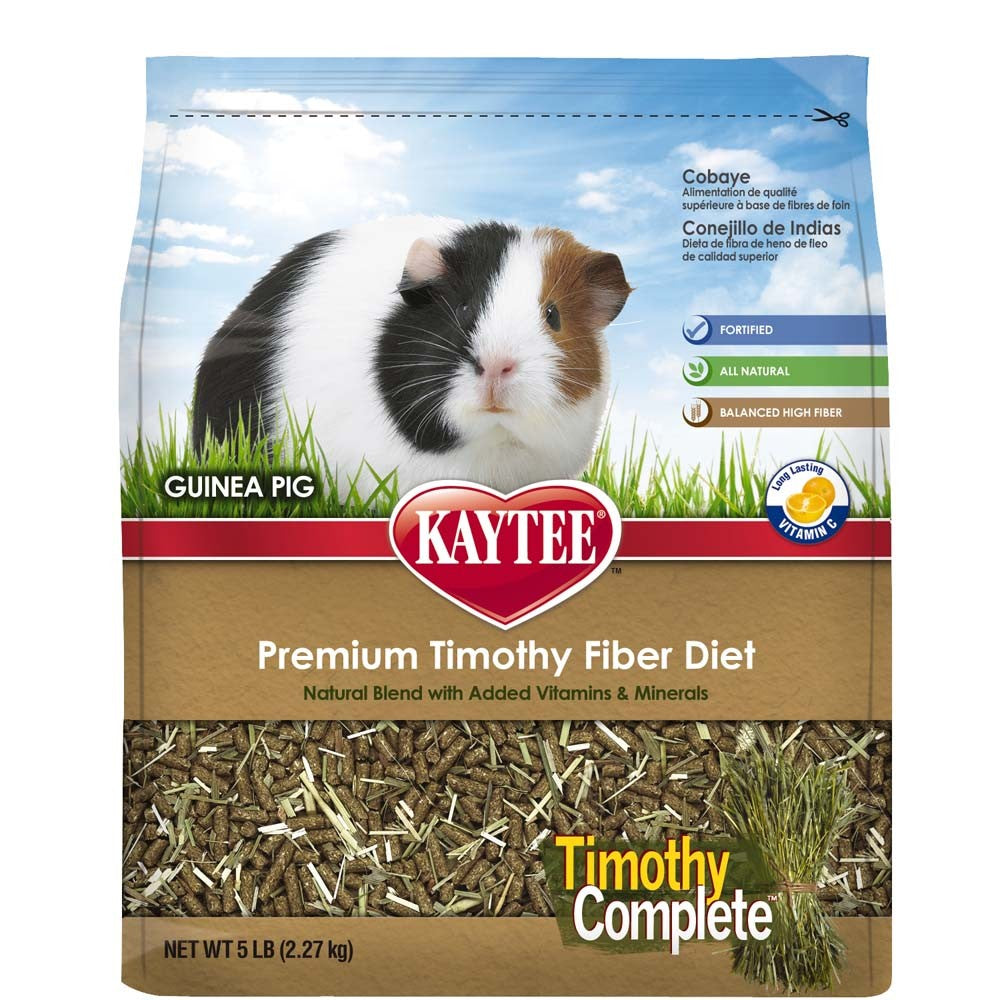
Hay does the heavy lifting, but it shouldn’t stand alone. A measured, vitamin C–fortified pellet closes the nutritional gap that hay leaves open, and it’s why Kaytee Timothy Complete Guinea Pig Food 5lb works as a daily companion to unlimited timothy or orchard grass rather than a replacement for it.
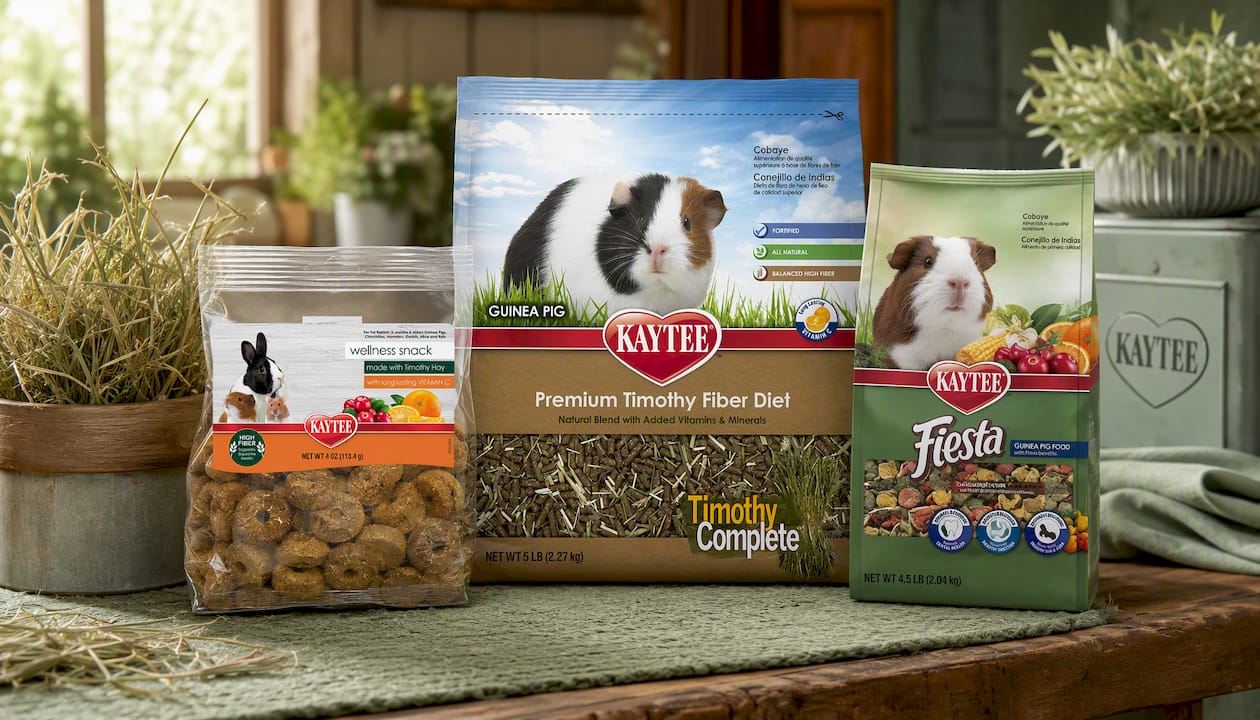
Treats have a place too, just a smaller one. Kaytee Timothy Wellness Snack Baked Biscuits Orange and Cranberry 4oz makes a good occasional reward, and Kaytee Fiesta Guinea Pig Food 4.5lb gives owners who want variety in texture and flavor another measured option to rotate in. If you want a fresher treat alongside dried snacks, Turkey Feast Turkey Chips is worth a look too, used sparingly.
The buying rule stays simple: measure pellets rather than free-feeding them, prioritize formulas that list fortified vitamin C on the label, and keep treats occasional rather than daily. Browse small animal selections from reputable sources to build out the rest of your pig’s feeding routine around whichever hay you’ve settled on.
Sources
For deeper reading on guinea pig nutrition, a few sources stand out for their reliability. VCA Hospitals covers general feeding guidelines and hay recommendations from a veterinary perspective. UC Davis Veterinary Medicine offers a shopping guide focused on vitamin C needs. The Merck Veterinary Manual details the clinical side of nutritional problems, including digestive stasis. Lafeber and AskAVet both publish practical, vet-informed guides on hay types and feeding routines worth cross-referencing.
None of these replace an actual vet visit. If your guinea pig shows any signs of illness or you’re unsure about a life-stage transition, a veterinarian who treats exotic pets is the right call, not a search engine.


