


72 Hour New Puppy Checklist: Before Pickup to Week One
Stepwise new puppy checklist with vet backed steps for before pickup, the first 48–72 hours, and week one. Includes supplies, vaccine timing, and starter...

Handle three things and you’re ahead of most new owners: stock the core supplies before pickup, book a vet visit within 72 hours, and puppy-proof one room before your puppy sets a paw in the house. Everything else, from crate training to socialization, builds on that foundation over the first week. Follow a simple phase structure: before pickup, the first 24 to 48 hours, then the first week, and you’ll spend less time scrambling and more time actually enjoying the dog.
TL;DR:
- Ensuring the puppy’s first week includes stocking the same food, a properly sized crate, and essential identification measures prevents stress and housetraining setbacks.
- Booking the vet within 72 hours and bringing all documentation helps establish a clear health and vaccination timeline aligned with local laws.
- Maintaining a consistent routine with brief, activity-linked potty breaks and sleep schedules facilitates successful housetraining and reduces accidents.
- Introducing socialization gradually with short, controlled exposures avoids fear responses while building confidence during the critical early window.
- Separating resident pets during initial interactions and ensuring safety measures will foster smoother integration and prevent resource guarding or accidents.
Table of Contents
- The Ultimate Puppy Supplies Checklist for Before Day One
- Booking the First Vet Visit and Tracking the Vaccine Timeline
- What to Expect in the First 72 Hours and Week One
- Building a Housetraining Routine That Actually Works
- Socializing Your Puppy During the Critical Window
- Puppy-Proofing, Safety, and Travel Basics
- Feeding Your Puppy Without Upsetting Their Stomach
- How Walnut Creek Pet Supports New Puppy Parents
- Mental Stimulation and Playtime for a Growing Puppy
- Introducing Your New Puppy to Resident Pets
- A Note on Getting Through the First Weeks
- Getting Your Puppy’s First Week Right With Walnut Creek Pet
- Sources
- FAQ
The Ultimate Puppy Supplies Checklist for Before Day One
Buy the right things once instead of making three trips to the store during week one. Start with food. Ask the breeder or shelter exactly what your puppy has been eating and buy that same bag, along with a measuring scoop and two bowls (stainless steel or ceramic hold up better than plastic and don’t harbor bacteria in scratches).
Containment and sleep come next. A crate sized so your puppy can stand, turn around, and lie down comfortably, but not so large that they can sleep in one corner and potty in another, works best for housetraining. Pair it with a washable bed and, if you have the space, an exercise pen or baby gates to block off a safe zone while you’re home but not watching closely.
For identification and travel, you need a properly fitted collar or harness, a 4 to 6 foot leash, and a durable ID tag. Register a microchip if the shelter or breeder didn’t already, and keep the number somewhere you won’t lose it.
Cleanup and health basics matter more than people expect. An enzymatic cleaner is non negotiable, regular cleaners don’t fully break down the proteins in urine, so puppies smell the spot and return to it. Add poop bags, puppy pads if you’re using them, a basic pet first aid kit, gentle puppy shampoo, and nail clippers sized for small paws.
Round it out with enrichment: one to three safe chew toys, a puzzle feeder, and a comfort item. A blanket or towel that smells like your puppy’s original home can ease the stress of that first night away from littermates, according to guidance from VCA Hospitals.
- Food, scoop, and two bowls
- Right sized crate, bed, exercise pen or gates
- Collar or harness, leash, ID tag, microchip registration
- Enzymatic cleaner, poop bags, first aid basics, shampoo, nail clippers
- Chew toys, puzzle toy, comfort item with a familiar scent
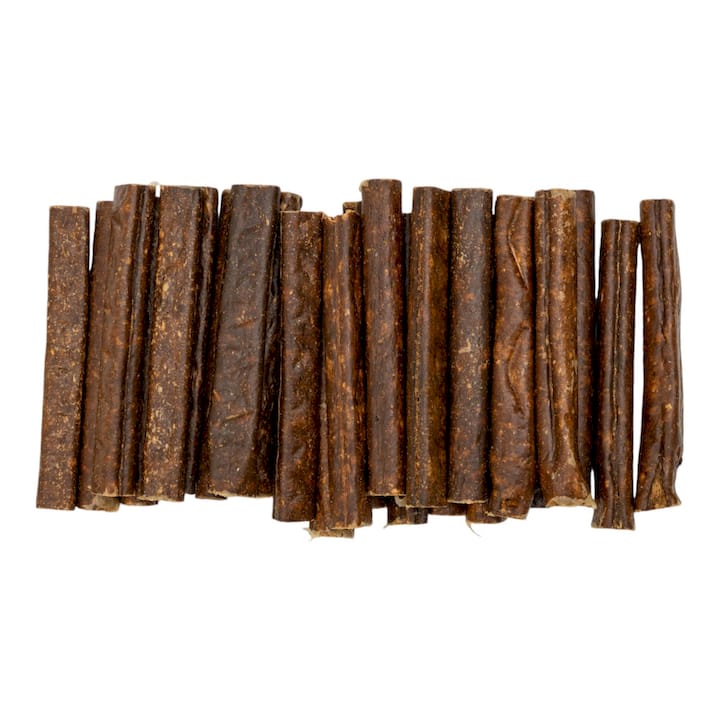
Treats deserve their own line item, because you’ll use them constantly for training in week one. All-Natural Beef Sausage Dog Treats work well as high-value rewards for name recognition and recall practice, while Wholesomes Rewards biscuits are useful for lower-stakes moments like crate loading or settling on a mat.
Pro Tip: Buy a bag of your puppy’s current food even if you plan to switch brands eventually. Trying a new diet on top of a new home is asking for a stressed stomach in week one.
Booking the First Vet Visit and Tracking the Vaccine Timeline
Schedule your puppy’s first exam within 72 hours of bringing them home, a window backed by AAHA guidance, with some sources allowing a slightly wider 3 to 5 day margin. That first visit typically covers a weight check, a fecal test for intestinal parasites, a review of any vaccines already given, and a conversation about what’s next.
Most puppies can start flea, tick, and heartworm prevention around 8 weeks old, provided they meet a minimum weight threshold, usually somewhere between 2 and 4 pounds, according to the American Kennel Club. Your veterinarian will confirm timing and adjust based on your puppy’s breed, health history, and local disease risk.
| Age | Typical focus |
|---|---|
| 6 to 8 weeks | First exam, initial vaccines, deworming check |
| 8 to 10 weeks | Parasite prevention start, vaccine booster |
| 10 to 12 weeks | Second booster, weight and growth check |
| 12 to 14 weeks | Final core boosters, rabies vaccine per local law |
Gather paperwork before the appointment: vaccination records from the breeder or shelter, the microchip number, any adoption or purchase contract, and your local dog license if your area requires one. A folder or a phone album works fine, just centralize it so you’re not hunting for a shot record during a boarding emergency two years from now.
- Vaccination and deworming records
- Microchip number and registration confirmation
- Adoption or purchase contract
- Local license paperwork
What to Expect in the First 72 Hours and Week One
Expect some appetite dips and clinginess in the first 24 to 48 hours. That’s a normal stress response to a new environment, not a sign something’s wrong, unless it stretches past two or three days.
Sleep is the real challenge. AAHA notes that successful housetraining often means scheduled nighttime potty breaks, which means broken sleep for you. Put the crate near your bed for the first week or two, and if there are two adults in the house, split the overnight wake-ups so one person isn’t running on fumes by day four.
A basic rhythm speeds up settling, and the Banfield puppy guide backs a simple structure of meals, potty windows, short training bursts, and supervised naps repeated through the day.
- Morning: Potty break immediately on waking, then breakfast, then another potty break 10 to 20 minutes later.
- Midday: Short 5 minute training session (name, sit), supervised play, a nap in the crate or pen.
- Afternoon: Potty break, second meal if feeding twice daily, quiet enrichment time with a chew toy.
- Evening: Potty break, family time with light handling and gentle socialization, wind-down routine.
- Bedtime: Final potty break, crate settle, and a note of weight, appetite, and any concerns for the vet.
Weigh your puppy every few days during week one and jot down eating and bathroom patterns. That log becomes useful fast if you need to call the vet about anything unusual.
Building a Housetraining Routine That Actually Works
Tie potty breaks to activity, not the clock. Puppies usually need to go after waking up, after eating, and after any burst of play, and young puppies under 12 weeks often need a bathroom trip every one to two hours during the day.
Crate training works best as a positive association, not a containment tool. Feed meals in the crate, leave the door open during the day so your puppy can wander in voluntarily, and only start closing the door for short stretches once they’re comfortable resting inside. AAHA is explicit that the crate should never be used as punishment, since that undoes the whole point of building it as a safe space.
- Take your puppy out on waking, after meals, and after play
- Feed in the crate; leave the door open until they choose to nap there
- Clean accidents with an enzymatic cleaner, never a punishment
- Praise successful outdoor potty trips immediately, every time
- Call your vet or a certified trainer if accidents persist past 4 to 6 months
Accidents will happen. Clean them thoroughly so the smell doesn’t pull your puppy back to the same spot, and resist the urge to scold. Fear slows housetraining down; consistency speeds it up.
Socializing Your Puppy During the Critical Window
The socialization window runs from roughly 3 to 14 weeks of age, the period when puppies are most open to accepting new sights, sounds, and experiences without developing fear responses, according to American Humane. That window overlaps with an incomplete vaccine schedule, so the goal is managed exposure, not a free-for-all at the dog park.
Good socialization looks calm and deliberate: watching joggers and bicycles from a distance, short supervised greetings with vaccinated adult dogs, brief exposure to novel objects like umbrellas or vacuum cleaners at home, and puppy classes once your vet clears group settings.
Training sessions during this window should stay short. Focus on name recognition, sit, and come, using small, high-value rewards.
- Keep exposures brief and end on a calm note, not overstimulation
- Introduce one new sound, surface, or object per session, not five
- Use the 10 minute rule: cap formal training sessions at 10 minutes for young puppies
- Apply the rule of threes loosely: three new experiences a day is plenty for a young puppy still adjusting
Pro Tip: If your puppy backs away from something new, don’t force it closer. Let them approach at their own pace and reward any curiosity, even a single sniff.
Puppy-Proofing, Safety, and Travel Basics
Walk through each room at puppy eye level before bringing them home. Electrical cords, toxic foods like grapes and chocolate, houseplants such as lilies, and trash cans within reach are the most common trouble spots, and all of them are fixable with cord covers, cabinet latches, and a lidded trash can.
Supervise every interaction between young children and the puppy, and teach kids to approach slowly and avoid grabbing at ears or tails. The same rule applies to introducing other household pets: short, leashed, calm sessions beat unsupervised free-for-alls.
For containment beyond the house, a resource like this wireless fence boundary training guide is worth a look if you’re weighing outdoor containment options down the road.
- Secure cords, toxic plants, chocolate, and trash cans before pickup day
- Supervise every child-puppy interaction, no exceptions
- Use a crash-tested crate or harness restraint in the car, never a loose puppy in the back seat
- Pack a small first-aid kit and know your closest emergency vet’s hours
Feeding Your Puppy Without Upsetting Their Stomach
Keep your puppy on whatever food they were already eating for at least the first few days. If you plan to switch brands, do it gradually over 7 to 10 days, mixing in a little more of the new food each day, since a sudden switch is one of the fastest ways to trigger diarrhea, according to PetMD.
Feeding frequency depends on age and size: most puppies under 4 months need three meals a day, dropping to two by 6 months, with larger breeds sometimes needing slightly more food spread across more meals to avoid bloat risk.
- Keep the original food for the first several days minimum
- Transition new food gradually over 7 to 10 days
- Use small, frequent treats for training, not meal-sized portions
- Watch for diarrhea, vomiting, or lethargy and call your vet if they last more than a day
A food topper like Stella & Chewy’s Freeze Dried Magical Dinner Dust can help coax a stressed or picky eater through that first week without changing their actual diet.
How Walnut Creek Pet Supports New Puppy Parents
New adoptees get access to discounts and care guides built specifically for this transition period.
In practice, that means single-ingredient training treats do double duty as training rewards and food toppers, while an ID kit helps centralize microchip and contact information from day one.
Mental Stimulation and Playtime for a Growing Puppy
Physical exercise matters, but a bored puppy with pent-up energy is far more likely to chew furniture than a mentally tired one. Puzzle feeders, snuffle mats, and simple hide-and-seek games with treats work a puppy’s brain in ways a walk around the block doesn’t.
Rotate toys every few days instead of leaving everything out at once. A puppy who’s seen the same three toys all week loses interest fast, but the same toys reintroduced after a break feel new again.
Short training sessions count as mental enrichment too. Teaching sit, come, or a simple hand touch for five minutes burns more mental energy than an hour of unstructured zoomies in the backyard. Balance that with supervised free play, tug games with appropriate toys, and quiet chew time, since a young puppy needs downtime just as much as stimulation.
Watch for signs of overstimulation: nipping harder than usual, ignoring cues they normally know, or sudden crankiness. That’s usually a nap cue, not a training failure. Puppies under 4 months old often need 18 to 20 hours of sleep a day, so plenty of quiet crate time between play sessions isn’t neglect, it’s necessary.
Rotate between physical play, puzzle-based mental work, and short obedience reps throughout the day rather than one long play session. That variety mirrors the same routine-building principle that speeds up housetraining: predictable structure helps a young brain settle faster than an unpredictable free-for-all.
Introducing Your New Puppy to Resident Pets
Go slow, even if your current dog or cat is famously easygoing. First impressions set the tone for a relationship that could last well over a decade.
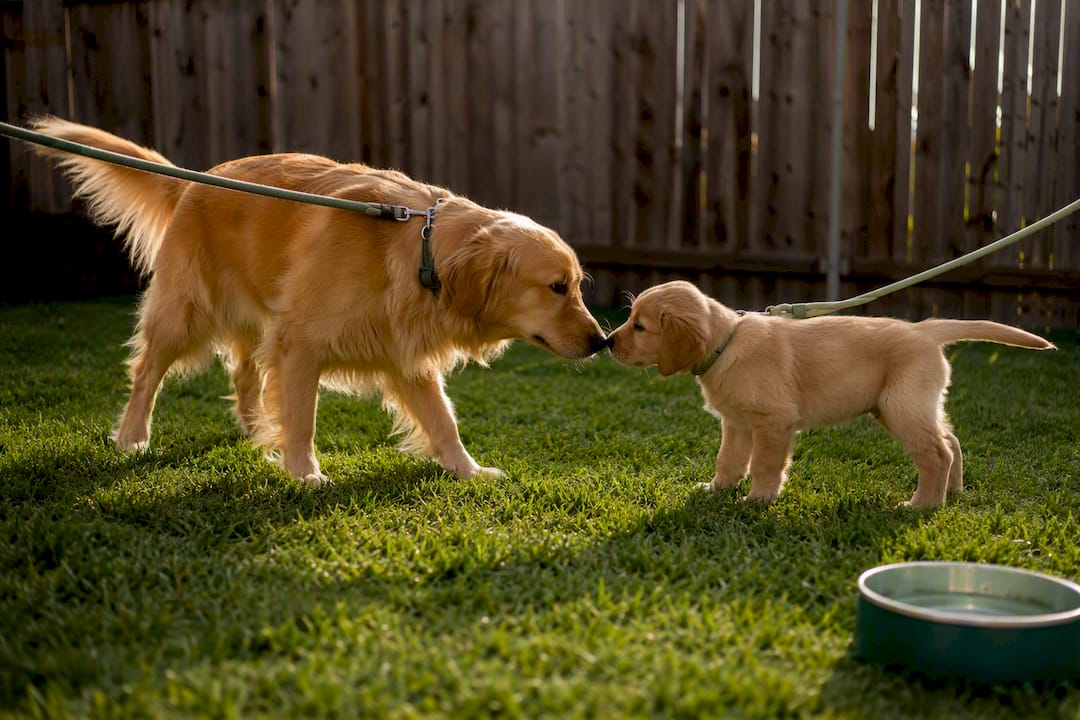
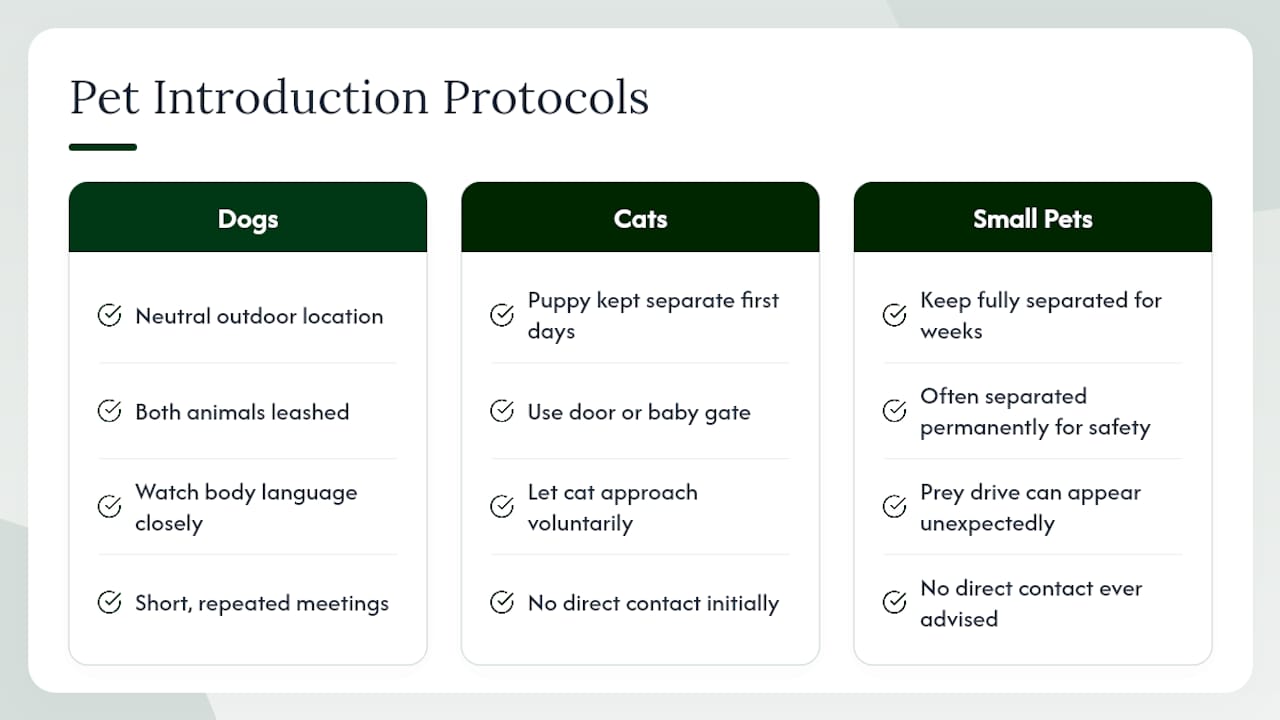
For resident dogs, arrange the first meeting somewhere neutral, like a yard or quiet stretch of sidewalk, rather than inside your home where territorial instincts run higher. Keep both animals leashed, watch body language closely, and end the session before either one gets overwhelmed. Short, repeated positive meetings beat one long forced interaction.
Cats need a different approach entirely. Keep the puppy in a separate room or crate for the first few days, and let the cat approach the door or gate on their own terms. A baby gate lets both animals see and smell each other without direct contact until the cat seems curious rather than defensive.
Small animals like rabbits, guinea pigs, or birds should stay fully separated from a new puppy for at least the first few weeks, and many households keep them separated permanently for safety, regardless of how calm the puppy seems. Prey drive can surface even in otherwise gentle dogs.
Feed all pets separately during this adjustment period. Resource guarding around food bowls is one of the most common friction points between a new puppy and an established pet, and separate feeding stations remove that trigger completely.
A Note on Getting Through the First Weeks
Expect to be tired. Expect a few accidents on the rug and a night or two where nobody sleeps well. That’s not a sign you’re doing it wrong, it’s just what the first stretch of raising a puppy looks like for almost everyone. Lean on routine, be patient with yourself, and use Walnut Creek Pet’s care guides and community resources when you need a second opinion or just some reassurance.
— Timothy
Getting Your Puppy’s First Week Right With Walnut Creek Pet
Walnut Creek Pet built its catalog around one idea: a new puppy’s first week goes smoother when the treats, food, and gear in the house are single-ingredient and free of unnecessary fillers, not another label you have to decode at 11pm. For training rewards, All-Natural Beef Sausage Dog Treats give you a high-value reward for recall and name work, while Wholesomes Rewards biscuits cover the lower-stakes moments like crate loading. If your puppy is a picky eater during the transition, the freeze-dried dinner topper makes their regular food more appealing without switching diets outright. New adopters get access to discounts, and every purchase contributes to Walnut Creek Pet’s ongoing donations to no-kill shelters. Browse the full puppy starter selection to build out the rest of your checklist before pickup day.
Sources

- What to do when you first bring home a new puppy - AAHA
- What Every New Puppy Parent Should Know - American Humane
- New Puppy Checklist: Essentials for Your New Dog - PetMD
FAQ
Where should a puppy sleep the first night?
In a crate placed near your bed. Proximity to you reduces nighttime crying and makes scheduled potty breaks far easier to manage.
What is the 10-minute rule for puppies?
It caps formal training sessions at around 10 minutes for young puppies, since their attention span and patience run out fast, and longer sessions tend to backfire.
What do you need for a new puppy checklist?
At minimum: food and bowls, a properly sized crate and bed, collar or harness with an ID tag, an enzymatic cleaner, chew toys, and paperwork for vaccination records and microchip registration.
What is the rule of threes for a new puppy?
It’s a loose pacing guideline suggesting no more than about three new experiences or exposures per day during socialization, so a young puppy isn’t overwhelmed by too much novelty at once.


