


3 Risks to Check Before Choosing Pet Safe Mulch for Dogs and Cats
A vet-backed, three-risk checklist for choosing pet safe mulch for dogs and cats. Learn which materials to avoid, zone-based picks, and simple maintenance...

Cedar, pine bark, shredded hardwood, and clean straw or shredded leaves are the safest mulch choices for yards with dogs and cats. Cocoa bean mulch, rubber mulch, and black walnut products should never go anywhere pets can reach them. The reasons split into three risks: chemical toxicity, physical obstruction, and biological contamination from mold. Supervise pets around any new mulch, and call your veterinarian immediately if you suspect ingestion.
TL;DR:
- Organic mulches like cedar, pine bark, shredded hardwood, straw, and leaves are safest options, but fresh cedar and dyed or recycled wood mulches can pose risks.
- Cocoa bean mulch, rubber mulch, black walnut products, and dyed or contaminated wood mulches are dangerous due to toxicity, sharp edges, or mold contamination.
- The main hazards include chemical poisoning, physical obstruction from ingestion or paw injury, and biological risks such as mold that produce toxins.
- Regular inspection, proper application, and choosing larger chip sizes can reduce the chance of pets swallowing harmful materials or getting injured.
- Using inorganic options like pea gravel or living groundcovers for high-traffic or digging zones can minimize ingestion risks and long-term costs.
Table of Contents
- What Is the Safest Mulch for Dogs and Cats?
- Mulches to Avoid and Why They’re Dangerous
- The Three Ways Mulch Hurts Pets
- How to Choose the Right Mulch for Your Yard
- Applying and Maintaining Pet-Safe Mulch
- Walnut Creek Pet’s Approach to Pet Yard Safety
- What Does Pet-Safe Mulch Cost?
- Switching Your Yard to Pet-Safe Mulch Without Upsetting Your Pet
- Why the Simple Safety Rules Aren’t Enough
- Give Your Pet Something Better to Chew Than Mulch
- Sources
- FAQ
What Is the Safest Mulch for Dogs and Cats?
Not all mulch behaves the same way once a curious nose or paw gets involved. The right pick depends on what it’s made of, how big the pieces are, and how your particular pet interacts with the yard.
Cedar tops most vets’ lists because its natural oils repel fleas and other insects without introducing synthetic pesticides. The ASPCA classifies cedar as non-toxic, alongside cypress and pine bark. One caveat: fresh cedar off-gasses a strong scent that can bother cats with respiratory sensitivities, so give it 24 to 48 hours before letting a sensitive cat roam unsupervised near a fresh application. Stick to medium chip sizes rather than fine dust, which is easier for pets to inhale or paw into their eyes.
Pine bark and pine straw are soft underfoot and gentle on paw pads, which matters if your dog spends hours lounging in garden beds. The American Kennel Club specifically recommends pine straw as a suitable alternative to riskier options. Buy pine bark in nugget rather than mini-nugget form when possible. Nuggets are large enough that most dogs won’t swallow a piece whole, while shredded pine bark dust tends to get kicked around and tracked indoors.
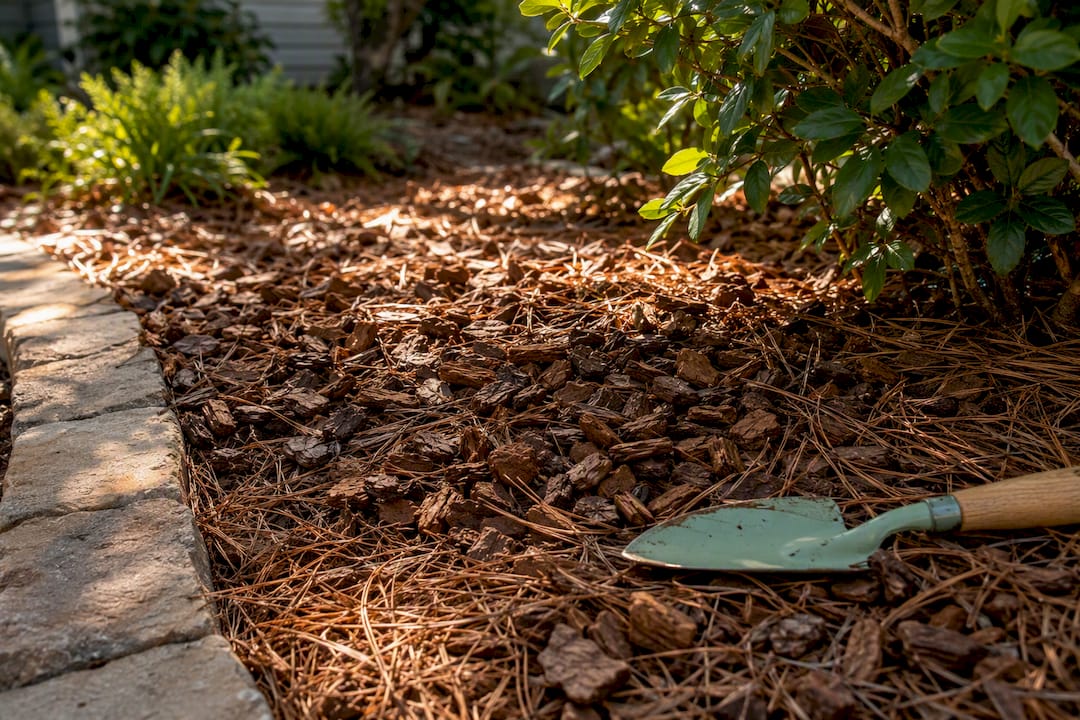
Shredded hardwood, when undyed, works well as an all-purpose landscaping mulch. Source it from a reputable supplier and confirm it hasn’t been treated with any wood preservative.
Straw and shredded leaves suit vegetable gardens and temporary ground cover better than permanent beds. They break down fast and add organic matter, but check that any hay or straw wasn’t treated with herbicide or pesticide before baling.
Cypress holds up well in wet, humid climates where other organic mulches turn moldy faster. It resists rot longer than shredded hardwood, which makes it a solid pick for shaded, damp corners of the yard.
Mulches to Avoid and Why They’re Dangerous
Some mulch products show up in landscaping aisles despite carrying real risk for pets. Knowing exactly why each one is dangerous makes it easier to walk past them at the garden center.
- Cocoa bean mulch contains theobromine and caffeine, the same compounds that make chocolate toxic to dogs. It also smells like chocolate, which makes it unusually attractive to dogs that would otherwise ignore mulch entirely. The AKC flags it directly as a dangerous choice for yards with dogs.
- Rubber mulch doesn’t break down, which means a swallowed piece stays intact and can lodge in the intestines. Rubber mulch is generally not recommended for pet areas because of the fatal blockage risk it poses, and it also absorbs heat and can off-gas chemical residues from tire manufacturing.
- Black walnut shells, hulls, and leaves contain juglone, a compound toxic to many plants and animals, and they’re prone to mold growth that produces additional toxins.
- Dyed or recycled wood mulch sometimes originates from demolition lumber, which can carry chromated copper arsenate or other preservatives. Look for Mulch and Soil Council certification to confirm safe, uncontaminated sourcing
- Sharp gravel or crushed stone can cut paw pads and, in small enough pieces, poses a swallowing hazard for dogs that dig or mouth their surroundings.
The Three Ways Mulch Hurts Pets
Every mulch decision boils down to three risk categories, and running any product through this filter before you buy it will catch most problems before they reach your yard.
Chemical toxicity covers ingredients that poison a pet outright, like the theobromine in cocoa mulch or preservatives in treated wood. Cross-check questionable products against the ASPCA’s toxic and non-toxic plant list or call the Pet Poison Helpline if you’re unsure.
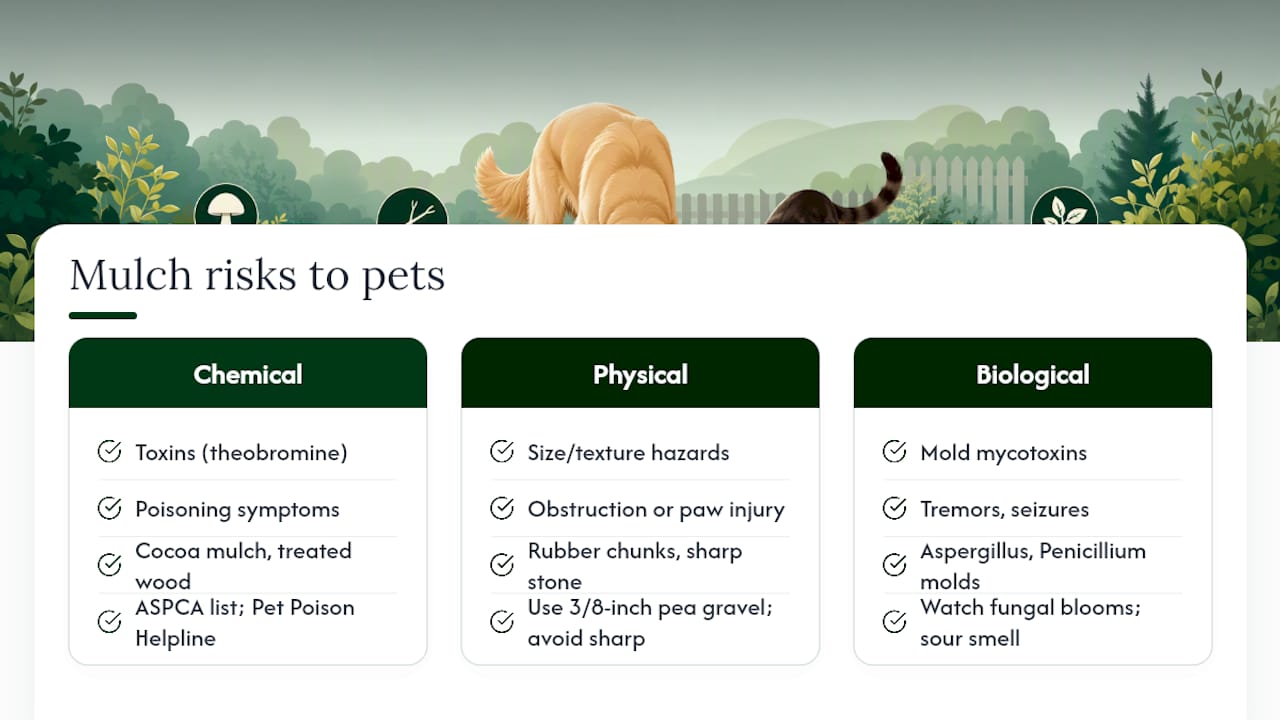
Physical hazard is about size and texture. A dog that swallows a large, indigestible chunk of rubber mulch risks a bowel obstruction that requires surgery. For inorganic ground cover in high-traffic zones, 3/8-inch rounded pea gravel is comfortable and hard to swallow, while 1 to 2 inch river rock works for areas where dogs spend more time lying down. Crushed stone, by contrast, has sharp edges that can injure paw pads.
Biological contamination shows up as mold in damp, decomposing mulch beds.
Tremorgenic mycotoxins from mold like Aspergillus and Penicillium can trigger sudden, severe tremors and seizures in dogs that ingest contaminated mulch, and symptoms can escalate within hours.
Watch for visible fungal blooms or a sour fermentation smell, especially in mulch that’s been down for 12 to 18 months without turning. Dark mulch also absorbs more heat, which can make paws uncomfortable on sunny days. If your pet does eat mulch of any kind, contact your veterinarian right away rather than waiting for symptoms, and never induce vomiting unless a vet specifically tells you to.
How to Choose the Right Mulch for Your Yard
Picking mulch isn’t a one-size-fits-all decision. A yard with a nine-month-old Labrador that digs craters looks nothing like a yard with an elderly cat who sunbathes in the flower bed.
- Assess chewing and digging habits first. Heavy chewers and diggers need coarser, larger-piece mulch or inorganic alternatives that are harder to mouth or excavate.
- Factor in pet size and age. Puppies and kittens explore with their mouths more than adult pets, so err toward the safest options during that stage regardless of what you’d otherwise choose.
- Consider your climate. Humid regions accelerate mold growth in organic mulch, which shortens replacement intervals; arid climates favor mulches like cedar or cypress that resist breakdown longer.
- Match sun exposure to material. Dark, dense mulch in full sun gets hot fast. Lighter-colored options or shaded placement reduce paw discomfort.
- Be honest about maintenance willingness. Straw and shredded leaves look great but need replacing more often than cedar or pine bark.
For play and run areas, lean toward inorganic ground cover like pea gravel or living groundcovers such as creeping thyme and microclover, both of which tolerate foot traffic without creating ingestion risk. Planting beds do well with cedar, pine bark, or shredded hardwood. Vegetable gardens are the one place straw and shredded leaf mulch genuinely shine, since they’re temporary by design and easy to till into the soil at season’s end.
At the register, ask suppliers whether the mulch is undyed, whether it carries Mulch and Soil Council certification, and what chip or nugget size the batch runs.
Pro Tip: Spread a small test patch of any new mulch and watch your pet’s reaction for 7 to 14 days before covering the whole yard. Some dogs ignore mulch entirely; others treat every new material as a snack, and it’s better to find out on a two-square-foot patch than after a full pallet delivery.
Applying and Maintaining Pet-Safe Mulch
Getting the material right only solves half the problem. How you spread and maintain it determines whether it stays safe for the next year or two.
Spread organic mulch 2 to 3 inches deep. That’s thick enough to suppress weeds without creating a pile deep enough for a pet to burrow into. Keep mulch pulled back about 2 inches from stems and trunks, both to protect plants from rot and to reduce the dense, damp pocket where pets might dig.
- Inspect beds at least once a year and replace any mulch that’s turned dark, slimy, or musty, generally within the 12 to 18 month window before mold risk climbs.
- In humid climates, turn beds partway through the season to let trapped moisture escape.
- Install edging around mulched beds to discourage digging and keep material from migrating onto walkways.
- Keep at least one shaded path option available in full-sun yards so paws have a cooler route on hot days.
- Check mulch after heavy rain or irrigation, when mold blooms tend to appear fastest.
Pro Tip: Run your hand through a section of mulch every few weeks. If it feels noticeably warmer than the surrounding air or smells sour, pull it and replace it before your pet gets there first.
Walnut Creek Pet’s Approach to Pet Yard Safety
Walnut Creek Pet supports pet owners with organic, single-ingredient products and donates 10% of profits to no-kill shelters, a mission built directly into the company’s approach to pet care. Care guides and discounts for new adoptees provide practical, everyday help for new pet parents.
Beyond mulch, outdoor maintenance gear matters too. Products like biodegradable pooper scooper waste bags fit naturally into a yard care routine built around safety and low chemical exposure.
[Author credentials and background placeholder]
[Customer testimonial placeholder highlighting product quality and service]
[Case study or data placeholder on shelter donation impact]
What Does Pet-Safe Mulch Cost?
Price differences between mulch types can be significant enough to change your decision, especially if you’re covering a large yard.
Straw and shredded leaves are usually the cheapest option, and if you have your own fall leaves, shredding them costs nothing beyond the labor. Shredded hardwood and pine bark nuggets sit in the mid-range at most garden centers, with pine bark often running slightly higher due to demand and sourcing. Cedar mulch tends to cost more than either, a premium buyers pay for its natural insect-repelling oils and longer breakdown time compared to hardwood.
Inorganic options carry a different cost structure. Pea gravel and river rock cost more upfront per square foot than any organic mulch, but they don’t need annual replacement. Over a five-year span, a one-time gravel installation can end up cheaper than five years of buying fresh hardwood mulch every spring. Living groundcovers like creeping thyme or microclover sit somewhere in between: modest upfront plant costs, minimal replacement, but some establishment time and occasional trimming.
The cheapest choice on the shelf isn’t always the cheapest choice over time. A yard that needs annual mulch replacement because of a digging dog may cost more in the long run than a one-time gravel or groundcover installation, even though the sticker price looks higher on day one.
Switching Your Yard to Pet-Safe Mulch Without Upsetting Your Pet
Ripping out old mulch and replacing it overnight can spook a pet that’s used to a familiar yard, and it raises the odds of curious sniffing turning into sampling.
Work in sections rather than doing the whole yard at once. Replace one bed, let your pet get used to the new texture and smell over a few days, then move to the next area. This also lets you spot a problem, like a dog that suddenly develops interest in eating the new mulch, before it’s spread across your entire property.
Remove old mulch completely before adding new material rather than layering on top of it. Old mulch trapped underneath new material holds moisture and speeds up mold growth exactly where you don’t want it.
Supervise outdoor time closely for the first week or two after any change. Pica, the tendency to eat non-food items, sometimes emerges specifically around novel textures and smells, so a pet that’s never shown interest in mulch before might investigate a brand-new pine bark bed. If persistent chewing or eating shows up, pull that mulch from accessible areas rather than hoping the behavior fades.
Keep transition timing in mind, too. Spring and fall installations give mulch time to settle and start off-gassing (in cedar’s case) before peak outdoor hours in summer heat.
Why the Simple Safety Rules Aren’t Enough
Most mulch advice stops at a list: use this, avoid that. That’s a fine starting point, but it misses the bigger issue, which is that mulch safety is really a behavior question wearing a materials question’s clothes.
The research backs this up. Veterinary consensus holds that every mulch type carries some ingestion risk, even the ones labeled safe. A dog that compulsively eats cedar mulch isn’t protected just because cedar isn’t toxic. It’s still getting a stomach full of wood fiber that didn’t need to be there. The real fix in that case isn’t a better mulch. It’s redirecting the behavior with a chew or enrichment toy and possibly removing mulch from that dog’s reach entirely.
I’d also push back gently on treating the “avoid list” as the finish line. Rubber and cocoa mulch get flagged everywhere for good reason, but plenty of owners feel like they’ve done their homework once they’ve ruled those two out, then skip the mold inspection schedule that actually matters more over time. Prioritize the maintenance habit over the initial purchase decision. That’s where most real-world incidents happen.
— Timothy
Give Your Pet Something Better to Chew Than Mulch
Walnut Creek Pet exists for exactly this kind of problem: pet owners who want organic, single-ingredient products instead of guessing what’s safe. If your dog treats every yard project as a snack opportunity, redirecting that instinct works better than fighting it.
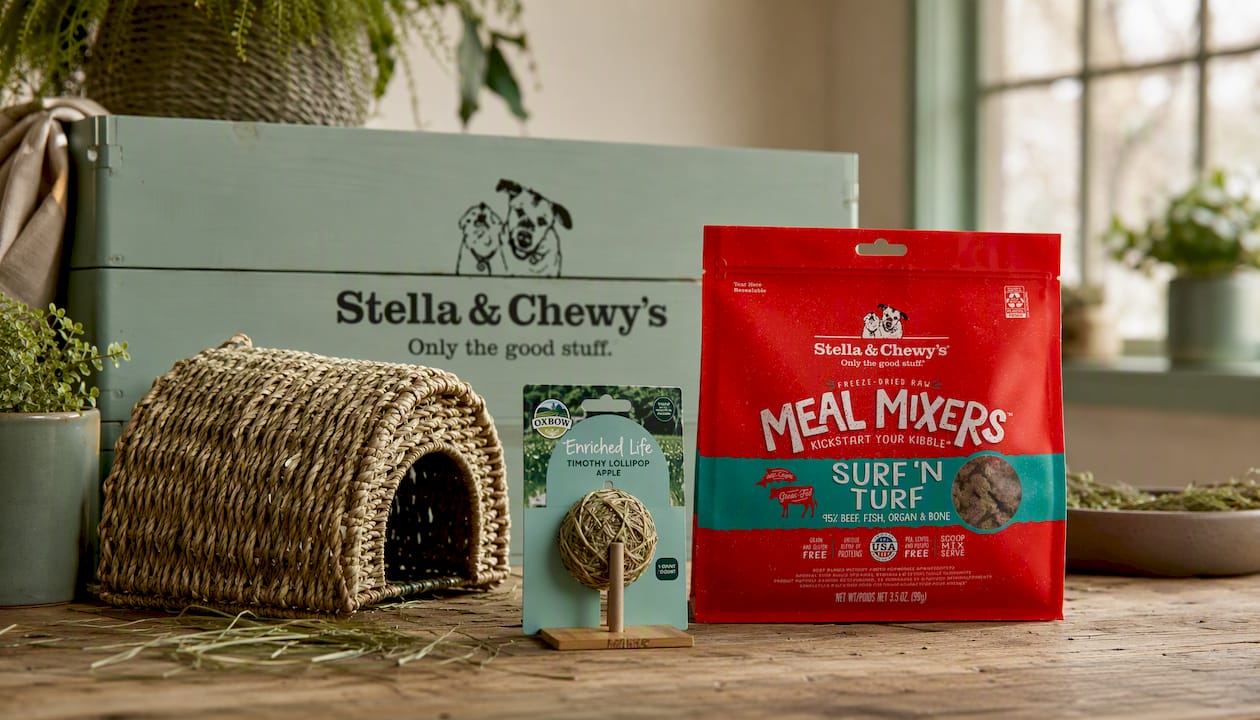
Rotating in something like Stella & Chewy’s Freeze Dried Meal Mixers as a meal topper gives dogs a stronger food reward at dinner, which sometimes eases mulch-sampling behavior between meals. For households with rabbits, guinea pigs, or other small animals sharing the same outdoor space, an Oxbow Enriched Life Woven Hideout gives them a secure retreat away from garden beds entirely, and an Oxbow Timothy Lollipop chew keeps grazing instincts satisfied on something built for it. Browse catalogs of organic, single-ingredient supplies to find the right fit for your yard and your pet’s habits.
Sources
- ASPCA: Toxic and Non-Toxic Plants
- AKC: Yard Safety — Keeping Your Dog Safe in Your Yard
- Dogster: Is Mulch Safe for Dogs? Our Vet-Approved Advice
- LawnsGuide: Is Mulch Safe for Dogs? A Toxicity & Selection Guide
FAQ
What should I use instead of mulch if my dog eats everything?
Inorganic ground cover like 3/8-inch pea gravel or a living groundcover such as creeping thyme or microclover holds up better against dogs that treat organic mulch as a snack. Pairing either option with a dedicated chew toy helps redirect the behavior rather than just removing the temptation.
What is the safest ground cover for dogs?
Rounded pea gravel and river rock are among the safest inorganic choices because they’re too large to swallow easily and don’t carry the toxicity risk that comes with cocoa bean or rubber mulch. Living groundcovers like microclover offer a softer, cooler surface for paws while standing up to regular foot traffic.
Is there a mulch dogs won’t eat?
No mulch is guaranteed dog-proof, since any mulch carries some ingestion risk depending on an individual dog’s habits. Coarse pine bark nuggets and cedar chips tend to be less appealing to most dogs than fine, sweet-smelling shredded mulch, but persistent chewers may need inorganic ground cover instead.
Is dyed or scented mulch safe for dogs?
Dyed mulch sourced from certified suppliers can be safe, but the wood behind the dye sometimes comes from recycled or treated lumber. Check for Mulch and Soil Council certification to confirm the wood source is free of preservative contamination before buying any dyed product
What should I do if my dog eats mulch?
Contact your veterinarian immediately rather than waiting to see if symptoms appear, and don’t induce vomiting unless a vet specifically instructs you to. Note the type and amount of mulch eaten, since cocoa bean mulch and moldy mulch both require faster intervention than a small bite of plain cedar.
Recommended
- Turkey Chips for Dogs | All-Natural Single-Ingredient Healthy Dog Treats
- Mr. Peanut’s XL Pooper Scooper Sized 13X11" BioDegradable BioPlastic Recycled Plant-Based Waste Bags
- Chicken Treats Dog Treats, 5 Ounce Bag, Single Ingredient, High Protein
- Chicken Chips for Dogs | All-Natural Single-Ingredient Dog Treats


