


Cut Calories 24% and Preserve Muscle: Vet Guided Senior Dog Nutrition
Vet guided senior dog nutrition: cut calories up to 24%, preserve muscle with quality protein, monitor body condition, and follow your vet's advice on diets.

Most senior dogs don’t need a total diet overhaul, but almost all of them need adjustments. Prioritize three things: keep protein quality high to protect muscle, cut calories to match a slower metabolism, and add targeted nutrients like EPA/DHA and antioxidants when your dog’s condition calls for them. Talk to your veterinarian before starting any prescription diet or supplement, since the right approach depends on your individual dog, not just a birthday.
TL;DR:
- Senior dogs generally need up to 24% fewer calories than younger adults, but adjustments should be based on body condition and activity level.
- Quality protein remains essential for seniors to maintain muscle, with protein restriction only advised for dogs with diagnosed kidney disease.
- Incorporating omega-3 fatty acids, antioxidants, and targeted nutrients like EPA/DHA can support joint health and cognitive function.
- Transition between different foods should be done gradually over at least two weeks to prevent gastrointestinal upset.
- Always verify the actual nutrient content on the label, focusing on guaranteed analysis and named protein sources rather than marketing claims.
Table of Contents
- When Is a Dog Considered a Senior for Nutrition Purposes?
- Key Nutrients Senior Dogs Need in Their Diet
- How Many Calories Does a Senior Dog Actually Need?
- Why Do Senior Dogs Drink and Eat Less, and What Helps?
- Which Supplements and Prescription Diets Actually Have Evidence Behind Them?
- How Do You Safely Switch a Senior Dog’s Food?
- Practical Products That Support a Senior Feeding Plan
- What Are the Signs of Malnutrition in Senior Dogs?
- Nutrition Guidance for Kidney Disease, Arthritis, and Cognitive Decline
- Is Homemade Food Safe for Senior Dogs?
- What Are Good Low-Calorie Treats for Senior Dogs?
- How Does Digestion Change as Dogs Age?
- How to Read a Senior Dog Food Label the Right Way
- A Practical Note on Balancing Vet Input and Home Management
- Find Senior-Friendly Nutrition Support at Walnut Creek Pet
- Sources
- FAQ
When Is a Dog Considered a Senior for Nutrition Purposes?
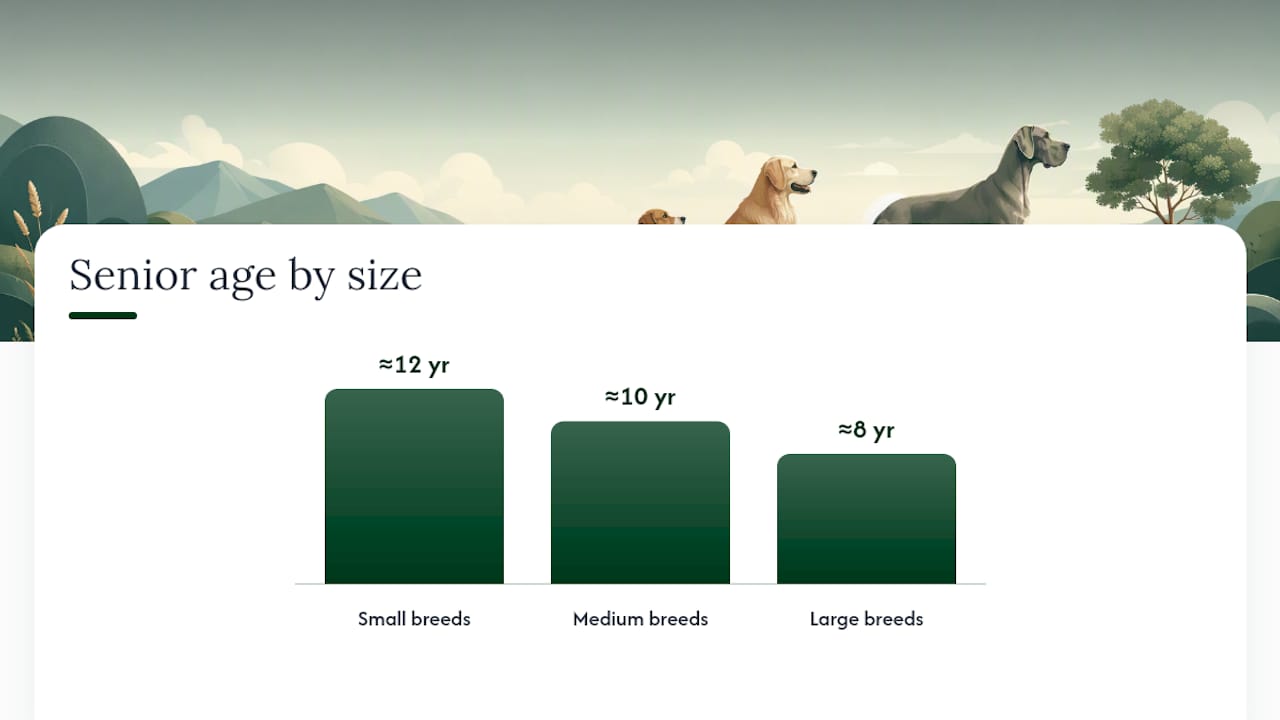
There’s no single age that flips a switch. Size drives the timeline: small breeds are generally considered senior around 12 years old, medium breeds around 10, and large breeds as early as 8. Large and giant breeds age faster metabolically and orthopedically, so watch them sooner rather than later.
Breed, activity history, and existing chronic conditions all shift that timeline in either direction. A lean, active 9-year-old Labrador may still eat like an adult dog, while an overweight 7-year-old with arthritis already needs senior-level attention.
Watch for these signals that it’s time to reassess feeding:
- Gradual weight gain despite unchanged food amounts
- Visible muscle loss along the spine or hind legs
- Noticeably less enthusiasm for walks or play
- Appetite swings, either picky eating or sudden overeating
- Slower recovery after activity or stiffness getting up
Key Nutrients Senior Dogs Need in Their Diet
Nutritional needs of senior dogs shift toward preserving what’s left of muscle mass while protecting organs that are working harder than they used to. Here’s what actually matters on a label, and why.
Protein. Older dogs need high-quality, digestible protein to maintain lean body mass, not less protein just because they’re aging. Cornell’s veterinary guidance notes that protein restriction is only appropriate for dogs with diagnosed kidney disease, and even then it’s a vet-guided decision, not a default.
Fat and MCTs. Fat supplies concentrated energy, which is exactly why total fat needs to be controlled in a less active senior. Medium-chain triglycerides are a different story: they convert into ketones the aging brain can use when glucose metabolism starts slipping around age 7, giving cognitive support that ordinary fat doesn’t.
Fiber and moisture. A blend of soluble and insoluble fiber keeps stool quality consistent and supports a gut that’s slowing down. Higher moisture content, whether from canned food or added water, eases digestion and makes meals more appealing to a dog with a duller sense of smell.
Omega-3s (EPA/DHA). These support joint comfort and cognitive function, but the dose matters enormously.
Statistic Callout: Senior dogs may need up to 24% fewer calories than they did as younger adults, largely from slower metabolism and reduced activity.
Antioxidants. Vitamin E, vitamin C, and similar compounds appear to support memory and cognitive function, especially when paired with environmental enrichment like puzzle feeders or new walking routes.
Phosphorus and sodium. These only become a real concern once kidney or heart disease enters the picture. A healthy senior doesn’t need phosphorus restriction; a senior with early kidney disease often does.
Pro Tip: Don’t judge a food by the word “senior” on the bag. There’s no regulated definition of that term, so two “senior formulas” can have wildly different protein and fat levels. Read the guaranteed analysis, not the marketing panel.
How Many Calories Does a Senior Dog Actually Need?
The 24% calorie reduction figure from Cornell is a useful starting point, not a rule to apply blindly. A dog that’s already lean and active may need a much smaller cut, while a dog that’s been sedentary for years might need more.
Here’s a practical process for getting it right:
- Body-condition score monthly. Feel for ribs, waist, and abdominal tuck rather than relying on the scale alone.
- Weigh your dog on a consistent schedule. Monthly weigh-ins catch slow weight changes before they become obvious visually.
- Adjust in small increments. Cut or add food in 10% steps and reassess after two to three weeks, not overnight.
- Budget treats separately. Treats should stay under 10% of total daily calories, and that budget needs to come out of the main meal allotment.
- Watch for the opposite problem. Unexplained weight loss or muscle wasting means it’s time to increase calories or protein, not restrict further, and it deserves a vet visit.
Why Do Senior Dogs Drink and Eat Less, and What Helps?
Older dogs often have a blunted thirst drive, and dental pain, reduced smell, or nausea from underlying disease can all suppress appetite. Left unaddressed, this snowballs into dehydration and weight loss that compounds whatever health issue started it.
Simple fixes go a long way:
- Clean water bowls daily, since biofilm buildup can deter drinking even when water looks fine to you.
- Add a pet fountain or a second water station for dogs with mobility limits.
- Use low, wide bowls for arthritic dogs who struggle to bend.
- Warm kibble slightly or mix in a splash of warm water to boost aroma and moisture.
- Stir in a freeze-dried topper for dogs who’ve gone lukewarm on their regular food.
Pro Tip: If your senior skips two consecutive meals or drinks noticeably less for more than a day, call your vet rather than waiting it out. Appetite loss in older dogs is rarely “nothing.”
Which Supplements and Prescription Diets Actually Have Evidence Behind Them?
Not every supplement on a pet store shelf earns its price tag. Here’s where the evidence is strongest and where it’s thinner.
- Omega-3s (EPA/DHA): Genuinely useful for joint comfort, but the effective therapeutic dose is higher than most over-the-counter fish oil capsules provide. Ask your vet to calculate a dose based on your dog’s weight and condition.
- Glucosamine and chondroitin: Commonly used for joint support, though the evidence is more modest than omega-3 research. Most vets treat them as a reasonable adjunct, not a standalone fix.
- MCT oil: Backed by research on canine cognition showing that MCTs give the aging brain an alternative fuel source when glucose use declines. Small trials show benefit in some dogs, particularly those with early cognitive changes.
- Prescription diets: Appropriate for diagnosed conditions like kidney disease, liver disease, or advanced mobility problems, never as a preventive measure for a healthy senior. These require a vet’s diagnosis and bloodwork first.
A senior dog with normal kidney values doesn’t benefit from a low-protein renal diet, and putting one on it can actually accelerate muscle loss.
How Do You Safely Switch a Senior Dog’s Food?
A rushed food switch is one of the most common causes of senior GI upset. Slow it down.
- Days 1 to 3: Mix 25% new food with 75% current food.
- Days 4 to 7: Move to a 50/50 blend.
- Days 8 to 10: Shift to 75% new food, 25% old.
- Days 11 to 14: Complete the transition to 100% new food.
- Watch for loose stool, vomiting, or refusal to eat at any stage, and slow the pace or call your vet if you see it.
Track a simple monitoring checklist through the transition and beyond: weight, body-condition score, stool quality, coat condition, activity level, and appetite. Any negative shift in two or more of these at once is worth calling your vet.
Dental pain changes what “good food” looks like. Dogs with worn or missing teeth often do better with softer kibble, canned food, or kibble softened with warm water. Picky eaters frequently respond to a protein-forward topper rather than a full food swap.
Pro Tip: If your senior is losing weight despite eating well, ask your vet about bloodwork before changing the diet again. A malabsorption issue or thyroid problem can look exactly like “picky eating” from the outside.
Practical Products That Support a Senior Feeding Plan
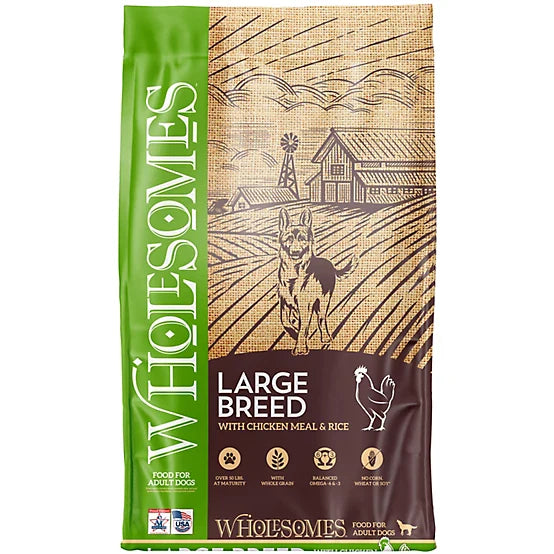
Portion-controlled kibble like Wholsomes Dog Adult Large Breed supports the calorie-conscious approach large-breed seniors need. For palatability and a protein boost without excess bulk, Stella & Chewy’s Freeze Dried Meal Mixers Surf & Turf and Stella & Chewy’s Freeze Dried Meal Mixers Chicken work well as toppers for dogs going lukewarm on dry food. None of these replace veterinary care for diagnosed disease, but they’re practical tools for the everyday feeding challenges described above.
What Are the Signs of Malnutrition in Senior Dogs?
Malnutrition in older dogs doesn’t always look like a skeletal, starving animal. It’s often subtler, and it’s frequently missed until it’s fairly advanced.
Look for these signs:
- Dull, brittle coat or increased shedding beyond normal seasonal patterns
- Muscle wasting along the spine, shoulders, or hind legs, even in a dog that isn’t visibly thin
- Lethargy that goes beyond typical age-related slowdown
- Slow wound healing or recurring minor infections
- Brittle nails or noticeable changes in skin elasticity
- Digestive irregularity, including chronic loose stool or constipation
Protein deficiency specifically tends to show up as muscle wasting first, since the body pulls amino acids from muscle when dietary intake falls short. This is why a senior dog can look “fine” on the scale while quietly losing the muscle that keeps them mobile.
A dog eating a nutritionally complete commercial diet in appropriate amounts is unlikely to develop true deficiencies. Malnutrition in seniors usually stems from something interfering with intake or absorption: dental pain limiting how much they eat, an underlying disease increasing nutrient losses, or a homemade diet that isn’t balanced.
If you notice two or more of these signs, ask your vet about bloodwork rather than simply adding a supplement and hoping. A CBC and chemistry panel can reveal protein levels, organ function, and anemia, all of which point toward the actual cause faster than guessing from the outside.
Nutrition Guidance for Kidney Disease, Arthritis, and Cognitive Decline
These three conditions are the most common reasons a senior dog’s diet needs to diverge sharply from a standard formula, and each pulls in a different direction.
Kidney disease typically calls for controlled phosphorus and moderate, high-quality protein, guided by bloodwork rather than a blanket rule. Because there’s no regulated senior AAFCO profile, a diet built for kidney disease often looks nothing like one built for a healthy, active senior of the same age. Prescription renal diets require veterinary diagnosis, since restricting protein in a dog without kidney disease can do more harm than good.
Arthritis responds best to a combination of weight control and therapeutic omega-3 dosing, since excess body weight directly increases joint load. Weight loss alone, even without supplements, measurably reduces pain and improves mobility in overweight arthritic dogs.
Cognitive decline benefits from a combination approach: MCT oil for alternative brain fuel, antioxidants for oxidative stress, and behavioral enrichment layered on top of diet. None of these fixes cognitive decline outright, but the combination has shown measurable improvement in research settings.
All three conditions need a veterinary diagnosis before you build a feeding plan around them. Guessing which condition your dog has, based on symptoms alone, risks feeding a diet that’s wrong for what’s actually going on.
Is Homemade Food Safe for Senior Dogs?
Homemade diets can work for senior dogs, but the risk of getting them wrong is higher than most owners expect. A 2013 balance-focused review of home-cooked recipes found the overwhelming majority failed to meet basic nutritional standards, often missing calcium, zinc, or specific vitamins entirely.
For a senior dog, that risk compounds. An aging body has less reserve to compensate for a chronically imbalanced diet, and deficiencies that a young, healthy dog might tolerate for months can accelerate muscle loss or organ stress in an older one far faster.
Homemade diets for seniors with a diagnosed condition, like kidney disease, are especially risky to improvise. Getting the phosphorus, sodium, and protein levels wrong in either direction can worsen the exact problem you’re trying to manage.
If you want to feed homemade, do it with a board-certified veterinary nutritionist who can formulate a complete recipe for your dog’s specific age, weight, and health status, and recheck the recipe periodically as your dog’s needs change. A one-time consultation isn’t enough since senior dogs’ needs shift as new conditions emerge. Skip generic recipes from books or websites; they’re rarely balanced for an individual dog’s actual bloodwork and body condition.
What Are Good Low-Calorie Treats for Senior Dogs?
Treats add up faster than most owners realize, especially once daily calorie needs drop by nearly a quarter. The general rule holds for seniors just as it does for younger dogs: treats should stay under 10% of total daily calories.
Single-ingredient, high-protein options work well because they deliver reward value without excess fat or filler. Chicken chips, turkey chips, and pork treats fit this profile since they’re low in additives and easy to break into smaller pieces for portion control.
For seniors with dental issues, softer treats or ones that can be crumbled into food work better than hard chews that require full bite force. A dog with a picky appetite sometimes responds better to a protein-forward treat used as a meal topper than to a treat given separately between meals.
Skip anything high in sodium or artificial sweeteners, and be especially careful with xylitol, which is toxic to dogs at any age. Table scraps are the least controllable treat category, since portion size and ingredients vary wildly, and they’re the easiest way to accidentally undo calorie management you’ve worked to establish elsewhere in the diet.
How Does Digestion Change as Dogs Age?
An aging gut absorbs nutrients less efficiently than it did a decade earlier, and this shows up in ways that are easy to mistake for other problems. Reduced digestive enzyme production means fat and protein don’t break down as completely, which can translate into softer stool or reduced nutrient uptake even when the diet itself is well formulated.
Gut motility tends to slow as well, increasing the risk of constipation, especially in dogs that have also become less active. Slower transit time gives bacteria more opportunity to ferment food in the colon, which can cause gas and looser stool in dogs that never had digestive issues as younger adults.
The gut microbiome itself shifts with age too, generally trending toward less diversity. That’s part of why fiber matters so much in a senior diet: both soluble and insoluble fiber support the bacterial populations that help maintain stool quality and regular motility.
Dogs with reduced digestive efficiency sometimes need a diet with slightly more digestible protein and fat than they needed as younger adults, not less, since less of what they eat is actually being absorbed. This is one more reason blanket senior formulas that reduce protein across the board can backfire.
If a senior dog develops chronic diarrhea, gas, or weight loss despite normal eating, it’s worth ruling out pancreatic insufficiency or inflammatory bowel disease before assuming it’s simply “old age.” Bloodwork and, in some cases, a fecal panel can distinguish a normal age-related digestive shift from something that needs targeted treatment.
How to Read a Senior Dog Food Label the Right Way
Skip the front of the bag entirely. Words like “senior,” “mature,” or “vitality” carry no regulated definition, which means one brand’s senior formula might have 22% protein and another’s might have 32%, with nothing on the front label telling you the difference.
Go straight to the guaranteed analysis panel and check four numbers: crude protein, crude fat, crude fiber, and moisture. Compare these against your dog’s actual condition rather than the marketing name. A lean, muscle-losing senior needs higher protein than the label’s default; an overweight senior needs lower fat regardless of what “senior formula” implies.
Check the ingredient list for a named protein source in the first two or three positions, like chicken, salmon, or beef, rather than a vague “meat meal” or “animal by-product.” Named sources tend to indicate more consistent quality control from batch to batch.
Look for an AAFCO nutritional adequacy statement confirming the food is “complete and balanced for adult maintenance,” since that’s the only meaningful regulatory checkpoint most senior formulas actually pass through. Calorie content per cup or per can, usually listed separately from the guaranteed analysis, is essential for the portion math discussed earlier.
Finally, cross-reference any specific health claim, like “supports joint health,” against the actual EPA/DHA or glucosamine content per serving. A food can legally claim joint support with a dose too low to do anything measurable.
A Practical Note on Balancing Vet Input and Home Management
Regular vet checkups and periodic weighing catch problems long before symptoms do. Quality toppers and mixers have their place, but they support a vet-guided plan. They don’t replace one.
— Timothy
Find Senior-Friendly Nutrition Support at Walnut Creek Pet
Feeding a senior dog well means solving three problems at once: getting them to actually eat, keeping protein quality high, and managing calories without sacrificing nutrition.
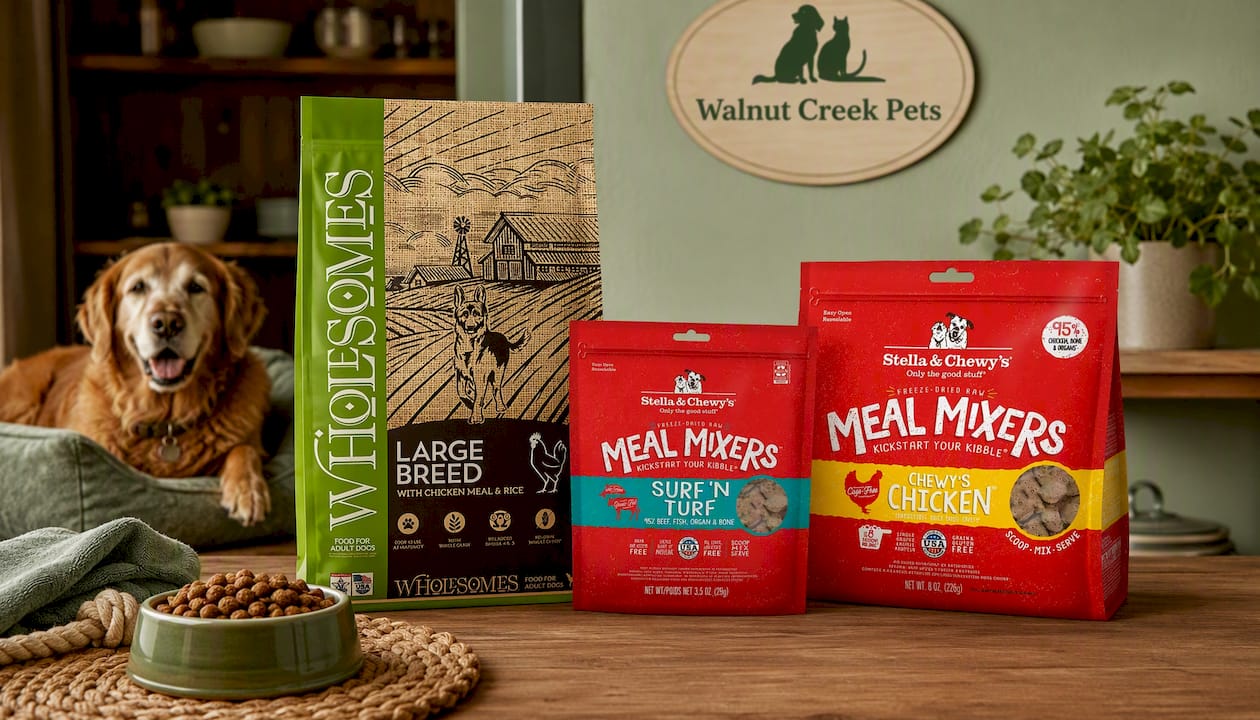
If your senior has gone lukewarm on dry kibble, start with a bag of Wholsomes Dog Adult Large Breed for calorie-conscious feeding, or add a Stella & Chewy’s Freeze Dried Meal Mixer to boost aroma and protein without overhauling the whole diet. Browse the full senior-support lineup at Walnut Creek Pet and build a feeding plan your dog will actually finish.
Sources
- Choosing food for your senior dog — Cornell University College of Veterinary Medicine
- Feeding mature and senior dogs — VCA Animal Hospitals
- PMC article on MCTs and canine cognition
- Senior dog nutrition and supplement tips — American Kennel Club
- Senior dog nutrition — East Oak Vet (clinical guidance PDF)
FAQ
At What Age Is a Dog Considered Senior?
It depends on size: roughly 12 for small breeds, 10 for medium breeds, and 8 for large breeds, though individual health and activity level shift that timeline.
How Many Fewer Calories Does a Senior Dog Need?
Senior dogs may need up to 24% fewer calories than they did as younger adults, though the exact amount depends on activity level and body condition.
Should Senior Dogs Eat Less Protein?
No, most healthy seniors need high-quality, digestible protein to preserve muscle mass; protein restriction is only appropriate for dogs with diagnosed kidney disease under veterinary guidance.
Are Fish Oil Supplements Worth Giving a Senior Dog?
Omega-3s support joint comfort and cognition, but effective doses are often higher than standard over-the-counter capsules provide, so ask your vet to calculate a therapeutic amount.
What’s a Good Way to Boost Appetite in a Senior Dog That’s Eating Less?
Warm the food slightly, add a splash of water, or mix in a freeze-dried topper like Stella & Chewy’s Meal Mixers to boost aroma and moisture.


