


Measure 10–12g Tonight: Species Aware Hamster Feeding for New Owners
Species aware feeding for hamster owners: make pellets 70–80% of the diet, measure 10–12g for adult Syrians, add a small daily veg portion and limit treats.

A healthy hamster diet is built on a complete pelleted food, topped with a small daily portion of fresh vegetables and the occasional protein treat. Seed mixes and sugary snacks stay in a supporting role. Adjust portion sizes by species, since Syrian and dwarf hamsters have different calorie needs and in some dwarf breeds, different sugar tolerances.
TL;DR:
- Hamsters should primarily eat a complete pellet diet with protein around 17-20% and fiber to prevent nutritional gaps and selective feeding habits.
- Fresh vegetables like broccoli and carrots can be offered daily in small amounts, while fruit should be limited to two or three times a week due to sugar content.
- Avoid human foods such as onion, garlic, citrus, chocolate, and high-sugar treats to prevent health risks and nutritional deficiencies.
- Feed adult Syrian hamsters about 10 to 12 grams of pellets daily, with smaller portions for dwarf breeds, and measure portions to avoid overfeeding.
- Regularly monitor weight, droppings, and appetite, and never let hamsters go more than a day without food to catch health issues early.
Table of Contents
- Hamster Diet Guide: Pellets vs. Seed Mixes for the Staple Diet
- Safe Fresh Foods for Hamsters and What to Avoid
- Portion Sizes and Feeding Schedule by Species
- Hamster Safe Treats and Protein Supplements
- Water, Feeding Hygiene, and Storing Hamster Food
- Monitoring Your Hamster’s Diet and Knowing When to See a Vet
- What Actually Changes a Hamster’s Health: An Editorial Take
- Where to Find Vet-Backed Hamster Food at Walnut Creek Pet
- Sources
- FAQ
Hamster Diet Guide: Pellets vs. Seed Mixes for the Staple Diet
Pellets, not seed mixes, should make up the bulk of what your hamster eats every day. A pelleted or block diet forces your hamster to eat every nutrient in every bite, while a loose seed mix invites selective feeding, where your hamster picks out the sunflower seeds and corn and leaves the vitamin-fortified pieces behind. Over months, that habit leads to obesity in one direction and vitamin gaps in the other.
Pro Tip: Check the guaranteed analysis panel on the bag before buying. If the fat percentage looks unusually high for a “hamster mix,” that’s often a sign it’s heavy on sunflower seeds and light on actual nutrition.
When shopping for a base food, look for these label targets:
- Protein around 17% to 20%
- Fat in the 4% to 7% range
- Adequate fiber to support normal gut motility
Those nutrient ranges come from veterinary guidance built specifically for hamster maintenance, not general small-animal averages.
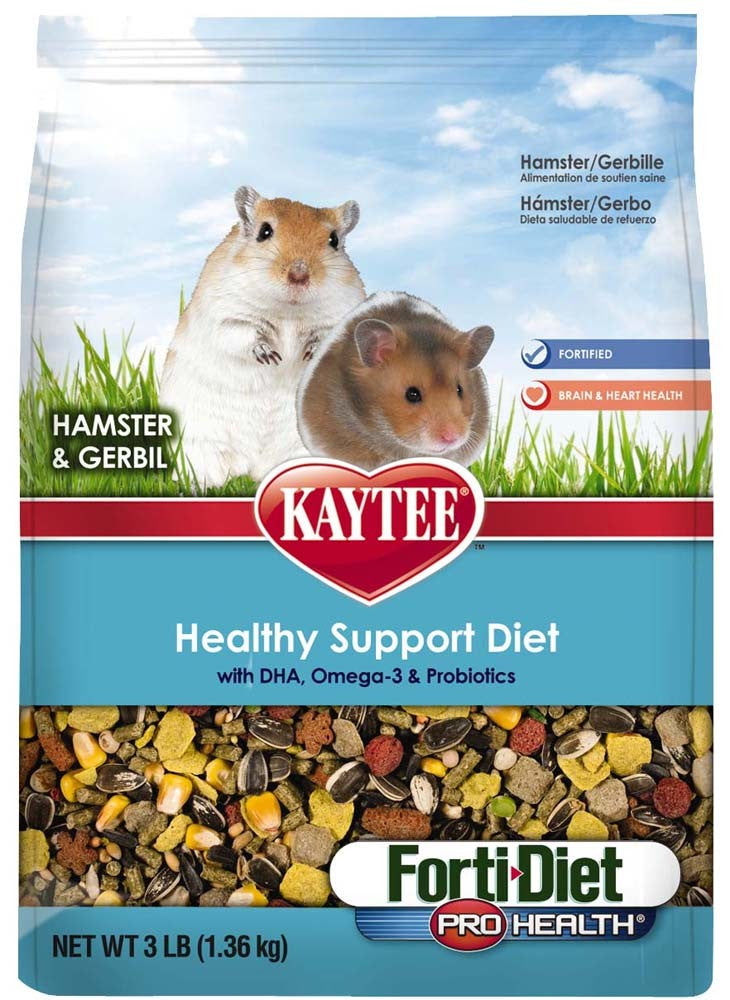
That doesn’t mean seed mixes are off the table entirely. They’re fine as an occasional supplement or enrichment tool, mixed sparingly into a pellet-based bowl, as long as you watch for your hamster cherry-picking the fatty pieces and leaving the rest. A product like Tiny Friends Farm Hazel Hamster Tasty Mix works well in that supporting role. For the actual foundation of the bowl, a complete pellet such as Kaytee Forti-Diet Pro Health Nourish+Protect is built to cover the daily nutrient targets without the guesswork.
Safe Fresh Foods for Hamsters and What to Avoid
Fresh food is where most new owners either get it right or accidentally cause a health problem. The rule of thumb: vegetables can be a near-daily addition in small amounts, fruit is an occasional treat, and a short list of common kitchen items should never end up in the cage.
Vegetables that are generally safe in pea-sized portions include broccoli, carrot, cucumber, spinach, and bell pepper. Rotate two or three of these through the week rather than feeding the same vegetable every day, which helps you notice if one particular food causes loose stool. Fresh vegetables can be offered regularly, but fruit should be limited to one to three times a week because of its sugar content.
Certain human foods carry real risk and shouldn’t make it anywhere near the cage:
- Onion and garlic, which can damage red blood cells
- Citrus fruits, which are too acidic for a hamster’s digestive tract
- Chocolate, which is toxic to hamsters the same way it is to dogs
- Sticky or high-sugar foods like caramel or dried fruit with added sugar
- Fruit pits and seeds, which can be choking hazards or contain trace toxins
| Food type | Examples | How often |
|---|---|---|
| Safe vegetables | Broccoli, carrot, cucumber, spinach | Small amounts, most days |
| Safe fruit | Apple slice, banana, blueberry (no pits/seeds) | 1 to 3 times per week |
| Foods to avoid | Onion, garlic, citrus, chocolate, sticky sweets | Never |
Before serving anything fresh, wash it thoroughly, cut it down to pea size, and introduce new items one at a time so you can spot a reaction. Pull any leftovers out of the cage well before they start to spoil.
Portion Sizes and Feeding Schedule by Species
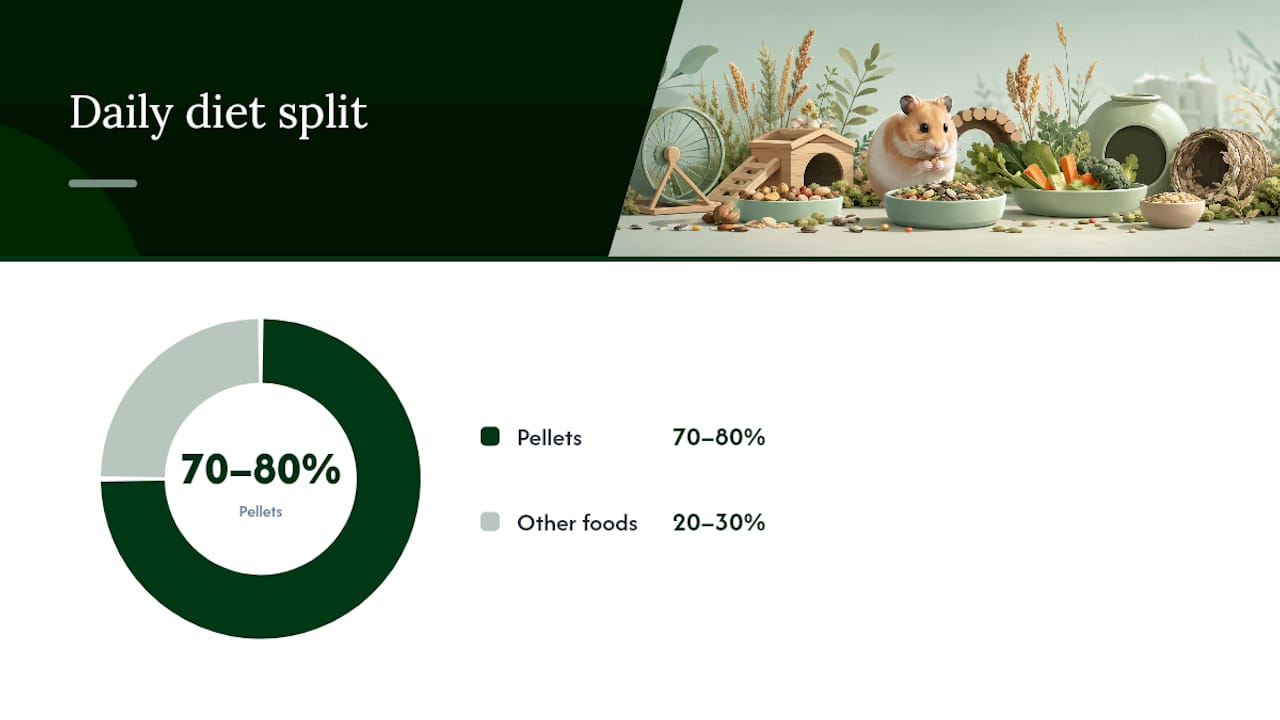
That 70 to 80 percent pellet baseline is the number to build your feeding routine around, whether you call it the 90/10 rule or the 80/20 rule.
In practical terms, that works out to about 10 to 12 grams of pellets per day for an adult Syrian hamster, which is roughly one to two tablespoons measured out each evening. That benchmark comes from small-pet feeding guides built specifically around gram and tablespoon measurements owners can replicate without a kitchen scale. Dwarf species, including Roborovski and Campbell’s dwarf hamsters, need proportionally smaller portions since their bodies are a fraction of a Syrian’s size.
Feed once daily, ideally in the early evening when hamsters naturally wake up and start foraging. Measure the pellet portion with a small scoop or spoon rather than eyeballing it, since it’s easy to overfill a bowl for a species this small.
A few adjustments matter beyond the basic schedule:
- Pregnant or nursing females need more frequent access to food and a slight bump in protein
- Senior hamsters may need softer foods if dental issues develop
- Overweight hamsters benefit from a stricter cap on treats rather than a smaller pellet portion, since pellets carry the essential nutrients
Campbell’s dwarf hamsters carry a meaningfully higher diabetes risk than Syrians. For that breed specifically, sugary fruit and high-sugar treats should be limited far more strictly, and in some cases cut out altogether in favor of a low-sugar pellet.
Hamster Safe Treats and Protein Supplements
Treats exist to build trust and enrichment, not to replace real nutrition. Keep total treats under 10% of daily intake and rotate between a few reliable options.
- Freeze-dried mealworms. A small handful once or twice a week gives your hamster a protein boost that mimics what they’d forage for in the wild.
- Cooked egg or chicken, unseasoned. A pea-sized bit once or twice weekly works as an occasional protein treat without tipping the calorie balance.
- Low-sugar commercial treats. Something like Sun Seed Vita Prima Trail Treat can work in moderation, but check the label for added sugar before making it a regular habit.
Freeze-dried mealworms and small amounts of cooked lean protein are fine as supplements, never as a substitute for the pellet foundation.
Pro Tip: Scatter treats in bedding instead of handing them over directly. It turns a simple snack into a few minutes of foraging enrichment, which matters more for a hamster’s well-being than the treat itself.
Skip live prey entirely, and resist the urge to share salty or sugary human snacks, even in tiny amounts.
Water, Feeding Hygiene, and Storing Hamster Food
Fresh water needs to be available at all times, and a water bottle should be checked daily for a working nozzle, not just refilled. A clogged ball-bearing tip is one of the most common reasons hamsters go without water despite a “full” bottle.
- Check the bottle nozzle daily by tapping it lightly to confirm a drop forms
- Clean the bottle and dish weekly to prevent buildup
- Remove any uneaten fresh vegetables or fruit within about 12 hours, since leftover produce spoils quickly and can grow mold in warm bedding
- Store pellets and seed mixes in a sealed, airtight container in a cool, dry spot, away from direct sunlight
- Check bedding corners for hoarded fresh food your hamster tucked away and forgot
A shallow ceramic dish works better than a deep bowl, since it’s easier for a hamster to reach the bottom without tipping the whole thing over.
Monitoring Your Hamster’s Diet and Knowing When to See a Vet
A monthly weigh-in on a small kitchen scale is the easiest way to catch a problem before it becomes serious. Healthy body condition looks rounded but firm, not doughy around the middle and not so lean that the spine is easy to feel.
Watch for these warning signs that the current diet or feeding routine needs adjusting:
- Diarrhea or unusually wet, sticky droppings
- Wet tail, a serious and fast-moving condition that needs same-day vet attention
- A sudden drop in appetite or food left untouched for more than a day
- Dull, patchy, or greasy-looking fur
Pellet-based diets reduce the risk of obesity and malnutrition compared with seed-only feeding, but even a good diet needs monitoring. Illness, pregnancy, or a diabetes diagnosis in a dwarf hamster may call for a vet-prescribed feeding plan that overrides the general rules in this guide. Keep a simple notebook or phone note tracking weight and appetite each month. Small trends are much easier to spot on paper than from memory alone.
What Actually Changes a Hamster’s Health: An Editorial Take
Most feeding advice online treats hamsters like tiny dogs with different food bowls. They’re not. A hamster’s gut evolved to process a narrow, high-fiber, low-sugar diet, and most of the “treats are fine in moderation” advice underestimates how little moderation actually means for an animal this small.
Here’s what I’d fix tonight if I were starting over: confirm your hamster’s bowl has a real pellet foundation, then measure that portion instead of eyeballing it. This week, add one approved vegetable to the rotation and pick a single protein treat to try. Then start a monthly weigh-in and jot down appetite and droppings. Three small habits, and you’ll catch problems months before they become emergencies.
— Timothy
Where to Find Vet-Backed Hamster Food at Walnut Creek Pet
If you’re ready to build a feeding routine around real nutrition instead of guesswork, start with a complete pellet base and add supplements from there.
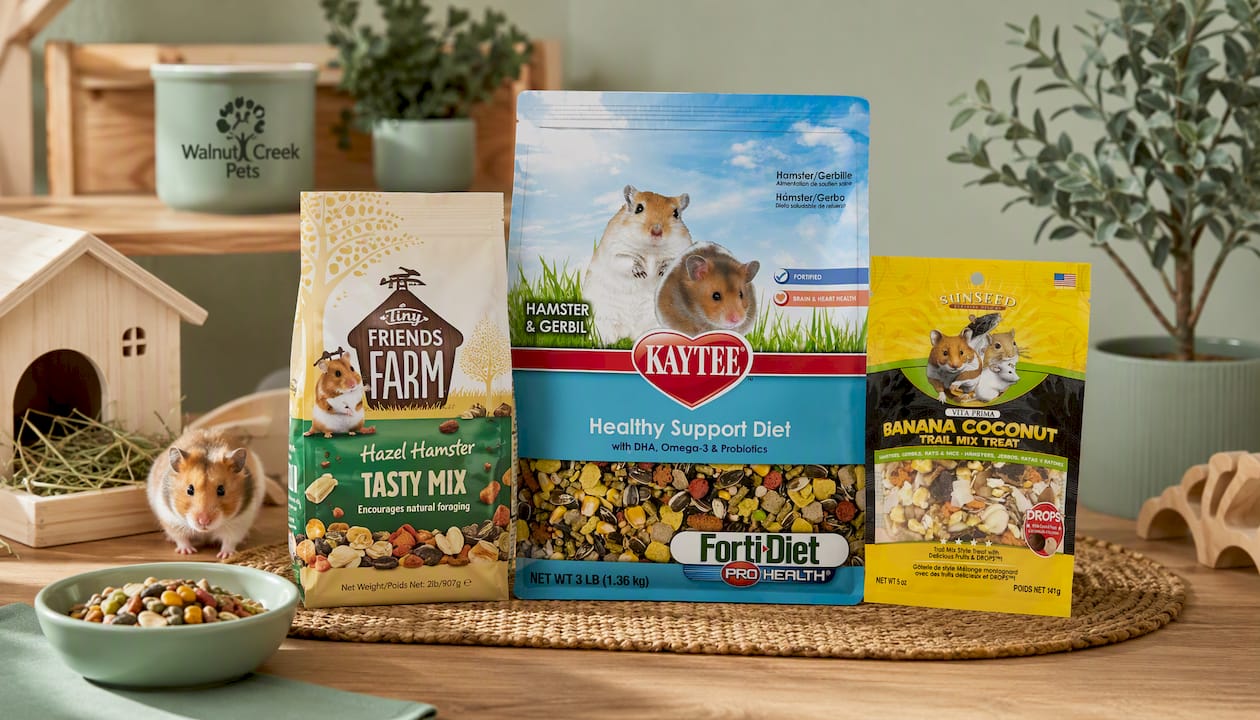
For the daily foundation, Kaytee Forti-Diet Pro Health Nourish+Protect covers the protein and fat ranges this guide walks through. Pair it with Tiny Friends Farm Hazel Hamster Tasty Mix for supplemental variety, and keep a treat like Sun Seed Vita Prima Trail Treat on hand for the occasional reward. If you want additional protein options, freeze-dried chicken breast and freeze-dried lamb liver are both worth adding to the rotation. Browse the full small animal selection and place your order today.
Sources
The goal is steering owners toward foods with real nutritional purpose rather than filler ingredients.
Three products from the catalog map directly onto the feeding approach covered above:
- Hamster Diet Essentials: A Vet’s 2025 Guide with Dr Duncan Houston BVSc 🐹🥕 — Ask A Vet
- What Can Hamsters Eat? | PetMD
- Complete Hamster Diet Guide | Small Pet Expert
The nutrient ranges and safety information in this guide draw on veterinarian-reviewed sources, including Ask A Vet, PetMD, and Small Pet Expert.
FAQ
What Should a Hamster Eat Daily?
A hamster should eat a measured portion of complete pellets as the foundation, plus a small daily amount of fresh vegetables. Fruit and protein treats stay occasional, kept under 10% of total intake, following the 70 to 80 percent pellet guideline most vets recommend.
What Is the Best Food for Hamsters to Eat?
A complete pelleted diet formulated for hamsters, rather than a loose seed mix, is the best staple food. A pellet such as Kaytee Forti-Diet Pro Health Nourish+Protect delivers balanced protein and fat without letting a hamster pick out only the fatty pieces the way loose mixes allow.
Can a Hamster Go Three Days Without Food?
A healthy adult hamster can often survive a day or two without food by relying on cheek-pouch stores, but going three days without eating is risky and can lead to serious health decline. Any hamster refusing food for more than a day needs prompt attention, and a vet visit is warranted if appetite loss continues.
What Foods Should Hamsters Avoid?
Hamsters should never eat onion, garlic, citrus fruit, chocolate, or sticky high-sugar foods, along with fruit pits and seeds that pose choking or toxicity risks. Dwarf breeds like Campbell’s hamsters need even stricter limits on sugary foods because of their higher diabetes risk.


