


See Hoof Gains in 6–9 Months: Natural Hoof Care for Horse Owners
Evidence backed plan for horse owners to transition to barefoot: step by step trimming, diet changes, and 15–20 mg biotin, with measurable gains in 6–9...

Natural hoof care is a holistic system of lifestyle, diet, and barefoot trimming that aims to grow stronger hoof horn over months, not just taking off shoes. It works by mimicking how wild horses move, eat, and wear their feet down naturally. Expect visible change over months, not days, and know that severe conditions like acute laminitis still require immediate veterinary care.
TL;DR:
- Movement on varied terrain is essential for hoof health, with barefoot horses needing consistent stimulation to promote blood flow and horn growth.
- Testing hay for water-soluble carbohydrates and starch levels helps prevent hoof problems linked to high-sugar diets, influencing hoof strength over time.
- Natural trims focus on preserving the hoof’s functional mechanics, using beveled edges and proper weight-bearing surfaces to mimic wild-horse hooves.
- Transitioning from shoes to barefoot requires a staged approach over 6 to 9 months, with hoof boots providing protection during the process.
- Adequate long-term nutrition, especially biotin and amino acids, supports hoof growth, but visible improvements typically take at least six months to realize.
Table of Contents
- What Is Natural Hoof Care, and Where Did It Come From?
- The Three Pillars: Movement, Diet, and Trimming
- What Makes the Natural Trim Different From a Standard Farrier Trim?
- How Do You Transition a Horse From Shoes to Barefoot?
- What Nutrition and Supplements Actually Support Hoof Growth?
- Recognizing Thrush, White Line Disease, and Laminitis
- Building a Realistic Maintenance Routine
- Where Walnutcreekpet Fits Into the Bigger Picture
- When Does Barefoot Actually Make Sense, and When Doesn’t It?
- Supportive Feeding Choices for Horses in Transition
- Where to Go for Deeper Guidance
- Sources
What Is Natural Hoof Care, and Where Did It Come From?
The term picked up steam in the 1980s and 1990s as farriers and researchers studied feral horses in places like the Great Basin, asking why their feet held up so well without shoes, trims, or veterinary intervention. That research shaped what became known as natural hoof care, a framework built on the idea that domestic horses can grow tougher, healthier hooves if their living conditions come closer to matching those wild environments.
It is not simply the absence of shoes. A horse standing barefoot in a small paddock eating rich grass hay still isn’t practicing natural hoof care in any meaningful sense.
The approach rests on three observations from wild-horse populations:
- Near-constant movement across varied, often abrasive terrain
- A sparse, low-sugar forage diet
- Hoof wear that happens gradually and continuously, rather than in six-week bursts
Critics point out that wild-horse comparisons have limits. Feral herds also face high mortality and lameness rates that owners would never accept in a domestic horse, so the model informs practice without dictating it wholesale.
The Three Pillars: Movement, Diet, and Trimming
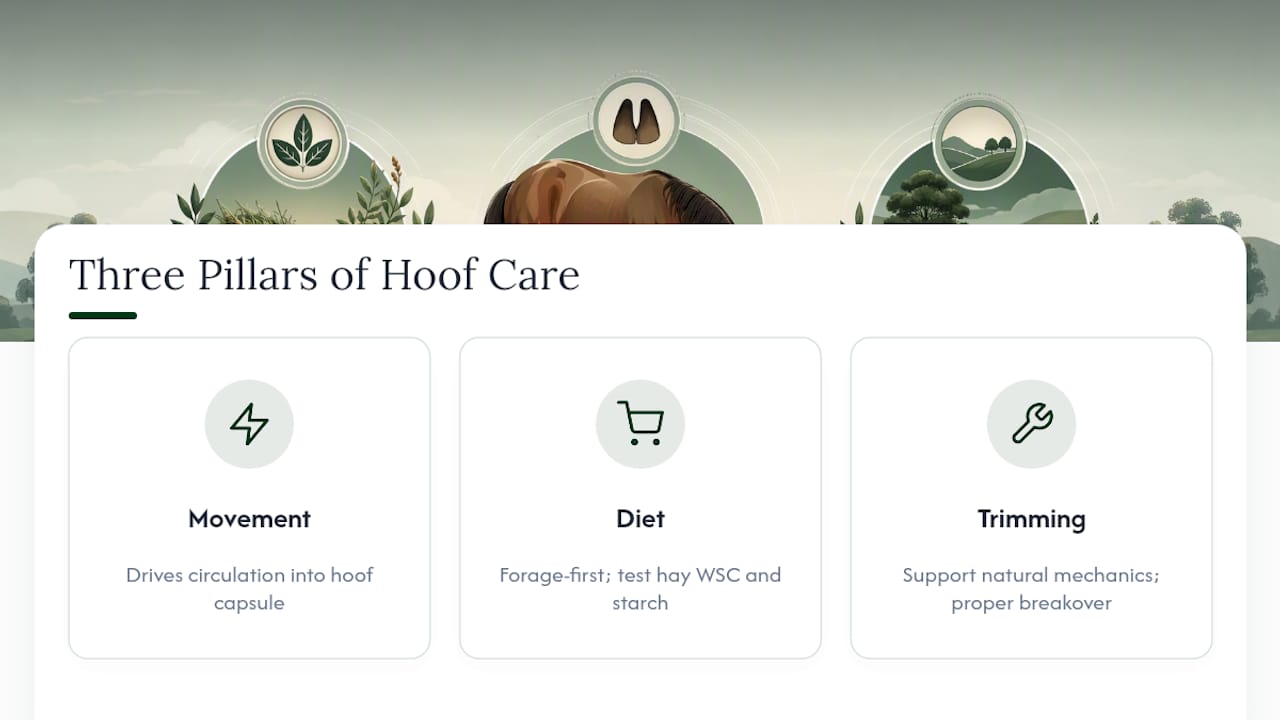
Every credible natural hoof care program comes back to the same three levers, and neglecting one undermines the other two.
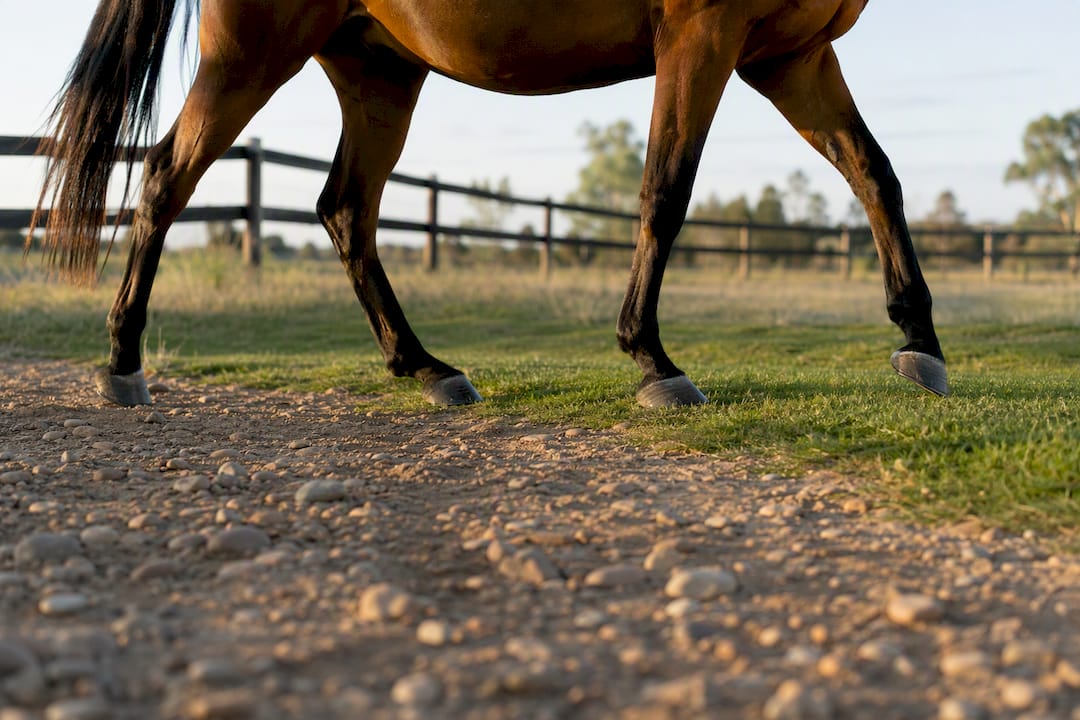
Movement drives circulation into the hoof capsule, which is what actually builds strong horn. A horse standing in a stall for eighteen hours a day, even a barefoot one, isn’t getting the internal blood flow that stimulates growth. Turnout on varied terrain, not just flat grass, does more work than any product on a shelf.
Diet means forage-first feeding with attention to sugar and starch content. Hay testing for water-soluble carbohydrates (WSC) and starch matters more for at-risk horses than most owners realize; hay can vary from under 10% WSC to over 20% depending on cutting and curing.
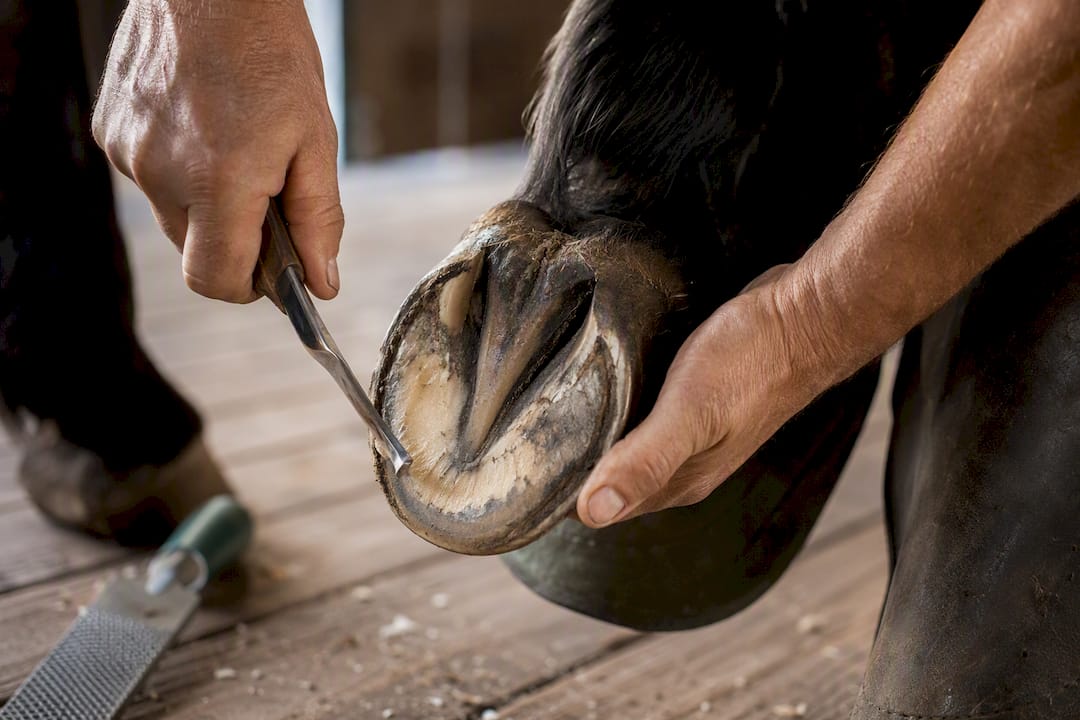
Trimming aims to support the hoof’s natural mechanics rather than impose an artificial shape on it. A good trim encourages proper breakover and reduces strain on tendons and navicular structures by focusing on functional bearing-surface geometry instead of cosmetic wall length.
Pro Tip: Before changing anything else, get your hay tested. A $20 forage analysis often reveals more about hoof problems than a month of guessing about supplements.
What Makes the Natural Trim Different From a Standard Farrier Trim?
A natural trim and a standard shoeing trim can look similar from three feet away and produce very different results underneath.
- The mustang roll. The outer edge of the hoof wall gets beveled to mimic the rounded edge worn into wild-horse hooves by abrasive terrain, which reduces chipping and cracking at the margin.
- Bearing surface shaping. Rather than trimming to a flat plane, the trim accounts for how the sole, bars, and frog should share weight-bearing load together.
- Sole and frog preservation. Excess sole is left largely intact rather than pared away, and the frog is trimmed only enough to remove loose, ragged tissue.
Traditional shoeing trims often prioritize a flat, level surface for the shoe to sit on, which can mean removing more sole and wall than a barefoot-focused trim would. Corrective shoeing goes further, adding wedges, pads, or extensions to address specific angle problems.
When vetting a trimmer, ask how they were trained, whether they’ll explain their reasoning trim by trim, and how they handle a horse that seems footsore afterward. A trimmer who can’t explain the “why” behind a cut, or who dismisses ongoing soreness as normal, is a red flag.
How Do You Transition a Horse From Shoes to Barefoot?
Pulling shoes without a plan is where most transitions go wrong. A staged approach protects the horse while its feet adapt.
- Weeks 1 to 4: Expect some sensitivity, especially on gravel or hard ground. Keep exercise on soft, familiar footing.
- Months 2 to 4: Callus and new, tougher horn begin forming at the ground surface as the hoof responds to increased stimulation.
- Months 6 to 9: This is when most owners see measurable improvement in hoof density and shape, matching the timeline seen in hoof-supplement research where structural change strengthens with sustained management.
Hoof boots bridge the gap during this window. They’re genuinely useful for protecting soles on trail rides or hard surfaces, but ill-fitting boots can cause rubbing or pressure damage, so check fit every few weeks as the hoof shape changes. Practitioners note that horses coming off soft, consistent pasture often need harder terrain introduced gradually rather than all at once.
Pro Tip: Keep a simple photo log, taken from the same angles every trim cycle. Hoof change is slow enough that memory alone will trick you into thinking nothing’s happening.
What Nutrition and Supplements Actually Support Hoof Growth?
Biotin remains the most studied hoof supplement, and the evidence has real limits worth understanding before you buy a tub of it.
Clinical guidance commonly lands on 15 to 20 mg of biotin per day. Because hooves grow slowly from the coronary band down, visible improvement in new horn typically shows up around six months, with the strongest structural evidence appearing at nine months and beyond, based on a trial that ran three years at 20 mg/day. Biotin is not a fast fix. Treat it as a long-term input, not a quick patch for a horse with visible cracks this week.
Biotin isn’t the whole story, though:
- Methionine provides sulfur-containing amino acids the hoof wall structurally depends on.
- Zinc and copper support enzyme function tied to keratin formation.
- Iodine and balanced trace minerals matter most when hay or pasture is deficient, which a simple forage test can reveal.
- Adequate protein overall gives the hoof the raw material to build from.
Because full hoof turnover takes roughly 9 to 12 months, diet and supplement changes act on the horn that hasn’t grown yet, not the horn already on the ground. That’s also why cutting sugar and starch matters beyond hoof cosmetics: it directly reduces laminitis risk over time.
Recognizing Thrush, White Line Disease, and Laminitis
Most hoof problems owners encounter fall into three categories, and they don’t call for the same response.
Thrush is an anaerobic bacterial infection, meaning it thrives where oxygen can’t reach. Prevention means keeping the frog sulci clean and exposed to air, which matters more than any topical treatment applied after the fact.
Effective thrush prevention comes down to keeping crevices free of mud and manure and making sure the frog sulci stay ventilated rather than packed. Topical treatments help manage an active infection, but the underlying cause is almost always environmental.
White line disease shows up as a separation between the hoof wall and sole, often starting small and spreading upward if ignored. Early signs include a chalky, crumbly texture at the white line visible during routine picking.
Laminitis is different from the other two. It’s a veterinary emergency, not a barefoot-management project.
- Sudden reluctance to move, especially shifting weight onto the heels
- Heat in the hoof wall or a strong digital pulse
- Any suspicion tied to grain overload, rich spring grass, or a metabolic condition
Home remedies have no place in an acute laminitis episode. Call your vet immediately.
Building a Realistic Maintenance Routine
Consistency beats intensity here. A horse trimmed perfectly once and then ignored for four months will regress faster than one trimmed modestly on schedule.
- Set trim intervals by season. Summer growth typically calls for trims every 4 to 8 weeks; winter’s slower growth usually stretches that to 6 to 12 weeks.
- Pick feet daily. Clear packed mud and debris, and check the frog and white line for early trouble.
- Adjust turnout with the weather. Wet-to-dry cycles soften and then harden horn rapidly, which is when cracks and thrush both tend to appear.
The Pampered Pups grooming blog’s nail-trimming schedule makes a similar point for a different species: routine cadence, not occasional deep intervention, is what actually prevents problems.
Where Walnutcreekpet Fits Into the Bigger Picture
Some pet and livestock supply businesses build their model around the idea that pets and livestock do better on organic, natural, single-ingredient products, without unnecessary additives. That philosophy applies directly to horse management, where forage quality and low-sugar feeding choices shape hoof outcomes as much as any trim does.
Beyond horses, Walnutcreekpet donates 10% of profits to no-kill shelters and stocks food, treats, and supplements across species with that same single-ingredient standard. Content contributors for some pet and homestead care sites focus on translating extension-level and clinical guidance into practical steps for owners.
When Does Barefoot Actually Make Sense, and When Doesn’t It?
Barefoot works well for most horses in light-to-moderate work on varied terrain. It struggles for horses doing intense performance work on hard, consistent surfaces, where boots or shoes may serve better short-term. Run any switch as a monitored trial: track soundness weekly, and adjust before soreness becomes a setback.
— Timothy
Supportive Feeding Choices for Horses in Transition
Nutrition support matters most during a barefoot transition, when the hoof is doing extra work to adapt. Certain retailers stock feeding and snack options built around a low-sugar, single-ingredient philosophy aligned with natural hoof care principles, without marketing them as treatments for hoof disease.
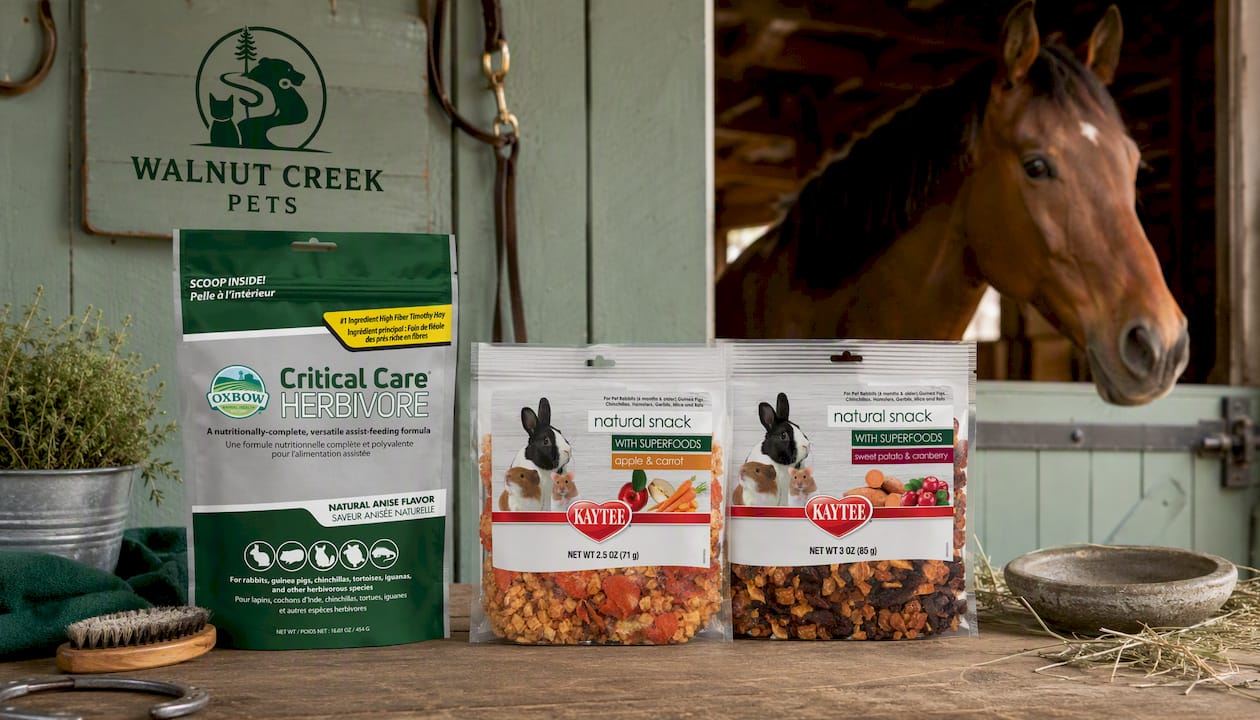
The Oxbow Critical Care Herbivore Feeding Formula works as a targeted nutritional support option for animals needing extra feeding attention, used alongside veterinary guidance when a horse’s diet needs a boost. For everyday low-sugar rewards, the Kaytee Natural Snack Carrot & Apple Blend and the Kaytee Natural Snack Sweet Potato & Cranberry blend both give you a treat option that won’t undercut a forage-first feeding plan.
New adopters and shelter partners can find discounts and care guides directly on the Walnutcreekpet site. Browse the feeding and supplement selection there to find what fits your horse’s current stage of hoof recovery.
Where to Go for Deeper Guidance
- UMN Extension’s hoof-care guide for trimming intervals and prevention basics
- The Horse’s Hoof overview for the philosophy behind natural trimming
- A veterinarian or extension specialist for anything region-specific or urgent


