


Keep Treats Under 10%: Vet Backed Puppy Nutrition for New Owners
Vet aligned, growth focused feeding plan for new puppy owners. Read AAFCO labels, measure portions, weigh weekly, and keep treats under 10%.

Pick a puppy food carrying an AAFCO growth or all-life-stages statement, measure every portion with a cup or scale, and feed on an age-based schedule. Aim for steady, lean growth rather than a fast-filling-out puppy, and use body condition rather than the bag chart as your real guide.
TL;DR:
- Most puppy foods with AAFCO growth or all-life-stages statements are nutritionally adequate for puppies, especially when combined with proper portioning and monitoring.
- Large-breed puppies require careful control of calcium and phosphorus levels to support healthy bone development and reduce orthopedic risks.
- Feeding schedules should be progressively reduced from four to two meals daily, with adjustments based on actual body condition rather than bag charts alone.
- Use the AAFCO statement and feeding trial claims on labels to choose reliable, nutritionally complete diets instead of relying solely on ingredient order or marketing claims.
- Treats should not exceed 10% of daily calories, and supplements are generally unnecessary unless recommended by a veterinarian after diagnostics.
Table of Contents
- Puppy Nutritional Needs: Proteins, Fats, Calcium, and Digestibility
- How to Choose Puppy Food: The AAFCO Checklist That Actually Matters
- How Much to Feed a Puppy: Schedules and Portion Adjustments
- Monitoring Growth and Red Flags: When to Call the Vet
- Diet Forms and Safety: Dry, Wet, Freeze-Dried, Raw, and Homemade
- Treats, Supplements, and Calorie Budgeting
- Quick Label Checklist: AAFCO, Calories, and Calcium/Phosphorus
- Walnut Creek Pet: Why We Recommend These Products
- Hydration Needs and Importance for Puppies
- Special Dietary Considerations for Common Puppy Health Issues
- Understanding and Managing Nutrient Imbalances and Deficiencies
- Author Perspective: Practical Expectations for New Owners
- Shop Starter Picks at Walnut Creek Pet
- Sources
- FAQ
Puppy Nutritional Needs: Proteins, Fats, Calcium, and Digestibility
Puppies need more protein and fat per pound than adult dogs because they’re building muscle, organs, and brain tissue at the same time. Fat also delivers the concentrated calories a growing body burns through fast. Amino acids like arginine matter too. They support the immune system and metabolic function during the stretch when a puppy’s body is developing quickly.
Calcium and phosphorus deserve special attention, especially for large and giant breeds. Too much of either mineral during the growth window can distort bone development and raise the risk of orthopedic problems later, a concern Veterinary Partner flags directly for bigger dogs. This is the core reason “optimal growth” beats “maximal growth” as a feeding goal. VCA Animal Hospitals notes that rapid growth from excess calories raises skeletal disease risk, not just the odds of a chubby puppy.
A few things worth remembering when you’re comparing labels:
- Protein and fat percentages matter less than digestibility. A highly digestible formula gets more nutrition into your puppy per bite.
- Large-breed puppies need tighter calcium and phosphorus control than small breeds.
- A puppy that grows in slowly and leanly tends to have better joint outcomes as an adult than one that fills out fast.
How to Choose Puppy Food: The AAFCO Checklist That Actually Matters
Every legitimate puppy food carries an AAFCO nutritional adequacy statement somewhere on the bag or can, usually near the ingredient list. It will say the food is formulated for “growth,” “all life stages,” or both. That single line, explained well by PreventiveVet, is the fastest way to confirm a food actually meets puppy nutrient requirements instead of just looking like it does.
Here’s a five-step way to size up a bag or can before you buy:
- Find the AAFCO statement. No statement, no purchase. It’s a hard line, not a preference.
- Check “growth” versus “all life stages.” Both work for puppies, but all-life-stages formulas are built to satisfy the highest-need life stage, which can mean higher calorie density.
- Look for feeding-trial language. A label that says the formula was tested through AAFCO feeding trials carries more real-world confidence than one based purely on lab formulation.
- Scan calorie density and calcium/phosphorus ratios if you have a large or giant breed puppy. Lower mineral concentrations matter here.
- Ignore marketing words like “human-grade” or “premium.” They aren’t AAFCO terms and don’t guarantee anything about nutrient adequacy.
Pro Tip: Manufacturer reputation and the AAFCO statement tell you far more than ingredient-list order does. A splashy first ingredient means nothing if the rest of the formula is thin.
How Much to Feed a Puppy: Schedules and Portion Adjustments
Most vets recommend four meals a day under 12 weeks, three meals from 3 to 6 months, and two meals daily after that, with large and giant breeds sometimes staying on three meals a bit longer, according to the American Kennel Club. That’s the schedule side. Portion size is where most owners drift off course.
Bag charts are a starting point, not gospel. PetMD notes actual calorie needs can run up to 50% above or below what a chart suggests, depending on activity level, metabolism, and breed. Treat the chart number as your first guess, then adjust based on what you actually see.
A practical routine looks like this:
- Calculate the daily amount from the chart for your puppy’s current weight, then divide it across the recommended number of meals.
- Measure every meal with a scale or a dedicated measuring cup, never a scoop eyeballed from memory.
- Weigh your puppy weekly and log the number somewhere you’ll actually check it again.
- Adjust portions up or down based on body condition, not just the scale.
To check body condition, run your hands along the ribs with light pressure. You should feel them easily without seeing them sharply, and there should be a visible waist behind the ribs when you look down at your puppy from above, a technique detailed by PetMD.
Monitoring Growth and Red Flags: When to Call the Vet
Weigh your puppy every one to two weeks during the first several months and jot the numbers down somewhere consistent. A steady upward curve is normal. A flat line, a sudden jump, or a drop is not.
Watch for these signs that call for a vet visit rather than a portion tweak:
- Rapid weight gain paired with loss of a visible waistline
- No weight gain at all over two or more consecutive weigh-ins
- Diarrhea or vomiting that lasts more than a day or two
- Noticeably low energy, especially alongside appetite changes
Large and giant breed puppies keep growing until 18 to 24 months, well past the point smaller breeds finish filling out, which is part of why Veterinary Partner recommends staying on a controlled growth formula that long for bigger dogs. A minor plateau in a healthy-looking puppy usually just needs a small feeding adjustment. Persistent GI symptoms or a puppy that seems lethargic needs diagnostics, not guesswork.
Diet Forms and Safety: Dry, Wet, Freeze-Dried, Raw, and Homemade
Kibble is the most convenient and shelf-stable option and usually the most calorie-dense per cup. Canned food tends to be more palatable and easier to eat for small mouths, though it costs more per calorie. Freeze-dried mixers add flavor and nutrient density without disrupting a balanced base diet, useful for a puppy that’s turning up its nose at plain kibble.
Raw and home-cooked diets carry real risk if you’re not careful. Improperly handled raw meat carries pathogen risk, and home-cooked meals frequently miss calcium, zinc, or vitamin balance unless a veterinary nutritionist formulates the recipe. If you’re set on either approach, work with a nutritionist rather than a recipe you found online.
- Switch foods gradually over 7 to 10 days, mixing increasing amounts of the new food into the old, a pace the Merck Veterinary Manual recommends limiting GI upset.
- Prescription or vet-formulated diets come into play for puppies with diagnosed digestive disease, food allergies, or specific medical needs.
Treats, Supplements, and Calorie Budgeting
Treats should stay under about 10% of daily calories, a threshold VCA Animal Hospitals points to directly. Go over that regularly and you dilute the balanced nutrition the main diet is supposed to provide.
- Subtract treat calories from the day’s meal portions rather than adding them on top.
- Use single-ingredient treats or plain kibble for training instead of high-calorie commercial treats.
- Skip over-the-counter supplements unless your vet recommends one. Most healthy puppies on a complete growth diet don’t need extras.
Pro Tip: If you’re training hard with lots of rewards, use your puppy’s regular kibble as the reward and pull that amount out of the next meal. It keeps calorie totals honest without you tracking every single treat.
Quick Label Checklist: AAFCO, Calories, and Calcium/Phosphorus
Before you check out at the store, run through this list one more time:
- Confirm the AAFCO statement says “growth” or “all life stages,” and check for a large-breed designation if your puppy is expected to top 70 pounds.
- Note the calorie density per cup and compare it against your puppy’s expected size and activity level.
- For large-breed puppies, check that calcium and phosphorus levels sit on the lower end of the growth-formula range.
- Favor brands that mention feeding trials, not just formulation to a nutrient profile.
- When in doubt, keep your puppy on a recognized growth formula and call your vet before adding anything extra.
Walnut Creek Pet: Why We Recommend These Products
For puppies on a growth formula, we stock Earthborn Grain Free Meadow Feast Dry Dog Food as a solid kibble base, plus freeze-dried mixers to boost palatability for picky eaters.
- Single-ingredient training treats keep the 10% treat rule easy to follow.
- Freeze-dried toppers add nutrient density without unbalancing a complete diet.
- Purchases from certain pet supply companies can support shelter animals waiting for homes.
This guide reflects Timothy’s editorial perspective on practical, vet-aligned feeding for new owners.
Hydration Needs and Importance for Puppies
Puppies need consistent access to fresh water throughout the day, not just at mealtimes. Their smaller body mass and higher activity level mean dehydration can set in faster than it would in an adult dog, especially during hot weather or after energetic play sessions.

Wet food and freeze-dried mixers rehydrated with water contribute meaningfully to daily water intake, which matters if your puppy isn’t a big drinker on its own. A puppy eating primarily dry kibble needs to make up that difference by drinking more water directly, so keep bowls filled and clean, and check them more than once a day.
Watch for signs of inadequate hydration: dry gums, skin that doesn’t spring back quickly when gently pinched, or noticeably reduced urination. Puppies recovering from diarrhea or vomiting lose fluids fast and may need veterinary support with fluids if they can’t keep water down. A puppy that’s just started a new food, is teething, or is adjusting to a new home may drink less than usual for a day or two, but persistent low water intake alongside other symptoms warrants a call to your vet.
Keep water bowls in more than one spot if your puppy roams a multi-level home, and consider a second bowl outdoors if your dog spends real time in the yard. Ceramic and stainless bowls stay cleaner than plastic, which can harbor bacteria in scratches over time.
Special Dietary Considerations for Common Puppy Health Issues
Food allergies in puppies are less common than food intolerances, but both show up with similar signs: itchy skin, ear infections, or digestive upset after eating. True allergies usually point to a specific protein source, most often chicken, beef, or dairy, and the fix is typically a limited-ingredient diet built around a novel protein your puppy hasn’t eaten before.
Digestive sensitivity is more common and often less about the specific ingredient than about how fast a diet changes or how rich a food is. A puppy with a sensitive stomach tends to do better on a formula with a shorter ingredient list and consistent, gradual feeding rather than frequent switching. If you’re moving a sensitive puppy onto a new food, stretch the 7 to 10 day transition window even longer, closer to two full weeks, and watch stool consistency closely along the way.
Persistent loose stool, frequent vomiting, or a puppy that seems to react to every new food deserves veterinary attention rather than a string of guesses. A vet can run tests to distinguish a true allergy from a transient intolerance and can recommend an elimination diet if needed. Don’t try to diagnose a suspected allergy on your own by cycling through commercial diets. It wastes money and can mask the real cause. Prescription gastrointestinal or hypoallergenic diets exist for exactly this reason, and they’re formulated with the same AAFCO growth standards a healthy puppy needs, just built around limited or hydrolyzed proteins.
Understanding and Managing Nutrient Imbalances and Deficiencies
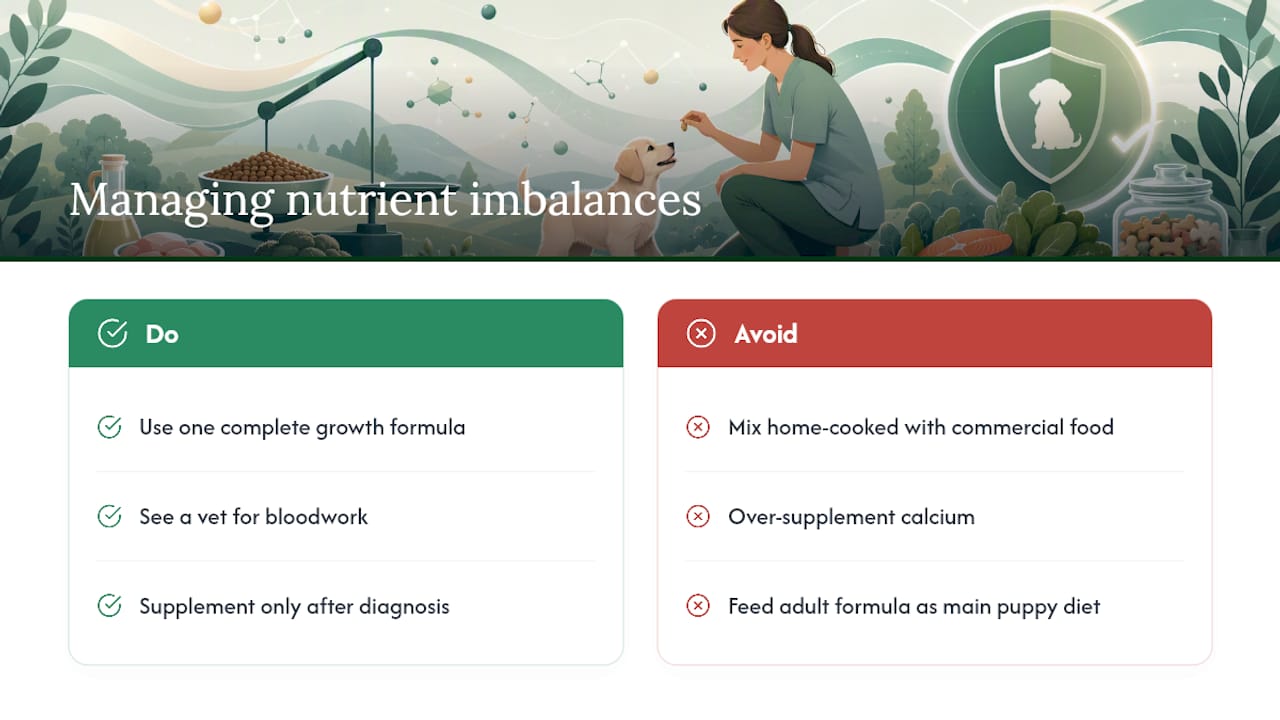
Most nutrient imbalances in puppies come from well-meaning mistakes: adding home-cooked meals to a commercial diet without adjusting portions, over-supplementing calcium for a large-breed puppy, or feeding an all-life-stages adult formula that’s too calorie-dense for a puppy’s actual needs. A complete AAFCO growth diet is formulated to avoid these issues on its own, which is exactly why straying from it without a plan creates risk.
Calcium and phosphorus imbalance is the one to watch most closely in large and giant breeds. Adding calcium supplements or excessive dairy to an already-complete diet can push mineral levels high enough to disrupt bone development, the same concern that drives lower mineral formulas for big-breed puppies. Deficiencies show up differently. A puppy on an unbalanced home-cooked diet might develop weak bones, poor coat quality, or slow growth over weeks or months, not overnight, which makes the problem easy to miss until it’s fairly advanced.
The fix in nearly every case is the same: stick to a single complete and balanced growth formula rather than mixing in extras that throw off the ratios the formula was built around. If you suspect a deficiency, whether from a homemade diet or a poorly chosen commercial one, a vet can run bloodwork to check specific levels rather than guessing from symptoms alone. Supplementation should follow a diagnosis, not precede one.
Author Perspective: Practical Expectations for New Owners
Most new owners overthink the marketing and underthink the measuring cup. The label claims matter less than whether you’re actually weighing your puppy weekly and checking its waistline. Over-treating is the most common slip I see, followed closely by owners jumping between three foods in two months chasing the “perfect” formula. Pick a solid AAFCO growth diet, track weight and body condition consistently, and loop your vet in for anything breed-specific, especially with large breeds. Consistency beats perfection here.
— Timothy
Shop Starter Picks at Walnut Creek Pet
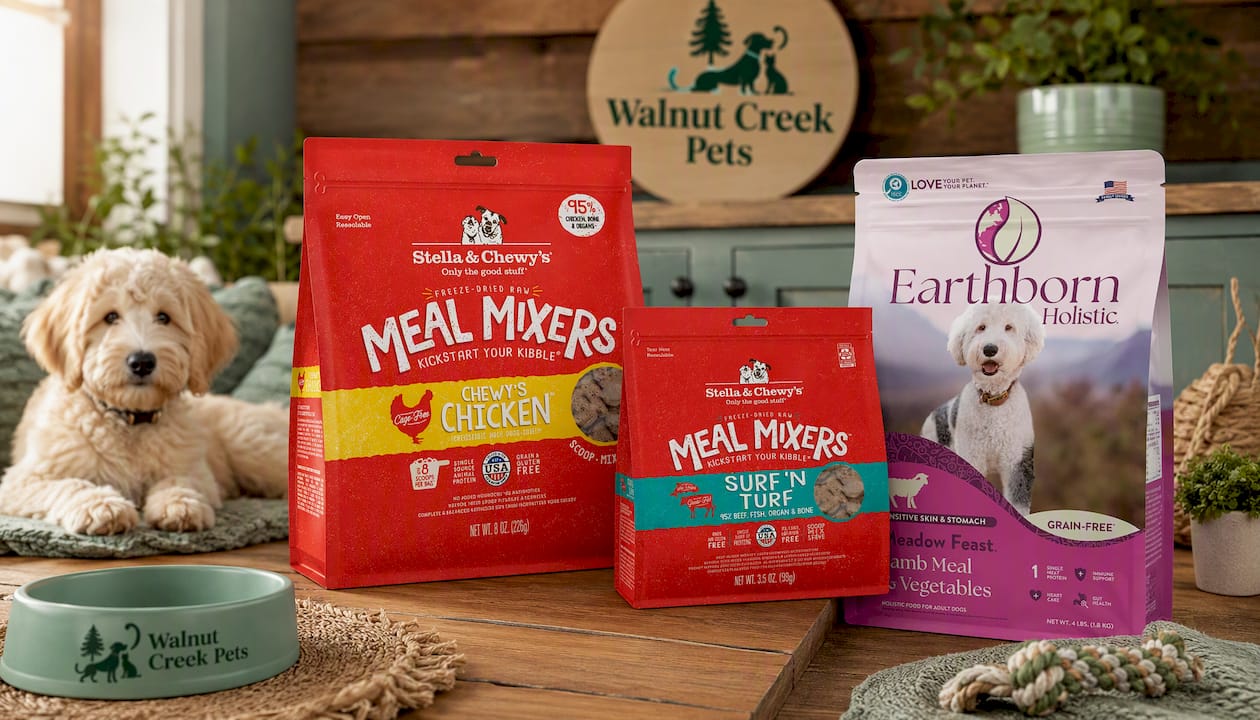
Getting the fundamentals right doesn’t require a complicated setup, just the right food and a few tools to measure it consistently. Earthborn Grain Free Meadow Feast Dry Dog Food works as a complete growth-formulated kibble base for most puppies. If your puppy needs a flavor boost or you want to add nutrient-dense variety, Stella & Chewy’s Freeze Dried Meal Mixers Chicken Dog Food and the smaller Stella & Chewy’s Freeze Dried Meal Mixers Surf & Turf size both work well as toppers for picky eaters trialing something new.
Round out the setup with a proper food scale, a measuring cup that matches your bag’s serving size, and single-ingredient training treats like turkey chips or the puppy treat starter pack, which make the 10% treat rule easy to stick to instead of something you track in your head. Head to Walnutcreekpet and build your puppy’s feeding kit today.
Sources
- Puppy nutrition guide | PreventiveVet
- How much to feed a puppy | PetMD
- Feeding growing puppies | VCA Animal Hospitals
- Puppy feeding fundamentals | American Kennel Club
- Nutrition and exercise for growing puppies | Veterinary Partner (VIN)
FAQ
What Is the 7-7-7 Rule for Puppies?
The 7-7-7 rule is a socialization guideline suggesting puppies experience 7 different surfaces, 7 types of play, and 7 new environments by 7 weeks old. It’s about early exposure and confidence building, not feeding.
Should a Puppy Be Fed 2 or 3 Times a Day?
It depends on age: puppies between 3 and 6 months typically do best on three meals a day, while puppies over 6 months can usually shift to two meals daily, per the American Kennel Club.
What Is the 10-10-10 Rule for Puppies?
There’s no single, widely recognized veterinary “10-10-10 rule” for puppy nutrition. The consistent 10% guideline that does apply is the treat rule: keep treats under 10% of daily calories to avoid nutrient dilution and overfeeding.
What Month Is Hardest With a Puppy?
Most owners point to the 4 to 6 month stretch, when teething, growing independence, and adolescent testing collide, though it varies by breed and individual temperament. Feeding consistency during this stretch helps steady behavior alongside training.
How Do I Know if My Puppy’s Food Is Actually Balanced?
Check the AAFCO statement on the label for a “growth” or “all life stages” claim, and favor formulas that mention feeding trials, a signal covered directly by PreventiveVet.


