


48 Hour Starter Plan for New Kitten Owners: Checklist and Vet Timeline
Prepare for adoption: supplies checklist, vet schedule, and a starter room plan for your kitten’s first 48 hours. Includes product picks and adopter...

Before your kitten arrives, have these ready: kitten-formulated food, a low-entry litter box with unscented clumping litter, a secure hard-sided carrier, stainless steel or ceramic bowls, a soft bed or blanket, a scratching post, and a quiet starter room. Feed 3 to 4 small meals a day until around six months old. Then schedule a vet visit within the first week and watch eating and litter habits closely.
TL;DR:
- Schedule the first vet visit within a week of bringing your kitten home, ideally before the vaccine series begins, and bring a stool sample if possible.
- Use low-sided, unscented clumping litter in a box with easy entry to prevent avoidance and promote proper litter training.
- Keep the kitten in a secure starter room with essential supplies, including a carrier, scratching post, soft bedding, and safe toys, for the first 48 hours.
- Focus on early socialization, gradual exposure to new sounds and people, and positive reinforcement rather than punishment or harsh corrections.
- Prioritize booking and completing the vaccination series, deworming, and spaying or neutering between 4 and 6 months for optimal health and behavior.
Table of Contents
- New Kitten Checklist: Essential Supplies to Buy First
- Kitten-Proofing Your Home Before They Arrive
- The First Vet Visit and Vaccine Schedule Kittens Need
- Settling In: Feeding, Litter Training, and Early Socialization
- First-Year Kitten Milestones: A Month-by-Month Checklist
- Why Walnut Creek Pet Backs This Checklist
- What This Checklist Gets Right (And What Most Guides Miss)
- Ready to Shop the Checklist? Start With These Three
- Sources
New Kitten Checklist: Essential Supplies to Buy First
Getting the supplies right the first time saves you a second trip to the store and, more importantly, keeps your kitten safe during a stressful transition. Here’s what actually matters and why.
Food. Choose a kitten-formulated diet labeled complete and balanced for growth under AAFCO standards. Kittens need more protein and calories per pound than adult cats, and feeding schedules should run 3 to 4 small meals daily until roughly six months old. Wet food adds hydration and tends to appeal to picky eaters, while dry kibble is easier to free feed and better for dental texture. If you’re switching foods, mix the new formula in gradually over five to seven days to avoid stomach upset. Earthborn Grain Free Primitive Feline Dry Cat Food is one nutrition option to check against your kitten’s exact life-stage needs before committing to a full bag.

Bowls. Stainless steel or ceramic beats plastic here. Plastic develops microscopic scratches over time that trap bacteria and have been linked to feline chin acne, so the extra couple of dollars for a ceramic dish is cheap insurance.
Carrier. Buy hard-sided and appropriately sized, big enough for the kitten to turn around but not so large it slides around during transport. Leave it open in the starter room with a towel inside from day one. That way the carrier becomes a familiar napping spot instead of something that only shows up on vet days.
Litter box and litter. Kittens need a box with low sides they can climb into easily, filled with unscented clumping litter. Scented varieties can irritate a kitten’s nose and sometimes trigger avoidance of the box entirely. Keep one box per cat plus one extra as a standing rule.
Bedding. A soft bed or a spare towel from the shelter that still smells like littermates helps enormously during the first few nights. Kaytee Clean & Cozy Small Animal Bedding, available in both White and Natural, gives you a soft, absorbent lining option for a carrier or sleeping nook.
Scratching surfaces. Vertical posts that let a kitten fully extend and stretch tend to work better than flat horizontal pads, though offering both gives your kitten options. Scratching is a biological need, not a habit to punish, so place a post near the sleeping area and another near a favorite window perch.
Toys, grooming tools, and parasite prevention. Rotate a handful of wand toys, crinkle balls, and puzzle feeders weekly to keep boredom at bay. Pick up small nail clippers, a soft-bristle brush, and pet-safe wipes. Hold off on flea or worm treatments until your vet weighs in. These are prescribed by weight and age.
- Kitten-formulated food and a sampler pack if you’re unsure what they’ll tolerate
- Low-entry litter box plus unscented clumping litter
- Hard-sided carrier, left open at home for acclimation
- Stainless steel or ceramic bowls, never plastic
- Soft bedding with a familiar scent
- A vertical scratching post near sleeping and play zones
- Rotating toys, nail clippers, a soft brush, and pet wipes
Pro Tip: Grab a kibble sampler pack before buying a full bag of anything. Kittens can be surprisingly opinionated about texture, and testing a few options first saves money and food waste.
Kitten-Proofing Your Home Before They Arrive
A kitten’s first 48 hours go smoother in one contained room than in a wide-open house. Set up a starter room. A spare bathroom, laundry room, or bedroom works fine. Stock it with the litter box, food and water, bed, open carrier, scratcher, a couple of toys, a hiding box, and a dim night light for late-night confidence.
- Secure windows and balconies. Screens should be latched, not just resting in the frame, and windows should stay closed unless you’re supervising. Cut looped blind cords short or tie them out of reach. Kittens climb before they think.
- Remove toxic plants. Lilies are severely toxic to cats and can cause kidney failure from just brushing against the pollen. Sweep the house for other common offenders like pothos, aloe, and philodendron, and store human medications and food well out of paw’s reach.
- Tuck away cords and small objects. Electrical cords get chewed by curious kittens, and small items like rubber bands, hair ties, and coins pose choking or intestinal blockage risks. Bag them up or route them behind furniture.
- Confine before you expand. Most kittens do best confined to the starter room for the first day or two while they get comfortable eating and using the litter box reliably. Shy or nervous kittens may need a little longer before you open the door to the rest of the house.
- Watch daily for the basics. Track appetite, litter box use, and energy level every day during the first week. Cats are remarkably good at hiding pain or illness, so small changes in eating or activity are often the earliest clue something is wrong.
The First Vet Visit and Vaccine Schedule Kittens Need
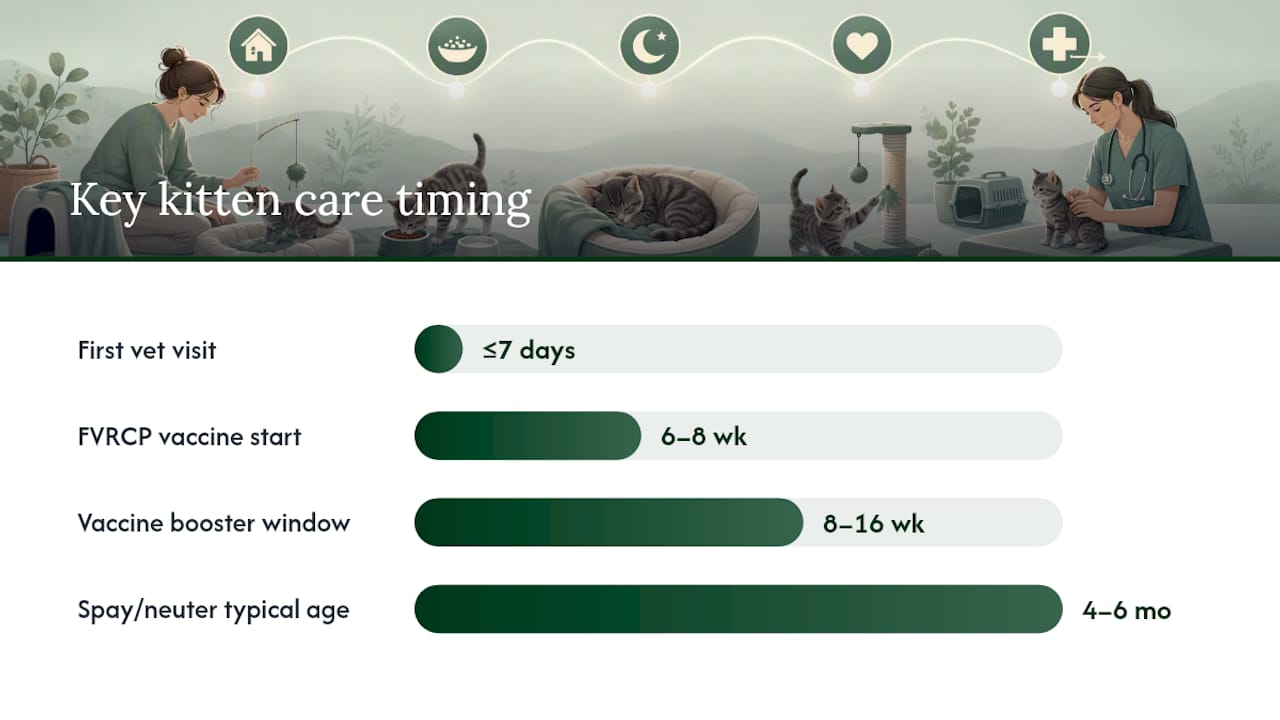
Book the appointment within seven days of bringing your kitten home. Bring any shelter or adoption paperwork you were given, and if you can manage it, a fresh stool sample makes parasite testing faster and more accurate.
At that first visit, expect a full nose-to-tail physical exam, a fecal parasite screen, and a conversation about FeLV/FIV testing, especially if your kitten came from an unknown or multi-cat background. The vet will also check for congenital issues like heart murmurs or hernias that are easy to miss at home.
- Vaccines: the FVRCP series typically starts around 6 to 8 weeks old, with boosters every 3 to 4 weeks until about 16 weeks; rabies is given once your kitten reaches the age required by your state.
- Deworming: pyrantel is commonly given at each vaccine visit since kittens often carry intestinal parasites passed from their mother, and praziquantel gets added if you spot tapeworm segments in the litter box.
- Spay/neuter: most vets recommend scheduling this between 4 and 6 months old. Earlier sterilization has become increasingly common because it eliminates the risk of an unplanned litter before a cat reaches sexual maturity.
- Microchipping: many vets implant and register the chip the same day as spay/neuter surgery. A microchip is not a GPS tracker. It only stores an ID number that shows up when a shelter or vet scans it, so registration with your current contact information is what actually makes it useful.
When to call the vet immediately: no interest in food for more than 24 hours, vomiting or diarrhea that won’t quit, labored breathing, or sudden lethargy that doesn’t match a normal nap. Kittens can decline fast, and same-day calls are always better than a wait-and-see approach.
Roughly three to four booster rounds between 8 and 16 weeks is standard for most kittens, which is why that first appointment should get booked before the excitement of adoption day fades and the calendar fills up with other things.
Settling In: Feeding, Litter Training, and Early Socialization
Stick to 3 to 4 small meals a day until your kitten hits around six months, then you can transition toward larger, less frequent feedings. Watch their weight and stool consistency along the way. Sudden changes in either are worth mentioning at the next checkup.
Litter training is usually easier than owners expect. Kittens instinctively dig and bury, so a low-sided box in a quiet, accessible spot away from food and foot traffic is often all it takes. Scoop daily. A dirty box is one of the most common reasons a kitten starts eliminating elsewhere.
Socialization should start early and stay positive. Short, controlled exposures to new sounds, people, and pets build confidence, while harsh corrections do the opposite and can damage trust that takes months to rebuild. Skip the spray bottle and the raised voice. Redirect instead.
- Feed on a consistent schedule, 3 to 4 times daily until about six months old
- Scoop the litter box every day and keep it in a low-traffic spot
- Introduce new people, pets, and sounds gradually and reward calm behavior
- Reward scratching post use immediately rather than punishing furniture scratching
- Start gentle paw handling early so nail trims aren’t a fight later
Pro Tip: Place a scratching post directly next to the furniture your kitten already favors, then reward every use with a treat. Moving the post later is much harder than getting the placement right the first time.
First-Year Kitten Milestones: A Month-by-Month Checklist
- Before arrival: starter room stocked, supplies bought, home swept for hazards.
- Week 1: first vet visit completed, daily monitoring of eating and litter habits underway.
- 8 to 16 weeks: vaccine series finished, repeat deworming as needed, microchip implanted and registered.
- 4 to 6 months: spay or neuter scheduled and completed, medical records updated.
- 6 to 12 months: feeding transition planned, socialization ongoing, next wellness visit booked.
Why Walnut Creek Pet Backs This Checklist
Walnutcreekpet donates 10% of profits to no-kill shelters, and that mission shapes the products on the shelf: single-ingredient foods, natural supplements, and starter supplies built for new adopters, not just seasoned pet owners. Beyond the checklist items above, the identification kits, care guides, and adoption discounts are designed specifically to support the first weeks after you bring a kitten home.
What This Checklist Gets Right (And What Most Guides Miss)
Most new kitten checklists treat the supply list and the vet visit as two separate conversations. That’s a mistake. The supplies you buy in week one, especially the carrier and the scratching post, directly affect how your kitten behaves at the vet and around your furniture for years afterward. A kitten that’s been napping in an open carrier since day one doesn’t panic on exam table day. A kitten with a scratching post placed exactly where it wants to scratch never develops a habit you have to break later.
I’d also push back gently on how much weight generic guides put on toys and gadgets. The stuff that actually prevents problems is boring: unscented litter, a stainless bowl, a vet appointment booked before you forget, and boosters that actually happen on schedule. Prioritize the medical timeline first. Everything else is easier to fix retroactively than a missed vaccine window or an untreated parasite.
If you take one thing from this article, make it the first-week vet visit. Everything else on this list is recoverable if you get it wrong. A skipped or delayed vaccine series is not.
— Timothy
Ready to Shop the Checklist? Start With These Three
Walnutcreekpet built its catalog around exactly the items this checklist calls for, and three products cover a lot of ground at once. Earthborn Grain Free Primitive Feline Dry Cat Food satisfies the kitten-nutrition line item without you having to cross-reference ingredient labels yourself. For bedding, Kaytee Clean & Cozy comes in White or Natural, both absorbent enough to line a carrier or a starter-room bed.

If you’re still deciding on an identification setup before that first vet visit, the QR pet ID kit pairs well with microchipping as a backup layer of protection. Pick up a small starter bundle now, or browse the full Walnut Creek Pet catalog for care guides and adoption discounts built specifically for new kitten owners.
Sources
- New Kitten Checklist: First Vet Visit, Supplies & First-Year Care - AAHA
- VCA Hospitals — socialization and fear prevention in kittens
- UC Davis Veterinary Medicine — inappropriate scratching in cats
- New Kitten Checklist: Supplies, Vaccines & First Year (The Pet Advocate Vet)


