



Leaving already?
Can we tempt you with 5$ off your first order?
Min Order of $50


Care Guide & Supplies
Gerbils are social, curious foragers who love seeds, grains, and digging. Find the best gerbil nutrition here.
Habitat, diet, lighting, troubleshooting and a first-48-hours quick start. Free, no email required — from our family in Lancaster County to yours.
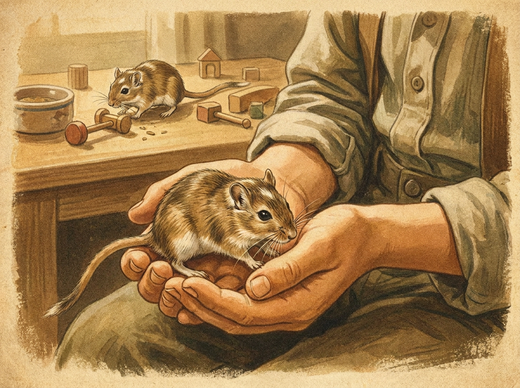
Gerbil Socialisation and Handling: Building a Relationship With Your Gerbils
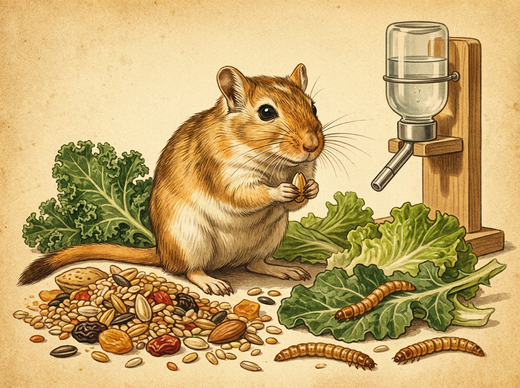
What Do Gerbils Eat? A Simple Guide to Seeds, Grains, and Fresh Food
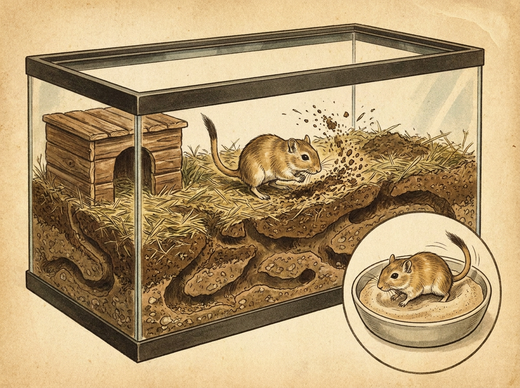
Building the Best Gerbil Home: Tank Setup, Bedding Depth, and Enrichment
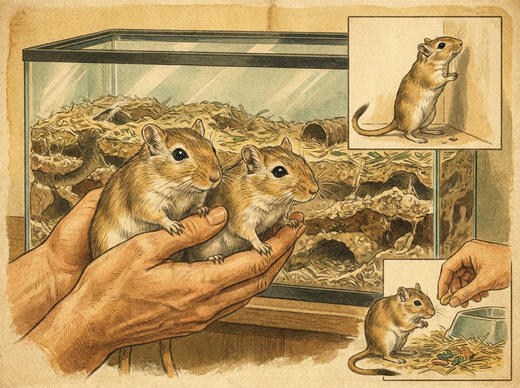
Gerbil Care for Beginners: Everything You Need Before You Start
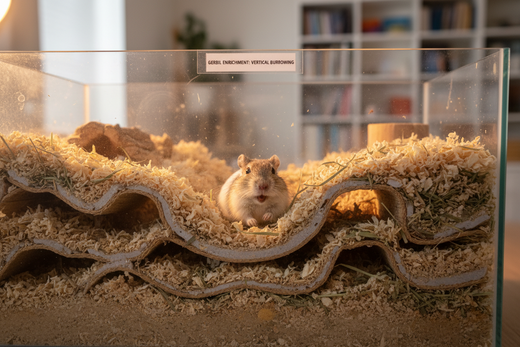
Why Digging Space Matters for Pet Gerbils
The whole guide, free to read right here — habitat, diet, lighting, troubleshooting and a first-48-hours quick start. No email required.
Gerbils are among the most genuinely enjoyable small animals you can keep — active, curious, social, and endlessly busy in a way that makes watching them as entertaining as anything else you could put in that corner of the room. The catch is that "small and energetic" sometimes gets read as "low maintenance," and that framing is exactly where problems start. Gerbils are desert animals from the Mongolian steppe, built over millions of years to dig deep, run far, and live in tight social groups. A pair of gerbils in the right setup — a deep column of tunneling substrate (a loose burrowing medium deep enough for them to excavate and maintain stable underground passages), a solid-surface wheel, a sand bath, and a bonded companion to groom and sleep with — will give you a window into genuinely natural small-mammal behavior that is extraordinary to watch. A lone gerbil in a shallow aquarium on bare wood shavings is a gerbil running her body against the glass all night trying to dig somewhere that does not exist. She looks fine. She is not fine. This guide puts every piece of that difference on the table before day one, so your gerbils spend their three to five years doing what gerbils actually do: building underground cities, caching seeds, pile-sleeping with their bonded companion, and watching everything you do with those bright, dark, endlessly interested eyes.
What needs to be in the house on day one, and what to look for in each category.
Ready to set up? Browse the essentials in our collections: Critter Enclosures and Critter Bedding and Accessories.
Enrichment, one click away. Shop Critter Toys and Accessories.
The Mongolian gerbil (Meriones unguiculatus) comes from the semi-arid grasslands and desert steppe of Mongolia and northern China — a landscape of short coarse grass, sparse shrubs, sandy soil, and extreme seasonal temperature swings, with very little standing water and persistently low humidity for most of the year. Their burrow systems in the wild are sophisticated multi-chamber structures: a main sleeping chamber, side tunnels for escape, and separate cached food stores, often reaching a meter or more in depth. They are not recently domesticated animals — Mongolian gerbils entered laboratory breeding programs in the 1930s and were available as pets in North America by the early 1960s. Decades of captive breeding have produced animals that are genuinely comfortable around humans, curious about new objects, and far more handleable than any wild gerbil you would encounter.
| Trait | Detail |
|---|---|
| Common name | Mongolian gerbil |
| Scientific name | Meriones unguiculatus |
| Native range | Mongolia, northern China; semi-arid steppe and desert grassland |
| Wild habitat | Short-grass plains, sandy and loam soil, sparse shrub cover; low humidity year-round |
| Adult body length | 4–5 inches nose to tail base; plus a 3–4 inch tufted tail |
| Adult weight | 60–110 grams; males tend slightly heavier than females |
| Typical lifespan | 3–5 years with good care |
| Activity pattern | Polyphasic — multiple short bursts of activity spread across the full 24 hours; not strictly nocturnal |
| Social structure | Clan-living in the wild; same-sex pairs or small groups in captivity — never solitary |
| Natural coat color | Agouti — brown-tipped guard hairs over a pale undercoat, cream or white on the belly; the ancestral wild-type coloring |
The fat-tailed gerbil (Pachyuromys duprasi) is occasionally sold alongside Mongolian gerbils and is worth knowing about. Fat-tails are rounder, slower-paced, and typically handle with even more docility than Mongolians — a genuine option for someone who wants a calmer, less speed-oriented small animal. Their care broadly parallels the Mongolian gerbil's, with the same low humidity requirements, social preferences, and commercial gerbil diet. This guide focuses on the Mongolian gerbil as the standard species, but most of the husbandry information here applies to fat-tails with minor adjustments.
The most critical distinction is sociality. Syrian hamsters are solitary and will fight to the death if housed together after weaning — that is the correct husbandry for a Syrian hamster. Gerbils are the opposite end of the spectrum: they evolved to live in cooperating family clans and their nervous systems require social contact, grooming, shared sleeping, and low-level constant communication with a companion. A lone gerbil is not a hamster-style contented solitude case; it is a chronically stressed animal who cannot fulfill a core behavioral need regardless of how much human attention it receives. Mice fall somewhere between the two — social but not to the same degree of bonded dependency. Gerbils are their own category.
The second distinction is burrowing. Gerbils in the wild spend the majority of their time underground — constructing and maintaining tunnel networks, sleeping in subterranean nest chambers, caching food below ground. Housing them in a shallow layer of bedding is not a compromise; it is a welfare failure. They will spend the rest of their lives attempting to dig somewhere that does not exist.
The third distinction is activity timing. Syrian hamsters are primarily nocturnal and can be grumpy if disturbed during the day. Gerbils have a polyphasic rhythm — multiple short active periods distributed across the full 24 hours, including reliably social windows during the daytime. This makes interaction with families and children genuinely practical.
The burrowing drive is the first and most important surprise. Owners who start with shallow substrate watch their pair attempt to dig through a floor that yields nothing, running repeatedly against the glass walls, starting tunnels that collapse immediately. This looks like personality. It is not — it is a behavioral distress signal, and it does not stop until the substrate is deep enough to actually burrow in. Watching the same pair in 8 inches of stable burrowing mix — tunneling in, disappearing for twenty minutes, emerging from a different exit — is a completely different experience, and the behavioral difference makes the husbandry investment immediately obvious.
The second surprise is teeth color. Gerbil incisors are naturally orange-yellow — the color comes from iron compounds embedded in the tooth enamel as a hardening mechanism. This is completely normal and not a sign of disease, dietary deficiency, or anything requiring veterinary attention. New owners frequently call vets convinced something is wrong with their gerbil's teeth. If the teeth are a uniform warm amber-yellow, correctly aligned, and a normal length, nothing is wrong.
The third surprise is cecotrope consumption. Gerbils eat certain soft cecal droppings directly from their body — a perfectly normal and nutritionally important digestive behavior that allows them to extract additional nutrients from partially fermented cecal material. It looks alarming the first time. It is beneficial and should never be discouraged or prevented.
This is not an aesthetic preference — it is a functional requirement. Glass or acrylic tanks are the correct choice for gerbils, full stop. Wire cages cannot hold a deep substrate column; the loose material falls through the bars continuously, the gerbils kick out the rest through normal digging activity, and within a day or two the floor is back to a thin ineffective layer. Some keepers try to solve this with deep solid-insert trays fitted inside a wire frame, but maintaining consistent depth with this approach is more work than simply using a sealed-wall container. Use a tank.
The minimum for a pair is a 20-gallon long aquarium (30" × 12" floor). The long specification matters — a tall 20-gallon has the same volume but a narrow footprint that does not support adequate burrowing complexity or above-ground activity range. A 40-gallon breeder (36" × 18") is a meaningful and strongly recommended upgrade; the additional floor width produces dramatically more complex tunnel architecture and eliminates the space constraints that can trigger social tension in older pairs.
A screen lid provides adequate ventilation and is appropriate. Gerbils do not engineer escapes the way corn snakes do, but a loose-fitting screen lid they can push upward is a risk. Confirm the lid sits flat and flush on all four sides before the animals go in.
Think of the enclosure as having two functional areas with different purposes.
The substrate zone occupies the bottom 6 to 8 inches — this is the burrowing column. The tunnel network, the sleeping chamber, the food cache, and the majority of the gerbils' social life all happen here. Do not place decorative items you care about preserving in this zone; they will be buried, relocated, and incorporated into the tunnel architecture within days.
The above-ground zone is the top few inches and the enclosure surface — where the wheel runs, the food dish (if used) sits, the water bottle sipper tube reaches, the sand bath sits during access sessions, and any surface-level exploration platforms are placed. Gerbils move between zones constantly during active periods — tunneling down, emerging to eat or run, going back underground to deposit a cached item, then surfacing again to groom.
No wire floors under any circumstances. Wire mesh flooring causes bumblefoot — a painful pressure-sore and bacterial infection of the foot pads from chronic contact with hard wire surfaces. Every gerbil's feet must rest on solid substrate at all times.
Getting the substrate right is the single most impactful husbandry decision you make for a pair of gerbils. The column must be deep enough for stable tunnel maintenance, dry enough to protect desert-adapted respiratory systems, and made from material that does not compact into a brick within the first week.
| Substrate | Tunneling performance | Humidity profile | Notes |
|---|---|---|---|
| Paper-based bedding + coconut fiber (50:50 dry blend) | Excellent — the best available combination for tunnel stability | Good — paper breathes at the surface; coco fiber adds structural integrity and a slight moisture retention at depth without wetting upper layers | The recommended starting substrate for most gerbil keepers; paper contributes tunnel wall stability, coco fiber gives a natural dark appearance and handles moisture gradient well |
| Paper-based bedding alone | Very good | Very good — dries quickly at the surface, minimal moisture retention | Excellent for keepers in humid climates where any moisture-retaining component is a concern; slightly less tunnel stability than the blended mix |
| Aspen shavings | Good — adequate for burrowing but tunnels collapse more readily than paper-based options | Very good — low moisture retention, dries fast | The traditional small-animal substrate; functional for gerbils, easier to source than some alternatives; purchase kiln-dried grade only; never fine-dust grade |
| Commercial gerbil burrowing mix (sand-peat or loam blend) | Excellent — replicates Mongolian desert soil most closely; excellent tunnel architecture | Good for desert humidity profile; watch for moisture if peat content is high | Some imports contain peat that can develop mold if wetted; keep the column fully dry |
| Timothy hay (surface layer only) | Not a burrowing substrate | N/A | Useful as a surface scatter layer for nesting material and foraging enrichment; not a standalone substrate; can be layered at the top of any of the above options |
| Aromatic pine shavings | Adequate structure | Good — low moisture retention | Avoid — unprocessed pine contains aromatic phenols that are respiratory irritants; the risk-benefit does not favor pine when paper-based alternatives are widely available |
| Cedar shavings | — | — | Never — aromatic phenols in cedar are toxic via respiratory exposure at any concentration; no safe use case for any small mammal at any life stage |
| Clay cat litter | — | — | Never — clumping formulas are lethal if ingested; non-clumping clay generates respiratory dust and has poor burrowing properties |
| Anything pre-wetted or consistently damp | — | — | Never — gerbils are desert animals; a moist substrate column causes respiratory infections, ringworm, and nasal dermatitis regardless of the material |
The practical recommendation for most gerbil keepers: a 50:50 blend of paper-based bedding (Carefresh or equivalent) and dry coconut fiber, packed to 6 to 8 inches depth and topped with a light surface scatter of hay. This combination produces the best tunnel stability, the most natural visual appearance, and the safest moisture profile for animals adapted to a desert environment. Fill the column generously — you will be surprised how quickly a pair manages to compress loose bedding through normal activity.
These two parameters carry most of the weight of gerbil health long term. Get both right and your pair will have a robust immune system, a healthy coat, and normal respiratory function throughout their lives. Allow either to drift and you will see problems arrive as a puffed coat, wet nose, nasal crust, or labored breathing — all well before the animal looks dramatically unwell. By then, a vet visit is overdue.
| Parameter | Target | How to measure | What goes wrong when it's off |
|---|---|---|---|
| Ambient room temperature | 65–75°F | Digital thermometer at enclosure level; do not estimate from how the room feels to a human in clothing | Below 60°F: immune suppression, metabolic stress, reduced activity; above 80–85°F: heat stroke risk — gerbils have very limited ability to regulate body temperature and cannot pant effectively |
| Relative humidity | Below 50% — target 30–50% | Digital hygrometer positioned at substrate surface level | Above 55% sustained: respiratory vulnerability increases and coat quality declines; above 65% sustained: nasal dermatitis (inflamed, raw-looking sore nose) and respiratory infection become likely; consistent dampness causes ringworm |
| Direct sunlight | None — keep enclosure out of sun | Placement assessment | Glass walls amplify solar heat rapidly; even moderate direct sun can raise internal enclosure temperature to dangerous levels before the keeper notices |
| Cold drafts | None | Placement away from HVAC vents, window gaps, and exterior walls | Cold drafts cause respiratory infections even when average room temperature is correct; draft exposure is a common overlooked trigger |
Most American homes maintain 65–75°F year-round without any intervention, which means gerbils in typical domestic settings do not need a supplemental heat source. They are not reptiles requiring a managed thermal gradient. What they need is protection from two extremes: drops below 60°F in winter (overnight in homes with aggressive temperature setbacks, cold garages, or basement placements) and rises above 80°F in summer during heatwaves in poorly air-conditioned spaces. For summer heat events, move the enclosure to the coolest room in the house and ensure air circulation around it — a fan directed at the room rather than directly at the enclosure is appropriate.
Gerbil nutrition involves a real trade-off, and framing it honestly is more useful than declaring one approach correct and moving on.
Seed and grain mixes — sometimes called muesli mixes — are the most natural-feeling option and the one gerbils engage with most enthusiastically. A quality mix includes oat groats, hulled millet, dried corn, dried peas, pumpkin seeds, sunflower seeds, rolled grains, legumes, and a proportion of compressed pellets. The problem is selective eating: gerbils in the wild are strategic cachers who prioritize high-fat, high-energy items. In captivity, a gerbil given a full dish of seed mix will often sort out and eat the sunflower seeds and pumpkin seeds first — the gerbil equivalent of eating all the chocolate chips out of trail mix — and leave the essential grains and legumes untouched. If you refill the dish before it empties, you are running a high-fat, calorie-dense feeding program with intermittent vitamins.
Compressed lab blocks eliminate selective eating entirely because every bite carries the same nutritional profile. The trade-off is reduced engagement: gerbils find them less interesting than a varied mix, and blocks alone do not support the natural foraging behavior — picking, turning, evaluating, caching — that a seed mix does.
The practical recommendation for most keepers: a quality commercial gerbil mix as the primary food, portioned so the dish empties before it is refilled. This prevents selective eating by requiring the gerbil to eat through the full mix before more is offered. Adding a small proportion of compressed pellets to the mix — roughly 10 to 20% — provides a nutritional safety net even if the gerbils favor certain components. Portion approximately one tablespoon of mix per gerbil per day as a starting baseline; adjust based on body condition. Gerbils also cache actively in the substrate, so do not interpret a nearly-empty dish as evidence of insufficient food — check whether a cache has accumulated underground before adding more.
Fresh food is a healthy and enriching supplement — not a dietary staple for gerbils. The practical rule is no more than 1 teaspoon of fresh food per gerbil per day, and when starting out, err below that. Gerbil digestive systems are calibrated for low-moisture, seed-heavy input; too much water-rich fresh food causes rapid-onset diarrhea. Offer fresh food on a small dish or scatter it at the surface level, and remove any uneaten pieces within 2–3 hours to prevent fermentation in a warm enclosure.
Good choices: small pieces of romaine lettuce or dandelion greens, broccoli florets, thin carrot slices, cucumber or zucchini strips, fresh herbs like parsley and cilantro. Dried herbs sprinkled through the seed mix add variety and scent enrichment with no moisture risk.
Insect protein treats: small mealworms — two to three per gerbil, once or twice a week — provide animal protein that gerbils naturally obtain in the wild through opportunistic insect consumption. Freeze-dried mealworms from a quality supplier are convenient and shelf-stable. Live mealworms are also accepted and provide additional sensory enrichment from the movement. Hard-boiled egg in a very small portion is another appropriate protein supplement.
Never offer: citrus fruit of any kind; onions or garlic; grapes or raisins; raw potatoes; chocolate; avocado; or any sticky foods — peanut butter, honey, molasses, or similarly adhesive items. Sticky foods present a specific hazard because gerbils naturally pack food items into their cheek pouches for transport and caching. A sticky substance can adhere to the cheek pouch interior or obstruct it, sometimes requiring veterinary intervention to remove. Keep all treats dry and non-adhesive as a blanket rule.
Gerbils drink far less than most small animals, reflecting their desert origin and their kidneys' remarkable efficiency at concentrating urine. They do, however, need clean fresh water available at all times — do not assume they are managing without it because you rarely see them drink. A sipper bottle is strongly preferred over an open water dish: gerbils will fill an open dish with substrate through normal digging within hours, and the evaporating moisture from an open dish raises ambient humidity in the enclosure. Mount the sipper bottle on the outside of the screen lid with the metal tube angled in through the mesh, and tap the ball bearing daily to confirm flow. Refresh the bottle completely every two to three days to prevent bacterial growth in the tube.
Shop the food and supplies: Browse Critter Food Treats & Feed.
Gerbils need enrichment more urgently than almost any other small animal. A hamster wheel and a hide is a functional minimum for a hamster in a way that satisfies the species' actual behavioral requirements. For a gerbil, that same setup is sensory poverty — the equivalent of a house with one room, no windows, and nothing to do. These are cognitively active, socially complex, physically driven animals. Their natural behavioral repertoire includes tunneling, caching, foraging, grooming, nest building, sand bathing, running, chewing, and exploratory investigation. An enriched enclosure gives outlets for all of these drives in rotation. A barren one doesn't, and the animal pays the behavioral price within days.
This is the foundation and the most powerful form of enrichment available. Six to eight inches of stable burrowing medium is not just floor covering — it is an entire environment. A pair of gerbils in deep substrate will excavate a tunnel system within the first 24 to 48 hours: multiple entrances, a sleeping chamber at depth, a food cache room, and often secondary side passages they maintain and renovate continuously. They collapse sections and rebuild them. They shift the nest chamber location after days of stable use. They add new branches and block old ones. This activity alone occupies significant daily time and satisfies the burrowing drive that has no substitute in a shallow enclosure.
Cardboard tubes buried diagonally or vertically through the substrate column give tunnel structure that holds its shape without substrate collapsing into it — particularly valuable in drier setups where loose paper bedding may not hold tunnel walls well on its own. Toilet paper roll cores, paper towel cores, and commercially made cardboard tunnels all serve this purpose. They will be chewed through over time. Replace them; that is part of the enrichment cycle.
Gerbil incisors grow throughout their entire lives and rely on constant gnawing to stay at correct length and alignment. This is not a preference — it is a physiological requirement. Provide a rotation of gnawing materials at all times: apple wood or willow sticks, compressed hay cubes, untreated balsa wood blocks, loofah sections, and cork bark pieces. Avoid any softwood with a strong aromatic scent. The pair will work through chew materials faster than you expect; budget for regular restocking. A gerbil without adequate gnawing material will redirect onto the enclosure hardware and will develop dental problems over months.
A sand bath is not optional enrichment — it is an essential behavior. In the wild, gerbils roll in dry sandy patches to strip excess oils, moisture, and debris from their coat. The captive sand bath serves the same function. Use chinchilla sand — specifically the coarse-ground variety, not chinchilla dust. Dust is milled too fine for gerbil respiratory systems and repeated use carries inhalation risk. Fill the bath container to about an inch depth, offer access for 20 to 30 minutes, and then remove it. Two to three times per week is the correct schedule. Left in the enclosure full-time the sand accumulates feces, urine, and food debris and defeats its own purpose. A gerbil who has regular sand bath access maintains a visibly cleaner, fluffier, healthier-looking coat than one who does not.
Gerbils run significant distances overnight and need a consistent physical outlet for that drive. An 8-inch solid-surface wheel is the minimum — verify that the gerbil's back stays relatively flat or only slightly curved during running; a pronounced arch means the wheel is too small and a 10-inch model is warranted. Saucer-style flat spinning wheels are accepted by many gerbils and eliminate the tail-catch risk that exists with traditional upright wheels where the running surface curves to a closed back. Mesh, bar, rung, or any open-surface wheel is inappropriate at any diameter — the risk of a leg, toe, or tail dropping through the running surface at speed is real, and the resulting injuries are serious.
Once or twice a week, scatter the daily seed allowance through the substrate layer rather than placing it in a dish. The pair will spend a meaningful portion of their active period methodically searching for seeds, testing them with their incisors, and either eating them on the spot or carrying them to a cache site underground. This is one of the most effective behavioral enrichment strategies available and it costs nothing beyond the few extra minutes distributing the food. It directly engages the foraging and caching behavior that forms the center of a gerbil's natural activity budget.
What you see: a previously bonded pair begins to show aggression — one gerbil chasing the other persistently, nipping fur into bare patches (called barbering, meaning gnawed-off coat sections), squeaking or screaming, or actively fighting with biting and tumbling. Why: declanning is the breakdown of a previously stable gerbil bond. It occurs most commonly in adult pairs — particularly female pairs — often between six months and two years of age, and it can escalate from intermittent tension to a lethal attack within 24 to 48 hours once serious fighting begins. Overcrowding, insufficient substrate depth, inadequate enrichment, illness, and environmental change can all trigger it, but declanning can also occur without any identifiable cause in pairs that appeared stable for months. What to do: separate immediately into two adjacent enclosures divided by a wire partition — this is a split-cage setup that allows the pair to smell and communicate without physical contact. Maintain for two to four weeks before attempting a careful reintroduction on completely neutral territory. Do not assume one serious fight ends the bond permanently, but do not leave them in contact once biting starts. When to call a vet: any bite wound that is bleeding actively, shows signs of infection (warmth, swelling, discharge), or appears to penetrate below the skin surface.
What you see: a section of skin has peeled or torn from the tail, exposing the underlying tissue. The injury may be partial — skin still attached at one edge — or complete, with a clean section of exposed tail visible. Why: gerbil tail skin is attached very loosely to the underlying tissue as a predator-escape adaptation — the skin releases so the gerbil can escape from a predator's grip intact. Grabbing a gerbil by the tail — from any position, at any speed, for any reason — will strip the skin from the tail. This is not hyperbole. It happens every time, and it occurs most often when a well-intentioned owner or child instinctively grabs a fleeing gerbil by the tail before it disappears. Once the skin tears, the exposed section cannot reattach and almost always requires surgical amputation of the affected tail portion. What to do: keep the wound clean and dry, do not allow the gerbil to chew at it, and see a vet the same day. When to call a vet: immediately, same day, no exception. Tail amputations are routine procedures for experienced exotic small-animal vets, and gerbils recover from them well — but they are entirely avoidable if the tail rule is taught before handling begins.
What you see: clicking or wheezing during normal breathing, a wet or crusty nose, matted fur around the nose and eyes, a hunched or puffed posture, or reduced energy and social engagement. Why: gerbils develop respiratory infections most commonly from sustained humidity above 55%, which allows bacterial and fungal agents to establish in the respiratory mucosa. Cold drafts, a damp or wet substrate column, and a drafty enclosure placement are the other common triggers. What to do: correct the environmental cause immediately — replace the substrate with dry material, improve ventilation, and if necessary move the enclosure to a drier location in the house — and see a vet promptly. When to call a vet: within one to two days of noticing any respiratory symptom. Small animals deteriorate quickly, and respiratory infections respond far better to treatment caught early than to infections allowed to progress over several days.
What you see: the gerbil appears to freeze, may exhibit repetitive twitching or stereotyped body movements, eyes appear glazed; after 30 to 90 seconds the episode resolves and the gerbil appears briefly disoriented before returning to normal activity. Why: epileptiform seizures are remarkably common in Mongolian gerbils — research estimates that up to half of all captive Mongolian gerbils will experience at least one in their lifetime. The predisposition appears to be a genetic feature of the captive population rather than a disease state. Triggers most commonly include handling in young animals aged 2 to 6 months, sudden unexpected movement, an unfamiliar environment, or no discernible trigger at all. The seizures are typically benign, brief, and self-resolving — they do not indicate a medical emergency in most cases. What to do: do not restrain the gerbil during a seizure; place it gently on a flat surface where it cannot fall and let the episode complete. Do not attempt to put anything in its mouth. After the episode, allow the gerbil to rest without handling for the remainder of the day. Most gerbils return to normal behavior within minutes. When to call a vet: any seizure lasting longer than two to three minutes; cluster seizures (multiple events within a few hours); a first seizure in a gerbil older than 18 months (late-onset seizures warrant ruling out a brain tumor or other underlying cause); or a pattern of increasing frequency over weeks.
What you see: excessive scratching, hair loss concentrated around the shoulders, neck, and face, visible skin flaking or a dull coat, and sometimes tiny moving specks visible on the skin under close examination. Why: mite infestations in gerbils most commonly arrive through contaminated bedding, contact with infested animals at a store or expo, or — less commonly — through hay or dried food materials. The most common species is Demodex, which lives in hair follicles and is normally tolerated at low populations; numbers can explode during immune stress from illness, advancing age, or husbandry deficiencies. What to do: consult a vet for species-accurate treatment — over-the-counter mite products vary widely in appropriateness and some are not safe for gerbils. Strip, disinfect, and completely restock the enclosure simultaneously with treating the animal. When to call a vet: any mite infestation warrants a vet visit for proper identification and treatment guidance; guessing at treatment for an unconfirmed species is not a reasonable approach.
What you see: the gerbil repeatedly drops food items it picks up, loses weight despite apparent interest in eating, drools, or shows visibly overgrown incisors — teeth that cross, curl, or extend noticeably past normal length. Why: gerbil incisors grow continuously and self-trim through gnawing and the friction of upper and lower incisors meeting correctly. A gerbil without adequate gnawing material, or whose teeth have been knocked out of alignment by a jaw injury, develops malocclusion — teeth that no longer meet correctly and therefore cannot wear each other down through normal use. This becomes a downward spiral: misaligned teeth make eating painful and difficult, the gerbil eats less, teeth wear even less, and the condition worsens. What to do: provide abundant gnawing material as a preventive measure throughout the gerbil's life. For a gerbil already showing overgrowth or misalignment, this is a veterinary matter — the teeth need professional trimming under appropriate sedation and the underlying alignment problem may require ongoing management. When to call a vet: any time incisors appear longer than normal, visibly crossed, or if the gerbil is dropping food or showing unexplained weight loss.
What you see: the pale oval patch on the abdomen — the midventral scent gland, a specialized sebaceous structure that gerbils use for gland marking by dragging their belly across surfaces to deposit territorial secretions — appears enlarged, raised, thickened, crusty, or develops a visible growth. Why: the midventral scent gland is the most common tumor site in older Mongolian gerbils. Adenocarcinomas and adenomas of the scent gland are among the most frequently diagnosed cancers in this species, occurring primarily but not exclusively in males over 18 months old. A gerbil actively dragging its belly across flat surfaces is performing normal scent marking and shows nothing abnormal. A gland that looks structurally different — larger, raised, rough-textured, weeping, or has a visible mass — warrants examination. What to do: incorporate a brief visual check of the midventral area into weekly handling sessions, particularly for males in the second half of their life. When to call a vet: any visible change in the gland's size, texture, or surface appearance.
What you see: loose, wet, or very soft droppings; soiled fur around the tail and hindquarters; a stronger than usual odor from the enclosure; and often reduced energy. Why: gerbil digestive physiology is calibrated for a dry, seed-heavy diet with very low moisture input. Too much water-rich fresh food — particularly watery vegetables, fruit, or an abrupt introduction of fresh food to a gerbil not yet accustomed to it — causes rapid-onset digestive upset. What to do: remove all fresh food immediately, replace soiled substrate with fresh dry material, ensure the sipper bottle is delivering clean water, and return to dry food only until droppings normalize. Reintroduce fresh foods gradually, at the small portions described in the Diet section, after the digestive system has had several days to stabilize. When to call a vet: diarrhea that does not resolve within 24 to 48 hours of removing fresh food; any blood visible in the stool; a gerbil that becomes lethargic, stops eating, or shows a hunched posture alongside the digestive symptoms.
What you see: a gerbil runs repeatedly along the enclosure walls in the same pattern, claws at one particular spot on the glass, or chews on any wire or metal sections of the enclosure in sustained repetitive cycles. Why: stereotypic behavior in gerbils is a recognized welfare indicator — a behavioral sign that the environment is not meeting the animal's needs. The most common cause by far is insufficient substrate depth: a gerbil who cannot burrow to a satisfying depth will redirect that drive into repetitive wall-running. An enclosure too small for the pair, social isolation, and severe enrichment deficiency are the other contributors. Glass surfing and bar chewing are not personality quirks or harmless fidgeting; they are signals that something in the setup needs to change. What to do: increase substrate depth to a genuine 6 to 8 inches as the first intervention; add tunneling materials; introduce scatter feeding; verify the pair has adequate floor space. For a gerbil housed alone, no enrichment strategy resolves stereotypies caused by social isolation — the only effective intervention is a companion introduced through a split-cage protocol. When to call a vet: stereotypic behavior that does not improve within two weeks of genuine environmental correction; at that point a vet consultation to rule out an anxiety or neurological component is appropriate, though husbandry correction remains the first and most important step.
The first and most important rule of gerbil handling bears repeating here even though it also appears in Common Challenges: never pick up a gerbil by the tail. The instinct to grab a fleeing gerbil by the tail before it disappears under furniture is natural and immediate — and the degloving injury happens in a fraction of a second. Every person in the household who will be near the gerbils needs to know this before the gerbils come home. Children especially.
The correct technique is cupping — placing both open hands flat on either side of the gerbil at substrate level and bringing the palms together beneath it so it sits in a warm hollow between your hands. Gerbils are quick and initially startled by unfamiliar hands; the goal is never to grab and close around the animal but to make your hands the warmest, most interesting surface available and let the gerbil step onto them voluntarily. In the early days, do this inside the enclosure with the gerbil free to retreat at will. A gerbil who steps onto a hand by choice is a gerbil beginning to associate hands with safety; one who was caught and held is a gerbil who learned that hands mean threat.
New gerbils need their initial 48-hour settling window before any handling attempts begin. After that settling period, start by sitting near the enclosure and speaking quietly — gerbils learn their owner's voice and scent pattern before they have meaningful direct contact. From day four or five, introduce a hand into the enclosure without attempting to move the gerbil; let them sniff and investigate it at their own pace. Offer a small treat from an open palm. After five to seven days of this low-pressure introduction, begin brief cupping sessions of two to three minutes inside the enclosure before progressing to sessions outside it.
A captive-bred pair from a quality breeder will typically reach relaxed handling confidence within two to three weeks of consistent calm interaction. Allow progress to be driven by the gerbils' behavior rather than a calendar. Never force handling when a gerbil is clearly running — exit the enclosure, offer a treat at the edge, and try again the following day.
A gerbil drumming its hind feet rapidly on the substrate is sounding an alarm — a wild communication behavior that signals perceived danger to the clan. It is common in a new home during the first several days and diminishes as the pair settles. During handling, a gerbil who freezes completely and then launches off your palm at speed, or who vocalizes sharply and attempts to bite when touched, is communicating clear discomfort. Set it down calmly and end the session. Gerbils who are comfortable with their owner rarely deliver a meaningful bite; those who are genuinely frightened do, and the bite is intentional.
Gerbils are well-suited to older children who can follow consistent instructions reliably — typically eight years and up, though every child is different. The non-negotiable rule is handling only while seated on the floor, never standing, with an adult directly present. A gerbil who falls from standing height to a hard floor can be fatally injured. Teach children the cupping technique before they handle for the first time, confirm they understand the tail rule, and end sessions before the gerbil shows visible stress signals rather than waiting for a bite to prompt a stop.
| How often | What to do |
|---|---|
| Daily | Check the sipper bottle — tap the valve to confirm flow; refill if below one-quarter full |
| Daily | Top up the food supply, checking first whether the pair has cached a significant amount before adding more |
| Daily | Spot-check the substrate surface for wet patches indicating a bottle leak or excessive fresh food moisture |
| Daily | Observe both gerbils: active, social, interacting normally? Any sign of fighting, barbering, or a gerbil isolating? |
| Daily | Confirm no enclosure components have shifted or been disturbed in a way that could create a hazard |
| 2–3x per week | Offer the sand bath for 20–30 minutes; remove and cover between sessions; replace sand fully once weekly |
| 2–3x per week | Scatter feed a portion of the daily seed ration through the substrate surface for foraging enrichment |
| Weekly | Remove and wash the food dish in hot water if used; remove any uneaten fresh food remains from the previous offering |
| Weekly | Inspect all chew materials and replace any that are fully depleted |
| Weekly | Weigh both gerbils on a kitchen scale; record and compare to previous week; note any divergence between the pair |
| Weekly | During or after a handling session, check the midventral abdomen of both gerbils — confirm the scent gland shows no changes in size or texture |
| Weekly | Check the water bottle for any sign of algae growth or debris in the tube; scrub and replace water fully |
| Monthly | Full substrate change: remove all bedding, discard it, clean all interior enclosure surfaces with a small-animal-safe disinfectant, dry completely, and refill to 6 or more inches with fresh burrowing substrate |
| Monthly | Wash all hides, platforms, and non-disposable enrichment items in hot water; dry completely before returning them |
| Monthly | Review weight records; note any trend in body condition, sustained weight loss, or weight divergence between the pair |
| Monthly | Audit temperature and humidity readings against target values; adjust enclosure placement or room conditions if readings have drifted |
| Annually | Exotic small-mammal vet wellness check; confirm the practice sees gerbils specifically; bring a fresh fecal sample in a sealed container and a brief written log of diet, fresh foods offered, substrate type, and any behavioral changes observed |
Gerbils are small animals with fast metabolisms and a short lifespan — a condition that is minor in a rabbit or a cat can become serious in a gerbil within 24 to 48 hours. The rule: when you are not sure whether to call, call.
Go today — same-day or emergency:
Book within a few days:
Find your exotic small-mammal vet before you need one, and confirm they see gerbils specifically — not all exotic practices have equivalent rodent experience, and some conflate gerbil care with hamster care in ways that matter clinically. Bring a written note of the substrate type, room temperature and humidity readings from the past week, the diet and fresh foods offered, and a fresh fecal sample in a sealed container.
With good care, Mongolian gerbils typically live 3 to 5 years — shorter than rabbits or guinea pigs, but a meaningful commitment that deserves serious consideration before purchase. Three years is the more common outcome in average husbandry conditions; 4.5 to 5 years appears most reliably in setups that provide correct humidity below 50%, paired social housing, a varied and appropriately portioned diet without excessive high-fat treats, and access to regular veterinary care. The factors most consistently linked to early death are respiratory disease from chronic high humidity, social isolation stress, and obesity from overfeeding seed mixes without portion management. This is a shorter lifespan than a cat or dog, but it is long enough that an impulse purchase for a child who loses interest in six months represents a real welfare outcome for the animals. Go in knowing the full term.
Yes — emphatically and without exception under normal circumstances. Gerbils are obligate social animals who evolved in wild family clans of five to seventeen individuals. A lone gerbil is not a content animal who simply prefers solitude; its nervous system expects constant social contact, grooming, shared sleeping, and low-level communication with a companion, and the absence of those inputs produces measurable chronic stress. Research consistently shows lone gerbils have higher baseline stress hormones, shorter lifespans, and more stereotypic behavior than paired animals. The standard setup is a same-sex pair introduced as littermates or through a patient split-cage introduction. The occasional situation where a gerbil truly cannot be housed with another — severe contagious illness requiring isolation, recovery from a declanning injury — is a temporary veterinary exception, never a starting condition.
The foundation of a gerbil's diet is a quality commercial gerbil seed and grain mix — a balanced blend that includes oat groats, hulled millet, dried corn, dried peas, pumpkin seeds, rolled barley, and compressed pellets. This is their main food, portioned so the dish empties before it is refilled to prevent selective eating of high-fat components. Fresh vegetables are a small supplement — no more than a teaspoon per gerbil per day — including leafy greens, broccoli, thin carrot, cucumber, and herbs like parsley. Small mealworms two to three times per week provide natural insect protein. Never offer citrus, grapes or raisins, onions, garlic, avocado, raw potato, chocolate, or any sticky food — sticky items like peanut butter are a cheek-pouch hazard because gerbils pack food into their pouches for caching and an adhesive substance can obstruct or adhere to the pouch interior.
A minimum of 6 inches — and deeper is better, up to 8 to 10 inches in a tall enough enclosure. This is not a comfort preference or a conservative suggestion; it is a behavioral and welfare requirement. Gerbils are burrowing animals whose natural activity budget centers on constructing and maintaining underground tunnel systems. A substrate column deep enough to hold stable tunnels satisfies this drive and prevents the glass-surfing and bar-chewing stereotypies that develop almost immediately in shallow setups. A glass-walled aquarium or sealed-wall tank is the only practical way to maintain this depth — wire cage bedding falls through the bars regardless of how it is managed. Fill to depth before the animals go in and replenish fully after monthly complete changes.
Gerbils who have been handled consistently and calmly from a young age rarely bite in a normal interaction. They may nibble exploratorily — testing a finger the same way they test every unfamiliar object with their incisors — but this is gentle and not defensive. A genuinely defensive bite from a gerbil who is frightened or in pain is sharper and purposeful, but even then less severe than a comparable bite from a hamster or rat. The most reliable way to minimize biting is to use the cupping technique rather than grabbing, to approach from the side or below rather than from above, and to end sessions when the gerbil shows discomfort signals rather than pushing past them. Children who have been taught proper technique before handling begins and who understand the tail rule rarely experience serious bites.
A sand bath is a shallow container — a ceramic dish, a glass jar on its side, or a commercial bath house — filled with about an inch of chinchilla sand (coarse grain, never fine dust) in which gerbils roll and dig to clean their coat. It replicates a natural grooming behavior: wild desert rodents roll in dry sandy patches to remove excess oils, moisture, and debris from their fur. In captivity it is an essential hygiene practice and a significant behavioral enrichment activity. Offer the bath two to three times per week for 20 to 30 minutes, then remove it — left in permanently the sand accumulates waste and its cleaning benefit disappears. Use chinchilla sand specifically, not chinchilla dust (respiratory risk from the fine particle size) and not playground sand or bird grit (wrong texture, may contain additives). A pair with regular sand bath access maintains a noticeably cleaner, fluffier coat than one without.
No — never, under any circumstances, at any speed or gentleness. Gerbil tail skin is connected very loosely to the underlying tissue as a predator-escape adaptation: when a predator grabs the tail, the skin releases so the gerbil can escape intact. In captivity, this means that grabbing the tail — even briefly, even gently, even to stop a gerbil from running off a surface — strips the skin from the tail entirely in a traumatic degloving injury. The exposed section cannot reattach and almost always requires surgical amputation of the affected portion. This is not a rare outcome from rough handling; it is a predictable anatomical result that occurs every time a gerbil's tail is grabbed. Teach this rule to every member of the household before the gerbils arrive, and teach it again specifically to any child who will have access to the enclosure. If a gerbil is running, cup your hands from the sides — never reach for the tail.
Yes. Gerbils are highly active animals who cover significant ground in the wild and need a consistent daily outlet for that physical drive in captivity. A solid-surface wheel of at least 8 inches diameter is essential — check during the first few days of use that the gerbil's back stays flat or nearly flat during running; a pronounced curve means the wheel is undersized and a 10-inch model is needed. The wheel must be solid — no mesh, no rungs, no bars — because any open surface creates a genuine injury risk as legs, toes, and tails drop through gaps during high-speed running. Saucer-style flat wheels are a good alternative for gerbils who prefer a less upright running geometry. Without a wheel, gerbils in a standard enclosure have no way to meet their daily movement needs and will express that unmet drive through increased stereotypic behavior.
Declanning is the term for the breakdown of a previously stable gerbil pair or group bond — where animals that have been living together harmoniously begin showing escalating aggression toward each other. It occurs most commonly in adult pairs, particularly female pairs, typically between six months and two years of age. A declanning pair may show barbering (chewed-off fur patches), persistent chasing, squeaking or screaming, and eventually active biting and tumbling fights. The escalation from early tension to lethal injury can happen within 24 to 48 hours once serious fighting begins. The correct response is immediate separation into adjacent split-cage enclosures where the animals can maintain scent contact without physical access, followed by weeks of careful reintroduction attempts on neutral ground. Declanning is one of the most common causes of serious injury and death in paired gerbils and should be taken seriously from the first sign of sustained aggression — not observed and waited out.
Gerbils are excellent pets for beginners who go in with the right information — and that qualifier genuinely matters. The two husbandry mistakes that account for the majority of welfare problems in beginner gerbil setups are both preventable from day one: keeping a single gerbil instead of a pair, and providing insufficient substrate depth. A keeper who starts with a bonded same-sex pair in a glass-walled tank with 6 or more inches of stable burrowing substrate has eliminated the two most common failure points before the gerbils arrive. After that, gerbil care is genuinely approachable: a commercial seed mix with small fresh food supplements, room temperature maintenance between 65 and 75°F, humidity kept below 50%, a sipper bottle, and a solid-surface wheel. They are active and interactive enough to be rewarding without requiring the handling investment of a rat or the specialized husbandry of a reptile. For families with children eight years and older who can reliably follow the tail-handling rule, for adults looking for a sociable small animal with a manageable care commitment, and for anyone willing to set up the pair housing correctly from the start — they are among the most naturally entertaining small animals available at any experience level.
Ready to shop? Start with Critters!. 10% of every purchase supports no-kill animal shelters. Not sure this is the right pet? Compare your options in our Small Animal Guide.
Before we earn a dime, 10% of every purchase at Walnut Creek Supply goes to no-kill animal shelters across the country. Not a round-up option at checkout. Not a checkbox for the environmentally conscious cart. Off the top of every order, every day — because caring about the animals you keep and caring about the animals who need homes are not separate decisions. They are the same decision, made at the same time.
Gerbils end up in rescues more than most people realize — often surrendered in pairs that have declanned and whose owners did not know how to manage it, or in shallow setups where the pair has been glass surfing for months and the owner couldn't identify what they were seeing. They are adaptable animals. Given a bonded companion, real burrowing depth, and a setup that meets their actual behavioral needs, most of them settle quickly and show you what a gerbil who is genuinely thriving looks like — the tunnel systems that appear overnight, the sand bath sessions that leave them looking like they just had a professional blow-dry, the two of them sleeping in a pile in a chamber they built and chose for themselves, watching you from a safe distance with those wide curious eyes.
If you can adopt rather than shop, small-animal rescues and humane societies in most regions have bonded gerbil pairs available for a prepared home.
We are a family business in Christiana, Lancaster County, Pennsylvania. We grow our own food, keep our own animals, and stock only what we would put in front of our own pets — no mystery ingredients, no hollow advice, nothing that cuts corners on the husbandry that actually matters. If you have a question about your gerbils' substrate depth, their sand bath schedule, or what declanning looks like in its early stages, call us at (717) 983-8069. We would rather walk you through it than have you figure it out alone.
Welcome to three to five years of two small animals who know your voice, watch for you when you sit near their enclosure, and spend half the night engineering something impressive underground.
From our family to yours, Walnut Creek Supply — Christiana, Lancaster County, Pennsylvania walnutcreeksupply.com
With good care, Mongolian gerbils typically live 3 to 5 years — shorter than rabbits or guinea pigs, but a meaningful commitment that deserves serious consideration before purchase. Three years is the more common outcome in average husbandry conditions; 4.5 to 5 years appears most reliably in setups that provide correct humidity below 50%, paired social housing, a varied and appropriately portioned diet without excessive high-fat treats, and access to regular veterinary care. The factors most consistently linked to early death are respiratory disease from chronic high humidity, social isolation stress, and obesity from overfeeding seed mixes without portion management. This is a shorter lifespan than a cat or dog, but it is long enough that an impulse purchase for a child who loses interest in six months represents a real welfare outcome for the animals. Go in knowing the full term.
Yes — emphatically and without exception under normal circumstances. Gerbils are obligate social animals who evolved in wild family clans of five to seventeen individuals. A lone gerbil is not a content animal who simply prefers solitude; its nervous system expects constant social contact, grooming, shared sleeping, and low-level communication with a companion, and the absence of those inputs produces measurable chronic stress. Research consistently shows lone gerbils have higher baseline stress hormones, shorter lifespans, and more stereotypic behavior than paired animals. The standard setup is a same-sex pair introduced as littermates or through a patient split-cage introduction. The occasional situation where a gerbil truly cannot be housed with another — severe contagious illness requiring isolation, recovery from a declanning injury — is a temporary veterinary exception, never a starting condition.
The foundation of a gerbil's diet is a quality commercial gerbil seed and grain mix — a balanced blend that includes oat groats, hulled millet, dried corn, dried peas, pumpkin seeds, rolled barley, and compressed pellets. This is their main food, portioned so the dish empties before it is refilled to prevent selective eating of high-fat components. Fresh vegetables are a small supplement — no more than a teaspoon per gerbil per day — including leafy greens, broccoli, thin carrot, cucumber, and herbs like parsley. Small mealworms two to three times per week provide natural insect protein. Never offer citrus, grapes or raisins, onions, garlic, avocado, raw potato, chocolate, or any sticky food — sticky items like peanut butter are a cheek-pouch hazard because gerbils pack food into their pouches for caching and an adhesive substance can obstruct or adhere to the pouch interior.
A minimum of 6 inches — and deeper is better, up to 8 to 10 inches in a tall enough enclosure. This is not a comfort preference or a conservative suggestion; it is a behavioral and welfare requirement. Gerbils are burrowing animals whose natural activity budget centers on constructing and maintaining underground tunnel systems. A substrate column deep enough to hold stable tunnels satisfies this drive and prevents the glass-surfing and bar-chewing stereotypies that develop almost immediately in shallow setups. A glass-walled aquarium or sealed-wall tank is the only practical way to maintain this depth — wire cage bedding falls through the bars regardless of how it is managed. Fill to depth before the animals go in and replenish fully after monthly complete changes.
Gerbils who have been handled consistently and calmly from a young age rarely bite in a normal interaction. They may nibble exploratorily — testing a finger the same way they test every unfamiliar object with their incisors — but this is gentle and not defensive. A genuinely defensive bite from a gerbil who is frightened or in pain is sharper and purposeful, but even then less severe than a comparable bite from a hamster or rat. The most reliable way to minimize biting is to use the cupping technique rather than grabbing, to approach from the side or below rather than from above, and to end sessions when the gerbil shows discomfort signals rather than pushing past them. Children who have been taught proper technique before handling begins and who understand the tail rule rarely experience serious bites.
A sand bath is a shallow container — a ceramic dish, a glass jar on its side, or a commercial bath house — filled with about an inch of chinchilla sand (coarse grain, never fine dust) in which gerbils roll and dig to clean their coat. It replicates a natural grooming behavior: wild desert rodents roll in dry sandy patches to remove excess oils, moisture, and debris from their fur. In captivity it is an essential hygiene practice and a significant behavioral enrichment activity. Offer the bath two to three times per week for 20 to 30 minutes, then remove it — left in permanently the sand accumulates waste and its cleaning benefit disappears. Use chinchilla sand specifically, not chinchilla dust (respiratory risk from the fine particle size) and not playground sand or bird grit (wrong texture, may contain additives). A pair with regular sand bath access maintains a noticeably cleaner, fluffier coat than one without.
No — never, under any circumstances, at any speed or gentleness. Gerbil tail skin is connected very loosely to the underlying tissue as a predator-escape adaptation: when a predator grabs the tail, the skin releases so the gerbil can escape intact. In captivity, this means that grabbing the tail — even briefly, even gently, even to stop a gerbil from running off a surface — strips the skin from the tail entirely in a traumatic degloving injury. The exposed section cannot reattach and almost always requires surgical amputation of the affected portion. This is not a rare outcome from rough handling; it is a predictable anatomical result that occurs every time a gerbil's tail is grabbed. Teach this rule to every member of the household before the gerbils arrive, and teach it again specifically to any child who will have access to the enclosure. If a gerbil is running, cup your hands from the sides — never reach for the tail.
Yes. Gerbils are highly active animals who cover significant ground in the wild and need a consistent daily outlet for that physical drive in captivity. A solid-surface wheel of at least 8 inches diameter is essential — check during the first few days of use that the gerbil's back stays flat or nearly flat during running; a pronounced curve means the wheel is undersized and a 10-inch model is needed. The wheel must be solid — no mesh, no rungs, no bars — because any open surface creates a genuine injury risk as legs, toes, and tails drop through gaps during high-speed running. Saucer-style flat wheels are a good alternative for gerbils who prefer a less upright running geometry. Without a wheel, gerbils in a standard enclosure have no way to meet their daily movement needs and will express that unmet drive through increased stereotypic behavior.
Declanning is the term for the breakdown of a previously stable gerbil pair or group bond — where animals that have been living together harmoniously begin showing escalating aggression toward each other. It occurs most commonly in adult pairs, particularly female pairs, typically between six months and two years of age. A declanning pair may show barbering (chewed-off fur patches), persistent chasing, squeaking or screaming, and eventually active biting and tumbling fights. The escalation from early tension to lethal injury can happen within 24 to 48 hours once serious fighting begins. The correct response is immediate separation into adjacent split-cage enclosures where the animals can maintain scent contact without physical access, followed by weeks of careful reintroduction attempts on neutral ground. Declanning is one of the most common causes of serious injury and death in paired gerbils and should be taken seriously from the first sign of sustained aggression — not observed and waited out.
Gerbils are excellent pets for beginners who go in with the right information — and that qualifier genuinely matters. The two husbandry mistakes that account for the majority of welfare problems in beginner gerbil setups are both preventable from day one: keeping a single gerbil instead of a pair, and providing insufficient substrate depth. A keeper who starts with a bonded same-sex pair in a glass-walled tank with 6 or more inches of stable burrowing substrate has eliminated the two most common failure points before the gerbils arrive. After that, gerbil care is genuinely approachable: a commercial seed mix with small fresh food supplements, room temperature maintenance between 65 and 75°F, humidity kept below 50%, a sipper bottle, and a solid-surface wheel. They are active and interactive enough to be rewarding without requiring the handling investment of a rat or the specialized husbandry of a reptile. For families with children eight years and older who can reliably follow the tail-handling rule, for adults looking for a sociable small animal with a manageable care commitment, and for anyone willing to set up the pair housing correctly from the start — they are among the most naturally entertaining small animals available at any experience level.
Every gerbil article we've published, in one place.