



Leaving already?
Can we tempt you with 5$ off your first order?
Min Order of $50


Care Guide & Supplies
Guinea pigs need unlimited timothy hay, vitamin C-rich foods, and fresh water daily. Find everything they need here.
Habitat, diet, lighting, troubleshooting and a first-48-hours quick start. Free, no email required — from our family in Lancaster County to yours.

Kaytee Forti-Diet Pro Health Honey Guinea Pig Treat Stick Value Pack 7.2oz

Kaytee Perfect Chew Guinea Pig Ka-Bob

Oxbow Essentials Senior Guinea Pig Food 8lb

Sun Seed Vita Prima Trail Treat Cranberry Raisin Rbbit/Guinea Pig

A & E Nibbles-Guinea-Pig-Hut-Large
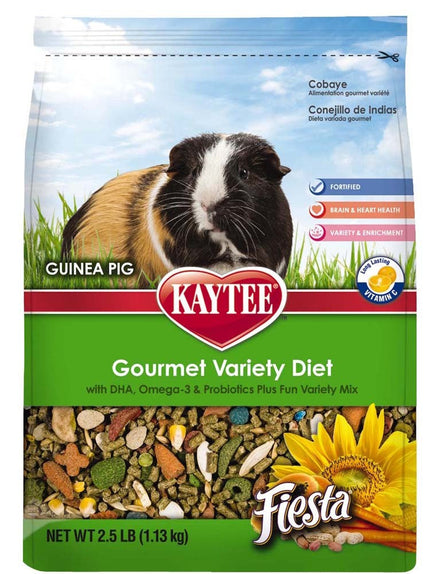
Kaytee Fiesta Guinea Pig Food 2.5lb

Kaytee Fiesta Guinea Pig Food 4.5lb
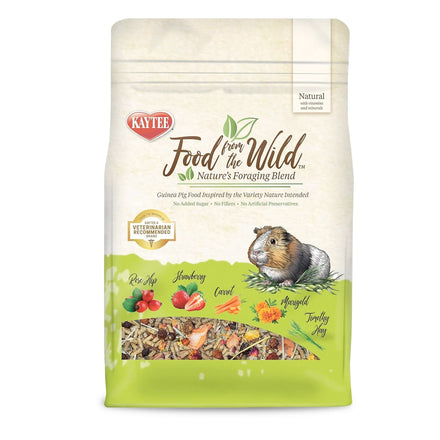
Kaytee Food from the Wild Guinea Pig 1ea/4 lb

Kaytee Forti Diet Guinea Pig Food 1ea/5 lb

Kaytee Forti-Diet Pro Health Nourish+Protect Guinea Pig Food 5lb

Kaytee Forti-Diet Pro Health Nourish+Protect Guinea Pig Food Timothy Hay 1ea/20 lb

Kaytee Supreme Guinea Pig Food 10Lb

Adult Guinea Pigs Need Unlimited Timothy or Orchard Grass Daily

Guinea Pig Health Basics: Signs Something Is Wrong and When to See a Vet

Why Guinea Pigs Should Never Live Alone (And How to Bond a Pair)
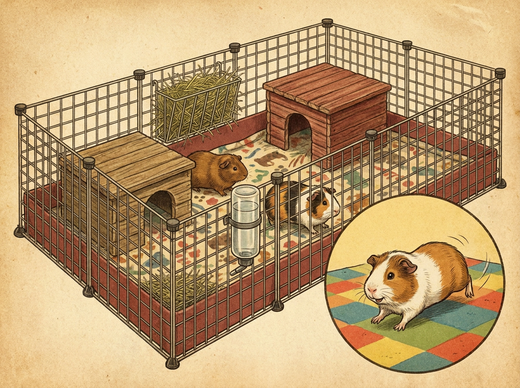
Setting Up the Perfect Guinea Pig Habitat: Space, Cage Type, and Layout
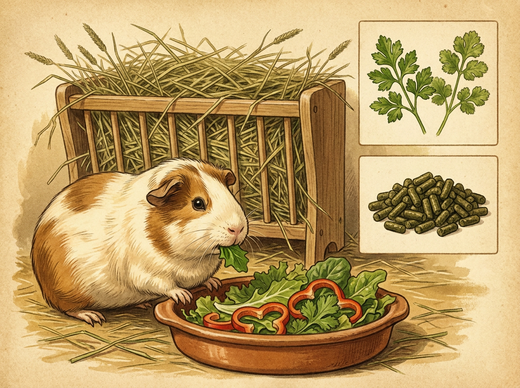
Guinea Pig Diet 101: Hay, Vitamin C, and What to Never Skip
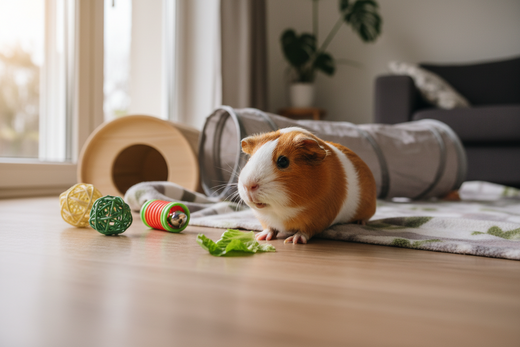
Why Floor Time Matters for Guinea Pigs

Why Floor Time Matters for Guinea Pigs
The whole guide, free to read right here — habitat, diet, lighting, troubleshooting and a first-48-hours quick start. No email required.
Guinea pigs are quietly one of the most rewarding small pets you can bring home — genuinely social, startlingly vocal, and affectionate in a way that surprises almost everyone who keeps them for the first time. The catch is that they come with one non-negotiable requirement the pet industry has consistently under-communicated: they must never live alone. A single guinea pig in an otherwise perfect enclosure will decline psychologically over months, developing chronic stress, a weakened immune system, and behaviors that get misread as quirky personality when they are actually distress signals. Get two. Everything in this guide assumes a pair or small group, because that is the only humane baseline for this species. Start correctly on housing and companionship, commit to a daily supply of fresh Vitamin C from real food, keep timothy hay in front of them every moment of every day, and you will have companions who know your voice, wheel to the cage bars when they hear you open the refrigerator, and fill your home with a sound vocabulary that is genuinely endearing — and genuinely loud. They are not a quiet species. They are exactly the right species.
Everything that needs to be in place on day one, and what to look for in each category.
Ready to set up? Browse the essentials in our collections: Critter Enclosures and Critter Bedding and Accessories.
Enrichment, one click away. Shop Critter Toys and Accessories.
Wild guinea pigs (Cavia porcellus) descend from species native to the Andes mountains of South America — Peru, Bolivia, Ecuador, and Colombia — where wild relatives still live in rocky grasslands and scrubby brushland at altitudes approaching 14,000 feet. Domestication began roughly 5,000 years ago with Inca and pre-Inca peoples of the Andes, who kept guinea pigs primarily as a food source and secondarily as ceremonial animals. The Spanish brought them to Europe in the 1500s, where they became fashionable pets among wealthy households almost immediately, and by the 17th century they were established as companion animals across Europe and eventually North America. They are entirely domestic animals with no meaningful instinct for wild survival — releasing a guinea pig outdoors is not a kindness, it is a death sentence within a day or two.
The name "guinea pig" is not particularly logical. They are not from Guinea and they are not pigs. Popular etymology suggests "guinea" may refer to the price of early specimens in England (a guinea coin), or be a corruption of "Guiana" — a South American region — or simply reflect the complicated trade routes through which they arrived in European ports. The "pig" component likely refers to the barrel-round body shape and the squealing vocalizations. In much of Latin America and continental Europe they are cobayo or cobaye, closer to their indigenous Quechua-derived name.
| Trait | Detail |
|---|---|
| Common name | Guinea pig; cavy |
| Scientific name | Cavia porcellus |
| Native ancestry | Andes mountains — Peru, Bolivia, Ecuador, Colombia |
| Domestication history | Approximately 5,000 years ago by Andean peoples |
| Adult weight | 1.5 to 2.5 lbs (700–1,100 g) |
| Adult length | 8 to 12 inches |
| Typical lifespan | 4 to 8 years with good care; 5–7 years is the most common range |
| Activity pattern | Crepuscular — most active at dawn and dusk, with frequent short bursts throughout the day |
| Social structure | Obligately social — must live with at least one other guinea pig |
| Vitamin C | Cannot synthesize it — must receive adequate Vitamin C from food every single day |
| Teeth | Continuously growing throughout life — unlimited hay prevents malocclusion (overgrown teeth) |
All guinea pig breeds share identical care requirements — the only variable is grooming frequency and complexity.
American (smooth-coated): The most common guinea pig in the United States. Short, dense, flat-lying coat available in a huge range of solid and multi-color patterns. Weekly brushing is sufficient. The easiest breed to keep clean and the best choice for households with young children or first-time guinea pig owners.
Abyssinian: Medium-length coat arranged in rosettes — swirling whorls that radiate outward from a central point, forming at the shoulders, hips, sides, and back. Gives the pig a perpetually tousled, Einstein-hair appearance. Weekly brushing; check rosette centers for hay and food debris that catches in the whorls.
Peruvian: Long coat that grows forward over the face and backward along the body, eventually reaching the floor if uncut. Requires daily combing and regular trimming around the rear to prevent soiling. Beautiful show animal; high-maintenance daily companion.
Silkie (Sheltie): Long, silky coat that sweeps backward from a clear, unobstructed face — the key difference from the Peruvian. Daily grooming and regular inspection for bedding caught in the coat.
Teddy: Short, dense, plush coat with a slight wave — the texture of a soft stuffed animal. Low maintenance; the coat does not mat easily.
Rex: Similar short plush texture to the Teddy, but with distinctively curled whiskers. Low maintenance and a great beginner option.
Crested: American smooth body with a single rosette centered on the forehead — a natural crown of radiating fur. Low maintenance beyond the American baseline.
Guinea pigs are the noisiest small pets most people will ever own. Learning their sounds is one of the genuine pleasures of the species and happens faster than you expect.
Wheeking (wheek-wheek-wheek): The loud, high-pitched squeal heard across an entire house. Pure excitement and anticipation — most commonly triggered by the refrigerator door opening, a rustling produce bag, or the approach of anyone associated with food. A wheeking guinea pig is a happy guinea pig communicating exactly what she wants. Within a week of arriving home, most guinea pigs have already mapped the sound of your refrigerator and will start before you have touched the vegetable drawer.
Purring: A low, rumbling vibration produced when content — most often during gentle handling, when settled in a lap, or during social grooming with a cagemate. A steady, deep purr means she is relaxed and trusts you. This is the sound you are working toward in the trust-building phase.
Teeth chattering: A rapid, staccato chatter — a clear warning. She means it. Used between pigs establishing dominance and occasionally toward a human hand that moved too quickly or reached in from above. End the interaction calmly.
Rumblestrutting: A slow, hip-swaying strut combined with a low, rolling rumble. This is a dominance display — the guinea pig version of chest-puffing. Both males and females do it, to each other and occasionally to their owners. It looks ridiculous, it is entirely normal, and it means they are working out who runs the show.
Chutting: A series of short, gentle clicking sounds made while exploring contentedly. Think of it as humming to yourself while doing something pleasant.
Chirping: A rare, birdlike sound that still puzzles researchers. Most owners never hear it. Guinea pigs that chirp appear to enter a trance-like state, possibly triggered by unusual sounds or scents. Not harmful, not a medical concern — simply one of the more fascinating and unexplained behaviors in the species.
The volume is the first surprise — and the speed at which guinea pigs associate specific household sounds with food. Within one week of arriving home, most pairs have already mapped the refrigerator, the crinkle of a produce bag, and the footsteps of the person who feeds them in the morning. The wheeking starts before any vegetable is visible. It is charming or mildly intrusive depending on your household, but it is absolutely consistent and it never stops for the life of the animal. This is a feature, not a problem.
The second surprise is how quickly a guinea pig deteriorates when sick. Prey animals mask illness — showing weakness in the wild attracts predators — and guinea pigs are no exception. By the time a guinea pig looks visibly unwell to a casual daily observer, she has usually been managing the problem for days. The rule with guinea pigs is: when in doubt, call the vet. A pig who seems "a little off" on Monday can be in critical condition by Wednesday.
The third surprise is the range of personality. Some guinea pigs are immediately bold, climbing into a lap the first time the enclosure opens. Others are cautious for weeks before they begin to relax. Both are entirely normal. The cautious ones often become the most deeply bonded animals once they decide you are trustworthy — and the patience it takes to earn that trust is part of what makes the relationship genuinely satisfying.
C&C stands for cubes and coroplast — a cage system built from wire storage cube panels (the same grids sold as closet organizers) assembled into a rectangular pen, lined with a corrugated plastic sheet bent into a base that contains bedding. The system emerged from the guinea pig community specifically because no commercially manufactured cage widely sold in U.S. pet stores reliably meets the minimum footprint requirement for even a single guinea pig, let alone the pair that is the minimum healthy social unit.
The minimum floor footprint for two guinea pigs is 10.5 square feet. A 2×4 grid C&C cage measures approximately 28″ × 56″ in internal floor space — right at that threshold. A 2×3 grid cage (roughly 28″ × 42″) is appropriate only as temporary quarantine housing for one pig. Three pigs need 13 square feet; four pigs need 16 square feet. More is always better. Guinea pigs run, play, establish social territory, and need unobstructed floor length to do the running leaps and twisting mid-air jumps known as popcorning — a physical expression of genuine joy that is only possible with open floor space.
The most commonly sold "guinea pig cage" at a major U.S. pet retailer measures approximately 30″ × 18″, about 3.75 square feet. That is one-third of the two-pig minimum. It is not suitable.
A well-designed guinea pig enclosure has distinct functional zones:
Hay zone: The wall-mounted hay rack with loose hay piled beneath it. Guinea pigs eat hay nearly continuously and spend most of their active time here. Place it in an easily accessible location you can refill quickly.
Feeding station: Pellet bowl and water bottle clustered in one corner. Heavy ceramic bowls resist tipping. Position the water bottle nipple at a height the smaller pig can reach without strain.
Hide zone: Two or more hides positioned away from the main traffic corridor — typically the back half of the enclosure. Each hide should be large enough for the pig to enter fully and turn around. Guinea pigs rest in hides through much of the midday period.
Run lane: An unobstructed corridor running the length of the enclosure. Popcorning requires a clear straight run. Do not tile the entire enclosure with hides and toys; leave a open lane from end to end.
Litter corner (optional): Many guinea pigs choose a preferred toileting corner organically. Placing a small section of paper pellet bedding in that corner — visually distinct from the fleece elsewhere in the cage — simplifies spot cleaning considerably.
Guinea pigs must never be housed on wire-bottom flooring. Wire gaps catch and twist feet, causing breaks and abrasions that rapidly develop into pododermatitis — commonly called bumblefoot — a bacterial infection of the foot pad characterized by painful swelling, open sores, and chronic lameness. Bumblefoot is painful, slow to heal, and entirely preventable. Solid-floor enclosures with appropriate bedding are the only acceptable option. If you inherit a wire-bottomed cage, line the floor completely with a flat piece of plywood or a smooth cutting board before any guinea pig goes in.
| Substrate | Best for | Ease of maintenance | Notes |
|---|---|---|---|
| Fleece liners (two-layer system) | All ages; pairs and groups; long-term setups | Spot-clean daily; full wash 1–2x per week | Most economical long-term; reusable; soft underfoot; no dust; requires wicking top layer over absorbent underlayer; odorless when changed on schedule |
| Paper-based bedding (Carefresh, Kaytee Clean & Cozy) | Any setup; especially good for odor control | Spot-clean daily; full change weekly | Excellent odor absorption; soft; choose dust-reduced grades for respiratory health; higher ongoing cost than fleece |
| Aspen shavings | Any setup; budget-friendly option | Spot-clean daily; full change weekly | Safe and widely available; moderate odor absorption; acceptable for guinea pigs; purchase dust-reduced grade |
| Hay (as partial floor covering in the hay zone) | Any setup — within the feeding zone only | Replace soiled hay daily | Appropriate in the area immediately beneath the hay rack; not suitable as full floor substrate — becomes unsanitary quickly throughout the rest of the cage |
| NEVER: Cedar shavings | Never, at any age, any dose | — | Aromatic phenols toxic via respiratory exposure; causes irreversible respiratory and liver damage in guinea pigs; no safe application at any life stage |
| NEVER: Pine shavings (untreated) | Never | — | Same phenol concern as cedar; heat-treated kiln-dried pine sold specifically for small animals is a separate product — verify the specification before use |
| NEVER: Clay or clumping cat litter | Never | — | Fine dust causes serious respiratory damage; clumping formulas can be ingested and impacted |
| NEVER: Corn cob bedding | Never | — | Molds rapidly in humid conditions; impaction risk if ingested |
| NEVER: Calcium sand or dusty play sand | Never | — | Respiratory irritant; no benefit for guinea pigs; no appropriate use case |
| NEVER: Scented or perfumed bedding | Never | — | Guinea pigs have sensitive respiratory tracts; artificial fragrances cause chronic respiratory irritation even at low concentrations |
The practical recommendation for most keepers: a two-layer fleece liner system — an absorbent underlayer (U-Haul furniture pads, bath towels, or purpose-made cage liners) topped with a wicking fleece top layer — is the most economical and guinea-pig-friendly long-term substrate. It is soft underfoot, dustless, produces no ongoing bedding cost after the initial investment, and is odorless when washed once or twice per week. The honest trade-off is laundry frequency. For keepers who prefer disposable bedding, unscented paper-based bedding at 2–3 inches depth is the best alternative. Aspen is an acceptable third option. Cedar, pine, cat litter, corn cob, sand, and any scented product are not acceptable under any circumstances.
Guinea pigs do not need a basking lamp, UV bulb, or supplemental heat source beyond what a well-heated home already provides. Their thermal requirements fall squarely within the comfort zone of a normal human living space. What they do need from their environment is temperature stability, a natural light rhythm, and a daily enrichment routine that engages foraging, social, and exploratory drives.
| Parameter | Target | How to monitor it | What goes wrong when it drifts |
|---|---|---|---|
| Ambient temperature | 65–75°F | Thermometer inside or directly adjacent to the enclosure | Below 60°F: immune suppression, sluggishness, hypothermia risk; above 80°F: heatstroke — can be fatal within hours |
| Heatstroke danger threshold | Above 80°F | Room thermometer; monitor near windows in summer | Rapid panting, drooling, lying on side, unresponsiveness — veterinary emergency |
| Draft exposure | None at any temperature | Enclosure placement review | Drafts at a comfortable ambient temperature still trigger upper respiratory infections |
| Light cycle | 12–14 hours of ambient room light | Window proximity or room lighting routine | Continuous bright light is stressful; natural cycling supports normal sleep and activity patterns |
| Summer monitoring | Critical above 75°F ambient | Room thermometer; A/C confirmation | Non-climate-controlled spaces in summer are a genuine life-safety issue for guinea pigs |
Guinea pigs cannot sweat and have very limited ability to pant heat away. In a room above 80°F, a guinea pig loses the ability to cool herself and will progress to heatstroke within hours. Long-haired breeds, overweight animals, and pigs in small or poorly ventilated enclosures are at highest risk. In warm months:
A guinea pig who is cold, still, and unresponsive is not hibernating. Guinea pigs have no hibernation mechanism whatsoever. A cold and lethargic guinea pig is a sick guinea pig who needs a vet visit today, not tomorrow.
Guinea pigs are crepuscular — most active at dawn and dusk, with short activity bursts interspersed through the day and quieter periods at midday and overnight. They require no UV lighting and no specialty lamp. Normal household ambient light tracking a natural day-night cycle is all they need. Avoid placing the enclosure in a room that is brightly lit 24 hours; continuous light is genuinely stressful for crepuscular animals whose nervous system is calibrated for daily dark periods.
An under-enriched guinea pig with nothing to investigate becomes inactive, overeats, and develops dominance conflicts with her cagemate that have more to do with frustration than genuine personality incompatibility. Enrichment is not optional for a species this cognitively active.
Foraging enrichment produces the longest engagement per unit of effort: scatter pellets through a thin layer of hay, stuff fresh herbs loosely into a cardboard tube, or load a hay ball that dispenses as it rolls. Tunnels are used compulsively — rotate them weekly so they remain novel. Chew items — apple wood sticks, willow balls, loofah pieces — satisfy the chewing drive and protect any wooden furniture in free-roam areas. Rearranging the enclosure periodically — moving a hide to a new corner, adding an unfamiliar tunnel — provides genuine exploratory novelty. Guinea pigs memorize their enclosure layout completely and show visible investigative behavior when something changes.
Guinea pigs share one metabolic limitation with humans that almost no other mammal has: they cannot synthesize Vitamin C (ascorbic acid) from glucose. The enzyme that performs this conversion — L-gulonolactone oxidase — is absent in guinea pig physiology. Every milligram of Vitamin C your guinea pig requires must arrive from her food, every single day, with no gaps.
Without adequate Vitamin C, guinea pigs develop scurvy — the same disease that killed sailors on long ocean voyages without access to fresh citrus. The progression is predictable and devastating: first, a rough, dull coat and subtle lethargy as cellular repair slows. Then swollen, painful joints as connective tissue breaks down without the collagen synthesis that depends on ascorbic acid. Then weight loss, reluctance to move, dental changes as gum tissue deteriorates, and eventually hemorrhaging and organ failure. A guinea pig in advanced scurvy cannot be saved by a pellet change — the damage accumulates silently and is already done before the animal looks visibly sick.
The daily Vitamin C requirement for an adult guinea pig is approximately 10–30 mg per day, rising to 30–50 mg during pregnancy, nursing, or illness. This sounds modest until you understand that guinea pig pellets begin losing their Vitamin C content the moment the bag is opened — degraded by light, air, heat, and time — and a bag sitting open in a kitchen cabinet for three months may deliver essentially no Vitamin C by week eight regardless of what the label says at manufacture.
Fresh vegetables are your most reliable daily Vitamin C source, not pellets. And the single best vegetable you can give a guinea pig is bell pepper — red, orange, or yellow. Bell peppers contain more Vitamin C per gram than oranges, they are eagerly accepted by almost every guinea pig, and they are available year-round at every grocery store. Two to three small strips per pig per day provides a substantial share of the daily requirement. Fresh cilantro, romaine lettuce, and parsley fill in the rest across the week's rotation.
Do not rely on Vitamin C powder or drops added to water. Vitamin C oxidizes rapidly in solution — it loses meaningful potency within a few hours of being dissolved in a water bottle. By the time your guinea pig drinks, the supplement has degraded to near zero. This product is widely marketed and widely relied upon, and it does not reliably deliver what it promises. Fresh vegetables are the correct delivery method.
Early signs of Vitamin C deficiency to watch for at your weekly weight and health check: coat looks rough or dull; pig is moving less than usual; joints look slightly puffed at the wrists and hocks; eating less, losing weight. At the first sign of any of these in a pig not receiving fresh produce daily, call a vet. Early scurvy reverses quickly and completely; advanced scurvy does not.
Timothy hay is not bedding material that happens to be edible. It is the primary food source for adult guinea pigs — comprising 80% or more of the total diet by volume — and the single item most responsible for their long-term health. Guinea pig teeth grow continuously throughout their lives: the incisors you can see when they eat, and the molars and premolars further back in the jaw that you cannot see without veterinary equipment. The only thing that keeps those teeth worn to the correct length, shape, and angle is the lateral grinding motion of chewing long-strand fibrous hay. Pellets, vegetables, and treats all require a vertical crushing motion that does not wear the molars correctly. Without constant hay access, teeth overgrow into malocclusion — a misalignment of molar surfaces that eventually prevents effective chewing, causes drooling, weight loss, and chronic pain, and is the leading cause of death in guinea pigs over three years old.
Beyond dental health, hay maintains the digestive motility that keeps the gut moving normally. Guinea pigs are hindgut fermenters — their digestive system ferments fiber in the cecum after initial stomach digestion, producing volatile fatty acids that serve as a primary energy source and sustain the microbial balance that keeps digestion functional. A reduction in hay intake slows gut motility, disrupts the cecal microbiome, and creates the conditions for GI stasis — a full or partial shutdown of intestinal movement that is a quiet, rapidly lethal emergency described in detail in the Common Challenges section.
Timothy hay is the standard grass hay for adult guinea pigs. Orchard grass is an excellent alternate or rotation hay. Meadow hay blends add dietary variety. Alfalfa hay is appropriate for guinea pigs under six months of age and for pregnant or nursing sows — it is calorie-dense and high in protein and calcium needed by growing or reproducing animals — but the calcium content is too high for healthy adult pigs and causes urinary sludge and bladder stones if fed long-term. After six months, transition all pigs to grass-based hays and use alfalfa only as an occasional enrichment treat.
One-quarter cup of plain, Vitamin C-fortified guinea pig pellets per pig per day. Not more. Pellets are calorie-dense and do not provide the lateral grinding action that hay provides. A pig who fills up on pellets eats less hay — the opposite of the outcome you are managing for. The portion limit protects the hay priority.
When reading a pellet label, look for: grass hay or timothy as the first ingredient; Vitamin C listed as an added supplement; no seeds, nuts, corn, dried fruit, or colored pieces. A plain compressed pellet is correct. Any bag labeled "gourmet guinea pig diet" that contains sunflower seeds, papaya bits, peanuts, or colorful yogurt drops is not guinea pig food — it is a treat medley that a guinea pig will sort through selectively, eating the calorie-dense junk and leaving the nutritional base untouched.
Store pellets correctly: sealed bag, cool and dark location, used within 90 days of opening. Vitamin C degrades with every day of exposure to air, light, and heat. A large bag bought infrequently and left open in a warm pantry provides effectively zero Vitamin C by month three, regardless of what the bag says.
Daily vegetables — serve every day, rotate through the week:
| Vegetable | Notes |
|---|---|
| Bell pepper (any color) | Best daily choice; highest Vitamin C per gram; eagerly eaten by most pigs |
| Fresh cilantro | High Vitamin C; good daily rotation staple |
| Romaine lettuce | Safe daily; moderate Vitamin C; good hydration content |
| Green leaf lettuce | Safe daily; lower in nutrition than romaine but accepted well |
| Parsley (flat-leaf or curly) | High Vitamin C; limit to a small sprig several times per week — high calcium |
| Kale | High Vitamin C; limit to small amounts 2–3x per week due to calcium content |
Occasional vegetables — safe 2–3 times per week:
| Vegetable | Notes |
|---|---|
| Cucumber | Very hydrating; low Vitamin C; good in warm weather |
| Zucchini | Well-tolerated; mild flavor most pigs accept |
| Broccoli (stems and leaves) | Safe in small amounts; florets occasionally only — can cause gas |
| Fresh or frozen-thawed peas | Safe in moderation |
| Carrot | Safe; higher sugar — small amounts only |
Fruits — occasional treat, once or twice per week, small portions only:
Strawberries (1–2 per pig), blueberries (3–4 per pig), and apple slices with seeds and core fully removed are the safest options. Fruit is high in sugar and should never be a daily item.
One type of leafy green per day. Serving multiple leafy greens simultaneously — a pile of parsley AND kale AND cilantro — multiplies the gas-producing potential and can trigger dangerous bloat. Rotate greens through the week; do not pile them together in a single serving.
| Food | Why it is dangerous |
|---|---|
| Iceberg lettuce | Negligible nutrition; extremely high water content causes severe diarrhea |
| Onions, garlic, leeks, chives | Causes hemolytic anemia — destroys red blood cells; can be fatal |
| Potatoes (raw or cooked) | Contains solanine and other toxic alkaloids; raw potato is acutely dangerous |
| Rhubarb (leaves and stalk) | High oxalic acid; highly toxic |
| Avocado | Persin — toxic to guinea pigs |
| Grapes and raisins | Documented kidney damage risk |
| Seeds and nuts (any kind) | High fat; wrong macronutrient profile; choking hazard |
| Dried fruit (all types) | Concentrated sugar; significant digestive disruption |
| Corn (fresh, dried, or popped) | Digestive upset; hard dried corn is a choking hazard |
| Dairy products | Guinea pigs are lactose intolerant; causes serious GI illness |
| Meat or animal protein | Guinea pigs are strict herbivores; their digestive system cannot process animal protein |
| Mushrooms | Potentially toxic species variation; safest to avoid entirely |
| Any human snack food | Salt, sugar, preservatives, and artificial additives — none of which a guinea pig's digestive system can tolerate safely |
Fresh water must be available at all times. A sipper bottle plus a ceramic bowl is the recommended setup — some guinea pigs prefer one, some the other, and offering both ensures every pig drinks adequately without the keeper needing to know individual preferences from day one. Change water every day without exception. Scrub the sipper bottle nipple and tube weekly with a bottle brush — algae and biofilm build up in sipper bottles faster than they are visible. A guinea pig who does not drink adequately develops concentrated urine, urinary sludge, and ultimately bladder stones; dehydration is a common and preventable underlying factor in urinary disease.
Shop the food and supplies: Browse Critter Food Treats & Feed.
Short-haired guinea pigs (American, Teddy, Rex, Crested): A soft-bristle brush once per week is sufficient under normal conditions. During seasonal coat transitions in spring and autumn, brushing two to three times weekly reduces the shed hair that pigs ingest during self-grooming. Use a soft-bristle brush or a rubber grooming glove — stiff brushes are unnecessary on short coats and uncomfortable.
Abyssinian: Brush the rosettes once or twice per week with a soft slicker or pin brush. Check rosette centers after every hay feeding — food particles, hay seeds, and shed hair collect in the whorls and will mat if left.
Long-haired breeds (Peruvian, Silkie): Daily brushing is not optional — it is the minimum required to prevent matting. A wide-tooth comb followed by a detangling brush works better than bristle-only brushes on long coats. Trim the coat around the rear end every four to six weeks to prevent soiling; long coat that contacts the litter area becomes stained with urine and feces, causing skin irritation and infection beneath. If daily grooming is not a realistic commitment, a short-coated breed is the better match.
Mat removal: Small mats in medium-length coats can often be teased apart with fingers and a wide-tooth comb. Do not pull hard or cut through mats with scissors without looking carefully — guinea pig skin is thin and tears easily. Large, tight mats in long-haired breeds should be removed by a vet or an experienced groomer to avoid cutting the skin beneath.
Guinea pig nails grow continuously and must be trimmed every four to six weeks. Overgrown nails snag on fleece, curl under the foot pad, alter foot angles, and contribute directly to bumblefoot development. Use small animal nail clippers — the scissor style is easiest to control on guinea pig nails. Clip only the clear tip of the nail, well forward of the pink quick (the blood vessel visible in light-colored nails). If you clip the quick, it bleeds freely — apply cornstarch or styptic powder directly to the nail tip and hold light pressure for 60 seconds. The bleeding stops quickly and the animal is not harmed beyond the moment of discomfort.
For dark nails where the quick is not visible, clip a very small amount at a time. Stop when the cross-section of the cut nail looks slightly more concave or the tip looks faintly moist — both indicate proximity to the quick. Ask your vet to demonstrate nail trimming at your first visit if you are uncertain; it is a skill that improves quickly with practice.
A clean, slightly waxy inner ear is completely normal in guinea pigs and requires no intervention. Clean visibly dirty outer ear folds with a cotton ball barely dampened with warm water — never insert cotton swabs into the ear canal, and never introduce water into the ear. Excessive dark wax, a foul odor, head tilting, or persistent scratching at the ears indicates an ear infection or ear mites and warrants a vet visit.
Guinea pig molars sit far enough back in the jaw that you cannot examine them without a vet's speculum and lighting. What you can observe at home:
Any of the above: book a vet exam and request a dental check specifically. Molar disease in guinea pigs requires sedation to examine and treat, and the earlier it is caught the safer and more effective the intervention.
Male guinea pigs (boars) have a perineal sac — a pocket of skin surrounding the anal area — that accumulates smegma (a waxy, sebaceous secretion). This buildup is physiologically normal but must be cleaned every two to four weeks or it impacts, hardens, and causes significant discomfort. Using a cotton swab or soft cloth dampened with warm water or a small amount of coconut oil, gently clean inside the perineal sac, working the buildup outward. The material is brownish, waxy, and unpleasant-smelling. Skipping this cleaning leads to impaction requiring veterinary removal. Sows do not require this procedure.
What you see: rough, dull coat that has lost its normal luster; reduced activity and engagement; swollen, tender-looking joints at the wrists and hocks; progressive weight loss; in advanced cases, visible bleeding around the gumline and loosening of teeth. Why: inadequate dietary Vitamin C — no fresh vegetables, over-reliance on degraded pellets, or Vitamin C water supplements that oxidize within hours. What to do: increase fresh bell pepper and cilantro immediately; consult a vet about injectable or oral Vitamin C supplementation for active recovery. When to call a vet: at the first sign of swollen joints or unexplained weight loss — early scurvy reverses fully; advanced scurvy causes permanent joint damage.
What you see: progressive weight loss despite an apparently normal food intake; drooling or persistently wet fur around the chin; dropping food from the mouth while chewing (quidding); reluctance to eat hay; thin body condition developing over weeks. Why: insufficient hay intake — most commonly from a diet too heavy in pellets and vegetables relative to hay — allows molars to grow unevenly, developing spurs (sharp points) that lacerate the tongue and cheek mucosa, making eating painful. What to do: schedule a vet dental exam immediately — molar spurs must be filed under sedation and anesthesia; simultaneously maximize hay access and eliminate any barrier to eating it. When to call a vet: at the first sign of reduced hay intake, weight loss, or drooling — do not wait. Dental disease progresses rapidly once it begins, and the sedation required for treatment carries greater risk in an already debilitated animal.
What you see: sneezing — even mild or intermittent sneezing is significant in guinea pigs; nasal discharge ranging from clear to yellow or green; audible clicking or crackling during breathing; labored breath; lethargy; reduced appetite. Why: bacterial infection — most commonly Bordetella bronchiseptica or Streptococcus pneumoniae — typically triggered by cold drafts, stress, introduction of a new animal without quarantine, or immune suppression from nutritional deficiency. What to do: move the pig away from any draft source; keep the enclosure warm and dry; call the vet the same day. When to call a vet: today, without exception. Guinea pig URIs progress to pneumonia with remarkable speed and require antibiotic treatment to resolve. This is never a "wait and see" situation.
What you see: the pig is hunched, grinding her teeth, moving very little; abdomen feels hard, distended, or bloated when palpated gently; absent or dramatically reduced fecal output in the enclosure; the pig may stretch repeatedly or press her belly to the floor. Why: gut motility has slowed or stopped, causing gas to accumulate in the stagnant intestinal tract. Most commonly triggered by insufficient hay, a sudden major dietary change, stress, pain from another condition, or post-anesthetic ileus. As gas builds, pain escalates rapidly. What to do: this is a veterinary emergency — do not wait to see if it resolves on its own. Keep the pig warm, encourage gentle movement (which helps stimulate gut activity), and get to a vet as quickly as possible. When to call a vet: immediately. GI stasis can be fatal within 24 to 48 hours in an untreated guinea pig.
What you see: excessive, compulsive scratching — sometimes severe enough to cause wounds; hair loss, particularly over the shoulders, back, and rump; white flakes or "walking dandruff" visible on the coat (caused by large surface mites in the genus Cheyletiella); skin thickening or crusting in areas of hair loss. Why: fur mites and static lice are extremely common in guinea pigs acquired from pet stores and easily transferred through shared bedding or direct contact with an infested animal. What to do: see a vet for appropriate treatment — ivermectin (subcutaneous injection or topical application) is the standard. Never use over-the-counter bird or small animal mite sprays; many are toxic to guinea pigs. Treat all guinea pigs in the household simultaneously, replace all bedding, and scrub the enclosure. When to call a vet: within one to two days of noticing scratching or hair loss.
What you see: one or more foot pads appear swollen, reddened, or ulcerated; the pig is reluctant to bear full weight on the affected foot; movement is reduced; in advanced cases, open sores with crusting are visible on the pad. Why: wire-bottom flooring, chronically soiled or abrasive substrate, obesity, or insufficient movement creates sustained pressure and abrasion on the foot pad, which becomes infected with bacteria — most commonly Staphylococcus aureus — beneath the surface. What to do: remove the pig from any wire flooring immediately; switch to clean, soft fleece or paper-based bedding; see a vet — antibiotics are required and advanced cases need surgical debridement. When to call a vet: at the first sign of a swollen or discolored foot pad. Early bumblefoot is manageable; late-stage bumblefoot causes permanent structural foot damage and chronic pain.
What you see: a distinctive pattern of bilateral flank hair loss — smooth, symmetrical thinning along both sides of the body simultaneously, rather than the patchy or random hair loss associated with mites; the sow may become more irritable or show more dominance behavior than usual; in later stages, a palpable swelling in the lower abdomen. Why: ovarian cysts are extremely common in intact female guinea pigs over two years of age — some studies estimate prevalence above 50% in adult sows. The cysts produce estrogen that drives the characteristic bilateral hair loss pattern. What to do: consult a vet — treatment options include hormonal injections (GnRH agonist implants) to suppress cyst activity medically, or surgical spaying for a permanent solution. When to call a vet: when you notice the bilateral flank hair-loss pattern. The symmetry is distinctive enough that vets often make a working diagnosis on physical exam alone.
What you see: persistent chasing, mounting attempts, teeth chattering, and escalating rumblestruts between two male guinea pigs; in serious cases, bite wounds to the ears, face, or back. Why: two unrelated adult males introduced without a proper neutral-territory introduction protocol almost always conflict for dominance. Boar compatibility is strongly influenced by age at introduction — littermates or juveniles introduced before four months are far more compatible than adult strangers. An intact boar housed with any sow will breed continuously. What to do: if wounds are present, separate immediately. Consult a guinea pig rescue about proper neutral-territory introduction technique before attempting re-pairing. Consider neutering one or both boars — a neutered boar can be housed with sows safely and often coexists more calmly with other boars. When to call a vet: any bite wound. Guinea pig bite wounds develop serious bacterial infections rapidly; they require cleaning and usually antibiotic treatment.
What you see: the pig is lying on her side or spread flat on her belly with no normal posture; panting with the mouth open; drooling or visibly wet around the chin; unresponsive or barely responsive to touch; skin feels unusually warm. Why: ambient temperature above 80°F exceeded the guinea pig's ability to thermoregulate. Common situations: a sunny window, a car in warm weather, a non-air-conditioned room during a summer heat wave, or being placed near an active heating vent. What to do: move the pig to a cool area immediately; apply cool (not cold or ice) water to the ears and feet; offer cool water to drink if she is alert enough to accept it; place her on a lightly damp cool cloth. Get to a vet immediately regardless of apparent recovery — heatstroke causes organ damage that may not be immediately visible and requires veterinary assessment even in animals that seem to stabilize. When to call a vet: immediately. Do not wait to see if she improves at home.
| What you see | Likely cause | What to do | Vet urgency |
|---|---|---|---|
| Rough coat, swollen joints, weight loss | Vitamin C deficiency / scurvy | Fresh bell pepper daily; vet consult for supplementation | Within a day or two |
| Weight loss, drooling, quidding, reduced hay intake | Malocclusion / dental disease | Vet dental exam; maximize hay access | Within a few days; sooner if not eating |
| Sneezing, nasal discharge, audible breathing | Upper respiratory infection | Remove from drafts; vet same day | Today — URIs progress to pneumonia fast |
| Hunched, grinding teeth, no feces, bloated abdomen | GI stasis / bloat | Warm environment; gentle movement; vet now | Immediately |
| Compulsive scratching, white flakes, hair loss | Fur mites or lice | Vet for ivermectin; replace all bedding | Within 1–2 days |
| Swollen or red foot pad, reluctance to walk | Bumblefoot / pododermatitis | Remove from wire; soft bedding; vet | Within a few days; today if severe |
| Bilateral flank hair loss in adult sow | Ovarian cysts | Vet consultation | Within a week |
| Chasing, biting, wounds between male pigs | Boar fighting | Separate if wounds present; vet for wounds | Wounds: today |
| Lying flat, panting, drooling, hot skin | Heatstroke | Cool area; cool damp cloth; vet immediately | Immediately |
Guinea pigs are prey animals with a well-calibrated startle reflex — an overhead approach, a sudden loud sound, or an unexpected fast movement triggers an immediate freeze-or-flee response. Always approach at the animal's level, not from above. Announce yourself with a quiet voice before reaching into the enclosure. Never swoop a hand down from above; it is precisely what an aerial predator looks like.
The correct hold is a two-hand scoop: slide your primary hand under the pig's chest and front legs from one side while your secondary hand slides under the hindquarters and rear legs simultaneously. Lift in one smooth, unhurried motion. Supporting the hindquarters is not optional. A guinea pig who feels her rear end unsupported will kick hard to correct the sensation, and a startled guinea pig mid-air with kicking rear legs is a very short fall away from a spinal injury. Once lifted, hold her against your chest or settled in your lap rather than at arm's length — the chest contact is genuinely comforting and reduces wriggling.
Never scruff a guinea pig. Lifting by the scruff of the neck — a natural and harmless restraint technique in cats — causes pain and potential neck injury in guinea pigs. It is not a valid restraint method for this species at any handling level.
Freezing (fear-freeze): The pig goes completely motionless in your hands, eyes wide and unblinking. This is the prey animal's primary defense — playing dead. She is not relaxed; she is frightened. Sit on the floor, hold her gently against your chest, speak quietly, and wait. Most guinea pigs begin to relax within a few minutes once they confirm you are not a threat.
Purring in your hands: The low, steady rumble of contentment. She has decided she is safe. This is the goal you are working toward, and it arrives reliably with patience.
Teeth chattering: A warning. Set her down calmly and end the session.
Rumblestrutting on your arm: The pig is attempting to establish dominance over your forearm. Mildly amusing; not a concern. End the session calmly.
Popcorning: A joyful, spontaneous leap-and-twist from a standstill. A pig who popcorns during floor time or in your lap is a happy, relaxed animal doing exactly what healthy guinea pigs do. It is one of the more delightful things you will ever watch a small animal do.
The first week is observation and quiet presence — no handling required. Sit near the enclosure and let the pigs approach the bars at their own pace. Offer a strip of bell pepper from your fingers through the cage bars: even the most cautious guinea pig usually accepts food from a human hand within two or three sessions. Food is the fastest trust-building tool available.
From the second week, begin gentle five-minute handling sessions on the floor — never while standing. A towel across your lap gives the pig a textured, grippable surface that feels more secure than exposed clothing. Build session length gradually over several weeks as the pig settles. Daily brief handling builds trust dramatically faster than long infrequent sessions — a pig handled for five minutes every day for two weeks is a measurably calmer animal than one handled for an hour once a week.
Guinea pigs are well-suited to children who can sit still and handle gently, with appropriate supervision. The practical rule: all guinea pig handling involving children under ten years old happens seated on the floor, with an adult's hands within immediate reach. Teach children to let the pig walk across their lap at her own pace rather than gripping or restraining her. Sudden sounds and fast movements are the primary triggers for startling in a pig who would otherwise be entirely comfortable.
Guinea pigs are not a rough-and-tumble species. They are a pet for children willing to sit quietly on the floor, earn trust over days and weeks, and experience the reward of an animal who runs to the cage bars at feeding time and settles into a contented purr in a lap. That experience is genuinely wonderful and entirely worth the patience it asks for.
| How often | What to do |
|---|---|
| Daily | Refill the hay rack completely and top off the floor hay pile — pigs should never run out at any point |
| Daily | Change water in both the sipper bottle and the ceramic bowl; refresh fully, do not top off |
| Daily | Offer fresh vegetables: bell pepper as the daily staple; rotate through your greens schedule for the week |
| Daily | Place ¼ cup of pellets per pig in the food bowl; remove uneaten pellets after 24 hours |
| Daily | Spot-clean bedding: remove soiled sections around the feeding station and toileting corner |
| Daily | Observe both pigs — normal posture, movement, appetite, and droppings? Any change is information |
| Every 2–3 days | In a fleece system: swap the absorbent underlayer; in a paper-bedding system, add fresh bedding to the toileting corner |
| Weekly | Full fleece liner laundry — wash with unscented detergent, dry completely before replacing |
| Weekly | Scrub the sipper bottle and the water bowl with a bottle brush; rinse thoroughly |
| Weekly | Weigh each pig individually on a kitchen scale; log the result and compare to the previous week |
| Weekly | Inspect coat for mites, hair loss, or skin changes; check each foot pad for redness or swelling |
| Every 4–6 weeks | Trim all nails — front and rear feet on both pigs |
| Every 4–6 weeks (boars only) | Clean the perineal sac; remove any smegma buildup |
| Monthly | Deep-clean the full enclosure: remove all bedding and accessories; scrub all surfaces with a safe pet disinfectant (dilute white vinegar is effective and leaves no harmful residue when rinsed); dry completely before reassembling |
| Monthly | Inspect all hides, tunnels, and enrichment items; replace saturated cardboard; retire chewed-through wooden items |
| Monthly | Photograph each pig from above for a body-condition baseline to compare over time |
| Every 6 months | Review the weight log and note any trend; pigs over four years old should see the vet twice annually |
| Annually (minimum) | Exotic small-animal vet wellness exam: physical assessment, dental check, and fecal parasite screen; twice annually for pigs over five years |
Guinea pigs mask illness until they cannot. By the time a guinea pig looks visibly unwell to a casual check, she has usually been managing the problem for days. The rule: when in doubt, call — every time.
Go today — same-day or emergency:
Book within a few days:
Find your exotic small-animal vet before you need them. Confirm they see guinea pigs and that they are specifically comfortable managing guinea pig dental disease — molar work is a specialty within exotic small animal practice, and not every veterinarian who sees "small mammals" has the equipment and experience for it. Bring your weekly weight log, a feeding record, and a fresh fecal sample in a sealed container to every wellness visit.
Guinea pigs are strict herbivores whose diet is built on a foundation of unlimited timothy hay — at least 80% of everything they consume by volume, every day of their lives. On top of the hay base, adult guinea pigs receive approximately one-quarter cup per pig per day of plain, Vitamin C-fortified pellets, along with a daily serving of fresh vegetables led by bell pepper, which provides more Vitamin C per gram than oranges and is accepted enthusiastically by almost every guinea pig. Romaine lettuce, fresh cilantro, and parsley rotate through the rest of the week's vegetable offerings. Small amounts of fruit — strawberries, blueberries, apple slices without seeds — can be offered as occasional treats. Guinea pigs must never be fed onions, garlic, rhubarb, potatoes, iceberg lettuce, seeds, nuts, dried fruit, dairy, meat, or any human snack food; many items that seem harmless are genuinely toxic to them.
Yes — this is the single most important fact about guinea pig nutrition. Guinea pigs, like humans, cannot synthesize Vitamin C internally; every milligram must come from food every single day without exception. A guinea pig deprived of Vitamin C develops scurvy: rough coat, swollen and painful joints, progressive weight loss, and eventually internal bleeding. Pellets fortified with Vitamin C at packaging are unreliable as a primary source because the Vitamin C degrades rapidly once the bag is opened, particularly if stored in a warm or bright location. The best daily source is fresh bell pepper — any color — because it contains more Vitamin C per gram than citrus fruit and is readily eaten by most guinea pigs. Vitamin C supplements added to water oxidize within a few hours of being dissolved and cannot be relied upon. The correct approach is fresh produce every single day, with bell pepper as the non-negotiable baseline.
At minimum, two — and both should be brought home at the same time whenever possible. Guinea pigs are obligately social animals whose psychological health depends on the presence of a compatible companion. A lone guinea pig does not simply prefer company; she requires it. Solitary guinea pigs develop chronic stress responses, weakened immune function, and behavioral changes that are easily misread as personality when they are signs of prolonged distress. The easiest pairing is two females (sows) introduced as young animals simultaneously. Two males (boars) who were raised as littermates or introduced as juveniles before four months typically coexist peacefully; adult boar introductions require careful neutral-territory introduction technique and are more unpredictable. A neutered male paired with one or more sows is a very compatible grouping. Never house an intact male with females unless intentional breeding is the goal.
The minimum for two guinea pigs is 10.5 square feet of floor space — equivalent to a C&C grid cage measuring 2×4 grids, approximately 28 inches by 56 inches in usable interior floor area. This is larger than almost every cage sold in U.S. pet stores under a "guinea pig cage" label, which is why the guinea pig community has standardized around DIY C&C builds as the practical baseline. The typical commercial pet store cage for guinea pigs measures roughly 30 × 18 inches — about 3.75 square feet, which is not adequate for a single pig, let alone the pair that is the social minimum. Three guinea pigs need a minimum of 13 square feet; four pigs need 16 square feet. A loft or second level adds valuable enrichment space but does not count toward the minimum floor footprint. When in doubt, go larger — there is no such thing as too much space for a guinea pig.
With good care, guinea pigs typically live 4 to 8 years, with 5 to 7 years being the most common range for well-kept animals. The factors most consistently associated with reaching the upper end of that range are daily Vitamin C from fresh vegetables throughout life, unlimited timothy hay from day one through old age (which protects against dental disease, the leading cause of death in guinea pigs over three years old), a clean and correctly sized living environment with compatible social housing, and annual veterinary care that identifies problems while they are still treatable. A pair of guinea pigs adopted together as young animals can represent a 6- to 8-year commitment — longer than most people expect when they first walk into a pet store, and a timeline that deserves honest consideration before purchase.
No. Guinea pigs require no heat lamp, UV bulb, or supplemental lighting of any kind. Their temperature comfort zone — 65 to 75°F — falls exactly within the range of a normal climate-controlled home, and supplemental heat is unnecessary in any well-heated indoor space. What they cannot tolerate is the opposite direction: temperatures above 80°F are dangerous, and temperatures above 85°F are a heatstroke emergency that can be fatal within hours. A room that is comfortable for you in a short-sleeve shirt is a safe temperature for a guinea pig. A car on a warm day, a sun-facing window, or a non-air-conditioned room during a heat wave are not safe. Cold drafts from air conditioning vents or exterior doors are equally dangerous even at a comfortable ambient temperature, because guinea pigs are highly susceptible to upper respiratory infections triggered by draft exposure.
Yes, when expectations are honest and supervision is consistent. Guinea pigs are gentle, non-aggressive, and genuinely affectionate — they learn their owners' voices quickly, rush to the cage front at feeding time, and purr with contentment when held by someone they trust. They are not appropriate for rough handling, being carried around the house unsupervised, or grabbed by excited small hands without an adult immediately present. The most successful households with children are those where an adult manages the daily care and the child participates in feeding, floor-time handling, and observing — building a relationship with an animal that learns to trust them specifically. Guinea pigs handled gently and consistently from an early age become very people-oriented animals, and the daily feeding routine makes them one of the more effective introductory-responsibility pets for children old enough to understand gentle handling and daily commitment.
Guinea pigs are among the most vocal small pets you will ever own. The wheek — a loud, high-pitched squeal — is the sound of excitement and hunger and typically starts before any food is visible, triggered by the refrigerator, a rustling bag, or simply the footsteps of whoever feeds them in the morning. Purring is a low, rumbling vibration of contentment, produced during gentle handling and social grooming; it is the sound that tells you trust has been established. Teeth chattering is a rapid, staccato warning — she means it, and the correct response is to back away calmly. Rumblestrutting pairs a slow, swaying walk with a rolling rumble and is a dominance display between guinea pigs establishing social hierarchy. Chutting is a relaxed, gentle clicking made while exploring contentedly. Chirping — a rare, birdlike vocalization — still puzzles researchers; most owners never hear it, but it is not a medical concern. Each of these sounds has a clear meaning, and learning them is part of what makes guinea pig ownership genuinely engaging rather than mysterious.
No, and this is worth stating plainly because the combination is frequently attempted by well-intentioned owners who assume similar diets and body sizes mean similar care requirements. Rabbits are significantly larger and stronger than guinea pigs and can seriously injure or kill a guinea pig with a single powerful kick, even with no aggressive intent. More critically, rabbits are common carriers of Bordetella bronchiseptica — a bacterium that causes only mild or subclinical illness in rabbits but causes life-threatening pneumonia in guinea pigs. Cohabitation exposes guinea pigs to a pathogen that can kill them without the rabbit ever appearing sick. Beyond the disease risk, rabbits and guinea pigs have different social communication systems and different dietary needs; housing them together serves neither species. Guinea pigs belong with guinea pigs, and rabbits belong with rabbits.
Daily spot-cleaning is the non-negotiable baseline: remove soiled bedding sections, replace the hay in the floor zone, and spot any obvious soiled areas around the feeding station and toileting corner. In a fleece-liner system, the full liner set should be washed once or twice per week, with the absorbent underlayer swapped every two to three days depending on how many pigs you have. In a paper-bedding system, a full substrate change every five to seven days is standard, with soiled areas addressed promptly throughout. The entire enclosure — walls, floor, all accessories — should receive a full deep clean once per month using a safe disinfectant; dilute white vinegar is effective, leaves no harmful residue when rinsed, and is inexpensive. Guinea pigs produce significant amounts of urine and fecal pellets daily, and an enclosure that looks acceptably clean from the outside can have ammonia concentrations at substrate level that cause chronic respiratory irritation. Clean more frequently rather than less when in doubt.
Ready to shop? Start with Critters!. 10% of every purchase supports no-kill animal shelters. Not sure this is the right pet? Compare your options in our Small Animal Guide.
Before we earn a dime, 10% of every purchase at Walnut Creek Supply goes to no-kill animal shelters across the country. Not at checkout. Not as a round-up option. Not on select products. Off the top of every order, every day — because taking care of animals in need is not a marketing message here. It is what we actually believe.
Guinea pigs are among the most commonly surrendered small animals at rescues in the United States. They arrive in pairs who outgrew a 30-inch starter cage within a month of purchase. They arrive alone, because their previous owner did not know they needed a companion, and two years of solitary confinement has left them passive and withdrawn in a way that is heartbreaking once you understand what it means. They arrive with advanced dental disease from a life of pellets, dried fruit treats, and very little hay — thin, quidding, in quiet chronic pain. Most of them are recoverable. Most of them are ready to bond with the next person who sits on the floor, offers a strip of bell pepper, and is patient enough to wait for the purr.
If you can adopt rather than shop — guinea pig rescues operate across every region of the country, many run by people with more practical cavy knowledge than any pet store you will ever walk into. They adopt in bonded pairs whenever possible, they health-check their animals before placement, and they will answer your questions six months after your pigs go home with you. Start there.
We are a family business in Christiana, Lancaster County, Pennsylvania. We grow our own food, keep our own animals, and stock what we would put in front of ours — no mystery ingredients, no undersized cages dressed up with colorful branding, no seed-mix pellets sold as complete nutrition. If you have a question about setting up a C&C enclosure for the first time, or you want to know which hay source ships dust-reduced, or you are watching one of your guinea pigs and something just does not look right, call us at (717) 983-8069. We would rather talk you through it than have you figure it out alone at 10pm.
From our family to yours, Walnut Creek Supply — Christiana, Lancaster County, Pennsylvania walnutcreeksupply.com
Guinea pigs are strict herbivores whose diet is built on a foundation of unlimited timothy hay — at least 80% of everything they consume by volume, every day of their lives. On top of the hay base, adult guinea pigs receive approximately one-quarter cup per pig per day of plain, Vitamin C-fortified pellets, along with a daily serving of fresh vegetables led by bell pepper, which provides more Vitamin C per gram than oranges and is accepted enthusiastically by almost every guinea pig. Romaine lettuce, fresh cilantro, and parsley rotate through the rest of the week's vegetable offerings. Small amounts of fruit — strawberries, blueberries, apple slices without seeds — can be offered as occasional treats. Guinea pigs must never be fed onions, garlic, rhubarb, potatoes, iceberg lettuce, seeds, nuts, dried fruit, dairy, meat, or any human snack food; many items that seem harmless are genuinely toxic to them.
Yes — this is the single most important fact about guinea pig nutrition. Guinea pigs, like humans, cannot synthesize Vitamin C internally; every milligram must come from food every single day without exception. A guinea pig deprived of Vitamin C develops scurvy: rough coat, swollen and painful joints, progressive weight loss, and eventually internal bleeding. Pellets fortified with Vitamin C at packaging are unreliable as a primary source because the Vitamin C degrades rapidly once the bag is opened, particularly if stored in a warm or bright location. The best daily source is fresh bell pepper — any color — because it contains more Vitamin C per gram than citrus fruit and is readily eaten by most guinea pigs. Vitamin C supplements added to water oxidize within a few hours of being dissolved and cannot be relied upon. The correct approach is fresh produce every single day, with bell pepper as the non-negotiable baseline.
At minimum, two — and both should be brought home at the same time whenever possible. Guinea pigs are obligately social animals whose psychological health depends on the presence of a compatible companion. A lone guinea pig does not simply prefer company; she requires it. Solitary guinea pigs develop chronic stress responses, weakened immune function, and behavioral changes that are easily misread as personality when they are signs of prolonged distress. The easiest pairing is two females (sows) introduced as young animals simultaneously. Two males (boars) who were raised as littermates or introduced as juveniles before four months typically coexist peacefully; adult boar introductions require careful neutral-territory introduction technique and are more unpredictable. A neutered male paired with one or more sows is a very compatible grouping. Never house an intact male with females unless intentional breeding is the goal.
The minimum for two guinea pigs is 10.5 square feet of floor space — equivalent to a C&C grid cage measuring 2×4 grids, approximately 28 inches by 56 inches in usable interior floor area. This is larger than almost every cage sold in U.S. pet stores under a "guinea pig cage" label, which is why the guinea pig community has standardized around DIY C&C builds as the practical baseline. The typical commercial pet store cage for guinea pigs measures roughly 30 × 18 inches — about 3.75 square feet, which is not adequate for a single pig, let alone the pair that is the social minimum. Three guinea pigs need a minimum of 13 square feet; four pigs need 16 square feet. A loft or second level adds valuable enrichment space but does not count toward the minimum floor footprint. When in doubt, go larger — there is no such thing as too much space for a guinea pig.
With good care, guinea pigs typically live 4 to 8 years, with 5 to 7 years being the most common range for well-kept animals. The factors most consistently associated with reaching the upper end of that range are daily Vitamin C from fresh vegetables throughout life, unlimited timothy hay from day one through old age (which protects against dental disease, the leading cause of death in guinea pigs over three years old), a clean and correctly sized living environment with compatible social housing, and annual veterinary care that identifies problems while they are still treatable. A pair of guinea pigs adopted together as young animals can represent a 6- to 8-year commitment — longer than most people expect when they first walk into a pet store, and a timeline that deserves honest consideration before purchase.
No. Guinea pigs require no heat lamp, UV bulb, or supplemental lighting of any kind. Their temperature comfort zone — 65 to 75°F — falls exactly within the range of a normal climate-controlled home, and supplemental heat is unnecessary in any well-heated indoor space. What they cannot tolerate is the opposite direction: temperatures above 80°F are dangerous, and temperatures above 85°F are a heatstroke emergency that can be fatal within hours. A room that is comfortable for you in a short-sleeve shirt is a safe temperature for a guinea pig. A car on a warm day, a sun-facing window, or a non-air-conditioned room during a heat wave are not safe. Cold drafts from air conditioning vents or exterior doors are equally dangerous even at a comfortable ambient temperature, because guinea pigs are highly susceptible to upper respiratory infections triggered by draft exposure.
Yes, when expectations are honest and supervision is consistent. Guinea pigs are gentle, non-aggressive, and genuinely affectionate — they learn their owners' voices quickly, rush to the cage front at feeding time, and purr with contentment when held by someone they trust. They are not appropriate for rough handling, being carried around the house unsupervised, or grabbed by excited small hands without an adult immediately present. The most successful households with children are those where an adult manages the daily care and the child participates in feeding, floor-time handling, and observing — building a relationship with an animal that learns to trust them specifically. Guinea pigs handled gently and consistently from an early age become very people-oriented animals, and the daily feeding routine makes them one of the more effective introductory-responsibility pets for children old enough to understand gentle handling and daily commitment.
Guinea pigs are among the most vocal small pets you will ever own. The wheek — a loud, high-pitched squeal — is the sound of excitement and hunger and typically starts before any food is visible, triggered by the refrigerator, a rustling bag, or simply the footsteps of whoever feeds them in the morning. Purring is a low, rumbling vibration of contentment, produced during gentle handling and social grooming; it is the sound that tells you trust has been established. Teeth chattering is a rapid, staccato warning — she means it, and the correct response is to back away calmly. Rumblestrutting pairs a slow, swaying walk with a rolling rumble and is a dominance display between guinea pigs establishing social hierarchy. Chutting is a relaxed, gentle clicking made while exploring contentedly. Chirping — a rare, birdlike vocalization — still puzzles researchers; most owners never hear it, but it is not a medical concern. Each of these sounds has a clear meaning, and learning them is part of what makes guinea pig ownership genuinely engaging rather than mysterious.
No, and this is worth stating plainly because the combination is frequently attempted by well-intentioned owners who assume similar diets and body sizes mean similar care requirements. Rabbits are significantly larger and stronger than guinea pigs and can seriously injure or kill a guinea pig with a single powerful kick, even with no aggressive intent. More critically, rabbits are common carriers of Bordetella bronchiseptica — a bacterium that causes only mild or subclinical illness in rabbits but causes life-threatening pneumonia in guinea pigs. Cohabitation exposes guinea pigs to a pathogen that can kill them without the rabbit ever appearing sick. Beyond the disease risk, rabbits and guinea pigs have different social communication systems and different dietary needs; housing them together serves neither species. Guinea pigs belong with guinea pigs, and rabbits belong with rabbits.
Daily spot-cleaning is the non-negotiable baseline: remove soiled bedding sections, replace the hay in the floor zone, and spot any obvious soiled areas around the feeding station and toileting corner. In a fleece-liner system, the full liner set should be washed once or twice per week, with the absorbent underlayer swapped every two to three days depending on how many pigs you have. In a paper-bedding system, a full substrate change every five to seven days is standard, with soiled areas addressed promptly throughout. The entire enclosure — walls, floor, all accessories — should receive a full deep clean once per month using a safe disinfectant; dilute white vinegar is effective, leaves no harmful residue when rinsed, and is inexpensive. Guinea pigs produce significant amounts of urine and fecal pellets daily, and an enclosure that looks acceptably clean from the outside can have ammonia concentrations at substrate level that cause chronic respiratory irritation. Clean more frequently rather than less when in doubt.
Every guinea pig article we've published, in one place.