


Leaving already?
Can we tempt you with 5$ off your first order?
Min Order of $50


Care Guide & Supplies
Free aquarium plant care guide: easy live plants, light, CO2, fertilizer and aquascaping tips for a healthy planted tank, plus supplies.
Habitat, diet, lighting, troubleshooting and a first-48-hours quick start. Free, no email required — from our family in Lancaster County to yours.

12 Plant - Beginner Aquarium Plant Pack
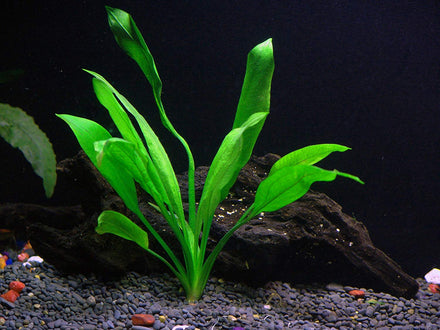
Amazon Sword – Echinodorus Bleheri – Easy Aquatic Plant

Anacharis Bunch – 5-7 Stems – Easy Aquatic Plant

Anubias Barteri – Easy Midground Plant

Banana Plant - Nymphoides Aquatica

Dwarf Sagittaria | Easy Carpeting Aquarium Plant

Giant Hairgrass – Easy Aquarium Plant for Backgrounds

Hornwort Bunch – 5-7 Stems – Easy Aquatic Plant

Hornwort Ceratophyllum | Live Aquarium or Pond Plant | Freshwater Floating or Rootless Plant | Easy Fast-Growing Bareroot
The whole guide, free to read right here — habitat, diet, lighting, troubleshooting and a first-48-hours quick start. No email required.
Walk past a tank full of healthy live plants and you can feel the difference before you can name it. The water looks clearer, the fish drift instead of dart, and the whole thing seems to breathe. Live aquarium plants are the quiet workhorses of a freshwater tank. They soak up the nitrate and ammonia that fish waste leaves behind, they give shy fish somewhere to hide, they shade the water so algae has a harder time, and they release oxygen into the water while the lights are on. They also happen to be beautiful, and a handful of easy species will grow happily for years in a plain tank with a basic light. This guide covers everything we would tell a neighbor standing in our shop: which plants to start with, how to arrange them, what they eat, how to trim them, and what to do when something goes wrong. It focuses on freshwater aquarium plants, with a short note on pond plants near the end of the layout section. Fish selection, cycling a new tank, and water changes live in our separate Freshwater Aquarium Guide, so we will point you there instead of repeating it. Start with the Quick Start below, and remember that a planted tank rewards patience far more than it rewards gadgets.
If you only read one section, make it this one. Following these steps gives your new plants the best chance to settle in and start growing instead of melting away.
Here is what we suggest having on hand before your plants arrive, and what to look for in each category.
Ready to set up? Browse the essentials in our collections: Aquarium Live Plants & More, Aquarium Substrate and Aquarium Lighting.
Enrichment, one click away. Shop Aquascape Kits & Hardscape and Aquarium Plants.
Aquarium plants fall into a few practical groups, based on how they grow and where they like to live. Knowing the group tells you how to plant it, where to put it, and how it feeds.
Rooted plants pull most of their nutrition through their roots and need a substrate they can grip. Rhizome plants grow from a thick horizontal stem and take most of their food from the water through their leaves, so they attach to wood or rock instead of sitting in the gravel. Stem plants grow tall and narrow, and absorb nutrients through both stems and leaves. Floating plants drift at the surface with their roots dangling down, taking nutrients straight from the water. Mosses and carpets form low, dense mats. Bulbs grow from a storage bulb that sits at the substrate surface. Moss balls are a special case: green algae that grows into a round cushion.
| Group | Examples | Difficulty | Light demand | Where it goes |
|---|---|---|---|---|
| Rooted | Amazon sword | Easy to moderate | Medium | Midground to background, with root tabs |
| Rooted | Cryptocoryne | Easy to moderate | Low to medium | Foreground to midground |
| Rooted | Vallisneria | Easy | Low to medium | Background, as a living curtain |
| Rhizome | Java fern | Easy | Low | Attached to wood or rock |
| Rhizome | Anubias | Easy | Low | Attached to wood or rock |
| Rhizome | Bolbitis | Moderate | Low to medium | Attached to wood or rock in good flow |
| Stem | Hornwort | Easy | Low to medium | Background, or floating loose |
| Stem | Anacharis (elodea) | Easy | Low to medium | Background |
| Stem | Bacopa | Easy to moderate | Medium | Midground to background |
| Stem | Rotala | Moderate to advanced | Medium to high | Midground to background |
| Floating | Frogbit | Easy | Low to medium | Surface |
| Floating | Red root floater | Moderate | Medium to high | Surface |
| Floating | Salvinia | Easy to moderate | Medium | Surface |
| Floating | Duckweed | Easy | Low to high | Surface (spreads aggressively) |
| Moss and carpet | Java moss | Easy | Low to medium | Attached to wood or rock |
| Moss and carpet | Dwarf hairgrass | Moderate to advanced | Medium to high | Foreground carpet |
| Moss and carpet | Monte Carlo | Moderate to advanced | Medium to high | Foreground carpet |
| Bulb | Aponogeton | Moderate | Medium | Midground to background |
| Bulb | Banana plant | Easy to moderate | Low to medium | Midground, leaves floating at surface |
| Moss ball | Marimo-style moss ball | Easy | Low | Anywhere on the substrate |
If you are brand new, start with these six types. They tolerate beginner mistakes, a basic light, and ordinary tap water.
Amazon sword is a big, bold, broad-leaved plant that becomes a focal point. It is a heavy root feeder, so give it a root tab every couple of months and room to spread. In a small tank it can outgrow its space.
Cryptocoryne (often called "crypts") comes in many sizes and colors. It often melts when first planted or when conditions change, then regrows from the roots. Leave it alone and do not dig it up.
Vallisneria sends out runners that form new plants. It handles a wide range of water conditions, and the long leaves can be trimmed to height.
Java fern is tied to wood or rock with thread or glue. Tiny plantlets sometimes form on mature leaves, and they can be removed and attached elsewhere.
Anubias has strong, glossy leaves that are slow to grow and slow to heal. Keep the rhizome out of the substrate and keep strong light off the leaves, because algae loves to settle on the old, slow ones.
Hornwort has bristly, whorled needle-like leaves. It sheds needles when stressed or when the water changes dramatically, which is annoying but not fatal.
Duckweed is a tiny floating plant that multiplies astonishingly fast. Warning: duckweed spreads, clings to everything (including nets, fish, and your hands), and is very difficult to remove once established. Think twice before adding it, and never dump it into any natural waterway.
Java moss is a fine, tangled moss that attaches to anything and gives fry and shrimp a place to hide. It traps debris, so rinse it gently during maintenance.
Moss balls are slow-growing balls of algae that need little more than low light and occasional rolling. Because wild-collected moss balls have been linked to hitchhiking invasive mussels in the past, always quarantine them. A common precaution is to inspect, rinse, and freeze or otherwise treat a new moss ball before it goes into your tank, and never to release one into natural water.
Live plants are good for the animals in your tank, not just the eyes.
A tank full of random plants can grow well and still look messy. A little planning makes the same plants look intentional, and it makes maintenance easier too. Aquascaping (the art of arranging plants and hardscape) is a skill worth learning gradually.
Think of your tank in three zones.
In a tank that will be seen from all sides, such as an island layout in the middle of a room, tall plants go in the center and shorter ones around the edges.
The eye likes a clear focal point. Place your main feature, such as a large piece of driftwood or an impressive sword plant, about one-third of the way across the tank rather than dead center. This is the rule of thirds, borrowed from photography. Balance it with something lighter on the other side, such as a smaller cluster of plants or a few rocks, so the scene feels settled instead of lopsided.
Plant in groups of the same species instead of single plants scattered around. Three to five of one plant makes a stronger statement than a single specimen of each kind.
Hardscape is the non-living structure of your tank. It anchors the layout and gives rhizome plants and mosses a place to grow.
A beautiful layout still needs to work for the people and animals who use it.
Some fish simply do not mix well with delicate plants.
If you keep rough fish, choose tough plants that fish dislike or cannot easily uproot. Anubias, java fern, and bolbitis attach to hardscape, have thick leaves, and tend to survive. Plants that are tied to heavy rocks or wood are harder to dig up. Floating plants and hardy stem plants like hornwort can also work. Details on choosing compatible fish are in our separate Freshwater Aquarium Guide.
Outdoor ponds follow the same principles, with a few adjustments.
Please treat this as a rule, not a suggestion. Never dump aquarium plants, water, or animals into lakes, streams, ponds, or storm drains. Several popular aquarium plants are invasive and have caused serious harm to natural waterways when released. Aquarium water can also carry organisms that do not belong in the wild. When you trim your plants, bag the trimmings and either freeze them for a day or two or put them in the household trash. Do not compost them where runoff can reach water, and do not flush them. If you have plants or fish you cannot keep, offer them to a local aquarium club, a friend, or a store that accepts them, or ask a local wildlife or fisheries office what is allowed in your area.
The material on the bottom of your tank does two jobs. It anchors roots, and for some plants it is also the pantry. Choosing a substrate comes down to which plants you want and how much work you want to do.
| Substrate type | What it is | Pros | Cons | Best for |
|---|---|---|---|---|
| Inert gravel or sand | Plain, non-nutritive material | Inexpensive, easy to find, stable, and works with root tabs | Holds no nutrients on its own | Beginners, low-tech tanks, java fern and anubias on hardscape |
| Nutrient-rich aquasoil | Soil-based granules designed for planted tanks | Feeds roots for months, often lowers pH and softens water slightly | Costs more, can release ammonia early on, breaks down over time | Carpets, stem plants, and demanding plants |
| Layered setup | A thin nutrient layer under a cap of sand or gravel | Combines nutrition with an easy-to-clean surface | More work to set up, harder to change later | Larger planted tanks and experienced hobbyists |
Inert gravel or sand works well for beginners. Plants that feed mostly through their leaves, such as java fern, anubias, and floating plants, do not care what is underneath. Rooted plants can still grow well if you add root tabs.
Nutrient-rich aquasoil gives plants a head start and is popular for carpets and demanding stem plants. New aquasoil can release ammonia in the first weeks, so set up with care, keep fish loads light at first, and follow the guidance on your type of soil. It also gradually exhausts, usually over a year or two.
A layered setup puts a thin layer of nutrient-rich material or soil on the bottom, capped with an inch or so of sand or gravel to keep it in place and keep the water clean. Do not disturb it once planted or you will cloud the tank.
Some plants, such as Amazon swords, cryptocoryne, and aponogeton, pull most of their nutrition through their roots. In plain gravel they may stall or yellow unless you feed them.
Root tabs are slow-release fertilizer capsules or pellets you push into the substrate near the roots. They release nutrients gradually for a month or more.
Rhizome plants such as java fern, anubias, and bolbitis must not be planted into the substrate. Burying the rhizome blocks oxygen and invites rot, and the plant will die. Tie or glue them to wood or rock, or wedge them into a crevice. Their roots will grab on over time, after which you can remove the thread.
Every planted tank is shaped by three things: how much light it gets, whether it has added carbon dioxide (CO2), and what the water is like. Get these three roughly right and the rest becomes much easier.
Light is plants' food factory. Plants use it for photosynthesis, the process that turns light, CO2, and nutrients into growth.
Duration. For most tanks, 6 to 8 hours a day is plenty. Put the light on a timer. Long lighting periods do not help plants much, but they give algae more time to grow. If you are fighting algae, shorten the period before changing anything else.
Intensity. Light is usually described as low, medium, or high.
The big rule: too much light for what your plants can use is the number one cause of algae. If your plants are slow and your light is bright, the extra energy goes to algae.
Keep the tank out of direct sunlight, which invites algae.
In water, plants take their carbon from dissolved CO2. In a low-light tank, the fish, bacteria, and surface exchange supply enough. In brighter tanks, CO2 can become the limiting factor.
CO2 is optional. You do not need it for low-light plants. Many beautiful tanks run without it for years.
If you want more growth, there are two paths.
Fish safety. Too much CO2 can harm fish. Signs include gasping at the surface, crowding near the filter outlet, or lying lethargic at the bottom. If you use pressurized CO2:
If fish ever look like they are struggling for air, turn the CO2 off, increase surface agitation, and do a water change. Details on fish health are in our Freshwater Aquarium Guide.
Plants are more flexible than many people expect. The goal is stable water, not perfect water. Plants adapt to steady conditions, but sudden swings stress them.
| Water factor | General range most aquarium plants tolerate | Notes |
|---|---|---|
| Temperature | About 72 to 80 degrees F | Some plants, such as anacharis, tolerate cooler water; check your fish's needs too |
| General hardness (GH) | Soft to moderately hard | Many plants adapt; very hard water can slow some soft-water species |
| pH | About 6.5 to 7.5 | Stability matters more than the exact number |
| Nitrate | Low but not zero | Plants use it as food; zero can mean starvation |
| Phosphate | Low but not zero | Plants use it too |
These ranges vary by species and by source. If a plant label gives different needs, follow the label. If you keep fish, always choose a water range that keeps both fish and plants healthy.
| Setup type | Light | CO2 | Fertilizer | Typical plants |
|---|---|---|---|---|
| Low-tech | Low, 6 to 7 hours | None | Occasional liquid fertilizer and root tabs | Java fern, anubias, cryptocoryne, vallisneria, hornwort, floating plants, java moss |
| Medium | Medium, 6 to 8 hours | Optional liquid carbon | Weekly liquid fertilizer plus root tabs | Amazon sword, bacopa, aponogeton, banana plant, anacharis, many stem plants |
| High-tech | High, 6 to 8 hours | Pressurized CO2 | Regular, measured dosing of macros and micros | Rotala, dwarf hairgrass, Monte Carlo, red root floater, demanding stem plants |
Most beginners do best in the low-tech column. You can always move up later, and many people find they never want to.
Plants need food, just like fish do. Some of it comes from fish waste and tap water, some from the substrate, and some from fertilizer you add on purpose.
Plants need two groups of nutrients.
Macronutrients are needed in larger amounts.
Micronutrients are needed in tiny amounts but are essential.
A good all-in-one liquid fertilizer covers both groups. Beginners should start there.
Only use fertilizers labeled for aquariums. Garden fertilizers and many houseplant products contain ingredients, such as urea or copper, that can harm fish and invertebrates. Even products made for aquariums vary. Some fertilizers contain trace copper, which is harmful to shrimp and snails. If you keep invertebrates, read the label, choose a copper-free formula, and when in doubt, ask us.
People who test their water often celebrate zero nitrate. In a tank with fish, zero nitrate is great for the fish's safety, but if you also have demanding plants, zero nitrate and zero phosphate can starve your plants. Plants need a little of each to grow. Signs of starvation include pale or yellowing leaves, stunted growth, and algae taking over. A low but measurable level, with steady dosing, usually keeps plants and fish happy.
Fish waste breaks down into ammonia, then nitrite, then nitrate, and plants consume that nitrate. A heavily stocked tank may need less nitrogen fertilizer, while a lightly stocked tank with lots of hungry plants may need more. Think of it as a balance: fish food and waste feed the plants, plants clean the water, and fertilizer fills the gaps. Do not overfeed fish to feed plants, because that fuels algae and fouls the water.
There are two ways to dose, and either works.
Change one thing at a time. More is not better; sudden increases cause algae blooms.
Leaves tell you what they need. Many problems have more than one possible cause, so treat this as a guide, not a diagnosis.
| What you see | Likely cause | What to try |
|---|---|---|
| Yellowing new leaves | Iron or micronutrient shortage | Add a complete fertilizer with iron; check the substrate and label |
| Yellowing old leaves | Nitrogen shortage (older leaves are sacrificed first) | Check nitrate; increase fertilizer or reduce plant crowding |
| Pinholes in leaves | Potassium shortage, often with low nitrate | Add a balanced fertilizer with potassium; check levels |
| Stunted growth | Low light, low CO2, or missing nutrients | Check light period, add root tabs, review fertilizer |
| Melting | Shock from a new tank, big water changes, or a lack of nutrients | Wait out transition; stabilize conditions; trim only dead material |
| Pale, washed-out color | Low iron or too much light | Check fertilizer; consider reducing intensity |
| Glassy, translucent leaves | Sudden change in conditions | Keep water steady and wait for recovery |
For more help with specific problems, see Common Challenges & Solutions below.
Feed your plants. Browse Aquarium Chems, Conditioners, Cultures.
How you plant makes a big difference.
Plant when the tank is partly filled with a few inches of water, then top off. This reduces floating and keeps things tidy. Use tweezers to keep your hands out of the tank as much as possible.
Stem plants are designed to be cut. When they reach the surface, cut the stem a few inches below the top with sharp scissors. Remove the lowest leaves on the cut top, and push it into the substrate as a new plant. Leave the bottom portion in place, because it will sprout side shoots and become bushier. This is one way to turn one bunch into many.
Trim tall plants regularly so lower plants are not shaded. A shaded plant melts and invites algae.
Many aquarium plants multiply on their own.
Share extras with friends or local aquarium clubs instead of discarding them into the environment.
If you buy plants that were grown above water, they usually have thicker, waxier leaves meant for air. Underwater, they need to grow new leaves with a different structure. During this "transition" they may melt, sometimes dramatically. Leave the roots or crown alone, keep conditions stable, and expect new growth in weeks. Do not assume you have killed the plant.
Algae is not a sign that you are a bad fishkeeper. Every tank has some. The goal is to keep it small, not to wipe it out entirely.
| Type | What it looks like | Common causes | First response |
|---|---|---|---|
| Green dust | A thin green film on glass | New tank, strong light, young tank | Scrape glass, shorten light period, wait |
| Green spot | Hard, round green dots on glass and slow leaves | Strong light, low phosphate | Scrape off, check phosphate, reduce light |
| Hair or thread | Long green strands | Excess nutrients, uneven fertilizing, iron overdose | Remove by hand, dose steadily, improve flow |
| Black beard | Dark, bristly tufts on leaf edges and hardscape | Unstable CO2 or nutrients, poor flow | Remove affected leaves, improve flow, stabilize care |
| Blue-green slime (cyanobacteria) | Slimy mat, often smelly, in blue-green or dark patches | Dead spots, low flow, excess waste | Siphon out, improve flow, reduce feeding |
| Diatoms | Brown dusty film in new tanks | New tank with silicates | Wipe off; it usually fades on its own |
Algae feeds on the same things plants do: light, nutrients, and carbon. It wins when something is out of balance, such as too much light, too many nutrients compared with what plants can use, poor flow, or a tank that is too young and unstable.
Small snails that appear from nowhere are usually hitchhikers on plants. They are generally harmless, and they eat dead matter and algae, but they multiply fast. A snail boom is a sign of overfeeding, because they feed on leftover food and waste. Feed less, remove excess food, and pick snails off by hand. If you want to avoid them entirely, quarantine plants and dip them first.
New plants can carry snails, snail eggs, algae spores, and other tiny passengers. A quarantine and dip routine reduces the risk.
Cautions. Bleach dips can kill plants that are delicate, including mosses, many stem plants, and vallisneria, and a mistake in strength or time can burn or kill a whole batch. Exact ratios and times vary by source and plant type, so follow a tested procedure from a reliable aquarium plant source for your specific plants. Wear gloves and eye protection, keep bleach away from children and pets, and never put bleached plants in the tank without rinsing. Test a single plant first.
Never use copper-based medications or treatments in a tank with live plants or invertebrates such as shrimp and snails. Copper can damage plants and is toxic to invertebrates. Always read the label on any medication or algae treatment before adding it to a planted tank, and ask us if you are unsure.
What you see: Leaves turn transparent, brown, or mushy, and fall away from newly planted plants.
Why it happens: Most often, the plant is changing from air-grown to water-grown leaves. Sudden changes in light, temperature, or water can also trigger it.
What to do: Leave the roots and crown alone. Trim only the dead leaves, keep conditions steady, and wait several weeks for new growth.
When to ask for help: If the entire plant, including the base, turns to mush and nothing regrows after a month, or if many unrelated plants melt at once.
What you see: Green film, hair, or slime coating glass, leaves, and hardscape.
Why it happens: Too much light, too many nutrients, poor flow, or an unstable tank.
What to do: Cut the light period by an hour or two, remove algae by hand, improve flow, and keep fertilizing steady. Avoid blackouts or drastic changes.
When to ask for help: If algae keeps returning after a few weeks of consistent care, or if it is smothering your plants.
What you see: Plants floating loose or tipped out of the substrate.
Why it happens: Shallow planting, digging fish, strong flow, or buoyant new stems.
What to do: Replant more deeply, weigh down with a small stone, or tie to hardscape. Choose tougher plants if fish dig.
When to ask for help: If specific fish repeatedly destroy the layout, ask us for tough plant and compatibility ideas.
What you see: Lots of small snails on glass and leaves.
Why it happens: Hitchhikers on plants plus extra food in the tank.
What to do: Feed less, remove leftover food, hand-pick snails, and quarantine new plants.
When to ask for help: If the population keeps exploding after you have cut feeding.
What you see: Leaves fade from green to yellow.
Why it happens: Often a nutrient shortage, such as iron or nitrogen, but old leaves also yellow naturally.
What to do: Check the table in the fertilizer section, add a complete fertilizer, and add root tabs for root feeders.
When to ask for help: If new growth is also yellow and nothing improves after two to three weeks of better feeding.
What you see: Pinholes or small holes appearing in leaves, which then spread.
Why it happens: Usually a nutrient shortage, especially potassium, though some fish and snails also nibble.
What to do: Add a balanced fertilizer with potassium, check your nitrate, and confirm no plant-eating animals are responsible.
When to ask for help: If holes continue to spread despite better fertilizing.
What you see: Plants hold steady, or shrink slowly, with no new leaves.
Why it happens: Too little light, missing nutrients, a plant that is dormant, or a tank that simply needs time.
What to do: Confirm light duration and strength, add root tabs and fertilizer, and give slow growers like anubias patience.
When to ask for help: If nothing changes after two months of consistent care.
What you see: A thick mat of floating plants shading the plants below.
Why it happens: Floating plants multiply quickly.
What to do: Scoop out extras weekly so about half to two-thirds of the surface stays open. Dispose of extras responsibly (freeze or trash them).
When to ask for help: If stubborn tiny plants like duckweed take over and you cannot remove them.
What you see: Fish gasping at the surface or crowded near the filter outlet, especially in the morning, in tanks using pressurized CO2.
Why it happens: CO2 is too high, or it was not turned off at night, or the surface is too still.
What to do: Turn off CO2, increase surface movement, and do a water change. Resume at a lower rate and gas off an hour before lights out.
When to ask for help: Right away if fish keep struggling after these steps. See our Freshwater Aquarium Guide.
What you see: A brown, dusty film on glass, plants, and substrate in a new tank.
Why it happens: New tanks often have silicates and an unbalanced early community.
What to do: Wipe it off, keep lights short, and be patient. It usually fades within a few weeks.
When to ask for help: If it persists for months or covers everything.
What you see: Chewed leaves, missing growth, or stripped stems.
Why it happens: Some fish and snails graze on plants, especially soft leaves.
What to do: Offer fresh vegetable matter in the diet, switch to tougher plants like anubias and java fern, and consider whether the fish suits a planted tank.
When to ask for help: If the damage is severe or you are unsure which animal is responsible.
What you see: The water turns milky or tan after planting.
Why it happens: Fine substrate dust stirred up, or a bacterial bloom after disturbing a newly established tank.
What to do: Do not do a big water change right away. Let the filter run, and the water usually clears within a day or two.
When to ask for help: If cloudiness lasts more than a week or smells bad.
| How often | What to do |
|---|---|
| Daily | Check that the light turned on and off at the right times |
| Daily | Look over plants and fish, and remove obvious dead leaves |
| Daily | Feed fish lightly and remove uneaten food |
| Weekly | Do a partial water change (see the Freshwater Aquarium Guide) |
| Weekly | Dose liquid fertilizer according to your routine |
| Weekly | Wipe algae from glass and remove dead leaves |
| Weekly | Thin floating plants and check for pests |
| Every 2 weeks | Trim fast-growing stem plants and replant tops |
| Monthly | Test nitrate, phosphate, pH, and hardness, and record results |
| Monthly | Clean filter media gently in tank water (not under the tap) |
| Every 2 to 3 months | Replace root tabs |
| Every 2 to 3 months | Divide rhizome plants and thin crowded clumps |
| Every 6 to 12 months | Check light output and consider replacing aging lights |
| Yearly | Reassess the layout, replant tired areas, and review your fertilizing routine |
Plants forgive a lot, and most problems are slow enough that you have time to think. Still, ask for help if:
For fish health, cycling, and water quality issues, see our Freshwater Aquarium Guide. For plant questions, call the store at (717) 983-8069 and we will talk it through with you. If your fish are in serious trouble, contact a local aquatic veterinarian or experienced fish store right away.
The easiest aquarium plants are java fern, anubias, cryptocoryne, vallisneria, hornwort, and floating plants such as frogbit. They tolerate basic lighting, ordinary tap water, and beginner mistakes. Java fern and anubias attach to wood or rock and need no special substrate. Hornwort and floating plants soak up nutrients straight from the water. Cryptocoryne and vallisneria root in the substrate and grow steadily with an occasional root tab. Start with a few of these, give them time to settle, and add more demanding plants once you are comfortable.
Aquarium plants do best under a light made for planted aquariums, but they do not need anything extreme. A full-spectrum LED at low or medium output is enough for most beginner plants. Ordinary room light alone usually is not enough, while strong direct sunlight usually brings algae. Choose a light that suits the plants you want, put it on a timer, and adjust duration before spending more on intensity. Low-light plants like java fern, anubias, and cryptocoryne are happy with a basic setup.
No, CO2 is optional. Low-light plants grow well without added CO2, and many successful tanks run that way for years. Pressurized CO2 or liquid carbon supplements can boost growth in brighter tanks and help demanding plants, but they add cost, effort, and risk if you overdo it. If you use pressurized CO2, increase it slowly, turn it off at night, keep good surface movement, and watch your fish carefully. Beginners can skip CO2 entirely and choose easy plants instead.
About 6 to 8 hours a day is a good starting point for most planted tanks, run on a timer. Longer periods tend to feed algae more than plants. If you see algae, shorten the period by an hour or two before changing anything else. Some people use a short midday break to help limit algae, but a steady, simple schedule works well for most. The exact best duration depends on your light strength, plants, and nutrients, so adjust gradually and watch how your tank responds.
Most do, at least a little. Fish waste supplies some nitrogen and phosphorus, and tap water supplies some minerals, but in a tank with growing plants these often run short. Easy plants like java fern and anubias may do fine with little, while heavy root feeders such as Amazon swords and cryptocoryne benefit from root tabs, and stem plants usually appreciate a weekly liquid dose. Use products labeled aquarium-safe, and check the label for copper if you keep shrimp or snails. Start with half the dose and adjust based on how the plants look.
Melting is most often the plant's response to a change. Many store-bought plants are grown above water, and when they go underwater they drop their old leaves and grow new ones made for submerged life. Cryptocoryne is famous for it. Sudden changes in light, temperature, or water, and nutrient shortages can also cause melting. Leave the roots and crown in place, remove only the dead leaves, keep conditions steady, and expect regrowth in a few weeks. If the base itself turns to mush and nothing regrows, the plant may be lost.
Planting depends on the type of plant. Rooted plants go into the substrate with the roots covered and the crown at or just above the surface. Stem plants are stripped of their bottom leaves and pushed an inch or two into the substrate in small groups. Carpet plants go in as small tufts with tweezers. Rhizome plants like java fern and anubias are never buried; they are tied or glued to wood or rock. Floating plants simply go on the surface. Plant gently, and give each plant room to grow.
Live plants can help, but they do not replace the cycle. Plants absorb ammonia and nitrate, and fast growers such as hornwort and anacharis can take up a lot, which makes a new tank gentler on fish. But beneficial bacteria still need time to establish, and plants cannot be relied on to protect fish by themselves. Test your water, take cycling seriously, and follow the steps in our Freshwater Aquarium Guide. Think of plants as helpful teammates, not a shortcut.
Pinholes are most often a sign of a nutrient shortage, especially potassium, and often appear along with low nitrate. Adding a balanced, aquarium-safe fertilizer that includes potassium, and checking your nitrate and phosphate, usually helps. Holes can also come from fish or snails nibbling soft leaves, or from age and physical damage. New leaves that grow in clean tell you the fix is working, but existing holes will not heal, so trim badly damaged leaves once the plant has recovered.
Balance is the key. Keep the lights on a timer at 6 to 8 hours, avoid direct sunlight, feed fish lightly, and fertilize steadily instead of in big bursts. Choose fast-growing plants and keep them trimmed so they outcompete algae. Keep water moving through the tank, remove dead leaves promptly, and do regular water changes. Add floating plants to shade the surface if needed. Some algae will always appear, and that is normal. If it grows out of control, shorten the light period first and remove it by hand.
Ready to shop? Start with Aquatics. 10% of every purchase supports no-kill animal shelters.
Before we earn a dime, 10% of every purchase at Walnut Creek Supply goes to no-kill animal shelters across the country. It is not an add-on at checkout and not a button you have to click. It comes off the top of every order, every day, because we believe caring for the animals in our own homes and caring for animals in need are the same kind of love.
That is as true for a planted tank as for anything else. A healthy planted aquarium is a small living community, and the same patience that grows a java fern also makes a good neighbor. When you pick up plants, hardscape, or fertilizer from us, a share of it helps shelter animals somewhere else find a home.
We are a family business in Christiana, Lancaster County, Pennsylvania. We grow our own food, keep our own animals, and stock the clean-label goods we would put in front of our own family. No mystery ingredients, no cheap filler, and no care guide that leaves out the honest parts. If you have a question about your plants, your light, or why that crypt is melting, call us at (717) 983-8069. We would be glad to talk it through.
Here is to clear water, green leaves, and a tank you love looking at.
_With thanks from our family to yours,_ Walnut Creek Supply - Christiana, Lancaster County, Pennsylvania _walnutcreeksupply.com_
The easiest aquarium plants are java fern, anubias, cryptocoryne, vallisneria, hornwort, and floating plants such as frogbit. They tolerate basic lighting, ordinary tap water, and beginner mistakes. Java fern and anubias attach to wood or rock and need no special substrate. Hornwort and floating plants soak up nutrients straight from the water. Cryptocoryne and vallisneria root in the substrate and grow steadily with an occasional root tab. Start with a few of these, give them time to settle, and add more demanding plants once you are comfortable.
Aquarium plants do best under a light made for planted aquariums, but they do not need anything extreme. A full-spectrum LED at low or medium output is enough for most beginner plants. Ordinary room light alone usually is not enough, while strong direct sunlight usually brings algae. Choose a light that suits the plants you want, put it on a timer, and adjust duration before spending more on intensity. Low-light plants like java fern, anubias, and cryptocoryne are happy with a basic setup.
No, CO2 is optional. Low-light plants grow well without added CO2, and many successful tanks run that way for years. Pressurized CO2 or liquid carbon supplements can boost growth in brighter tanks and help demanding plants, but they add cost, effort, and risk if you overdo it. If you use pressurized CO2, increase it slowly, turn it off at night, keep good surface movement, and watch your fish carefully. Beginners can skip CO2 entirely and choose easy plants instead.
About 6 to 8 hours a day is a good starting point for most planted tanks, run on a timer. Longer periods tend to feed algae more than plants. If you see algae, shorten the period by an hour or two before changing anything else. Some people use a short midday break to help limit algae, but a steady, simple schedule works well for most. The exact best duration depends on your light strength, plants, and nutrients, so adjust gradually and watch how your tank responds.
Most do, at least a little. Fish waste supplies some nitrogen and phosphorus, and tap water supplies some minerals, but in a tank with growing plants these often run short. Easy plants like java fern and anubias may do fine with little, while heavy root feeders such as Amazon swords and cryptocoryne benefit from root tabs, and stem plants usually appreciate a weekly liquid dose. Use products labeled aquarium-safe, and check the label for copper if you keep shrimp or snails. Start with half the dose and adjust based on how the plants look.
Melting is most often the plant's response to a change. Many store-bought plants are grown above water, and when they go underwater they drop their old leaves and grow new ones made for submerged life. Cryptocoryne is famous for it. Sudden changes in light, temperature, or water, and nutrient shortages can also cause melting. Leave the roots and crown in place, remove only the dead leaves, keep conditions steady, and expect regrowth in a few weeks. If the base itself turns to mush and nothing regrows, the plant may be lost.
Planting depends on the type of plant. Rooted plants go into the substrate with the roots covered and the crown at or just above the surface. Stem plants are stripped of their bottom leaves and pushed an inch or two into the substrate in small groups. Carpet plants go in as small tufts with tweezers. Rhizome plants like java fern and anubias are never buried; they are tied or glued to wood or rock. Floating plants simply go on the surface. Plant gently, and give each plant room to grow.
Live plants can help, but they do not replace the cycle. Plants absorb ammonia and nitrate, and fast growers such as hornwort and anacharis can take up a lot, which makes a new tank gentler on fish. But beneficial bacteria still need time to establish, and plants cannot be relied on to protect fish by themselves. Test your water, take cycling seriously, and follow the steps in our Freshwater Aquarium Guide. Think of plants as helpful teammates, not a shortcut.
Pinholes are most often a sign of a nutrient shortage, especially potassium, and often appear along with low nitrate. Adding a balanced, aquarium-safe fertilizer that includes potassium, and checking your nitrate and phosphate, usually helps. Holes can also come from fish or snails nibbling soft leaves, or from age and physical damage. New leaves that grow in clean tell you the fix is working, but existing holes will not heal, so trim badly damaged leaves once the plant has recovered.
Balance is the key. Keep the lights on a timer at 6 to 8 hours, avoid direct sunlight, feed fish lightly, and fertilize steadily instead of in big bursts. Choose fast-growing plants and keep them trimmed so they outcompete algae. Keep water moving through the tank, remove dead leaves promptly, and do regular water changes. Add floating plants to shade the surface if needed. Some algae will always appear, and that is normal. If it grows out of control, shorten the light period first and remove it by hand.