


Leaving already?
Can we tempt you with 5$ off your first order?
Min Order of $50


Care Guide & Supplies
Free small animal care guide and supplies for rabbits, guinea pigs, hamsters, rats, chinchillas and more. Compare pets, then shop cages and food.
Habitat, diet, lighting, troubleshooting and a first-48-hours quick start. Free, no email required — from our family in Lancaster County to yours.

Rabbit Care Essentials: Diet, Space, and the Setup That Keeps Rabbits Healthy

Hamster Care: Choosing the Right Cage, Wheel, and Diet for a Healthy Hamster

Guinea Pig Care Guide: Diet, Housing, and Enrichment for a Happy Herd

Ferret Enrichment: Toys, Tunnels, and “Jobs” That Prevent Boredom Biting

Critter Food & Treats: A Natural-First Feeding Routine (Plus Common Mistakes to Avoid)

Fitness Pets 101: How to Start an Active Routine Safely (Without Overdoing It)

Critter Vet Trips & Travel: A Stress-Low Plan for Small Pets and Busy Families

Joint-Friendly Play: Low-Impact Fitness Games for Dogs (Great for Families)
The whole guide, free to read right here — habitat, diet, lighting, troubleshooting and a first-48-hours quick start. No email required.
Small animals are some of the most lovable pets a family can bring home. They are also some of the most misunderstood. A rabbit, a guinea pig, a hamster and a chinchilla may all be sold from the same shelf in the same store, under the same cheerful label of "starter pet," and yet they have almost nothing in common. One lives eight to twelve years and needs a room to run in. One lives two years and runs miles on a wheel at 2 a.m. One must never live alone, and another must never live with anyone. One is perfectly legal on our side of the state line and two are against the law right here in Pennsylvania. Picking the right critter is the single most important animal-care decision you will make, and it happens before you ever buy a bag of food.
That is why we wrote this guide. It will not tell you which animal to love. It will help you match your family, your home, your schedule and your budget to the species that will genuinely thrive with you, and it will be honest about the ones that are poor first choices. For every species we cover here, we also have a full care guide with the deep detail, linked throughout. Start with the Quick Start checklist, find your family in the comparison chart, and then follow the link to the species guide that fits. Take your time. A good decision made slowly is a kindness to a small animal that cannot choose for itself.
Before you fall for a face, work through this checklist. Write your answers down, ideally with everyone in the household. If an honest answer surprises you, that is exactly the point of doing this first.
Two more questions help families more than any chart. Is this animal active when we are awake? And are we ready to be the person who notices when something is quietly wrong? Small prey animals hide illness, so the keeper's observation is the main health system they have.
These are the things every new keeper of any small animal needs in the house on day one, regardless of species. The species guides have the exact specifications.
Ready to set up? Browse the essentials in our collections: Critter Enclosures and Critter Bedding and Accessories.
Enrichment, one click away. Shop Critter Toys and Accessories.
Here are the eleven species in this guide, in plain language, with the honest version of each. Every one has its own full care guide; follow the links to go deeper.
Rabbits are intelligent, expressive, social animals who can learn their names, use a litter pan and greet you at the door. They are also a lot more work than their reputation suggests. Size varies enormously by breed, from about 2 to 3 pounds for the smallest dwarfs to 8 to 11 pounds or more for standard breeds. A well-cared-for indoor rabbit commonly lives 8 to 12 years, so this is a dog-length commitment. Rabbits are crepuscular, meaning most active at dawn and dusk, which fits a family's routine well. They need about 12 square feet of continuous home base for one small-to-medium rabbit, plus a safe exercise area and several hours out of the pen every day. They do best with a bonded partner, and spaying or neutering matters for both health and behavior. Rabbits are often bought for young children, but they are fragile prey animals who frequently dislike being picked up. Think of a rabbit as a floor-level companion for gentle, patient people, not a cuddly toy. Rescues often have rabbits, and sometimes already-bonded pairs, waiting for homes.
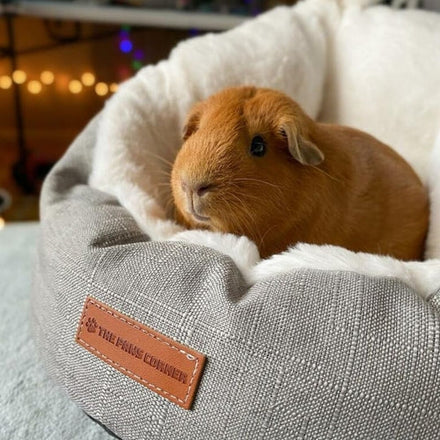
Guinea pigs, or cavies, are vocal, gentle, food-loving animals who "wheek" for vegetables and purr when content. Adults weigh about 1.5 to 2.5 pounds and measure 8 to 12 inches. They typically live 4 to 8 years, with 5 to 7 the most common range. They are obligately social: two or more, never one. A pair needs a minimum of about 10.5 square feet of floor, far larger than most pet-store cages. They are crepuscular, active in bursts through the day. Guinea pigs make a lovely first pet for a family, provided an adult does the care and children handle them seated and gently. They need daily vitamin C from fresh vegetables or fortified pellets, and unlimited hay. Rescues and shelters frequently have bonded pairs, and adopting a pair is the easiest start of all.
Hamsters are tiny, busy, solitary animals who stuff their cheeks, build hoards and run for miles on a wheel at night. The Syrian hamster is the largest at 5 to 7 inches and 120 to 200 grams, and lives about 2 to 3 years. Dwarf types, such as Roborovski, Russian and Campbell's, are much smaller and shorter-lived at roughly 1.5 to 3.5 years depending on type. Syrian hamsters must live strictly alone, and dwarf hamsters usually do best alone too. Hamsters are crepuscular with plenty of night activity, which makes them a poor fit for a child's bedroom. A hamster needs at least 450 square inches of unbroken floor (many aim for 600 to 800), deep bedding to burrow in, and a large solid wheel. Hamsters bite when startled or woken, so they suit patient, calm older children and adults better than small children.
Gerbils are active, curious desert animals from Mongolia and northern China. Adults are about 4 to 5 inches long plus a tufted tail and weigh roughly 60 to 110 grams, and they live about 3 to 5 years. They are clan animals and must be kept in same-sex pairs or small groups, never alone. A pair needs at least a 20-gallon long glass tank with deep substrate for tunneling. Gerbils keep a polyphasic schedule, with short bursts of activity around the clock, so they are not strictly nocturnal, but you will still hear them in the evening. They rarely bite, are less odorous than many rodents and are a great watch-and-enjoy animal, which makes them a very good first rodent for responsible families.
Fancy rats are clever, affectionate, trainable animals whose bond with their keepers is often compared to a dog's. Adults are 9 to 11 inches long, not including the tail, and weigh 250 to 500 grams, with females smaller. They live only 2 to 3 years, rarely beyond 3. They must be kept in same-sex pairs or groups. They are crepuscular and night-active, sleeping 12 to 14 hours a day. They need a tall, multi-level wire cage (about four cubic feet per rat, so at least eight cubic feet for a pair) and at least an hour of supervised free-roam each day. For a family that wants a pet to interact with, rats are among the most rewarding of all small animals, though the short lifespan and their vulnerability to respiratory illness and tumors are a real emotional cost.
Fancy mice are quick, tiny, agile animals, 3 to 4 inches long (not counting the tail) and weighing 1 to 2 ounces. They live just 1.5 to 3 years. Does (females) are social and do well in groups of two to four; bucks (males) are typically solitary unless they are littermates bonded from young, and they have the strongest odor. Mice are nocturnal, so they sleep through the day and are loudest when the house is quiet. A 10-gallon aquarium is the minimum for one or two mice, with a 20-gallon long better for a small group. They are a lovely watch-and-enjoy pet, but too small and fast for young children to handle, and the short lifespan comes as a shock to many families.
Chinchillas are gentle, clever, astonishingly soft animals from the Andes. Adults run roughly 9 to 14 inches in body length with a bushy tail, and weigh about 400 to 800 grams. They commonly live 10 to 20 years, most often around 12 to 15. They are heat-sensitive: the room must stay around 60 to 70°F, and above 77°F is not safe. They need a dust bath, a tall multi-level cage (at least 24 by 24 by 48 inches for one, and bigger is better), and daily out-of-cage time. They are most active at dusk and overnight, are fragile, and generally do not enjoy being held. Most do well with a same-sex pair, though pairing needs care. They are wonderful display companions for a patient adult and a poor match for a child who wants a cuddle.
Degus are lively, social, daytime-active rodents from the foothills of Chile, 6 to 8 inches long and about 250 to 300 grams. They typically live 6 to 8 years, longer than most rodents. Strictly social, they must live in a group of two or more. They are diurnal and crepuscular, active in daylight and early evening, so they fit a family's waking hours better than most. A pair needs a tall multi-level wire cage (at least about 24 by 16 by 24 inches, bigger is better) with half-inch bar spacing and a dust bath. Degus have a major dietary catch: they are very sensitive to sugar, so they must have unlimited hay and sugar-free pellets, and no fruit or sweet treats. They are great for a committed, experienced keeper and not a casual impulse buy.
Ferrets are playful, mischievous, endlessly curious carnivores who sleep 15 to 20 hours a day and then play at full speed. Adults are about 13 to 16 inches long (excluding the tail), females weigh 1.5 to 2 pounds, and males 3 to 4 pounds. They live 5 to 10 years. Ferrets can live singly with lots of attention or in pairs and groups; most do better with company. They are obligate carnivores, meaning they must eat animal protein and fat and cannot digest plant foods. They have a natural musky odor and need at least four hours of supervised free-roam in a ferret-proofed room each day. They are not rodents, and they are banned in some places (California, Hawaii and New York City). A ferret is a high-energy, high-attention pet for an experienced family with a ferret-proofed home.
Hedgehogs are quiet, solitary, spiny little insectivores from Africa. Adults are 5 to 8 inches long and weigh 8 to 24 ounces, living 4 to 6 years, sometimes 7 or 8. They are strictly nocturnal, sleeping 16 to 18 hours a day, and must live alone. Hedgehogs are illegal to keep or sell as pets in Pennsylvania, where the Game Commission treats them as exotic wildlife. A bill that would legalize them has not passed. Check your own state's rules, and know that in many states hedgehogs are also restricted. If you live in Pennsylvania, this is not a species for you, however charming. We include the species here so families who live elsewhere can make an informed choice.
Sugar gliders are small, nocturnal Australian marsupials that glide between branches with a membrane of skin. Adults weigh only 4 to 5 ounces, about 12 inches long with the tail, and can live 10 to 15 years. They are colony animals and must be kept in bonded pairs or groups. They are strictly nocturnal, most active between 10 p.m. and 4 a.m., and need a tall wire cage (at least 24 by 24 by 36 inches for a pair) and a carefully balanced diet. Sugar gliders are illegal to keep or sell as pets in Pennsylvania, where the Game Commission treats them as exotic wildlife, and bills to legalize them have not passed. They are also restricted in other states. They are a very long, very specialized commitment, and not a casual pet in any state.
This is the centerpiece of the guide. All figures come from our species guides; where a figure varies by breed or source, we give a range. "Minimum enclosure" is the least we would call acceptable for the number of animals shown, not the ideal, and bigger is always better. Hedgehogs and sugar gliders are listed for completeness, but both are illegal as pets in Pennsylvania.
| Species | Adult size | Lifespan | Social needs | Active | Minimum enclosure | Handling | Best for |
|---|---|---|---|---|---|---|---|
| Rabbit | About 2 to 11+ lb depending on breed | 8 to 12 years | Best with a bonded partner | Dawn and dusk | About 12 sq ft home base for one small-to-medium rabbit, plus 24 to 32 sq ft of exercise space | Gentle, seated; many dislike being picked up | Patient families with space and a long horizon |
| Guinea Pig | 1.5 to 2.5 lb, 8 to 12 in | 4 to 8 years | Pair or group required | Dawn and dusk, with bursts all day | About 10.5 sq ft for two | Gentle, seated, supervised | First small pet for a family with an adult caretaker |
| Hamster | Syrian 5 to 7 in; dwarfs 2 to 4 in | About 1.5 to 3.5 years depending on type | Alone (Syrians strictly; dwarfs usually) | Dusk and night | At least 450 sq in of unbroken floor; 600 to 800 is better | Patient; may bite if startled | Older children and adults who enjoy evening watching |
| Gerbil | 4 to 5 in plus tail, 60 to 110 g | 3 to 5 years | Same-sex pair or group required | Short bursts, around the clock | 20-gallon long tank (30 by 12 in floor) for a pair | Quick; best handled low and calm | Families who want to watch a busy burrow |
| Fancy Rat | 9 to 11 in plus tail, 250 to 500 g | 2 to 3 years | Same-sex pair or group required | Dawn, dusk and night | About 4 cu ft per rat; 8 cu ft for a pair (about 24 by 24 by 36 in class) | Very handleable and trainable | People who want an interactive, affectionate pet |
| Fancy Mouse | 3 to 4 in plus tail, 1 to 2 oz | 1.5 to 3 years | Does in groups of 2 to 4; bucks usually alone | Night | 10-gallon tank for one or two | Tiny and quick; careful handling | Watch-and-enjoy pet for a calm home |
| Chinchilla | 9 to 14 in plus tail, 400 to 800 g | 10 to 20 years | Same-sex pair preferred if the pairing works | Dusk and night | At least 24 by 24 by 48 in for one; 36 by 24 by 60 in recommended | Fragile; many dislike being held | Experienced adults in a cool home |
| Degu | 6 to 8 in, 250 to 300 g | 6 to 8 years | Group of two or more required | Daytime and early evening | About 24 by 16 by 24 in for two | Social and curious; takes time | Committed keepers who want a daytime pet |
| Ferret | 13 to 16 in plus tail; 1.5 to 4 lb | 5 to 10 years | Flexible; usually better in pairs | Short bursts; sleeps 15 to 20 hours | About 24 by 24 by 36 in for one; larger for a group | Playful and handleable | Experienced households with a ferret-proofed home |
| African Pygmy Hedgehog | 5 to 8 in, 8 to 24 oz | 4 to 6 years, sometimes 7 to 8 | Alone | Strictly nocturnal | About 4 sq ft of solid floor | Can ball up and quill when frightened | Not legal in Pennsylvania |
| Sugar Glider | About 4 to 5 oz, 12 in with tail | 10 to 15 years | Pair or colony required | Strictly nocturnal | About 24 by 24 by 36 in for two | Bonds closely with a patient keeper | Not legal in Pennsylvania |
You are looking for a first pet for a child. The most forgiving small-animal choices are a pair of guinea pigs or a pair of gerbils. Guinea pigs are sturdy for their size, vocal and gentle, and most are comfortable with seated handling; gerbils are active, rarely bite and are very low in odor. In either case an adult must be the responsible keeper, and the child's role is helper and friend. Rats are also wonderful for responsible older children, though their short lives can be hard on young hearts. Be cautious about rabbits, hamsters, mice and chinchillas for young children. Rabbits and chinchillas are fragile and often dislike being held; hamsters and mice are fast, nocturnal and easily frightened.
You are a busy adult. Gerbils, a pair of guinea pigs and a pair of rats all give you good value for the time you can spare, but nobody on this list is a no-effort pet. A pair of gerbils needs a lot less daily interaction than a rat or a ferret does. Species that demand hours of daily attention, such as rabbits (several hours out of the pen), ferrets (four hours of supervised roaming) and degus, are poor fits for a person away from home for long stretches.
You want a pet you can handle and bond with. Rats stand out here. They are social, trainable, and form real attachments. Ferrets and well-socialized rabbits can also be affectionate on their own terms, and degus bond with patient keepers. Chinchillas and hamsters are better admired than cuddled.
You want a display pet to watch. Gerbils, with their tunneling and burrowing, are marvelous to watch in a large glass tank. Degus, who are active in daylight, put on a show too. Fancy mice and hamsters are interesting to observe but are mostly night animals, so you will see the best of them at dusk or after dark.
You live in a small apartment. A pair of gerbils or a pair of mice (does) fit in the smallest footprint of any group here. Rats and degus need tall cages but little floor. Rabbits, guinea pigs, ferrets and chinchillas all need much more room than most people expect, so be honest with your measuring tape.
You want a long-term companion. Chinchillas (10 to 20 years), rabbits (8 to 12) and degus (6 to 8) have lifespans that outlast most childhoods. Be sure you want the decade, and plan who will take over if your circumstances change.
You want something short and sweet. Mice and rats live just a couple of years, and hamsters not much longer. They are lovely, but the grief comes quickly, and it can be hard on children. Talk about this before you bring them home.
Which are poor first choices? Chinchillas, degus and ferrets are rewarding but demanding, and are best for keepers who already have experience. Hedgehogs and sugar gliders are poor choices for almost everyone, and illegal in Pennsylvania. Hamsters are often sold to young children, but a hamster is a nocturnal solitary animal who may bite when woken, and is a better pet for an older child who enjoys quiet evenings. Rabbits are frequently bought as "easy" starter pets and then rehomed when families discover how much room, time and veterinary care they need.
Space is where most small-animal mistakes begin. The cages sold in most stores are far smaller than what any of these animals need, and the label on the box is not a welfare standard. Here is what our species guides recommend as the least you should provide, for the number of animals shown.
| Species | Minimum housing | Type of housing | Floor and bedding notes |
|---|---|---|---|
| Rabbit | About 12 sq ft home base for one small-to-medium rabbit; double for a pair or large breed | Exercise pen, large cage with a solid floor, or a rabbit-proofed room | Solid floor, absorbent litter pan, hay at all times; 24 to 32 sq ft of exercise space plus several hours out daily |
| Guinea Pig | About 10.5 sq ft for two; 13 sq ft for three | Cubes-and-coroplast (C&C) pen or similar | Fleece liners or paper-based bedding; solid floor only |
| Hamster | At least 450 sq in of unbroken floor; 600 to 800 recommended | Large tank, bin cage or wide cage with a deep base | At least 6 in of bedding that holds a tunnel; solid wheel of the right diameter |
| Gerbil | 20-gallon long tank (30 by 12 in floor) for a pair | Glass tank with a secure mesh lid | Deep substrate for tunneling; solid wheel |
| Fancy Rat | About 4 cu ft per rat, 8 cu ft for a pair | Tall multi-level wire cage, bar spacing 1/2 in or less | Solid levels, hammocks, litter pan |
| Fancy Mouse | 10-gallon tank for one or two; 20-gallon long for a group | Glass tank with a secure screen lid | Deep nesting material; solid wheel |
| Chinchilla | At least 24 by 24 by 48 in for one; 36 by 24 by 60 in recommended; larger for a pair | Tall multi-level cage with solid shelves | Solid ledges, dust-bath area, no plastic to chew |
| Degu | About 24 by 16 by 24 in for two | Tall multi-level wire cage, bar spacing 1/2 in or less | Chew wood, dust bath, solid shelving |
| Ferret | About 24 by 24 by 36 in for one; larger for a group | Multi-level cage with secure latches | Hammocks, litter box; at least 4 hours of supervised roaming |
| African Pygmy Hedgehog | About 4 sq ft of solid floor | C&C pen, large bin or purpose-built enclosure | Solid floor, a safe exercise wheel, cozy hide |
| Sugar Glider | About 24 by 24 by 36 in for two | Tall wire cage, bar spacing 1/2 in or less | Climbing branches, pouches, a safe wheel |
We deliberately do not put prices in this guide, because costs shift and vary by region, but we can tell you where the money goes, from the first day to the last.
| Cost category | When it hits | What to know |
|---|---|---|
| The animal itself | Once | Usually the smallest cost. Shelter and rescue adoption fees are generally modest and often include health checks or spay or neuter. |
| Housing and setup | Upfront | The big first expense. Properly sized housing costs far more than a starter kit, but a good home lasts for years. |
| Food, hay and fresh produce | Ongoing | Rabbits, guinea pigs, chinchillas and degus go through a great deal of hay. Rabbits and guinea pigs also eat fresh vegetables every day. Ferrets, hedgehogs and gliders have specialized diets. |
| Bedding and litter | Ongoing | Deep burrowing substrate for hamsters and gerbils, litter and fleece for rabbits and guinea pigs. Larger enclosures use more. |
| Routine veterinary care | Annual | A wellness exam and a vet who sees your species. Rabbits and ferrets may also need spay or neuter, and ferrets have vaccination needs. |
| Emergency veterinary care | Unpredictable | Small animals hide illness until they are very sick. Dental disease, respiratory infections and intestinal slowdown can need urgent care. Set money aside. |
| Enrichment and replacement items | Ongoing | Chew items, tunnels, wheels, dust, cardboard and toys wear out. |
| Electricity and climate | Ongoing | Chinchillas need a cool room, and sugar gliders and hedgehogs need warmth, which may mean air conditioning or heating all year. |
The cheapest way to keep a small animal is to buy the right housing once. The expensive way is to buy a starter kit, replace it, replace it again, and treat the avoidable illnesses that come from cramped, wrong-sized homes.
Small animals do not need basking lamps or UV lights the way reptiles do, but temperature, light and noise still matter a great deal, and heat is the silent danger for most of the group. The rule of thumb: if the room is uncomfortable for you in a sweater, it is probably uncomfortable for them. Put a thermometer at animal level and read it at the hottest part of the day.
| Species | Temperature notes | Light and activity | Habitat notes |
|---|---|---|---|
| Rabbit | Heat is the main danger; keep the room comfortably cool and never let it get hot | Dawn and dusk activity; normal room light | Indoor housing is safest; quiet, away from drafts and direct sun |
| Guinea Pig | 65 to 75°F; above 80°F risks heatstroke | Normal room light; no special lamp | Away from windows and loud appliances; floor-level housing |
| Hamster | Steady 65 to 75°F | Dusk and night active; keep out of a child's bedroom | Out of direct sun, vents and drafts |
| Gerbil | 65 to 75°F; humidity under about 50% | Short bursts around the clock | Keep away from damp rooms and drafts |
| Fancy Rat | A comfortable room temperature; avoid heat and cold | Dawn, dusk and night active | Solid levels, away from drafts |
| Fancy Mouse | 65 to 75°F | Night active; keep out of bedrooms | Draft-free, with deep nesting material |
| Chinchilla | 60 to 70°F; above 77°F is unsafe; keep humidity low | Dusk and night active | Cool room, dust baths, never wet |
| Degu | About 65 to 72°F | Active by day and early evening | Dry, well-ventilated room with a dust bath |
| Ferret | Keep the room below about 80°F | Sleeps 15 to 20 hours; polyphasic | Cool, ferret-proofed room |
| African Pygmy Hedgehog | 72 to 80°F at floor level | Strictly nocturnal | Warm, draft-free space with a reliable heat plan |
| Sugar Glider | 70 to 90°F | Strictly nocturnal, most active 10 p.m. to 4 a.m. | Quiet room; a cage in a bedroom is a bad idea |
Nocturnal, crepuscular or daytime? This matters more than most families realize. Strictly nocturnal animals, namely fancy mice, hedgehogs and sugar gliders, are awake and noisy when the house is asleep and tend to sleep through your waking hours. Hamsters, rats and chinchillas are crepuscular or night-active, so they are most lively at dusk and overnight. Rabbits and guinea pigs are crepuscular, with activity in bursts all day. Gerbils and ferrets run on short cycles around the clock. Degus are the exception, active during the day and early evening. For a child's bedroom, the animals to avoid are the night-active ones: hamsters, mice, rats, chinchillas, hedgehogs and sugar gliders. A hamster wheel at 2 a.m. is a memorable experience.
Where to put the enclosure. Choose a quiet spot in a living area, away from direct sunlight, vents, drafts, kitchen fumes and loud speakers. Keep the air clean: scented candles, aerosol sprays and smoke are hard on tiny lungs.
The biggest nutrition mistake in small-animal keeping is believing that "small pet food" is one thing. It is not. The right staple for a rabbit would harm a ferret, a degu cannot eat the treats a rat loves, and a hedgehog is built on a different plan from all of them. Please buy food by species, read the ingredient label and skip the colorful mixes with dried fruit bits and sugary treats. Our own rule: Clean Fuel, No Junk.
| Diet type | Species | Main staple | Common mistake |
|---|---|---|---|
| Hay-first herbivore | Rabbit, Guinea Pig, Chinchilla, Degu | Unlimited fresh grass hay such as timothy or orchard grass, plus measured plain pellets; fresh leafy greens for rabbits and guinea pigs | Feeding a pellet-and-seed mix instead of hay. Guinea pigs also need a daily source of vitamin C, and degus must avoid sugar completely |
| Seed and grain eater (omnivorous) | Hamster, Gerbil | A quality seed-and-grain mix (or fortified lab block for hamsters), with a little fresh food and small protein extras | Offering sunflower seeds and treats while leaving the balanced portions behind, and feeding sugary yogurt drops |
| Lab-block omnivore | Fancy Rat, Fancy Mouse | A complete pelleted lab block, with small amounts of fresh food | Using a hamster-style seed mix, which lets them pick out the fatty seeds |
| Obligate carnivore | Ferret | High-protein, high-fat, low-fiber ferret kibble with a named meat as the first ingredient | Feeding fruit, vegetables, grains or sweets; ferrets cannot digest plant carbohydrates |
| Insectivore | African Pygmy Hedgehog | A measured nightly portion of high-quality kibble, with insects such as black soldier fly larvae several times a week | Overfeeding mealworms and fatty insects, leading to obesity |
| Omnivore with a specialized diet | Sugar Glider | A balanced staple diet such as the widely used BML recipe, fresh produce and insects | Feeding a fruit-heavy diet with no calcium balance |
Hay is not optional. For the hay-first species, hay is not a treat or a bedding; it is the diet. It keeps teeth worn down and the gut moving, and when a rabbit, guinea pig or chinchilla stops eating hay, that is a veterinary concern. Unlimited, fresh, sweet-smelling grass hay should be available at all times. Pellets are a measured supplement. Alfalfa is generally for growing animals, not adults.
Fresh produce. Rabbits and guinea pigs thrive on a daily salad of leafy greens, and guinea pigs benefit from a vitamin C source such as bell pepper every day. Fruit is a tiny occasional treat at most. Rats and mice enjoy small portions of fresh vegetables and plain cooked foods alongside their lab block, as do hamsters and gerbils in small quantities. Never feed chocolate, caffeine, alcohol, avocado, raw beans, onions or garlic to any small animal, and introduce any new food slowly. If you are ever unsure whether something is safe, the ASPCA Animal Poison Control line is (888) 426-4435, and Pet Poison Helpline is (855) 764-7661.
Water. Fresh water must be available at all times. Use a sipper bottle and a heavy ceramic bowl where the species allows, wash daily and check the bottle spout every day. Sipper bottles clog.
Protein for the little omnivores. Hamsters, gerbils, rats, mice and sugar gliders benefit from small amounts of animal protein, such as dried or live insects. A few mealworms are a nice treat; a bowl of them is an obesity plan.
Treats. The best treats are tiny and natural: a pinch of herbs, a safe twig to chew, a single raw piece of vegetable. Skip yogurt drops, honey sticks and anything with sugar. Seed-heavy treats are junk food to most small animals.
One rule for everything. Change diets slowly over a week, and weigh your small animals regularly on a kitchen scale. Weight loss is often the first sign of illness, and small animals hide it well.
Shop the food and supplies: Browse Critter Food Treats & Feed.
A small body does not mean a small commitment. The time you will be responsible for this animal varies from roughly 18 months to nearly two decades.
| Lifespan range | Species | What it means for your family |
|---|---|---|
| Under 3 years | Fancy Mouse (1.5 to 3), Hamster (about 1.5 to 3.5 depending on type), Fancy Rat (2 to 3) | Brief and intense. Illness can move quickly. Good for a family ready to say goodbye and to explain it kindly to children. |
| 3 to 8 years | Gerbil (3 to 5), Guinea Pig (4 to 8), Hedgehog (4 to 6, sometimes more), Degu (6 to 8) | A school-age span. A child who gets a guinea pig in elementary school will likely still own it in middle school. |
| 5 to 12 years | Ferret (5 to 10), Rabbit (8 to 12) | A dog-length commitment. Plan for moves, college and life changes. |
| 10 years or more | Chinchilla (10 to 20), Sugar Glider (10 to 15) | A true long-term commitment. Not appropriate to buy for a child without a plan for lifelong adult ownership. |
Think about the family you will be in a decade. If you might move, travel a lot, have a baby or send a child off to school, think about who will care for the animal. A short-lived animal is not easier; it simply asks you to be emotionally ready sooner.
Plan for the end of life too. Older small animals often develop dental disease, tumors, arthritis and organ problems, and caring for them is part of the commitment. Talk with your vet about quality-of-life decisions, and prepare children gently.
Rehoming is a last resort, not a plan B. If you truly cannot keep an animal, contact a reputable rescue or the place you got it rather than releasing it outdoors or surrendering it carelessly. Never release a pet into the wild. Small pets are not equipped to survive outside, and releasing them can harm native wildlife.
Almost every small animal is a prey animal. Their instinct is to hide, freeze or flee, and a hand coming from above looks like a hawk. The most important thing we can teach a family is to let the animal choose to come to you.
General rules for any small animal.
Species notes for families. Rabbits and chinchillas are fragile and often dislike being held, so they are an adult's pet first, whatever the age of the child who asked for one. Guinea pigs and rats tolerate gentle, seated handling best and suit responsible children with an adult nearby. Hamsters and mice are fast, nocturnal and may bite when startled. Gerbils are quick and rarely bite but can wriggle free. Degus and ferrets are lively, social and need lots of daily attention and supervision around young children. Hedgehogs and sugar gliders are nocturnal, demanding and not suited to children, and both are illegal as pets in Pennsylvania.
Children and safety. Adults should supervise all handling for young children. After touching any small animal, its food or its bedding, wash hands with soap and water; animals can carry germs, including Salmonella, that affect people. Households with very young children, pregnant members or weakened immune systems should talk with a doctor and a vet before adding any small animal.
Multiple pets in one home. Cats and dogs may view small animals as prey, and ferrets are predators. Keep small animals in a closed room or behind secure barriers, and never rely on trust.
Pennsylvania law. We are a Pennsylvania business, so we say this plainly: hedgehogs and sugar gliders are illegal as pets in Pennsylvania. The Pennsylvania Game Commission treats them as exotic wildlife and does not allow them to be kept or sold. House Bill 692, introduced in 2025, would legalize them but has not passed. If you live here, please do not buy one online or from out of state, because keeping one is against the law.
Other places. Ferrets are banned statewide in California and Hawaii and in New York City. For every other species and every other location, rules vary by state, county, city and even homeowners' association or landlord. Please check your state wildlife agency and your local rules before you buy any animal, and get landlord permission in writing if you rent.
Ethical sourcing. Good sourcing is as important as good housing.
Most small-animal problems come from a short list of mistakes. Here are the ones we see most often across the group. Each of these has fuller detail in the species guides.
What you see: A child falls in love at the store, the family buys the cage and animal in one trip, and within weeks the novelty fades or the animal turns out to be nocturnal, noisy or a bigger commitment than expected. Why it happens: Stores sell animals and starter kits as a package, and the "starter pet" label hides the species' real needs. What to do: Wait a week, work through the Quick Start checklist, and visit a rescue or a friend's animal first. When to ask for help: If the animal is already home and the family cannot keep it, contact a rescue or the seller before it suffers from neglect.
What you see: Bar-chewing, constant pacing, a pile of bedding in one corner, obesity, or sore feet. Why it happens: The cage was sold as "complete" but is a fraction of the recommended size, or the animal grew. What to do: Replace it with the appropriate-sized home from the Space, Setup & Budget table, and add daily out-of-cage time where the species needs it. When to ask for help: If feet are red, raw or swollen, or the animal limps or stops moving freely, see an exotics vet.
What you see: Selective feeding on fatty seeds, soft stools or diarrhea, weight gain or loss, sticky or overgrown teeth, or an animal that ignores hay. Why it happens: Colorful seed mixes and sweet treats are marketed to every small animal, but each group has a different staple. What to do: Switch to the right staple from the Diet & Nutrition table, slowly over a week, and remove treats with sugar. When to ask for help: If a rabbit, guinea pig, chinchilla or degu stops eating or pooping for even a few hours, or any animal loses weight, call a vet the same day.
What you see: Panting, drooling, lying stretched out, limp, or unusually sleepy; a damp, musty enclosure. Why it happens: Chinchillas, guinea pigs, rabbits and ferrets overheat quickly, and desert animals such as gerbils suffer in humidity. What to do: Move the animal to a cooler room, keep a thermometer at cage level, and use air conditioning in summer if you keep a heat-sensitive species. When to ask for help: Heat stroke is an emergency. Call a vet immediately.
What you see: Dull, withdrawn, over-grooming, bar-chewing, or aggression. Why it happens: Guinea pigs, rats, gerbils, degus, female mice and sugar gliders need companions, and rabbits and chinchillas generally do better with one too. What to do: Keep these species in same-sex pairs or groups, introduce new companions carefully on neutral ground, and never house a solitary species such as a Syrian hamster or hedgehog with anyone. When to ask for help: If introductions turn violent or an animal is wounded, separate them and ask a vet or a rescue that offers bonding help.
What you see: Freezing, hiding, biting, urinating when picked up, struggling, or fur loss in a chinchilla. Why it happens: Prey animals read a grabbing hand as an attack, and busy households can overwhelm a shy species. What to do: Slow down, let the animal approach, use treats and short quiet sessions, and handle low over a soft surface. When to ask for help: If an animal bites repeatedly without cause, or hides all the time and refuses food, ask a vet to rule out pain.
What you see: A sick animal and a clinic that only treats dogs and cats. Why it happens: Small-mammal medicine is a specialty, and many practices do not see these species. What to do: Call ahead during the Quick Start stage, ask whether the vet treats your exact species, and find the nearest after-hours option. When to ask for help: Do not wait. A small animal that stops eating, breathes with effort, or is lethargic should be seen the same day.
What you see: Slight changes: less hay eaten, smaller droppings, a hunched posture, rough fur or weight loss. Why it happens: Prey animals hide weakness by instinct, so by the time symptoms show, illness is advanced. What to do: Look at your animals every day, weigh them regularly on a kitchen scale, and learn what normal looks like. When to ask for help: Any change in appetite, droppings, breathing or movement lasting more than a day, or sooner for rabbits, guinea pigs, and the very small species.
What you see: A family whose circumstances have changed, a pet that does not fit as expected, or an accidental litter. Why it happens: Life changes, and some species outlive the plan. What to do: Contact a reputable rescue or the original seller. Do not release the animal outdoors, and do not give it away without learning about the new home. When to ask for help: As soon as you realize you cannot keep an animal. Waiting leads to neglect.
This schedule works across the group. Pointers to the species guides give exact details for each animal.
| How often | What to do |
|---|---|
| Daily | Refill fresh water and check that the bottle flows |
| Daily | Offer the species-appropriate staple food and clear away uneaten fresh food; refill hay for hay-first species |
| Daily | Spot-clean droppings, wet bedding and the litter area |
| Daily | Look at every animal: eyes, breathing, posture, appetite and droppings |
| Daily | Check the room temperature at animal level |
| Daily | Supervised exercise and interaction for rabbits, rats, degus and ferrets; play time for others as the species needs |
| Weekly | Wash food dishes, water bottles and hides |
| Weekly | Replace soiled bedding and wash fleece liners where used |
| Weekly | Weigh each animal on a kitchen scale and record it |
| Weekly | Check chew items, wheels and toys for damage |
| Monthly | Deep-clean the enclosure and disinfect with a pet-safe cleaner |
| Monthly | Check teeth, nails and coat by sight; trim nails where the species needs it |
| Monthly | Replace worn toys and chew items; refresh the dust bath for chinchillas and degus as directed |
| Annually | Wellness exam with a vet who sees your species; discuss vaccines, spay or neuter, and any dental checks |
| Annually | Review the setup: has the animal outgrown the home, and does it still meet the guide's minimums? |
There is no single best, because the answer depends on the child's age and on the adult who will do the daily care. Our gentlest starting points are a bonded pair of guinea pigs or a pair of gerbils; both tolerate calm handling and are active at times a family is awake. Rats are wonderful for responsible older children. Rabbits, hamsters, mice and chinchillas are more often a poor fit for young children, because they are fragile, nocturnal or easily frightened. Whichever you choose, an adult must be the true keeper, and handling should be seated, gentle and supervised.
No small animal is truly easy, but a pair of gerbils comes closest for many families: they need a large tank with deep substrate, a simple seed-based diet, and less daily interaction than a rat or a rabbit. Guinea pigs are also manageable, but they need lots of hay, fresh vegetables and a large floor. Rabbits, chinchillas, degus and ferrets are far more demanding, and hedgehogs and sugar gliders are specialist animals. Easy usually means a lower-contact species, and a very lonely one if kept alone, so match your choice to the time you really have.
Chinchillas lead the group at roughly 10 to 20 years, with most living around 12 to 15. Sugar gliders can live 10 to 15 years, though they are illegal as pets in Pennsylvania. Rabbits typically live 8 to 12 years, degus 6 to 8, and ferrets 5 to 10. Guinea pigs live 4 to 8 years, gerbils 3 to 5, and hedgehogs 4 to 6. The shortest-lived are rats (2 to 3 years), fancy mice (1.5 to 3) and hamsters, which vary by type. These are ranges, and good care makes a real difference.
Guinea pigs, rats, gerbils, degus and sugar gliders must live with companions of their own kind, and female fancy mice are happiest in groups of two to four. Rabbits and chinchillas are also social and usually do best with a compatible partner, though pairing takes care and sometimes help from a rescue. Syrian hamsters and hedgehogs must live alone, and most dwarf hamsters do better alone too. Ferrets can live singly with lots of attention, or with other ferrets. Always keep pairs same-sex, or neutered and spayed where the species guide recommends it, to avoid unwanted litters.
Rabbits can be wonderful family pets, but they are not ideal pets for young children. They are fragile prey animals, many dislike being picked up, and a struggling rabbit can injure itself or a child. They also live 8 to 12 years and need a large home base, hours of exercise outside it every day, hay, vegetables and a vet who sees rabbits. A rabbit works well when an adult is the true caretaker, and when children are taught to sit on the floor and let the rabbit come to them.
For most families, a pair of guinea pigs is the better beginner choice. Guinea pigs are sturdy, vocal, active at times families are awake and tolerate gentle, seated handling. They do need more space, daily vegetables and plenty of hay. Hamsters are smaller and cheaper to house, but they live alone, are most active at night, can bite if woken, and do best with patient older children or adults. If you want a pet to watch rather than hold, a hamster in a very large, deep setup is a fine choice.
Every animal produces some odor, and smell is mostly a matter of housing and cleaning, so cramped cages are always smelly. Gerbils are generally the least odorous because they produce very little urine, while female mice are fairly clean and buck mice are notably stronger smelling. Ferrets have a natural musky scent that can be managed but not eliminated. Rabbits using a litter pan, hamsters, rats and guinea pigs stay fresh with daily spot cleaning and regular full cleans. A larger enclosure with the right bedding and a clean routine does more than any product.
Hedgehogs and sugar gliders are not legal as pets in Pennsylvania; the Pennsylvania Game Commission treats them as exotic wildlife and does not allow them to be kept or sold. A bill to legalize them has not passed. For the other species in this guide, check the Pennsylvania Game Commission and your local township or city rules, as well as any landlord or association rules, before you buy. If you live outside Pennsylvania, ferrets are banned in California, Hawaii and New York City, and every other state has its own rules.
The animal itself is usually the smallest expense. The real costs are housing of the proper size, hay and food, bedding, enrichment, annual veterinary care and emergency care. Hay-heavy animals such as rabbits, guinea pigs and chinchillas use a lot of hay, and rabbits and guinea pigs also eat fresh vegetables daily. Rabbits and ferrets may need spay or neuter or vaccinations. Exotic vets generally charge more than a typical visit, and sudden illness can be costly, so set aside an emergency fund before you bring any small animal home.
No, different species should never share an enclosure. Rabbits can seriously injure or kill a guinea pig, and rabbits commonly carry a bacterium that can cause life-threatening pneumonia in guinea pigs even if the rabbit looks healthy. Hamsters, gerbils, mice and rats have different diets, temperaments and social rules, and some will hurt or eat each other. Ferrets are predators of every other animal on this list. Keep each species in its own home, and keep different species apart even when they are out for exercise unless you are certain it is safe.
Ready to shop? Start with Critters!. 10% of every purchase supports no-kill animal shelters.
At Walnut Creek Supply, 10% of every purchase supports no-kill animal shelters, before we earn a dime ourselves. When you bring home a rabbit, a guinea pig or a pair of gerbils from us, you are also helping a shelter animal somewhere find a better day. We are a family business in Christiana, Lancaster County, Pennsylvania. We grow our own food, keep our own animals, and stock only what we would put in front of our own pets: no mystery ingredients, no cheap filler toys, and Clean Fuel, No Junk.
Take your time choosing. Whether you end up with a pair of guinea pigs on the living room floor or a gerbil tunnel system in a big glass tank, we hope this guide helps you give your critter a good home for all of its years. Questions? Call us at (717) 983-8069. We would love to help.
Welcome to the family, from ours to yours.
Walnut Creek Supply — Christiana, Lancaster County, Pennsylvania _walnutcreeksupply.com_
There is no single best, because the answer depends on the child's age and on the adult who will do the daily care. Our gentlest starting points are a bonded pair of guinea pigs or a pair of gerbils; both tolerate calm handling and are active at times a family is awake. Rats are wonderful for responsible older children. Rabbits, hamsters, mice and chinchillas are more often a poor fit for young children, because they are fragile, nocturnal or easily frightened. Whichever you choose, an adult must be the true keeper, and handling should be seated, gentle and supervised.
No small animal is truly easy, but a pair of gerbils comes closest for many families: they need a large tank with deep substrate, a simple seed-based diet, and less daily interaction than a rat or a rabbit. Guinea pigs are also manageable, but they need lots of hay, fresh vegetables and a large floor. Rabbits, chinchillas, degus and ferrets are far more demanding, and hedgehogs and sugar gliders are specialist animals. Easy usually means a lower-contact species, and a very lonely one if kept alone, so match your choice to the time you really have.
Chinchillas lead the group at roughly 10 to 20 years, with most living around 12 to 15. Sugar gliders can live 10 to 15 years, though they are illegal as pets in Pennsylvania. Rabbits typically live 8 to 12 years, degus 6 to 8, and ferrets 5 to 10. Guinea pigs live 4 to 8 years, gerbils 3 to 5, and hedgehogs 4 to 6. The shortest-lived are rats (2 to 3 years), fancy mice (1.5 to 3) and hamsters, which vary by type. These are ranges, and good care makes a real difference.
Guinea pigs, rats, gerbils, degus and sugar gliders must live with companions of their own kind, and female fancy mice are happiest in groups of two to four. Rabbits and chinchillas are also social and usually do best with a compatible partner, though pairing takes care and sometimes help from a rescue. Syrian hamsters and hedgehogs must live alone, and most dwarf hamsters do better alone too. Ferrets can live singly with lots of attention, or with other ferrets. Always keep pairs same-sex, or neutered and spayed where the species guide recommends it, to avoid unwanted litters.
Rabbits can be wonderful family pets, but they are not ideal pets for young children. They are fragile prey animals, many dislike being picked up, and a struggling rabbit can injure itself or a child. They also live 8 to 12 years and need a large home base, hours of exercise outside it every day, hay, vegetables and a vet who sees rabbits. A rabbit works well when an adult is the true caretaker, and when children are taught to sit on the floor and let the rabbit come to them.
For most families, a pair of guinea pigs is the better beginner choice. Guinea pigs are sturdy, vocal, active at times families are awake and tolerate gentle, seated handling. They do need more space, daily vegetables and plenty of hay. Hamsters are smaller and cheaper to house, but they live alone, are most active at night, can bite if woken, and do best with patient older children or adults. If you want a pet to watch rather than hold, a hamster in a very large, deep setup is a fine choice.
Every animal produces some odor, and smell is mostly a matter of housing and cleaning, so cramped cages are always smelly. Gerbils are generally the least odorous because they produce very little urine, while female mice are fairly clean and buck mice are notably stronger smelling. Ferrets have a natural musky scent that can be managed but not eliminated. Rabbits using a litter pan, hamsters, rats and guinea pigs stay fresh with daily spot cleaning and regular full cleans. A larger enclosure with the right bedding and a clean routine does more than any product.
Hedgehogs and sugar gliders are not legal as pets in Pennsylvania; the Pennsylvania Game Commission treats them as exotic wildlife and does not allow them to be kept or sold. A bill to legalize them has not passed. For the other species in this guide, check the Pennsylvania Game Commission and your local township or city rules, as well as any landlord or association rules, before you buy. If you live outside Pennsylvania, ferrets are banned in California, Hawaii and New York City, and every other state has its own rules.
The animal itself is usually the smallest expense. The real costs are housing of the proper size, hay and food, bedding, enrichment, annual veterinary care and emergency care. Hay-heavy animals such as rabbits, guinea pigs and chinchillas use a lot of hay, and rabbits and guinea pigs also eat fresh vegetables daily. Rabbits and ferrets may need spay or neuter or vaccinations. Exotic vets generally charge more than a typical visit, and sudden illness can be costly, so set aside an emergency fund before you bring any small animal home.
No, different species should never share an enclosure. Rabbits can seriously injure or kill a guinea pig, and rabbits commonly carry a bacterium that can cause life-threatening pneumonia in guinea pigs even if the rabbit looks healthy. Hamsters, gerbils, mice and rats have different diets, temperaments and social rules, and some will hurt or eat each other. Ferrets are predators of every other animal on this list. Keep each species in its own home, and keep different species apart even when they are out for exercise unless you are certain it is safe.
Every small animals article we've published, in one place.