


Veterinary Take on Raw Dog Food: Why 95% of DIY Plans Fail for Dog Owners
Evidence first veterinary take on raw dog food: why 95% of DIY recipes fail, the pathogen and nutrient risks, and safer freeze dried alternatives.

For most dogs, the risks of raw feeding outweigh the proven benefits, but the picture isn’t black and white. Owners report real improvements in coat and digestion, while veterinary bodies flag genuine pathogen and nutrition problems. The safest move: talk to your veterinarian or a board-certified veterinary nutritionist before switching, and treat any raw product, even freeze-dried, like raw meat in your kitchen.
TL;DR:
- Most owners report benefits like shinier coats, smaller stools, and increased energy, but these are mostly from small, uncontrolled studies and anecdotal evidence.
- Raw diets pose risks of pathogen transmission, especially Salmonella, even if dogs appear healthy, with contamination potentially affecting humans in the household.
- Nutritional imbalances are common in home-prepared recipes, often missing key nutrients like calcium, vitamins, and minerals, which can cause health issues over time.
- Handling raw and freeze-dried raw products safely involves strict hygiene, proper storage, and avoiding cross-contamination, particularly for vulnerable household members.
- The safety and nutritional quality of raw diets vary widely depending on formulation, ingredients, and handling, making veterinary consultation essential before switching.
Table of Contents
- Raw Dog Food Pros and Cons: What the Evidence Actually Shows
- Commonly Reported Benefits: What Owners and Some Studies Observe
- Documented Cons and Health Risks of Raw Diets
- Types of Raw Diets and Why Format Matters
- Practical Safety, Handling, and Storage Best Practices
- How to Ensure Nutritional Adequacy and When to Consult a Specialist
- Who Should Avoid Raw Diets or Use Veterinary Supervision
- Safer Alternatives and Middle-Ground Approaches
- A Short Decision Checklist for Trying Raw or Alternatives
- A Note From Walnut Creek Pet on Where We Fit Into This
- What Actually Matters Here
- Freeze-Dried Mixers Worth Considering as a Transition Step
- Sources
Raw Dog Food Pros and Cons: What the Evidence Actually Shows
The phrase “raw dog food pros and cons” gets thrown around a lot, but most articles just list anecdotes on one side and scare stories on the other. The more useful framework is the one veterinary researchers actually use: evidence-based nutrition, which weighs owner-reported outcomes against controlled data on pathogens, nutrient balance, and clinical results. That framework doesn’t produce a clean yes or no. It produces a set of trade-offs specific to your dog, your household, and how carefully you’re willing to handle raw meat.
Some dogs genuinely do better on raw diets. Some households genuinely shouldn’t attempt one. The rest of this guide walks through both sides in detail, plus the format differences (like freeze-dried vs. kibble) that change the risk calculus more than most owners realize.
Commonly Reported Benefits: What Owners and Some Studies Observe
Ask a raw-feeding forum why owners switched, and you’ll hear the same handful of observations repeated: shinier coats, smaller and firmer stools, more energy, and sometimes cleaner teeth. These aren’t fabricated. They show up consistently enough in owner surveys and small clinical studies that they’re worth taking seriously, even though the underlying science hasn’t caught up to the enthusiasm.
- Shinier, softer coats, likely tied to higher fat content and different fatty acid ratios in raw formulations
- Smaller, firmer stool volume, often linked to higher digestibility of animal protein versus some plant-based fillers
- Reported increases in energy and activity level
- Perceived dental benefits from chewing raw meaty bones, though this comes with its own physical risks (more on that shortly)
Small trials back some of this up. A handful of studies found improved apparent digestibility and stool quality when dogs switched from extruded dry diets to certain raw preparations. The catch is right there in the word “certain.” These studies used specific, often high-quality formulations, small sample sizes, and short observation windows. Nobody has isolated whether the improvement comes from the food being raw, or simply from it containing higher-quality, more digestible ingredients than the kibble it replaced.
Statistic Callout: Researchers reviewing raw meat diets for pets describe most supporting evidence as low-level, meaning it comes from owner surveys, case reports, and small uncontrolled trials rather than large randomized studies. That doesn’t mean the benefits are imaginary. It means the “why” behind them is still an open question, and ingredient quality is a plausible confounder that rarely gets isolated in the data.
Documented Cons and Health Risks of Raw Diets
Here’s where the raw-feeding conversation gets uncomfortable, and where most enthusiast content goes quiet. Raw meat carries live pathogens, and feeding it changes the risk profile for your dog and everyone who lives with your dog.
The American Veterinary Medical Association discourages feeding raw or undercooked animal-source proteins specifically because of contamination risk from bacteria, parasites, and viruses. That’s not a fringe opinion. It’s formal policy from the largest veterinary organization in the country, built on documented outbreaks and lab findings, not speculation.
Pathogen shedding is the part owners underestimate most. A dog can carry and shed Salmonella while looking completely healthy. A 2017 epidemiologic study identified raw meat consumption as a significant risk factor for Salmonella shedding, and many of the infected dogs in that research showed no clinical signs at all. That means your dog’s litter box, water bowl, or a lick on a child’s face can transmit bacteria even when the dog seems fine.
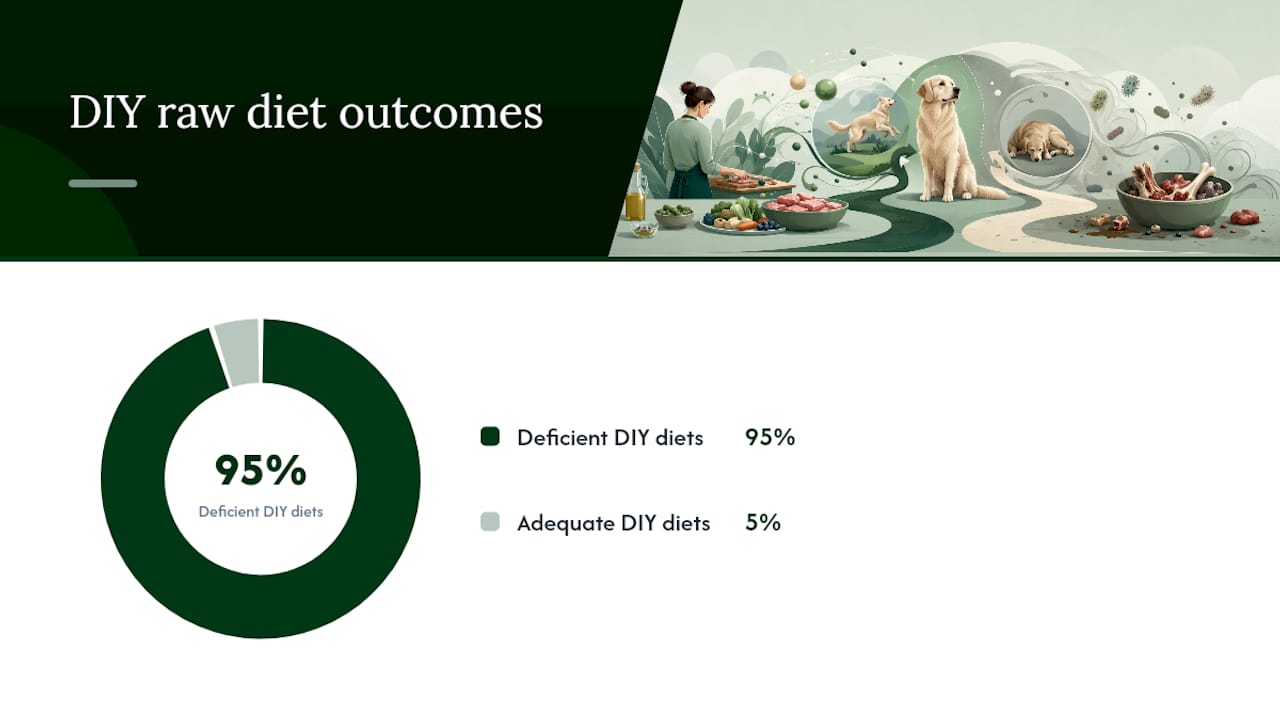
Nutritional imbalance is the second major problem, and it’s arguably more common than pathogen exposure. An analysis of home-prepared recipes found that 190 of 200 recipes, or 95%, were deficient in at least one essential nutrient. The most frequent failures involve incorrect calcium to phosphorus ratios and missing or excessive vitamins, problems that don’t show up overnight but can cause skeletal and developmental issues over months of feeding, especially in growing puppies.
Physical hazards round out the list:
- Bone fragments causing broken teeth, gastrointestinal obstruction, or perforation
- High-fat raw formulations contributing to pancreatitis or weight gain in dogs prone to either
- Choking risk from large bone pieces, particularly in small breeds or aggressive chewers
- Cross-contamination in the kitchen affecting cutting boards, sponges, and countertops used for human food prep
The human health angle deserves its own callout. Pregnant people, infants, elderly household members, and anyone immunocompromised face elevated risk from the same bacteria a healthy adult might shrug off. This isn’t limited to fresh raw meat, either. Freeze-dried and dried raw products don’t reliably eliminate pathogens, since drying reduces moisture but isn’t a substitute for cooking. Anyone handling it should treat it exactly like raw meat, not like a shelf-stable kibble alternative.
Types of Raw Diets and Why Format Matters
“Raw dog food” isn’t one product category. It’s four fairly different approaches, and the differences change both the nutrition profile and the safety math.
- BARF and home-prepared diets (Biologically Appropriate Raw Food): owner-assembled meals of muscle meat, organs, and bone, often with added vegetables or supplements. Maximum control, maximum risk of getting the ratios wrong.
- Commercial frozen raw: manufactured raw meals sold frozen, sometimes tested for pathogens and formulated to AAFCO nutrient profiles, sometimes not. Quality varies enormously between brands.
- Freeze-dried and air-dried raw: raw ingredients with moisture removed through freeze-drying or gentle air-drying, producing a shelf-stable product that rehydrates or gets fed dry. Convenient and less messy, but not sterile.
- Raw treats and toppers: single-ingredient freeze-dried meats or organs meant to supplement a base diet, not replace it.
The processing method matters more than most shoppers assume. Freeze-drying pulls moisture out slowly under vacuum, which preserves nutrients well but doesn’t apply the heat needed to kill Salmonella or Listeria. Commercial frozen raw sometimes undergoes high-pressure processing to reduce pathogen load, but not every brand does it, and labeling rarely spells out which safety step, if any, was applied. That inconsistency is exactly why an AAFCO adequacy statement and a manufacturer’s own testing protocol matter more than marketing language on the bag.
Practical Safety, Handling, and Storage Best Practices
If you’re feeding any raw product, freeze-dried included, the handling rules don’t change from what you’d use for raw chicken breast in your own kitchen.
- Store raw and freeze-dried raw food separately from human food, ideally in a dedicated section of the freezer or pantry.
- Thaw frozen raw meals in the refrigerator, never on the counter, and use within the manufacturer’s recommended window.
- Prep on a dedicated cutting board or surface reserved only for pet food, then disinfect it immediately after.
- Avoid rinsing raw food residue directly in the kitchen sink used for human dishes; use a separate basin or disinfect thoroughly afterward.
- Wash your hands with soap for at least 20 seconds after handling any raw or freeze-dried raw product.
- Feed from stainless steel bowls rather than plastic or ceramic. Porous materials can harbor bacteria even after washing, while stainless steel resists that persistence.
- If you suspect a commercial product made your dog sick, report it to the FDA, which investigates pet food safety complaints and maintains a laboratory network for exactly this purpose.
Pro Tip: Keep a separate set of tongs or gloves just for raw pet food prep. It sounds excessive until you realize how many kitchen injuries and infections trace back to using the same knife for a dog’s dinner and a family salad.
How to Ensure Nutritional Adequacy and When to Consult a Specialist
Not all “complete and balanced” claims mean the same thing. AAFCO allows two paths to that label: formulation, where a recipe is calculated on paper to meet nutrient minimums, and feeding trials, where the diet is actually tested on animals over time. Formulation-only products can still contain the right numbers on paper while performing poorly in real dogs, because bioavailability and ingredient interactions don’t always match the spreadsheet.
This is exactly why DIY raw recipes fail so often. The 95% deficiency rate found in home-prepared diet analysis wasn’t a fluke, and rotating ingredients on your own rarely fixes the underlying calcium, phosphorus, or vitamin problems without an actual nutrient analysis behind it. Common gaps include:
- Calcium and phosphorus ratios out of range for skeletal health
- Insufficient vitamin D and vitamin E
- Missing or excessive vitamin A, particularly in liver-heavy recipes
- Inadequate zinc and other trace minerals
Three paths reduce this risk. Choose a commercial raw or freeze-dried diet carrying an AAFCO complete-and-balanced statement backed by feeding trials, not formulation alone. Use a properly dosed premix designed to fill nutrient gaps in home-prepared meals. Or work directly with a board-certified veterinary nutritionist, who can run a full recipe analysis and tell you exactly what’s missing before it becomes a clinical problem.
Who Should Avoid Raw Diets or Use Veterinary Supervision
Some dogs and some households carry higher stakes if something goes wrong, and raw feeding deserves extra caution, or outright avoidance, in these cases.
- Puppies, whose developing skeletons are especially vulnerable to calcium and phosphorus imbalances
- Pregnant or lactating dogs, who need tightly controlled nutrient intake during a demanding physiological period
- Dogs with pancreatitis history, since high-fat raw formulations can trigger flare-ups
- Immunosuppressed pets, including those on chemotherapy or long-term steroids
- Households with pregnant people, infants, elderly members, or anyone immunocompromised, since even healthy-looking raw-fed dogs can shed pathogens intermittently
Any dog with an existing medical condition should have nutrient levels checked with actual bloodwork, not guesswork, before starting or continuing a raw diet.
Safer Alternatives and Middle-Ground Approaches
You don’t have to choose between full raw feeding and standard kibble. There’s real middle ground.
- Freeze-dried meal mixers and toppers add recognizable whole-food ingredients to a base diet without the mess or thawing schedule of frozen raw, and they’re easier to store and handle carefully.
- Cooked or gently prepared commercial diets formulated to AAFCO standards deliver fresher ingredients without the pathogen exposure of uncooked meat.
- Gradual transitions work better than an abrupt switch: introduce new food over 7 to 10 days, watching stool consistency and appetite the whole way.
If you go the topper route, remember that a mixer isn’t a complete diet on its own. It supplements a nutritionally complete base food; it shouldn’t become the majority of the bowl unless the product itself is formulated as complete and balanced.
A Short Decision Checklist for Trying Raw or Alternatives
Before changing anything, work through this sequence rather than jumping straight to a bag or a recipe.
- Define your goal. Are you chasing coat health, digestion, weight management, or something else?
- Talk to your veterinarian or a board-certified veterinary nutritionist before switching foods.
- Choose a tested, AAFCO-complete product, or build a plan with a nutrition professional if going the DIY route.
- Run a trial period of 4 to 6 weeks, tracking weight, stool quality, coat condition, and energy.
- Reassess with bloodwork if your dog has any preexisting condition, and repeat that check periodically.
Contact your vet immediately if you see vomiting, diarrhea lasting more than a day, lethargy, or sudden weight loss during any transition.
A Note From Walnut Creek Pet on Where We Fit Into This
Walnutcreekpet donates 10% of profits to no-kill shelters and focuses on organic, natural, single-ingredient products because we believe pet owners deserve transparency, not marketing spin. We provide freeze-dried mixers as a lower-risk way to add whole-ingredient variety, not as an unsupervised substitute for a vet-approved plan. Used as a topper alongside a complete base diet, they can add variety without the full handling burden of raw meat at home.
What Actually Matters Here
The raw-feeding debate usually gets framed as tradition versus science, ancestral diets versus processed convenience. That framing is a distraction. The real issue is variance: raw feeding outcomes swing wildly based on formulation quality and handling discipline, not on whether the food is raw in some abstract sense.
Conventional raw-feeding advice tends to undersell two things: how often home recipes are nutritionally incomplete, and how casually owners handle pathogen risk once a product feels routine. Both problems are fixable. Neither is trivial. Grooming habits and coat care, like the gentle handling routines useful for older dogs, matter less here than getting the food itself right.
If you take one thing from this article, prioritize this: get an actual nutrient analysis before committing to any home-prepared raw diet, and treat every raw or freeze-dried product with the same hygiene discipline you’d use on raw chicken in your own kitchen. That single habit prevents more problems than any specific brand or format choice ever will.
— Timothy
Freeze-Dried Mixers Worth Considering as a Transition Step
If you want to test the waters without committing to a full raw regimen, freeze-dried meal mixers give you real ingredient variety with far simpler handling than frozen raw.
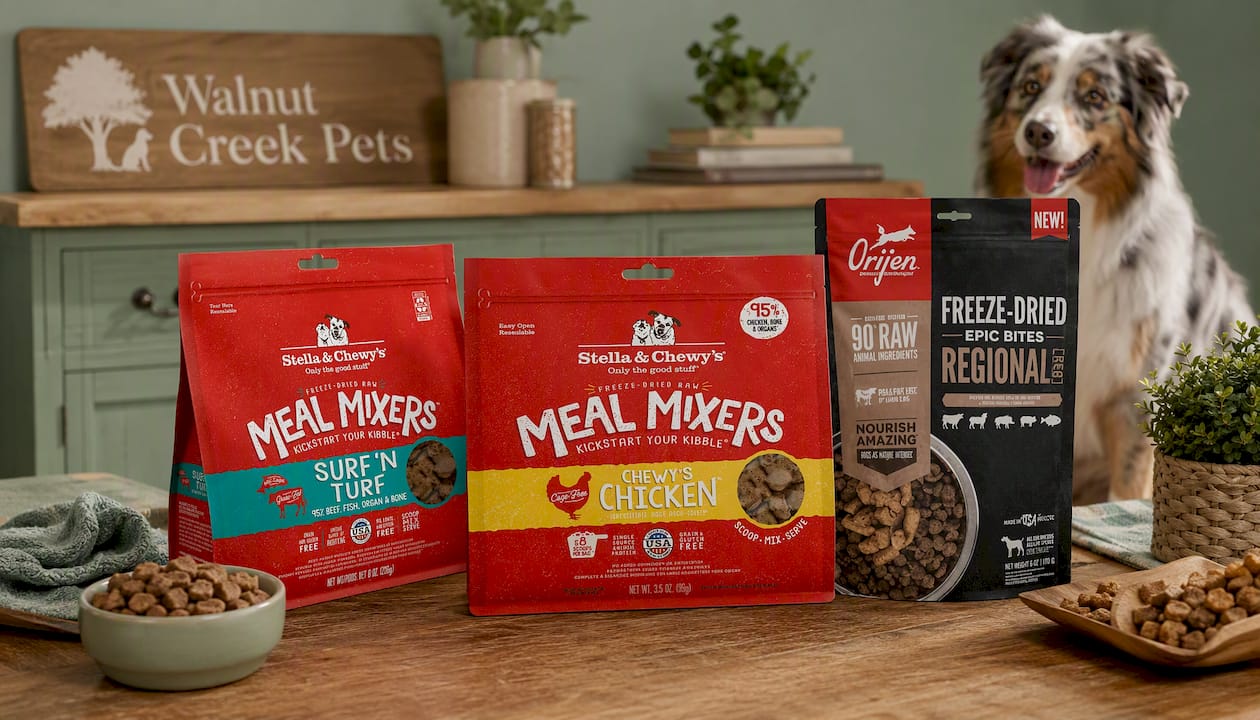
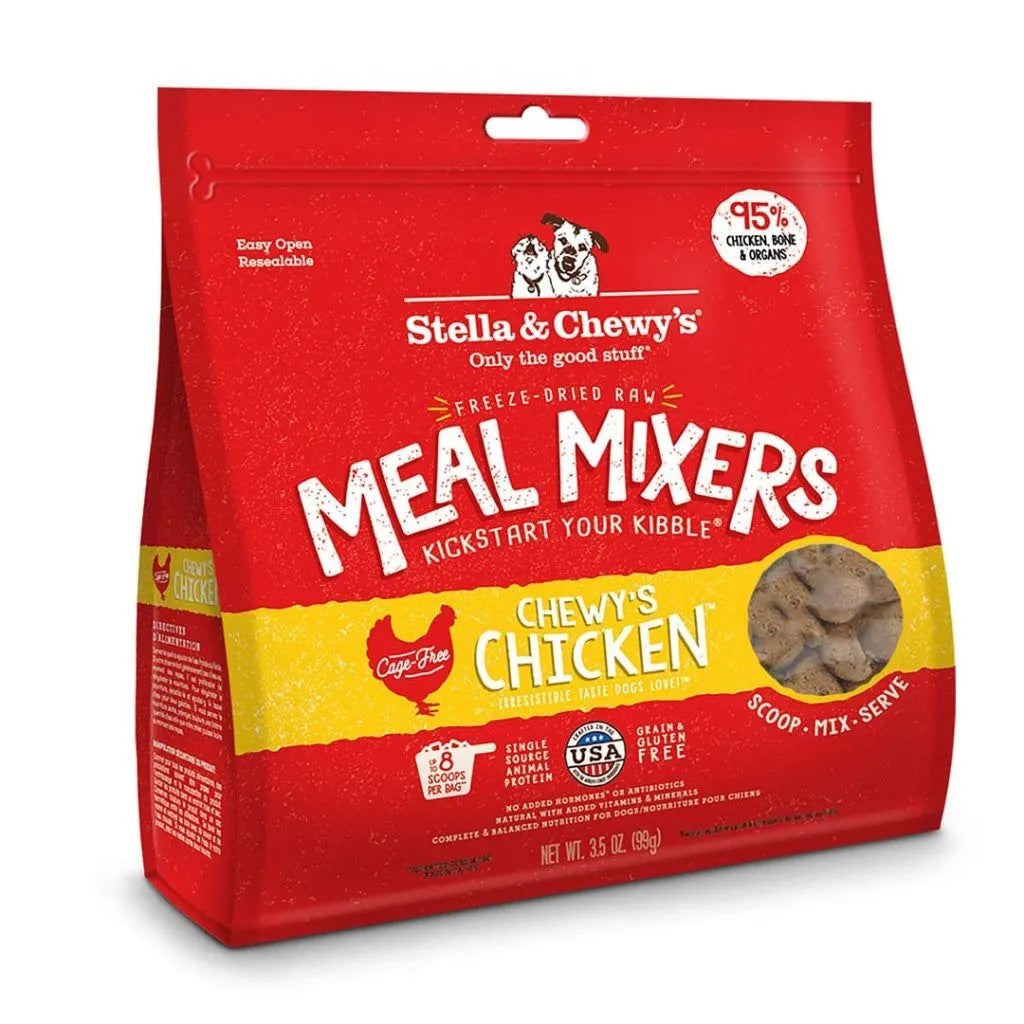
The Stella & Chewy’s Freeze Dried Meal Mixers Surf & Turf Dog Food combines two protein sources in one topper, useful if your dog needs variety without a full protein switch. The Stella & Chewy’s Freeze Dried Meal Mixers Chicken Dog Food works well as a single-protein starting point for dogs new to raw ingredients, in a larger 8-ounce size for longer use. The Orijen Regional Red Epic Bites Freeze Dried Dog Food delivers a multi-protein, whole-ingredient bite format that works equally well as a treat or a meal booster.
None of these replace a conversation with your veterinarian, and none should become an entire diet without checking that the base food underneath stays nutritionally complete. Use them as a topper, confirm your dog tolerates the change well over a couple of weeks, and adjust from there. If you want a place to start, browse the freeze-dried mixer options above and pick one protein to trial first.
Sources
- Current Evidence on Raw Meat Diets in Pets: A Natural Symbol, but a Nutritional Controversy
- Raw or undercooked animal-source protein: cat and dog diets — AVMA
- Raw foods for dogs: Evidence-based advice from the Riney Canine Health Center — Cornell University
- How to report a pet food complaint — FDA


