


Liberate Your Lifestyle!

Pellets vs. Seeds for Parrots: What to Feed and How to Switch
Pellets or seeds for your parrot? See what avian vets recommend, how much of each to feed, and how to switch a seed-lover to pellets safely.

For most pet parrots, a good pellet should be the base of the bowl. Fresh vegetables and fruit come next, and seeds are a small, well-chosen part of the day rather than the main meal. Veterinary sources agree on that pattern. Small species such as budgies and cockatiels have a few special rules, and we cover those below. You’ll also get a step-by-step plan for a bird that only wants seeds, so your parrot can enjoy variety and stay healthy for the long haul. ♡
TL;DR
- Seeds alone are low in vitamin A, calcium and key amino acids and high in fat, which is why the Merck Veterinary Manual calls seed-only diets suboptimal for parrots.
- Most vet sources put pellets at roughly 60 to 80% of the daily diet for most parrots, with vegetables and fruit filling much of the rest.
- Budgies, cockatiels and other small parrots often do best with pellets plus some whole grains and a measured portion of seeds.
- Switch gradually, weigh your bird on a gram scale, and call your avian vet if your bird eats less or loses weight.
- Variety keeps mealtime fun: fresh veggie mixes, sprouted seeds and rotating foods make a balanced diet easier to love.
Table of Contents
- Why seeds alone fall short
- What pellets do well
- How much of each? Numbers from the vets
- Budgies, cockatiels and other small parrots
- How to switch a parrot from seeds to pellets
- Filling the rest of the bowl
- Our perspective
- Give your parrot a bowl worth flying to
- FAQ
- Sources
Why seeds alone fall short
Seeds are what many parrots pick first, and they are tasty. That is exactly the problem when they are the whole menu. According to the Merck Veterinary Manual, strictly seed diets are deficient in vitamin A, protein (especially lysine and methionine) and calcium, and formulated pelleted diets have greatly improved parrots’ nutrition and health.
The University of Illinois College of Veterinary Medicine adds detail. It notes that pet-store seed mixes are high in fat and low in fiber and calcium and lack vitamin A. Vitamin A deficiency can show up as respiratory disease, poor feather quality and reproductive problems. High-fat diets with little exercise can lead to atherosclerosis, a progressive hardening of the arteries.
The University of Florida’s zoological medicine team lists obesity, strokes, high cholesterol, heart problems and fatty liver disease as risks of a seed-heavy diet. Hens can be affected too: the Illinois column explains that fatty seed diets can stimulate egg-laying, which drains calcium from the bones and can lead to life-threatening egg binding.
There is one more reason that has nothing to do with disease. Parrots are selective eaters. NC State’s veterinary hospital points out that birds will eat around the healthier foods when everything is offered at once, so a bowl that mixes pellets with seeds often ends up with the pellets left behind. Offer the pellets first and treat seeds like dessert.
How to spot a diet that is falling short
PetMD lists the signs of malnutrition in birds: weight loss, dull or malformed feathers, a protruding keel bone, lethargy and unusual droppings. If you see any of these, book a visit with your avian veterinarian. Changes to the diet of a bird that is already unwell should be guided by the vet.
What pellets do well
A pellet is a formulated food in which each bite carries the same balance of nutrients. That consistency is the point: a bird can’t pick out the sunflower seeds and skip the rest. The research backs the approach. In a study of captive Amazon parrots, published in the journal literature and indexed on PubMed, Donald Brightsmith found that birds eating 50% produce, 25% formulated diet and 25% seed took in too little calcium, sodium and iron and too much fat. Birds offered a low-seed diet of 60% pellet, 22% produce and 18% seed consumed acceptable nutrient levels. Birds on 75% formulated diet plus 25% produce met recommendations for nearly all nutrients measured.
The same study also shows that a small amount of seed, around 18% of the diet by wet weight, did not create major imbalances when the rest of the diet was well built. So the winning idea is not “never seeds.” It is “seeds in their proper place.”
Two practical pellet tips from avian vets:
- Look at the label, not the color. The Gabriel Foundation, a parrot rescue, suggests choosing natural, uncolored pellets and avoiding sugars among the first five ingredients.
- Rotate brands. Dr. Scott Echols, an avian specialist writing for the Association of Avian Veterinarians (AAV), suggests feeding two or three pellet brands for nutritional and textural variety.
Pellets also come with a vitamin A figure worth knowing. Merck recommends pellet vitamin A levels of 5,000 to 8,000 IU per kilogram of feed and cautions against oversupplementation. That is a reason to feed a complete pellet as the base and not stack extra vitamin powders on top unless your vet advises it. VCA Animal Hospitals notes that a bird eating 75 to 80% pelleted food generally does not need supplemental vitamins.
How much of each? Numbers from the vets
Sources differ a little by species and by who is writing, so use this table as a range and let your avian vet set your bird’s exact plan.
| Source | Pellets | Fresh produce | Seeds and nuts |
|---|---|---|---|
| University of Florida Small Animal Hospital (parrots) | 75 to 80% | 15 to 20% | Strictly limited or eliminated |
| PetMD (bird sanctuary director’s suggestion) | 60 to 70% | 20 to 30% | Up to 10% |
| VCA Animal Hospitals (budgies) | 60 to 80% | Up to 20 to 25% | Very small part, never the entire diet |
| Association of Avian Veterinarians handout (small parrots) | 50% or less | 25 to 30% | Whole grains 25 to 30%, other seeds as treats |
PetMD’s source adds that seeds are not recommended for larger birds such as African greys, Amazons, cockatoos and macaws. For those birds, nuts and seeds work best as training rewards and foraging fun.
Budgies, cockatiels and other small parrots
If you share your home with a parakeet (budgie), the answer shifts a little. PetMD’s parakeet care sheet says high-quality pellets formulated for parakeets should make up at least 60 to 70% of the diet, with treats no more than 10%, and fortified seeds or millet can be fed as treats.
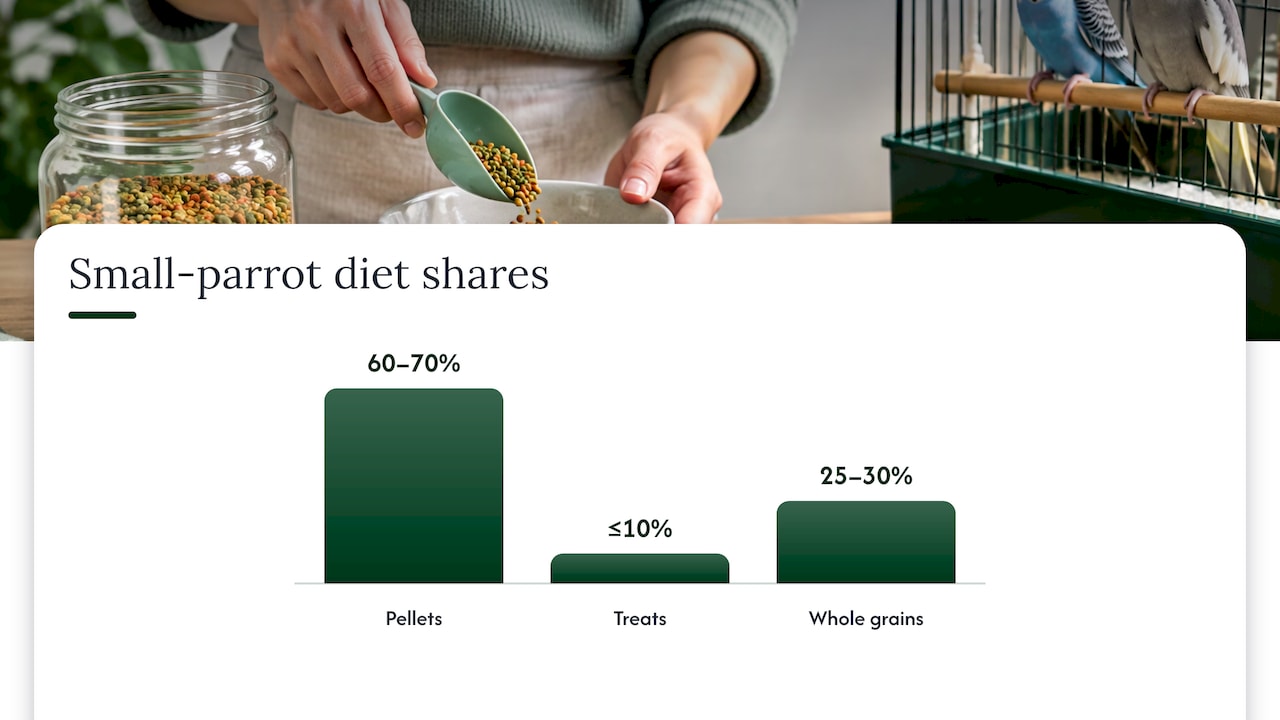
The AAV’s basic care handout notes that small species, especially budgerigars but also parrotlets, lovebirds and cockatiels, can develop kidney problems on a pellet-only diet. It recommends free-choice pellets plus a meal of some seeds each day. Dr. Echols’ handout goes further for small parrots, suggesting whole grains such as spelt, oat groats, barley, millet, flax, chia and hemp seed at 25 to 30% of the diet alongside pellets and fresh produce.
A few budgie habits to keep in mind:
- Offer millet spray as a special treat. VCA suggests only once or twice a month in small quantities.
- Measure seeds rather than leaving a full dish out all day.
- Check with your avian vet before changing a small bird’s diet, because a budgie has little weight to spare.
How to switch a parrot from seeds to pellets
A seed-loving parrot can absolutely learn to love pellets. It takes patience, a scale and a plan. The big rule from every source: go gradually, and never starve your bird into trying something new.
Step 1: Get a baseline
Safari Veterinary recommends a physical exam and baseline body weight before any diet change, then weekly rechecks until conversion is complete. This matters most for a bird that has eaten seeds for years, because a vet can spot problems before you change anything.
Step 2: Measure what your bird eats now
The University of Florida suggests measuring average daily intake over seven days. That number becomes your starting point, so you know how much total food the bird needs each day. Keep each day’s measured portions in a pet food storage container so the routine stays tidy and consistent.
Step 3: Swap in pellets in weekly steps
UF’s sample schedule runs like this:
- Week one: 75% seeds, 25% pellets of the calculated daily intake.
- Week two: 50% seeds, 50% pellets.
- Week three: 25% seeds, 75% pellets.
- After that, reduce seeds further for larger parrots.
UF notes the whole transition may take months to a year or more, so go at your bird’s pace. Safari Veterinary describes a slower variation: cut the seed by a quarter, add ten pellets for seven days, then cut to half, then a quarter of the original amount. For bashful birds, UF suggests offering pellets first thing in the morning and limiting seed access to an hour or two a couple of times a day.
Step 4: Weigh every day
This is the safety step. UF advises using a gram scale so the bird loses no more than 1 to 2% of body weight per week. VCA recommends weighing budgies daily during the switch, never removing familiar food until the bird is eating enough of the new diet, and calling your vet if the bird eats less or loses weight. Florida Parrot Rescue suggests a vet visit if weight loss passes 5 to 7%. Keep a simple log of weight and droppings so you can show your vet.
Step 5: Make pellets part of the fun
Certified parrot behavior consultant Pamela Clark describes a chop-mix method: mix the bird’s usual seed into an equal amount of chop (chopped fresh vegetables), offer a small separate dish of pellets daily, and trim the seed by about a teaspoon per week. She writes that this approach is for parrots other than budgerigars and cockatiels. Another trick from the Canobie Veterinary care sheet: layer the new pellet over the old diet instead of mixing, and remove moist foods after a few hours so they don’t spoil.
Filling the rest of the bowl
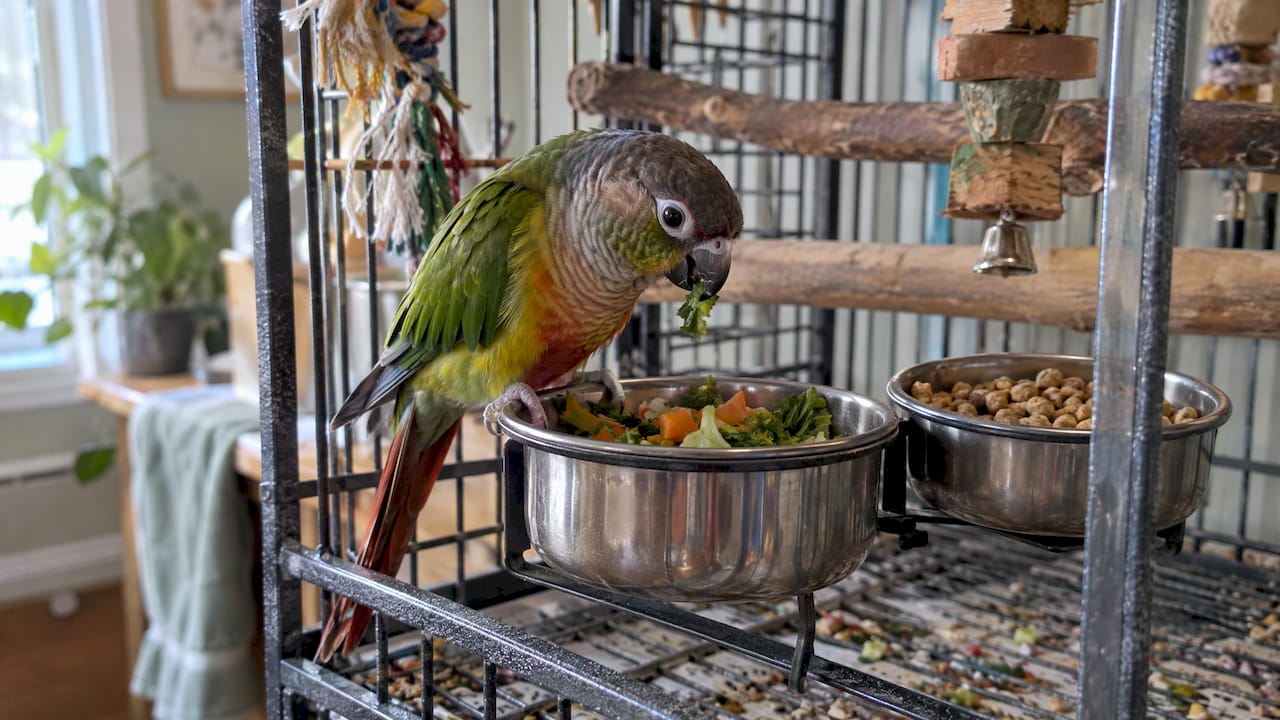
Once pellets are the base, the fun part begins. Fresh vegetables, fruit and the right seeds turn a healthy routine into a bird that looks forward to mealtime.
Veggies. Fresh produce is a daily part of the plan in every source above. If chopping each morning is a stretch, we offer parrot veggie mixes such as Green Goodness Boost and Peas & Bell Peppers Boost to add color and texture to your bird’s dish.
Sprouted seeds. Sprouting is a good middle road for seed lovers. A veterinary-written discussion of this topic notes that sprouting or soaking can increase the nutrients in seeds. If you grow your own, our guide to sprouted seeds for parrots covers how to handle each batch safely, including when to toss it.
Gut support. Dr. Echols notes that some research suggests the finely ground food used in pellets may affect digestion in some birds, which is one reason he adds whole grains for small parrots. A routine that includes variety supports your bird’s digestion, and our Pre+Pro+Post Biotics Blend for Parrots is one option to ask your avian vet about.
Our perspective
We think the best parrot bowl is a balanced one that your bird is excited about. Vets are clear that pellets, fresh produce and measured seeds each have a job, and the birds we love need all three.
At Walnut Creek Pet we focus on organic, natural and single-ingredient foods without harmful additives, because we believe pet parents should know exactly what goes into the dish. A single-ingredient veggie mix is easy to read, easy to rotate, and easy to portion.
Variety is also how a picky seed-eater becomes an adventurous eater. Offering different colors, shapes and textures over several weeks gives your parrot reasons to explore, and that is the heart of a successful switch.
And every order does a little extra good: we donate 10% of our profits to no-kill animal shelters, and we offer discounts to new adopters and care guides to help new bird parents get started with confidence.
Timothy
Give your parrot a bowl worth flying to
Ready to build variety into every meal? Our Parrot Food Variety Pack and Parrot Food Super-Pack make it easy to try different foods and find your bird’s favorites. New adopter? Ask about our adopter discount, and browse everything for birds at Walnut Creek Pet. 10% of our profits support no-kill shelters. ♡
FAQ
Are pellets necessary for parrots?
Most avian vets recommend them as the base of the diet because they deliver balanced nutrition in every bite. The University of Florida suggests 75 to 80% pellets for parrots. Small species may also need whole grains or measured seeds, so ask your avian vet what fits your bird.
Should I feed my parakeet seeds or pellets?
Both have a place. PetMD suggests pellets formulated for parakeets make up at least 60 to 70% of the diet, with treats such as millet no more than 10%. The AAV also suggests a daily meal of some seeds for small parrots to support kidney health.
Can I feed wild bird seed to my parrot?
It is not recommended. The Gabriel Foundation notes that wild bird seed is processed differently from parrot mixes and can be contaminated by rodents. Choose foods made for parrots instead.
How long does it take to switch a parrot to pellets?
Expect weeks to months. The University of Florida says the process may take months to a year or more, depending on the bird. Weigh your bird on a gram scale, go in small steps, and contact your avian vet if your bird eats less or loses weight.
Sources
- Merck Veterinary Manual: Nutrition in Psittacines
- University of Florida Small Animal Hospital: How to care for your pet bird
- Veterinary Medicine at Illinois: What to Feed Your Pet Bird
- NC State Veterinary Hospital: Parrot Nutrition
- PubMed: Nutritional levels of diets fed to captive Amazon parrots
- PetMD: Pet Bird Food: Seeds vs. Pellets
- PetMD: Parakeet Care Sheet
- VCA Animal Hospitals: Feeding Budgies
- AAV: Healthy Avian Diets, Basic Feeding Guidelines
- AAV: Basic Care for Companion Birds
- Safari Veterinary: Pet Bird Husbandry, Nutrition, Grooming & Care Guide
- Canobie Veterinary: Bird Care Sheet
- The Gabriel Foundation: Diet and Nutrition
- Pamela Clark, CPBC: Pellets, To Feed or Not to Feed


