


Buy Organic Hamster Food Online: A 2026 Buying Guide
Learn how to buy organic hamster food online with confidence. We cover labels, ingredients, pellets vs mix, and switching foods safely.

Table of Contents
- Why Buy Organic Hamster Food Online in 2026
- What 'Organic' Actually Means on a Hamster Food Label
- How to Find the Best Hamster Food for Your Pet
- Hamster Food Ingredients: What Belongs in the Bowl
- Hamster Pellets vs Mix: Which Should You Buy?
- How to Transition Hamster Food Without Stomach Upset
- Matching Food to Species and Life Stage
- Cost, Freshness, and Storage: Getting Value Over Time
- Conclusion
- Frequently Asked Questions
Last Updated: October 21, 2026
Why Buy Organic Hamster Food Online in 2026
Shopping for organic hamster food online gives you a wider selection, clearer ingredient labels, and fresher stock than most store shelves. Online, you can read the full ingredient list, compare package weights, and check how recently a batch was milled.
Seeds and grains lose nutritional value as they age, and a bag that sat in a warehouse for a year is not the same product as one milled last month. Retailers that move inventory quickly ship fresher food. A common mistake is grabbing the cheapest bag without checking the mill date.
Below, we'll cover what "organic" means on a hamster food label, how to compare mixes and pellets, and how to switch foods without upsetting your pet's digestion.
What 'Organic' Actually Means on a Hamster Food Label
Organic hamster food is a food mix made with ingredients grown and processed under defined organic standards, verified through certification rather than marketing language. In the United States, the USDA National Organic Program sets the rules for what can carry an organic claim.
Products making an organic claim fall into tiers:
- "100% Organic": every ingredient must be certified organic (with limited exceptions for water and salt)
- "Organic": at least 95% of ingredients by weight must be certified organic
- "Made with Organic Ingredients": at least 70% of ingredients must be certified organic
Anything below that threshold cannot use the word "organic" on the front panel. Look for the USDA organic seal, and check whether the label says "100% organic" or just "organic", a bag that says "made with organic oats" is not the same as a fully organic product.
Watch Out
A package that says "natural" is not organic. "Natural" has no certification behind it for pet food, so a bag can use that word with zero third-party verification. If organic matters to you, look for the seal, not the adjective.
How to Find the Best Hamster Food for Your Pet
The best hamster food for your pet matches its species, age, and activity level while listing recognizable ingredients and a complete guaranteed analysis.
Step 1: Confirm the species claim is specific, not broad. A bag labeled for "hamsters" is a starting point; one labeled for "small pets" or "hamsters and gerbils" is a warning sign.
Step 2: Read the ingredient list by weight, not by prominence. Ingredients are listed in descending order by weight before processing, so the first three to five items tell you what the food mostly is.
Step 3: Interpret the guaranteed analysis against your hamster, not a generic range. The panel lists minimum crude protein, minimum crude fat, maximum crude fiber, and maximum moisture.
Step 4: Check for a complete formulation, not just an ingredient list. A mix can list good ingredients and still be nutritionally incomplete without added vitamins and minerals.
Step 5: Verify freshness signals before you order. A mill date, a lot number, and a clear best-by date mark a retailer that moves inventory; a bag with none of those is a gamble regardless of the ingredient list.
Step 6: Match the food format to your hamster's eating habits. A hamster that selectively feeds, picking out sunflower seeds and leaving pellets and grains, may do better on a pellet-based diet with mix as enrichment.
Pro Tip
Compare two bags by their guaranteed analysis and ingredient order, not their front-panel claims. A mix that advertises "premium seeds" but lists 12% protein is telling you it is mostly filler. The numbers do not lie the way the marketing copy can.
Finally, consider storage and shipping. Heat and humidity degrade food quality, so a retailer that ships promptly and packs food in sealed containers protects your purchase better than one that lets bags sit.
Hamster Food Ingredients: What Belongs in the Bowl
A good hamster food mix combines grains, seeds, dried fruits and vegetables, and a protein source, with vitamins and minerals added to fill nutritional gaps. Hamsters are omnivores, so a seed-only mix is incomplete.
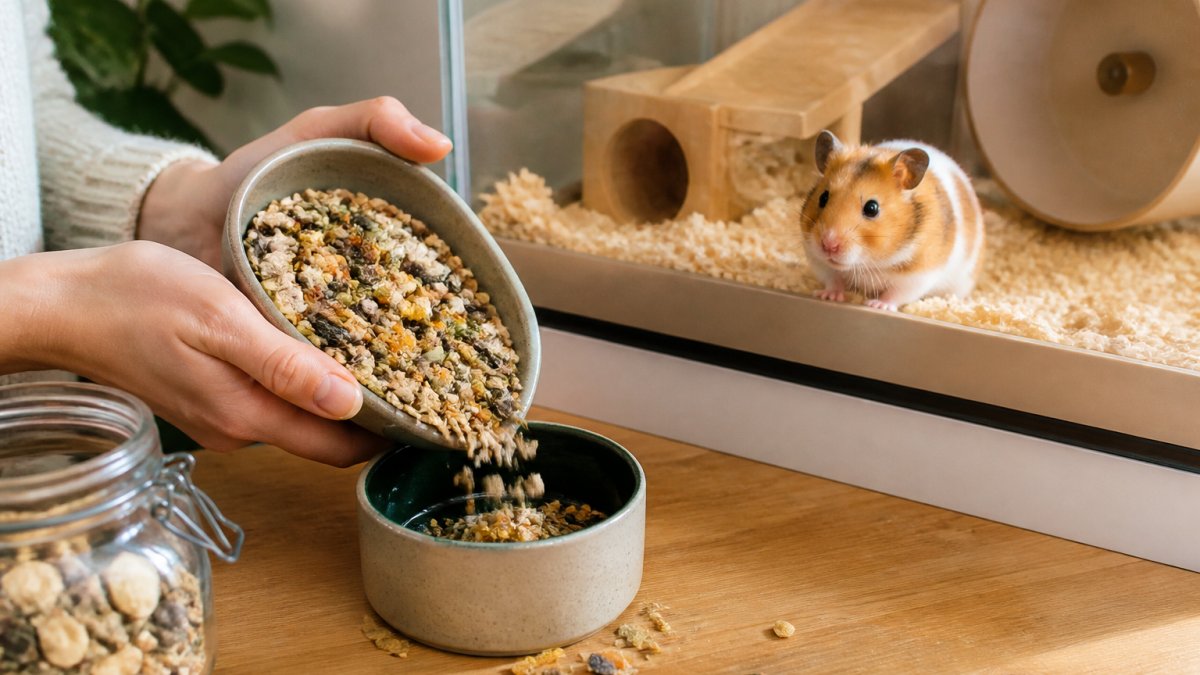
Here's what to look for in a quality mix:
- Grains: oats, wheat, barley, and millet form the carbohydrate base
- Seeds: sunflower, pumpkin, and flax seeds provide fat and protein
- Dried vegetables: carrots, peas, and beetroot add fiber and vitamins
- Animal or insect protein: mealworms, crickets, or egg provide essential amino acids
- Probiotics: some premium mixes include them to support digestive health
What you want to avoid: added sugar, artificial colors, and long lists of unnamed "cereal products." Those are fillers that add bulk without nutrition.
Reading the Guaranteed Analysis
The guaranteed analysis lists minimum protein, minimum fat, maximum fiber, and moisture content, the single most useful comparison tool on the package. For most hamsters, look for roughly 16-19% protein, 5-7% fat, and 6-10% fiber. Dwarf hamsters lean toward the lower end of protein; growing or pregnant hamsters need more.
Hamster Pellets vs Mix: Which Should You Buy?
Pellets and mix serve different purposes, and many owners use both. Pellets provide uniform, complete nutrition in every bite, which prevents selective feeding. Mix offers variety, foraging enrichment, and a more natural eating experience.
The trade-off is real: with a mix, hamsters often pick out the tastiest seeds and leave the rest, leading to an unbalanced diet over time. With pellets alone, you lose the enrichment and variety that keep mealtime interesting.
A practical approach: offer a quality mix as the base diet and a small portion of pellets to fill nutritional gaps.
| Feature | Pellets | Mix |
|---|---|---|
| Nutritional consistency | Uniform in every bite | Varies by what the hamster eats |
| Enrichment value | Low | High, supports foraging |
| Risk of selective feeding | Low | High |
| Best for | Picky eaters, young hamsters | Adult hamsters with good eating habits |
| Cost per pound | Generally lower | Generally higher |
How to Transition Hamster Food Without Stomach Upset
Switching hamster food too fast causes digestive upset, loose stool, and stress. The fix is a gradual transition over seven to ten days, mixing increasing amounts of the new food into the old.
Here is the schedule we recommend:
- Days 1-3: 75% old food, 25% new food
- Days 4-6: 50% old food, 50% new food
- Days 7-9: 25% old food, 75% new food
- Day 10: 100% new food
Watch your hamster's droppings and appetite during the switch. If you see loose stool or a sudden drop in eating, slow the transition and hold at the current ratio for a few extra days. A common mistake is dumping the old food and filling the bowl with the new one, that shortcut is the fastest way to a stressed hamster and a messy cage. Take the extra week.
Matching Food to Species and Life Stage
Food should match the hamster in front of you, not the average hamster in a care guide. Species and life-stage differences show up in protein, fat, sugar, and texture, here is how they translate into buying decisions.
Syrian hamsters are larger and need more food volume per day than dwarf hamsters, typically a tablespoon or more of mix daily, depending on size and activity.
Dwarf hamsters, including Campbell's and Roborovski, have faster metabolisms per gram of body weight but are more prone to diabetes, Campbell's in particular. The priority is a mix with no added sugar and limited dried fruit.
Young hamsters need more protein and fat to support growth. A protein target toward the upper end of the 16-19% range, or slightly above, is reasonable.
Pregnant and nursing females have the highest energy demands of any life stage. They need higher protein and fat for milk production, and many breeders offer unlimited access to a quality mix plus supplemental protein such as mealworms or egg during lactation.
Senior hamsters often benefit from softer, easier-to-chew food, since dental wear and reduced appetite are common. Some owners soften pellets with water or switch to a mix with smaller, softer pieces. Watch for weight loss and adjust portion size or texture accordingly.
Species mixing is a common mistake. Gerbil food is not hamster food, gerbils have different protein and fat needs, and a gerbil blend shortchanges a hamster.
Watch Out
Dwarf hamsters, especially Campbell's and Roborovski, are prone to diabetes. A mix with added sugar or a high proportion of dried fruit is a poor choice for these species regardless of how good the rest of the ingredient list looks.
A final note on life-stage transitions: when a hamster moves from juvenile to adult, or adult to senior, transition the food gradually over seven to ten days rather than switching abruptly.
Cost, Freshness, and Storage: Getting Value Over Time
The cheapest bag is rarely the best value. What matters is cost per pound, freshness on arrival, and how well the food keeps once opened.
Calculate price per pound by dividing package price by weight. A larger bag often wins on cost per pound, but only if your hamster eats it before it goes stale. For a single hamster, a smaller bag bought more often can be the better call.
Freshness is the variable most buyers ignore. Check for a mill date before ordering, fresh food lasts longer and retains more of its vitamin content. Keep food in an airtight container in a cool, dark place; heat and humidity degrade vitamins and can cause mold. Buy only what your hamster will eat in a few weeks.
Key Takeaway
Value comes from cost per pound times freshness times how much your hamster actually eats. A cheap bag that goes stale is a bad deal at any price.
Conclusion
Finding the right organic hamster food takes more work than grabbing the nearest bag, but the payoff is a healthier, more balanced diet. Read the label, check for certification, match the food to your hamster's species and life stage, and transition slowly.
At Walnut Creek Supply, we stock premium small-pet food and provide the guidance to help you choose well. Our family-owned shop focuses on high-quality products and educational content, so you can make informed decisions about your hamster's nutrition. Browse our small-pet selection and find a food that fits your pet.
Frequently Asked Questions
Where can I buy organic hamster food online?
You can buy organic hamster food online from specialty pet retailers that publish full ingredient lists and guaranteed analyses on each product page. Look for stores that offer a clear return policy. Before ordering, confirm the package weight and price per pound so you can compare value across sizes. Ordering from a dedicated small-pet supplier usually means fresher stock than a big-box listing that sits in a warehouse for months.
What should I look for in organic hamster food?
Start with a named protein source, a mix of grains and seeds, and dried vegetables or fruits rather than vague 'cereal byproducts.' Check the guaranteed analysis for protein, fat, and fiber levels, and look for a USDA organic seal if organic ingredients matter to you. Avoid blends with added sugar, artificial colors, or long lists of fillers. A short, readable ingredient list is usually a better sign than a long one full of unpronounceable additives.
Are hamster food mixes or pellets better?
Both have a place. A quality seed and grain mix supports natural foraging behavior and gives your hamster variety, while pellets deliver consistent nutrition in every bite. Many owners feed a fortified pellet as the base diet and scatter a small amount of mix for enrichment. If you feed only a mix, watch for selective eating, where the hamster picks out favorite seeds and leaves the nutritious pieces behind. Rotating the mix and limiting treats helps prevent that.
How should I transition my hamster to a new food?
Switch gradually over seven to ten days. Mix about 25 percent new food into 75 percent of the old food for the first few days, then move to a 50/50 split, then 75 percent new, and finally the full new diet. Watch droppings, appetite, and energy levels during the change. If you notice loose stools or your hamster stops eating, slow the transition down. Sudden switches are the most common cause of digestive upset in small pets.
Choosing the right food is one decision among many in caring for a hamster, and it's one you don't have to make alone. Walnut Creek Supply offers curated small-pet supplies, species-specific food guidance, and educational resources to help you build a healthier environment for your companion. Get started with Walnut Creek Supply and give your hamster a diet built on quality ingredients and informed choices.


