


Durable Reptile Habitat Decor Tips That Last
Durable reptile habitat decor starts with the right materials and secure placement. Learn the 3 mounting methods that survive heat and humidity.

Last Updated: November 3, 2026
Quick Summary
Durable reptile habitat decor starts with materials that handle heat and humidity, such as thick plastic, cured resin, dense hardwood, and cork bark. Anchor every piece into the substrate or against enclosure structure, and inspect joints and edges during each cleaning so small cracks get repaired before they fail.
- Thin plastic cracks under heat lamps, so choose thick-walled plastic and sealed resin pieces.
- Bake or freeze collected wood to kill pests, then dry it completely before use.
- Bury hide bases about an inch into the substrate to stop them sliding.
- Test stability by pushing sideways on branch tops and down on basking surfaces.
- Uncured sealant stays soft and off-gasses, so cure all builds fully before the animal returns.
Table of Contents
- Why Durable Reptile Habitat Decor Saves Money and Stress
- Safe Materials for Reptile Habitat Decor
- Picking Reptile-Safe Branches and Rocks
- Reptile Tank Decor Ideas That Hold Up Over Time
- DIY Reptile Enclosure Decorations: What Works and What Fails
- How to Secure Decor So It Stays Put
- Reptile Habitat Enrichment That Lasts Beyond the First Month
- Cleaning, Disinfecting, and Repairing Decor
- Choosing Decor That Earns Its Place
- Frequently Asked Questions
Why Durable Reptile Habitat Decor Saves Money and Stress
Durable reptile habitat decor is the difference between a setup that looks great for a month and one that still holds up two years later. Keepers often buy cheap decor, watch it crack, fade, or tip over, then replace it again and again. That cycle costs more than buying well once.
The math is simple. A flimsy hide that fails within months gets replaced three or four times over a couple of years.
There's a safety angle too. Weak decor breaks into sharp edges and small pieces, both real hazards in a reptile enclosure.
This guide covers the materials, branches, rocks, and layout choices that last, and shows you how to pick and secure decor so it survives the long haul.
Safe Materials for Reptile Habitat Decor
Choosing safe materials comes down to two questions: can it handle heat and humidity, and can your animal's claws and jaws damage it? Get those right and most durability problems disappear. Below is a straight comparison of how each material behaves over months of basking heat, humid hides, and repeated cleaning, plus the failure modes to watch for.
Plastic and Resin
Plastic and resin are the workhorses of durable terrarium decor. They resist moisture, clean up fast, and don't rot or grow mold.
A strong plastic hide, like the Zilla Durable Dens, can take claws and heat and still work as a basking area.

How they hold up: rigid plastic and cured resin tolerate basking temperatures and humid hides well, and they can be wiped or soaked during cleaning without swelling.
Wood, Cork, and Natural Textures
Wood and cork bring natural texture and grip for climbing. They also break down faster in high humidity.
Real wood branches can make good climbing structures when you pick the right species and dry them properly.
How they hold up: dense hardwoods outlast softwoods in humid enclosures, but all wood moves with moisture, it swells, dries, and can split along the grain.
Material Compatibility With Heat and Humidity
Use this practical reference when matching decor to your enclosure conditions:
| Material | Heat lamp / basking | Humid hide / misting | Repeated cleaning | Typical failure mode |
|---|---|---|---|---|
| Rigid plastic | Good if thick-walled | Good | Good | Cracks at thin sections or joints |
| Cured resin | Good | Good | Good | Chips at edges; glue fails at seams |
| Hardwood | Good when dry | Moderate, swells and splits | Moderate, needs full drying | Mold, soft spots, splitting |
| Cork bark | Moderate, can scorch if close | Moderate, absorbs water | Gentle only | Crumbling edges, lingering moisture |
| Artificial plants (silk/plastic) | Good away from bulbs | Good | Good | Fading, loose leaves, wire exposure |
| Natural rock | Good if dense and stable | Good | Good | Flaking, trapped heat, tipping |
Decor usually fails at the joints and edges first, not in the middle of a panel. That is why inspection matters more than the material label alone: a well-made plastic hide with sealed seams will outlast a cheap resin piece with exposed glue. Match the material to the wettest and hottest part of the enclosure, and keep absorbent materials out of constant-mist zones unless you can dry them fully.
What to Avoid
Skip anything with exposed foam, flaking paint, or loose small parts that can be ingested. Avoid untreated wood in humid setups, craft glues that soften under heat, and thin plastics near basking bulbs. Sharp edges, loose wire in artificial plants, or a hollow base that traps water make a piece not worth the risk, no matter how durable the label claims.
Picking Reptile-Safe Branches and Rocks
Not every branch in your yard belongs in a tank. Some woods release oils or sap that harm reptiles, and some rocks crumble or trap heat unevenly.
For branches, look for hardwoods that don't sap. Avoid fresh pine and cedar, which give off strong oils.
A common mistake is grabbing a rock that looks solid but splits under a basking lamp. Test stability by pressing down hard before it enters the enclosure.
Reptile Tank Decor Ideas That Hold Up Over Time
Good reptile tank decor ideas share one trait: they're built for the animal's behavior, not just for looks. A functional layout gives hides, climbing space, and basking spots that stay put.
Hides, Caves, and Basking Surfaces
Hides and shelters are the core of any setup, reducing stress and giving your animal a secure retreat. You can also compare a sweetgum ball isopod hide as another natural terrarium decor pod choice. For a natural option, consider a large lotus head pod hide made for terrarium decor.
The Zilla Durable Dens come in multiple sizes with a wide base that adds stability. Match hide size to your animal so it fits snugly and feels secure.
Plants, Foliage, and Water Features
Artificial plants made of silk or sturdy plastic can keep their color and shape in a dry tank. They add cover and visual depth without wilting. Real plants can work in bioactive setups, but they need more care.
For water features, a reliable misting system matters.
Zilla Durable Dens Gray, 1ea/Medium →
DIY Reptile Enclosure Decorations: What Works and What Fails
DIY reptile enclosure decorations can save money or waste it, depending on the build.
Spray foam and silicone are popular for building custom backgrounds and ledges. Both work when sealed and fully cured.
What fails most often:
- Regular craft glue that softens under heat
- Untreated wood that molds in humidity
- Paint that flakes off basking surfaces
If you build your own, use reptile-safe sealants and let everything cure completely before your animal goes back in. Repair small cracks early. A quick patch beats a full rebuild.
How to Secure Decor So It Stays Put
Stability is where most setups quietly fail. A hide that shifts can trap a limb, and a branch that falls can break glass or injure your animal. Securing decor properly takes a few minutes and prevents most accidents.
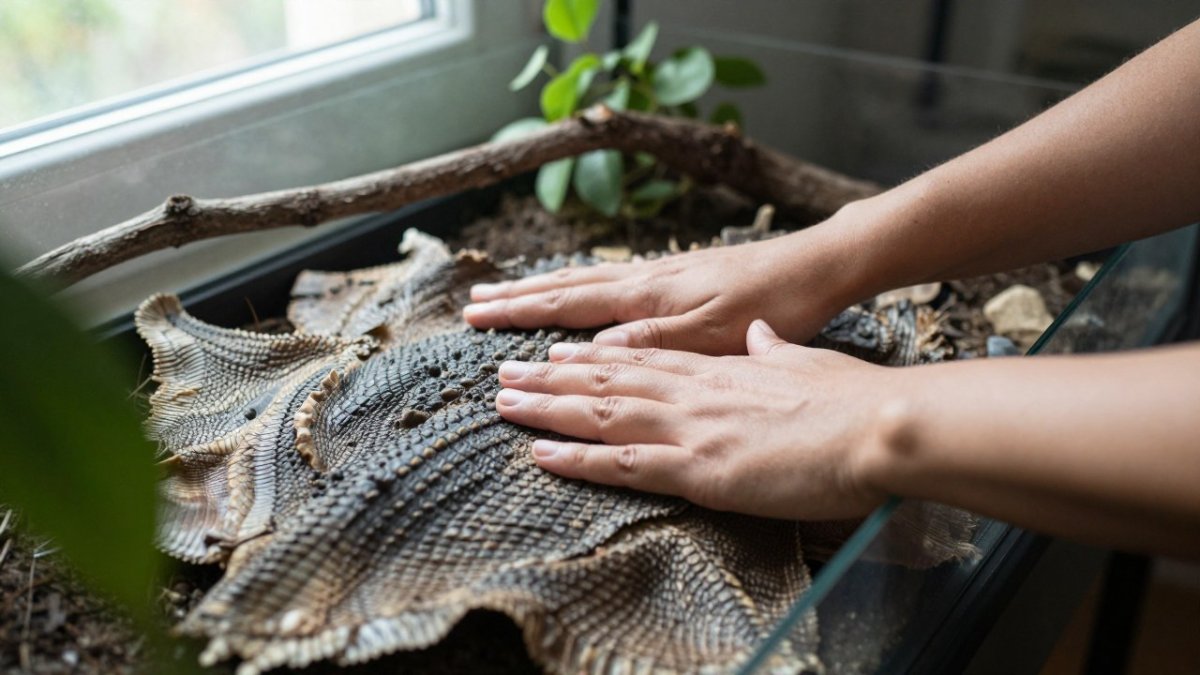
Follow these steps:
- Set the base first. Press wide-based items into the substrate so they sit level. A level base spreads load and stops rocking before you add weight above it.
- Anchor heavy pieces. Use resin packing material, like this resin packing set, to lock branches and rocks in place. Pack it around the contact points, not just under the piece, so lateral pushes are resisted too.
- Bury the bottom edge. Sink hide bases slightly so they can't slide. A rim buried an inch or so into the substrate resists sliding far better than a base resting on top.
- Brace branches against structure. A branch that spans two anchor points, substrate and a wall or a second branch, is far more stable than one wedged at a single end. Avoid cantilevers that carry weight over open space.
- Test with a firm push. If it moves, it needs more support. Push from the direction your animal will push: sideways at the top of a branch, forward at a hide entrance, and down on basking surfaces.
- Check after cleaning. Re-seat anything that shifts during tank maintenance. Cleaning is when most anchors loosen, so treat it as a scheduled stability check.
[IMAGE: Close-up of hands pressing a rock-textured reptile hide firmly into the substrate of a glass terrarium, with branches and foliage visible in the background, soft natural light from a nearby window.
Stability Checks That Catch Failures Early
A quick routine beats a full rebuild. Press down on every basking surface and ledge, push sideways on the top of each branch, and lift gently at hide entrances to confirm the base is seated.
Watch out: stacking rocks or branches without anchoring them is the most common cause of collapses. Always anchor before you add your animal, and never rely on friction alone to hold a heavy piece in place.
Curing and Safe Installation
If you use sealants, adhesives, or foam in a build, cure everything fully before the animal returns. Uncured sealant off-gasses and stays soft, weakening the anchor and exposing your animal to residue. Follow the product's cure time, ventilate the enclosure during curing, and confirm the surface is hard and odor-free before reinstalling decor. For DIY backgrounds and ledges, seal exposed foam and check the seal at every cleaning; a cracked seal coat is the first sign the anchor is degrading.
Reptile Habitat Enrichment That Lasts Beyond the First Month
Enrichment only works if it survives. Climbing structures, textured surfaces, and varied hides encourage natural behaviors, but cheap versions flatten out within weeks.
Rotating a few sturdy pieces can be easier to clean and maintain than a tank full of flimsy decor.
Species-specific needs matter here. A climbing species needs sturdy vertical structures, while a ground dweller benefits from low, stable hides.
Cleaning, Disinfecting, and Repairing Decor
A simple cleaning routine keeps durable decor lasting and your animal healthy. Most plastic and resin pieces can be wiped down with a reptile-safe cleaner. Wood and cork need gentler handling and full drying.
Here's a quick reference:
| Material | Cleaning Method | Drying Time | Check For |
|---|---|---|---|
| Plastic and resin | Wipe with reptile-safe cleaner | Quick air dry | Cracks, loose edges |
| Wood and cork | Scrub lightly, dry fully | Longer, keep dry | Soft spots, mold |
| Artificial plants | Rinse and air dry | Quick | Fading, loose leaves |
| Rocks | Scrub and rinse | Quick | Flaking, sharp edges |
Repair small issues before they spread. Seal a small crack, re-glue a loose plant stem, and replace anything with sharp edges or crumbling foam. A five-minute check during each cleaning saves a full rebuild later.
Choosing Decor That Earns Its Place
The best decor isn't the flashiest. It's the piece that still looks right and stays safe after months of heat, humidity, and daily wear. Build your setup around materials that handle the conditions, anchor everything firmly, and check it during routine cleaning.
Walnut Creek Supply is a family-owned, USA-based online destination for premium pet supplies, including reptile decor.
Continue shopping to find reptile decor for your habitat.
Frequently Asked Questions
What materials are safe for reptile habitat decor?
Plastic, resin, and cured silicone are the safest everyday choices because they resist heat and humidity without breaking down. Natural wood and cork work well if they are thoroughly dried and free of pesticides. Avoid untreated pine, cedar, and anything with flaking paint. The Zilla Durable Dens use strong plastic that stands up to claws and heat, while the Weco Wecorama Sleepy Hollows lodge is made of dense poly resin that will not fade and is safe for terrariums under normal conditions.
How do you secure branches and rocks in a reptile enclosure?
Start by burying the base of each branch or rock at least 2 to 3 inches into the substrate so it cannot tip. For heavier pieces, use aquarium-safe silicone or a reptile-safe adhesive at the contact points, then let it cure fully before returning your pet. Test every piece by pressing down firmly with your hand. If it shifts, it will shift under a climbing reptile. Wide-based items like the Zilla Durable Dens, which have an extended bottom lip and wide base for added stability, can be easier to keep in place.
How do you clean and disinfect reptile decor?
Remove decor during your regular tank cleaning and scrub it with a mild dish soap and warm water. For deeper disinfection, soak non-porous items in a diluted bleach solution of 1 part bleach to 10 parts water for 10 minutes, then rinse thoroughly and let them air dry completely before returning them. Porous wood and cork should be baked at 200 degrees Fahrenheit for 30 minutes instead of soaked. Never mix bleach with other cleaners.
Can you use DIY decorations in a reptile habitat?
Yes, if you choose the right materials. Spray foam, aquarium-safe silicone, and non-toxic water-based sealants are common DIY staples, but every finish must cure fully, often 24 to 72 hours, before your reptile goes near it. Avoid glitter, loose moss glued with craft glue, and any paint that can flake. Test a small piece first and check it after a week under your heat lamp to confirm it holds up.


