


Protect Dogs Year Round: Choose Flea and Tick Prevention by Lifestyle
Match flea and tick prevention to your dog’s lifestyle and health. Compare oral, topical, and collar tradeoffs plus safety tips for swimmers, kids, and...

Dogs need flea and tick prevention every month of the year, not just in summer. Fleas survive indoors through winter, and ticks stay active whenever temperatures climb above 40°F, according to Cornell University’s College of Veterinary Medicine. The three main formats worth considering are oral chewables, topical spot-ons, and sustained-release collars. Which one fits your dog depends on lifestyle, health history, and how reliably you can stick to a schedule, so talk specifics through with your veterinarian.
TL;DR:
- Monthly prevention is necessary year-round, especially for indoor dogs and in areas where ticks remain active above 40°F.
- Oral chewables act fastest within hours and are water-resistant, making them suitable for dogs that swim frequently, but require strict dosing schedules.
- Topical spot-ons provide longer protection but take longer to build a full barrier and may degrade faster with bathing or swimming.
- Collars offer the longest lasting protection up to eight months but depend heavily on proper fit and consistent wear to remain effective.
- Always confirm product age, weight suitability, and health history with your veterinarian, and monitor for adverse signs like neurological symptoms or skin irritation after application.
Table of Contents
- Oral, Topical, or Collar: How Each Flea and Tick Treatment Actually Works
- How Do You Choose the Right Flea and Tick Product for Your Dog?
- What Safety Issues Should Dog Owners Watch For?
- How to Treat an Active Flea or Tick Infestation
- Supportive Flea and Tick Care
- Product Picks That Support Your Flea and Tick Routine
- Sources
- FAQ
Oral, Topical, or Collar: How Each Flea and Tick Treatment Actually Works
Every flea and tick preventive falls into one of three delivery methods, and each works on a different principle. Understanding the mechanism, not just the marketing, tells you why one product suits a swimming Labrador and another suits an indoor senior chihuahua.
Oral chewables work systemically. The dog eats the product, the active ingredient enters the bloodstream, and a flea or tick has to bite the dog before the drug takes effect. That sounds like a disadvantage, but the speed makes up for it. Isoxazoline-class chewables like those built on fluralaner or afoxolaner start killing fleas within hours of a dose. Some formulations begin killing fleas in roughly two hours, others closer to four, based on onset data reported for products like Bravecto and NexGard. That rapid kill matters because it interrupts the flea’s ability to lay eggs before it dies, which is the real key to breaking an infestation cycle rather than just managing symptoms.

Topical spot-ons sit on the surface. Applied between the shoulder blades at intervals, they spread through the oil layer of the skin and coat the dog in an insecticide barrier. Some topical ingredients, such as permethrin, may repel ticks and stop them from attaching. Others, like fipronil, do not repel and kill ticks after biting, according to Cornell’s parasite prevention guidance. That distinction changes how much you should worry about tick-borne disease exposure in heavily wooded areas, since a repellent product blocks the bite that transmits pathogens like Lyme, while a kill-only product still allows brief attachment.
Collars offer the longest runway. Sustained-release collars can protect for many months on a single application, compared to shorter durations for oral chewables and topicals. The chemistry releases gradually from the collar material onto the dog’s coat and skin, refreshing the barrier over time. That makes collars appealing to owners who forget monthly doses, but fit and wear matter enormously. A collar that’s too loose won’t transfer enough product to the skin; one that’s soaked constantly won’t last anywhere near its labeled duration.
Here’s how the formats generally compare on the details that actually change a buying decision:
- Onset speed: oral chewables typically act fastest (hours), topicals take longer to build a full barrier, collars build protection over the first days after application.
- Duration: most collars run 6 to 8 months, oral chewables run 1 to 3 months, topicals run about 30 days.
- Water resistance: collars and topicals both degrade faster with frequent bathing or swimming; oral chewables aren’t affected by water at all since they work internally.
- Dosing certainty: chewables and topicals require you to remember a schedule; collars remove that burden but demand you check fit periodically.
- Household handling: topicals leave a wet application site that needs to dry before kids or other pets touch it; oral chewables and collars carry less handling risk once administered.
For a dog that swims every weekend, an oral chewable often makes more sense than a topical, since water exposure has zero effect on how it works. For a household with small children who like to pet the dog right after treatment, a collar or oral product avoids the wet-application window that topicals require. Multi-pet homes benefit from oral products too, because there’s no risk of one animal licking wet topical residue off another. Puppies and nursing dogs need extra care regardless of format. Many products carry strict age and weight cutoffs, so always confirm your dog qualifies before buying anything off the shelf.
How Do You Choose the Right Flea and Tick Product for Your Dog?
Picking a preventive isn’t about finding the “best” one on a shelf. It’s about matching a product’s profile to your specific dog and household, which is exactly what veterinary experts at Cornell recommend over chasing a brand name. Run through this checklist before you buy anything:
- Confirm age and weight. Most products list a minimum age (often 6 to 8 weeks) and a weight range on the label. A product dosed for a 15 pound dog won’t protect a 70 pound Labrador correctly, and giving a small dog a large dog’s dose can cause serious problems.
- Review health history. Dogs with a seizure history need special attention. The FDA has flagged rare neurologic adverse events tied to the isoxazoline class of flea and tick products, and dogs with prior seizures should only use these products under direct veterinary guidance.
- Think through lifestyle. A dog that swims weekly, hunts in tick-heavy brush, or hikes off leash faces different exposure than a dog that mostly naps on the couch. Match the format’s water resistance and repellent properties to actual risk.
- Check the household. Cats process certain flea ingredients very differently than dogs. Permethrin-based dog products, in particular, can be toxic to cats. If you have a multi-species household, keep treated dogs separated from cats until the application fully dries, and never apply a dog product to a cat.
- Assess your own compliance habits. If you know you’ll forget a monthly dose, a collar with up to eight months of coverage removes that risk entirely. If you’re diligent about a calendar reminder, a monthly chewable or topical works fine.
- Read the label for regulatory identifiers. Every legitimate product carries either an EPA registration number (for topicals and collars) or an FDA NADA/ANADA number (for prescription oral products). If a product you’re considering has neither, that’s a red flag.
- Decide on combination versus single-parasite coverage. Some oral products protect against fleas, ticks, and heartworm in one chew (like Simparica Trio), while others only cover fleas and ticks. If your dog isn’t on a combination product, confirm you have separate heartworm prevention in place. Heartworm prevention is not automatic just because a flea and tick chewable is working.
Pro Tip: Bring the actual product box, or a photo of the label, to your next vet visit. The EPA number or NADA/ANADA identifier lets your veterinarian instantly confirm the product is approved for your dog’s exact weight class and species, and flag any interaction with medications your dog already takes.
Before you commit to anything, ask your veterinarian a few pointed questions: has this specific product caused adverse events in patients they’ve treated, does it interact with any medication your dog currently takes, and is there a reason to avoid off-label use (like applying a cat product to a dog, which should never happen)? A five-minute conversation at a routine visit can prevent a bad reaction down the line, and it costs nothing beyond the time it takes to ask.
What Safety Issues Should Dog Owners Watch For?
Every flea and tick product on the market has gone through some level of regulatory review, but that doesn’t mean every dog tolerates every product identically. Knowing what signals matter helps you catch a problem early instead of dismissing it as a bad day.
The FDA has communicated directly with veterinarians and pet owners about isoxazoline-class oral products (the family that includes many popular monthly chewables) and rare reports of neurologic adverse events, including muscle tremors, ataxia, and seizures in some dogs. Dogs with a prior seizure history are the group most flagged for extra caution, and the FDA’s fact sheet recommends discussing alternatives with a veterinarian before starting one of these products in that population. These events are uncommon relative to the millions of doses given each year, but “uncommon” isn’t the same as “never,” so it’s worth knowing the signs.
Collars have drawn their own scrutiny. The EPA has reviewed certain long-duration collar products and published labeling guidance addressing correct fit, skin contact, and replacement timing. A collar that’s fitted too tightly can cause localized skin irritation; one that’s too loose transfers less active ingredient and shortens real-world effectiveness compared to labeled duration. Frequent bathing or swimming accelerates that decline, so a dog that swims weekly and wears a long-duration collar may need replacement sooner than the marketed lifespan.
Watch for these signs after starting any new product:
- Excessive scratching, redness, or hair loss at the application site or under a collar
- Vomiting, diarrhea, or lethargy within 24 to 48 hours of an oral dose
- Tremors, wobbliness, or disorientation, which warrant an immediate call to your veterinarian or an emergency clinic
- Skin irritation that doesn’t resolve within a few days of stopping topical use
If you see anything on that list beyond mild, brief irritation, call your veterinarian the same day. Serious neurologic signs are an emergency vet visit, not a wait-and-see situation. You can also report suspected adverse events directly to the product’s manufacturer or through the FDA’s reporting channels for animal drugs, which helps regulators track patterns across the wider dog population.
On the household side, a few practical habits reduce risk further. Let topical application sites dry fully, usually a few hours, before letting kids handle the dog or before the dog swims. In multi-pet homes, keep dogs separated from cats during that drying window, since cats are far more sensitive to certain flea ingredients than dogs are. And always store any unused product out of reach, since a chewable dosed for a dog can be dangerous if a curious cat or small child gets into it.
How to Treat an Active Flea or Tick Infestation
Finding fleas or ticks on your dog changes the plan from prevention to active treatment, and the steps look a little different. Speed matters here, both for your dog’s comfort and for stopping the problem from spreading through your home.
- Start a fast-acting treatment immediately. If your dog isn’t already on a preventive, ask your veterinarian about an isoxazoline oral product, since some begin killing adult fleas within about four hours of dosing, cutting off egg-laying quickly. If your dog shows signs of anemia, extreme itching, or skin infection from flea bites, get a same-day veterinary appointment rather than waiting.
- Treat every animal in the house. Fleas move between pets easily, so a single treated dog in a multi-pet home won’t solve anything. Every dog and cat needs species-appropriate treatment on the same timeline, following each product’s label exactly.
- Comb and bathe as directed. A fine-toothed flea comb pulled through the coat, especially around the neck and tail base, physically removes adult fleas and lets you check progress day by day. A gentle bath can help remove flea dirt and soothe irritated skin, but check with your vet on timing if your dog is also on a topical treatment, since bathing too soon can wash off active ingredient.
- Attack the environment, not just the dog. This is the step people skip, and it’s the reason infestations come back. Adult fleas on your dog represent only a small fraction of the total problem. Most of the infestation, in the form of eggs, larvae, and pupae, lives in your carpet, bedding, and yard, according to PetMD’s treatment guidance. Wash all pet bedding in hot water, vacuum carpets and furniture daily for at least two weeks, and consider an environmental insect growth regulator spray for severe cases. Heavy infestations in the yard may call for professional pest control.
- Set a follow-up check schedule. Comb your dog every few days for the next two to three weeks to confirm the population is dropping, not holding steady. If you’re still finding live fleas after a full treatment cycle, it’s time to reapply per label directions or switch products under veterinary guidance rather than assuming the problem will resolve on its own.
Pro Tip: Vacuum bags and canister contents can contain live flea eggs and larvae. Seal the bag in plastic and take it straight to an outdoor trash bin instead of leaving it in the house, or the vacuum itself becomes a flea nursery.
Supportive Flea and Tick Care
Prevention is a prescription-and-label conversation between you and your veterinarian, and nothing in a general pet store replaces that. But the supportive layer around prevention, keeping skin calm, coats clean, and dogs cooperative during treatment, is where a comprehensive pet retailer like Walnutcreeksupply genuinely helps, and 10% of every purchase supports no-kill shelters in the process.
A soothing shampoo formulated for irritated skin can make the days after a flea outbreak more comfortable while a prescription product does the real work. Dental chews and wellness treats have nothing to do with fleas directly, but they support the kind of overall health that makes any treatment plan easier to stick with. None of this substitutes for the prescription or EPA-registered product your vet recommends. It just fills the gap around it.
— Timothy
Product Picks That Support Your Flea and Tick Routine
Once a treatment plan is underway, a few non-prescription products from Walnutcreeksupply can make the process smoother for both you and your dog.
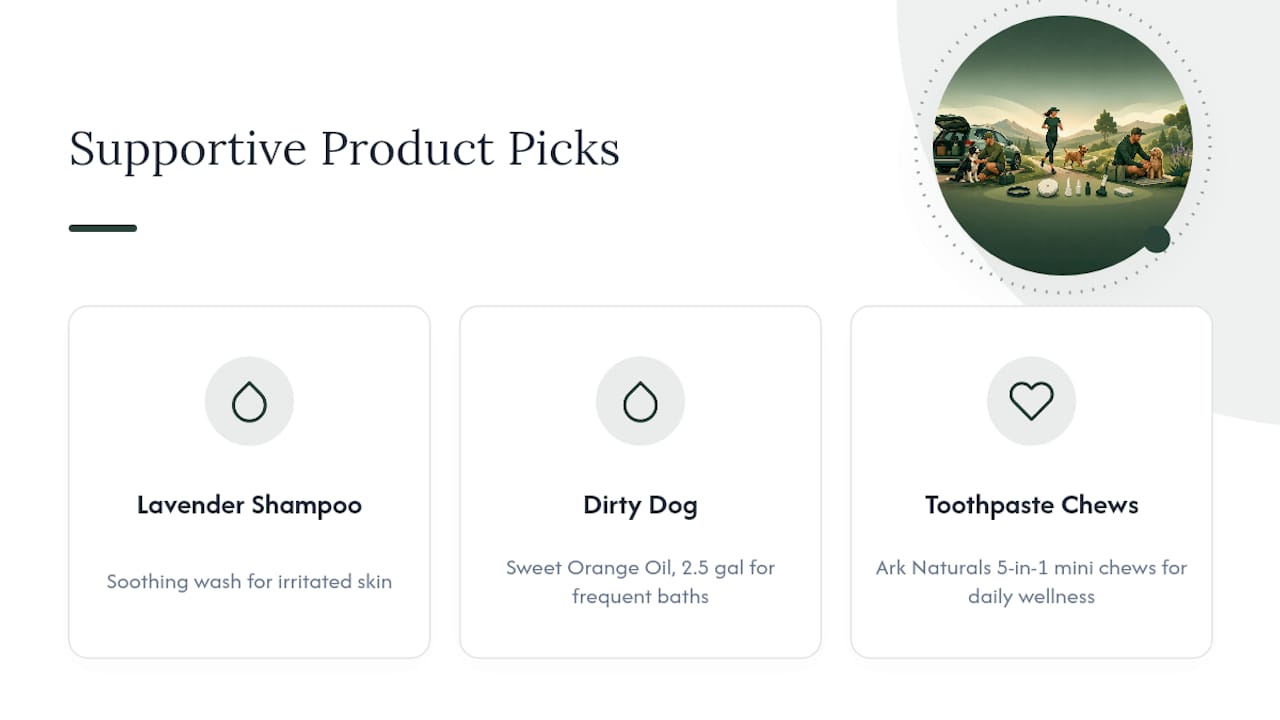
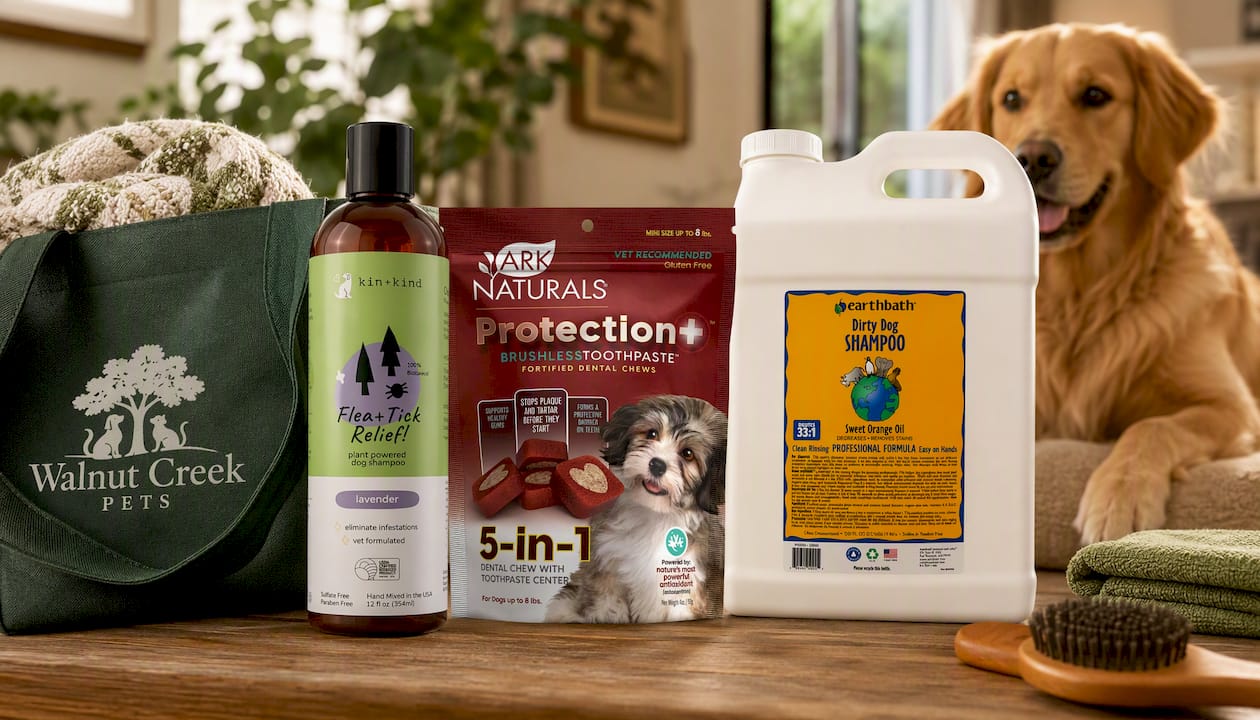
The Kin+Kid Flea/Tick Lavender Shampoo works well as a soothing wash during an active treatment period, especially for dogs with skin that’s already irritated from scratching. Follow your veterinarian’s guidance on bath timing if your dog is also using a topical or collar, since washing too soon after application can reduce effectiveness. For a deeper clean, especially if your dog’s coat is loaded with flea dirt or has been rolling through allergens outdoors, the earthbath Dirty Dog Shampoo in Sweet Orange Oil comes in a 2.5 gallon size built for households that bathe frequently or manage multiple dogs. And while it has nothing to do with fleas or ticks directly, the Ark Naturals Protection+ 5 In1 Toothpaste Mini Chews rounds out a dog’s overall wellness routine, giving owners one more simple habit to fold into daily care alongside prevention.
Browse the full lineup of supportive care products on the Walnutcreeksupply site, and bring any prescription or EPA-registered preventive questions to your veterinarian before your next visit.
Sources
This guide draws on veterinary and regulatory sources, including Cornell University’s College of Veterinary Medicine for year-round prevention guidance and format comparisons, the FDA’s fact sheet on isoxazoline products for neurologic safety signals, the EPA’s collar review materials for labeling and fit guidance, dvm360’s reporting on systemic ectoparasite control for onset-of-action data, and PetMD’s treatment guidance for household infestation steps. The Companion Animal Parasite Council also informed the consistency and compliance recommendations throughout.
- Flea and tick prevention | Cornell University College of Veterinary Medicine
- Systemic ectoparasite control and how it works | dvm360
- Fact sheet: Pet owners and veterinarians about potential adverse events associated with isoxazoline flea products | FDA
- Seresto pet collar review | EPA
- Flea and tick prevention and treatment for dogs | PetMD
FAQ
What is the best preventative flea and tick treatment for dogs?
There’s no single best product. The right choice depends on your dog’s weight, health history, and lifestyle, which is why matching format to habits, rather than chasing a brand, is the approach Cornell’s veterinary team recommends.
What is the most effective tick and flea treatment for dogs?
Oral isoxazoline chewables tend to act fastest, killing fleas within hours of dosing in many reported cases, while topicals with repellent properties and long-duration collars offer different tradeoffs in convenience and tick-attachment prevention.
What is the safest option for flea and tick prevention for dogs?
Safety depends more on matching the product to your dog’s health profile than on any one format being universally safest. Dogs with a seizure history need veterinary guidance around isoxazoline products specifically, per FDA safety communications.
What is the most effective chewable flea and tick prevention for dogs?
Isoxazoline-class chewables are generally the fastest-acting oral option, with some products beginning to kill fleas within about two to four hours of a dose, based on data reported for products like Bravecto and NexGard.
Can natural or non-chemical products replace prescription flea and tick prevention?
Natural options like essential oil sprays haven’t been tested with the same rigor as prescription and EPA-registered products, and some oils can be toxic to dogs if misused, so they work best as a complement, not a replacement, for a proven preventive.


