


Liberate Your Lifestyle!

How Often Should Dogs Get Dental Chews for Healthy Teeth
Wondering how often should dogs get dental chews? Learn serving sizes, daily limits, and safety tips to protect your pup's teeth and gums.

Last Updated: November 22, 2026
Quick Summary
Most dogs do well with one dental chew per day, sized to their weight, which is the frequency many dental chew manufacturers print on their packaging. If daily chews push your dog past their treat calories, drop to three or four times a week. So how often should dogs get dental chews? Start with once a day, then adjust.
- Treats, including dental chews, should make up no more than 10% of your dog's daily calories.
- A puppy under six months should not get hard chews at all.
- Dental chews do not replace brushing because they cannot clean the gumline like a toothbrush.
- A VOHC-approved dental chew has passed independent testing reviewed by the Veterinary Oral Health Council.
- Stop using a chew and contact your veterinarian if your dog swallows large pieces instead of chewing.
Not sure which chew size fits your dog?We stock dental chews sized from extra-small to large, with guidance to match.
Shop Dental Chews
Table of Contents
- The Short Answer on Dental Chew Frequency
- Can I Give My Dog Dental Chews Every Day?
- How Many Dental Chews Can a Dog Have a Day?
- Do Dog Dental Chews Actually Work?
- What Makes a VOHC-Approved Dental Chew Different
- Choosing the Right Chew by Size, Age, and Chewing Style
- Risks, Warning Signs, and Supervised Chewing
- Building a Daily Dental Routine for Your Dog
- Frequently Asked Questions
The Short Answer on Dental Chew Frequency
Most dogs do well with one dental chew per day, sized to their weight. That is the frequency many dental chew manufacturers print on their packaging, and it is the simplest rule to follow. If daily chews push your dog past their treat calories, drop to three or four times a week.
Pet parents often ask this question when choosing dental chews. The honest answer depends on three things: your dog's weight, the chew's calorie load, and how well your dog chews. So how often should dogs get dental chews? Start with once a day, then adjust.
Here is what most guides get wrong. They treat frequency as a single universal number. It is not. A 10-pound dog and a 70-pound dog cannot follow the same chew schedule without one of them overeating or under-chewing.
The conflicting advice you see online usually comes from mixing two different things: what a specific product label tells you to do, and what general veterinary guidance says about treats. A product label is written for that chew's size, texture, and calorie load, so it is the most specific instruction you can follow. General guidance about treats is written for all dogs, so it sets a ceiling rather than a schedule.
A practical way to reconcile them:
- Read the label first. Most dental chews state a daily maximum and a weight range. That number is the manufacturer's tested recommendation for that product.
- Check the calorie math. If one chew fits inside your dog's daily treat budget, daily use is reasonable. If it does not, cut back to three or four times a week.
- Match the schedule to the dog. A healthy adult with no dental issues can chew daily. A senior with worn teeth, a dog with missing teeth, or a dog prone to loose stools may do better on a reduced schedule.
- Ask your veterinarian to confirm. For dogs with existing dental disease, the vet's frequency recommendation should override both the label and general rules.
Matching Frequency to Your Dog's Needs
A healthy adult dog with no dental issues can chew daily. A senior dog with worn teeth may need softer options or fewer chews. A puppy under six months should not get hard chews at all.
Watch how your dog chews before you commit to a schedule:
- Fast gulpers: give chews less often and always supervised
- Slow, steady chewers: daily chews work well
- Dogs with missing teeth: ask your veterinarian first
- Dogs prone to upset stomach: start with one chew, then wait a few days
If you also give long-lasting chews, read our guide on how often dogs can have bully sticks so the two treats do not stack up into too many calories.
Can I Give My Dog Dental Chews Every Day?
Yes, daily dental chews are safe for most healthy adult dogs, as long as the chew fits your dog's size and stays inside the daily treat limit. Product directions on most dental chews say one per day.
The catch is portion control. A daily chew is still a treat, not a meal replacement. Feed it at the same time each day so it becomes part of the routine, not an extra snack you forget you gave.
Watch out: doubling up "because he loves them" is the most common mistake we hear about. Two chews a day quickly eats into your dog's calorie budget and can cause loose stools.
How Many Dental Chews Can a Dog Have a Day?
One dental chew per day is the standard ceiling for most adult dogs. Small dogs may need just one small chew. Large dogs get one large chew, not two medium ones.
The number depends on the chew's size and calorie count, not on your dog's enthusiasm. Check the package for the weight range and follow it.
Calories and the 10% Treat Rule
Treats, including dental chews, should make up no more than 10% of your dog's daily calories. That is the guideline printed on dental chew packaging and echoed by veterinary nutrition guidance.
Here is how it works in practice:
| Dog Size | Daily Calorie Need (approx.) | Treat Budget (10%) | Chew Plan |
|---|---|---|---|
| Small (10 lbs) | 250-300 calories | 25-30 calories | 1 small chew per day |
| Medium (35 lbs) | 600-700 calories | 60-70 calories | 1 medium chew per day |
| Large (60 lbs) | 900-1,100 calories | 90-110 calories | 1 large chew per day |
Daily Calorie Need (approx.)
Small (10 lbs) 250-300 calories
Medium (35 lbs) 600-700 calories
Large (60 lbs) 900-1,100 calories
These are rough starting points. Your veterinarian can give you an exact calorie target for your dog. Then subtract the chew from the treat budget, not the meal.
Do Dog Dental Chews Actually Work?
Dental chews are often marketed to help reduce plaque and tartar, but they do not replace brushing. The chewing action can scrape the tooth surface and stimulate saliva.
What chews cannot do is clean the gumline the way a toothbrush does. Think of chews as maintenance between brushings, not a substitute. Combining daily chewing with regular brushing is a common approach to supporting oral health.
The American Veterinary Medical Association's dental care guidance makes the same point: home dental care works best as a combination of brushing and dental products, checked at regular vet visits.
What Makes a VOHC-Approved Dental Chew Different
A VOHC-approved dental chew has passed independent testing reviewed by the Veterinary Oral Health Council. A VOHC seal indicates the product has been reviewed for plaque or tartar reduction.
This matters because the pet aisle is full of products that claim dental benefits with no proof. The Veterinary Oral Health Council's accepted products list shows which chews carry the seal. Look for it on the package.
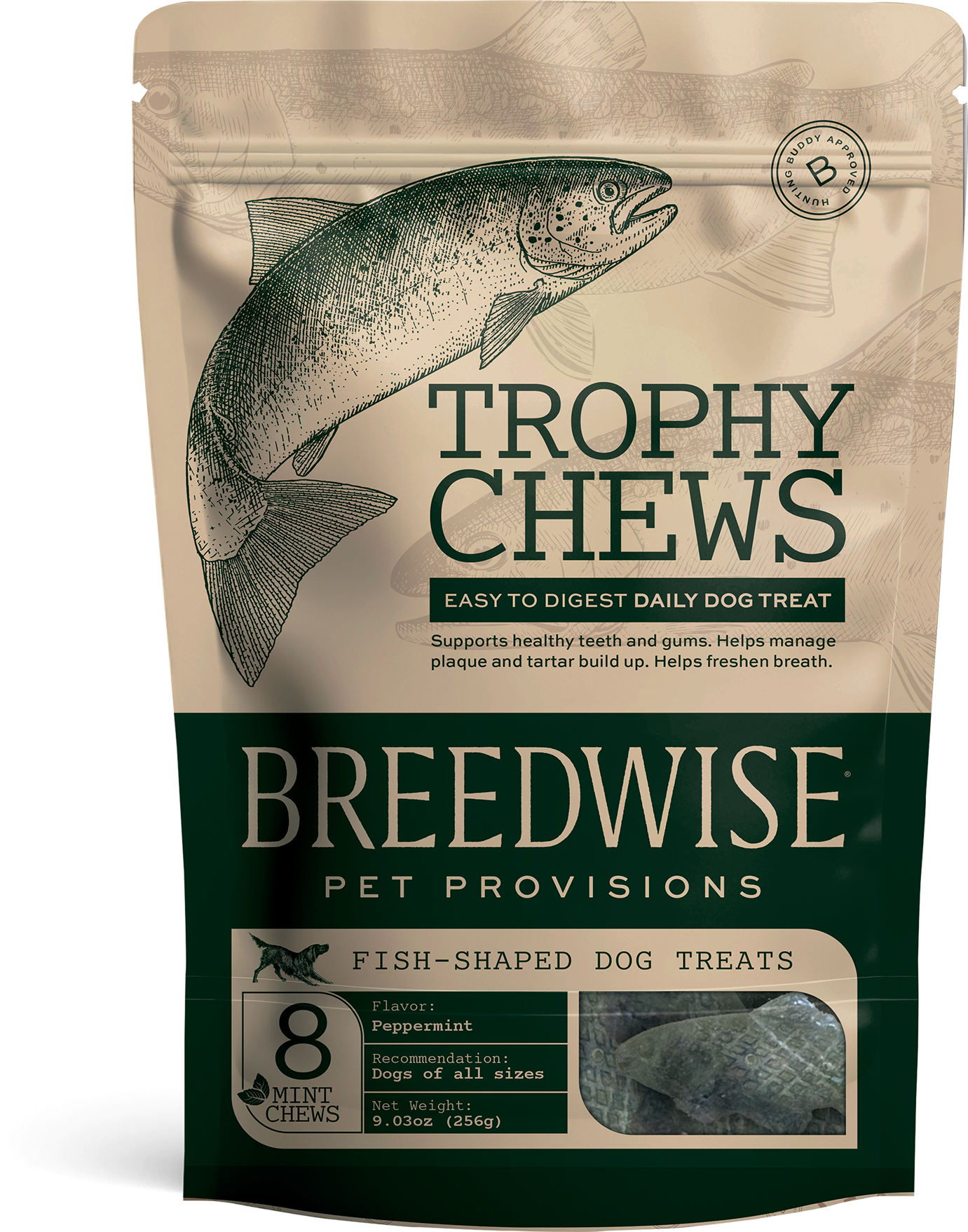
Our Trophy Chews Fish Shaped Dental Treats are the kind of product worth comparing against that list. Check the seal, check the size range, then buy.
Choosing the Right Chew by Size, Age, and Chewing Style
Match the chew to your dog's weight first, then to age and chewing habits. A chew that is too small becomes a choking hazard. One that is too hard can crack a tooth.
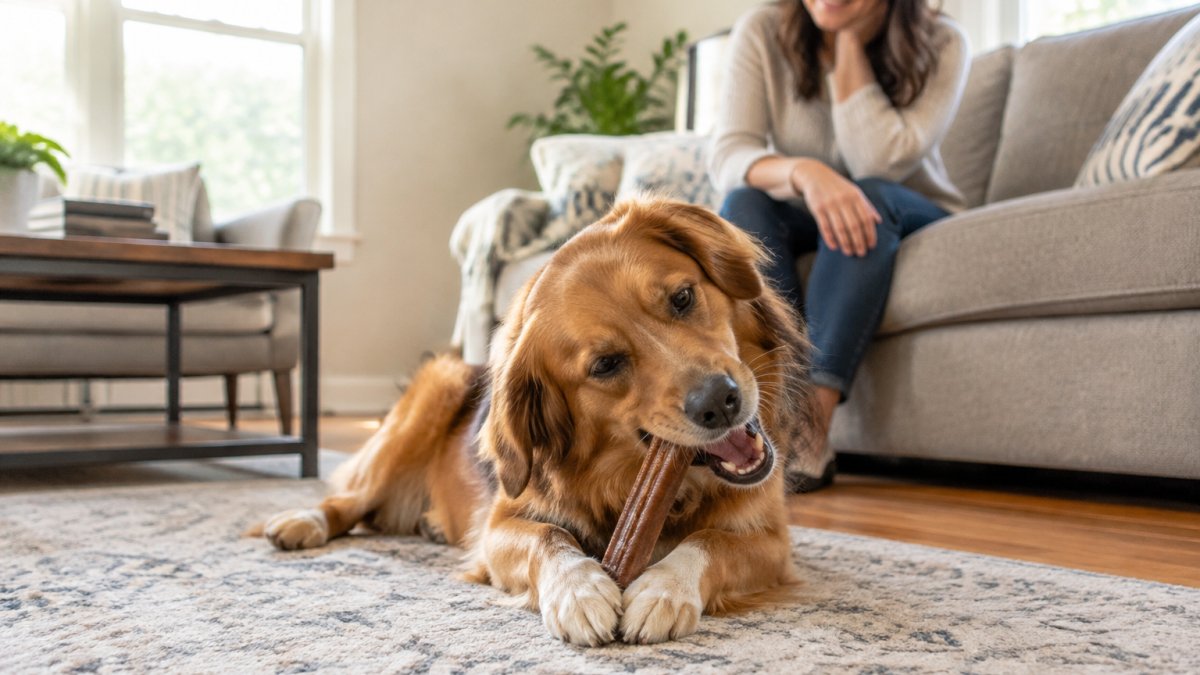
Size is the first filter:
- 5-15 lbs: extra-small chews
- 16-25 lbs: small chews
- 26-50 lbs: medium chews
- 51+ lbs: large chews
Weight alone is not enough. Two dogs of the same weight can chew very differently. A dog that gulps treats needs a larger, firmer chew it cannot swallow whole, while a dog that nibbles slowly can handle a smaller, softer chew.
Age matters too. Puppies under six months should skip hard chews while their adult teeth come in. Senior dogs and dogs with dental disease need softer textures or a vet's sign-off.
A practical decision guide:
- By weight: start with the package's weight range and stay inside it.
- By chewing style: power chewers need softer dental chews to protect teeth; gulpers need a size up so the chew cannot be swallowed in one piece.
- By safety standard: look for the Veterinary Oral Health Council seal, which means the product was tested for plaque or tartar reduction. The Veterinary Oral Health Council's accepted products list shows which chews carry it.
- By ingredient and calorie load: check the calorie count per chew so it fits your dog's treat budget.
Stop using a chew and contact your veterinarian if you see any of these signs:
- Your dog swallows large pieces instead of chewing
- The chew breaks apart within a few minutes
- Your dog's gums bleed after chewing
- Your dog vomits or has loose stools after chew time
- Your dog guards the chew aggressively
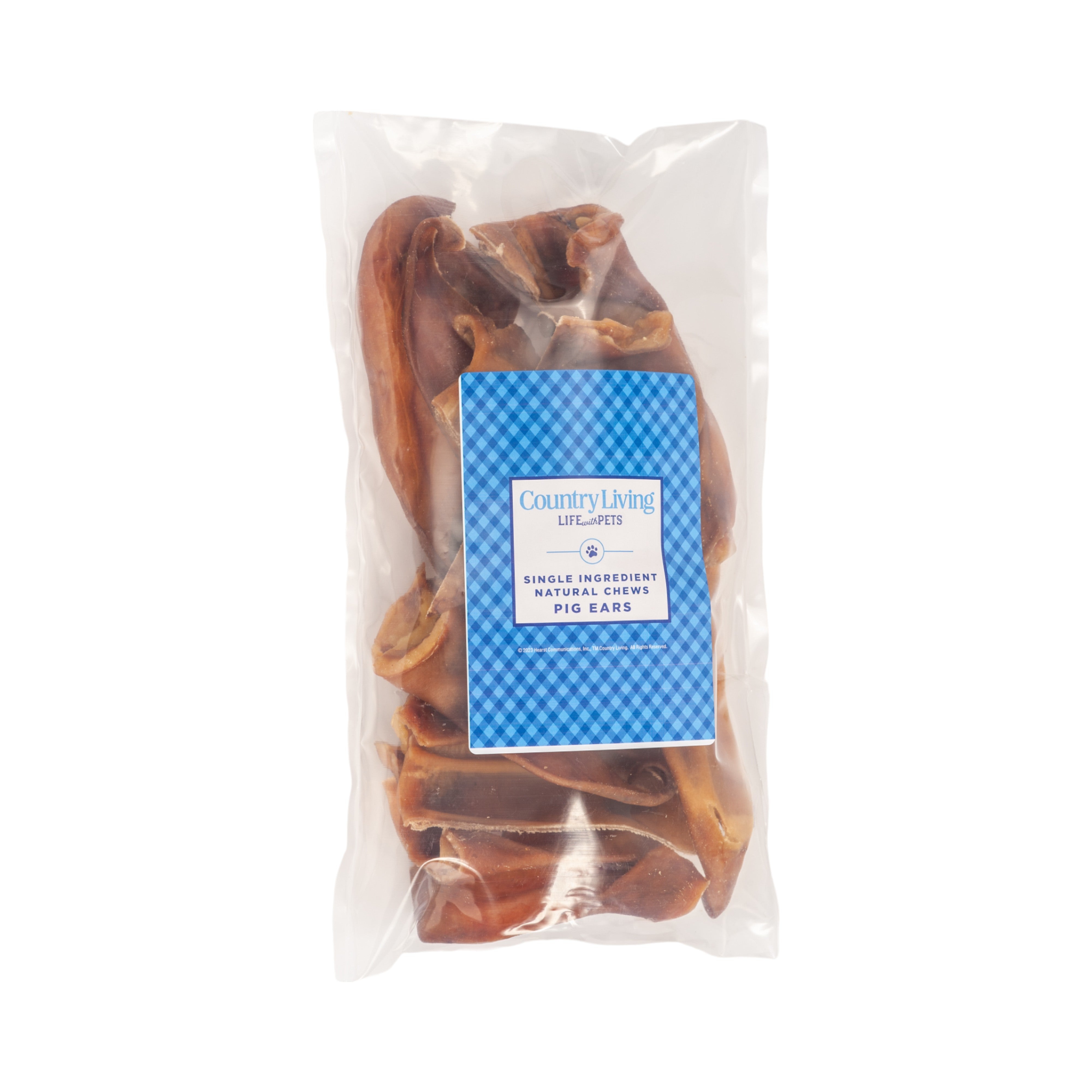
If you want a natural alternative to pressed dental chews, our whole pig ear dog treats are a good comparison point for texture and chew time.
Risks, Warning Signs, and Supervised Chewing
Supervision is not optional. Even the right-sized chew can break into pieces, and swallowing a large chunk is a choking hazard.
Stop and rethink the chew if you see any of these:
- Your dog swallows pieces whole instead of chewing
- The chew breaks apart in under a few minutes
- Your dog's gums bleed after chewing
- Your dog guards the chew aggressively
- You notice vomiting or loose stools after chew time
Watch out: hard chews can cause tooth fractures in dogs that chew with their back molars. If your dog is a power chewer, choose a softer dental chew or ask your vet which texture is safe.
Building a Daily Dental Routine for Your Dog
A daily routine beats occasional effort. Brush a few times a week, give one dental chew on the other days, and book a professional dental cleaning when your vet recommends it. That combination covers the gaps each method leaves.
A simple weekly plan:
- Monday, Wednesday, Friday: brush with dog-safe toothpaste
- Tuesday, Thursday, Saturday: one dental chew
- Sunday: rest day, or a chew if calories allow
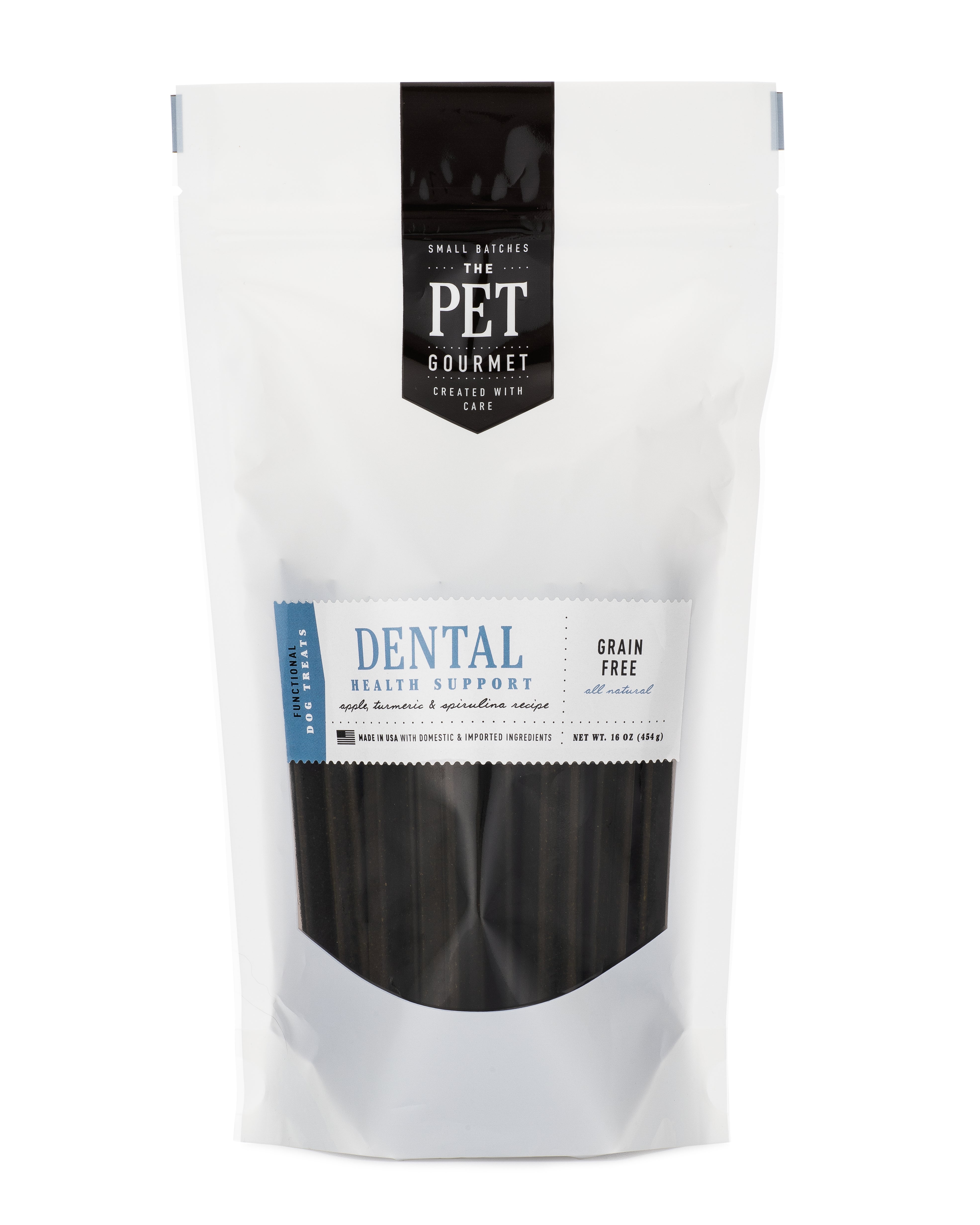
Add a dental support chew to the rotation if you want a softer daily option, and consider a dental care water additive for dogs that resist brushing. Both slot into the routine without adding much effort.
Start small, watch how your dog responds, and adjust the schedule from there.
Most dog owners mean to brush but miss days. A steady chew schedule fills that gap. Walnut Creek Supply stocks dental chews in four size ranges, plus water additives and support chews to round out a home routine. Browse the dental care collection and build a plan your dog will actually stick to.
Frequently Asked Questions
Can I give my dog a dental chew every day?
Yes, for most healthy adult dogs a single dental chew per day is safe and is the frequency many manufacturers recommend for the best dental benefit. Stella & Chewy's Dental Delights, for example, direct owners to feed one treat per day based on the dog's weight. Keep the chew at 10% or less of your dog's daily calories so it does not crowd out balanced meals, and check with your veterinarian first if your dog has dental disease, missing teeth, or a sensitive stomach.
Is two dental chews a day too much for a dog?
Two full-size dental chews in one day is more than most dogs need and can push treat calories past the recommended 10% of daily food intake. It also raises the risk of digestive upset and adds extra chewing wear on the teeth. If you want to split the dose, give one chew in the morning and none later, or use a smaller size rather than doubling up. When in doubt, follow the serving size on the product label for your dog's weight.
Do dog dental chews work as well as brushing?
Dental chews are designed with nubs and ridges that scrape teeth during chewing, and Stella & Chewy's Dental Delights are infused with peppermint and parsley to freshen breath. They are not a replacement for toothbrushing, which remains the most effective home method for controlling buildup. Think of chews as a supplement to regular brushing, professional dental care, and vet visits, not a substitute. A chew a day plus a few brushing sessions a week gives your dog the best chance at clean teeth.
What should I do if my dog eats more dental chews than recommended?
If your dog swipes an extra chew or two, watch for vomiting, diarrhea, bloating, or signs of choking and call your veterinarian if anything seems off. Most healthy dogs handle an occasional extra chew without issue, but sudden overfeeding can cause digestive upset. Going forward, store chews out of reach, give one at a time, and supervise chewing until the treat is finished. Never leave a dog alone with a chew that could break into swallowable pieces.


