


How to Read Dog Food Labels and Know What You're Buying
Reading dog food labels means checking the guaranteed analysis, ingredients and adequacy statement, then converting protein and fat to a dry matter basis.

Last Updated: November 13, 2026
Quick Summary
To read dog food labels, check the product name, guaranteed analysis, ingredient list, and nutritional adequacy statement, then convert protein and fat to a dry matter basis so wet and dry foods compare fairly. The guaranteed analysis lists protein and fat as minimums and fiber and moisture as maximums, all as-fed.
- Ingredients are listed in descending order by weight, with the heaviest ingredient first.
- Subtract moisture from 100, divide the nutrient by dry matter, then multiply by 100.
- A food with 10% moisture and 24% protein is about 27% protein on a dry matter basis.
- The nutritional adequacy statement names the life stage, such as adult maintenance or growth.
- Feeding directions are a starting range based on weight, not a prescription.
Ready to compare dog food labels?Shop premium dry dog food with full guaranteed analysis panels at Walnut Creek Supply.
Shop Dog Food
Table of Contents
- The Required Information on Every Dog Food Label
- How to Read Guaranteed Analysis on Dog Food
- Reading the Dog Food Ingredients List in Order
- Comparing Foods on a Dry Matter Basis
- Your Dog Food Labels Template for a Store Aisle or Cart
- Using a Dog Food Ingredients Checker Without Getting Fooled
- Matching Label Details to Your Individual Dog
- Picking Your Next Bag at Walnut Creek Supply
- Frequently Asked Questions
The Required Information on Every Dog Food Label
Learning how to read dog food labels starts with knowing what the rules actually require. In the United States, a pet food label follows a set format, and every required panel exists for a reason.
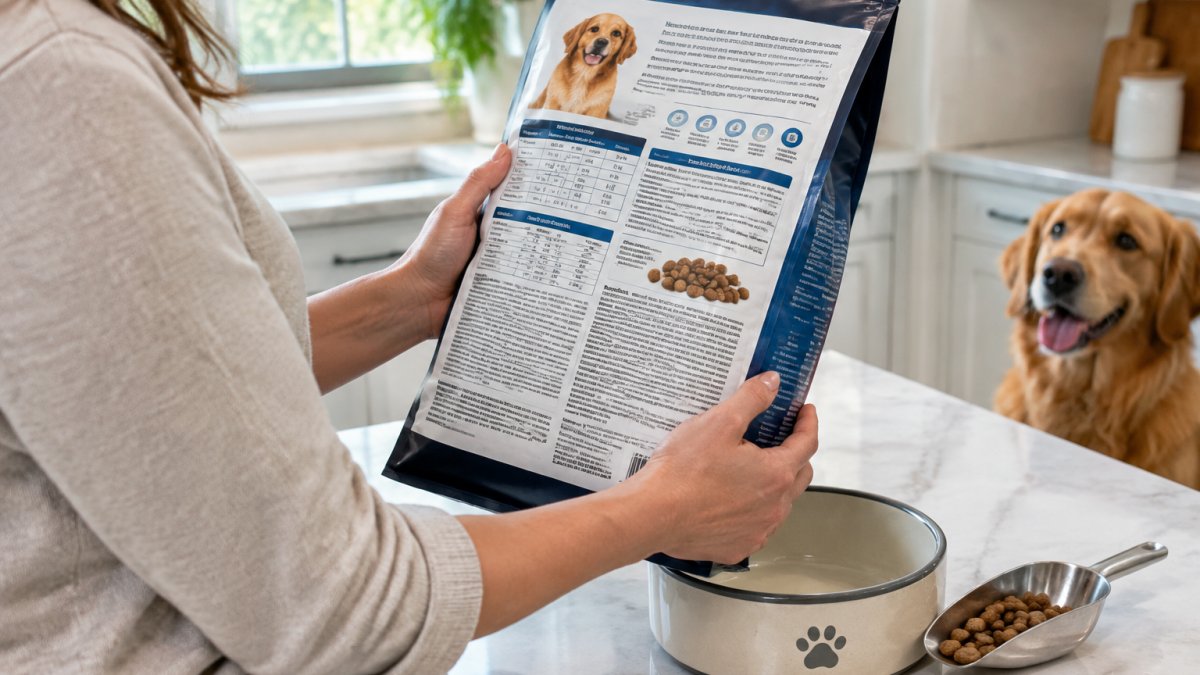
A dog food label is the regulated panel on a package that states the product name, the intended species, the guaranteed analysis, the ingredient list, and a nutritional adequacy statement.
Product Name, Brand, and Intended Species
The product name tells you what the food is. The brand name tells you who makes it. The intended species line confirms the food is for dogs, not cats or another animal.
Watch out: a name like "beef dinner" and a name like "beef recipe" are not the same claim. The wording on the front panel follows specific naming rules, so read it closely.
Net Weight and the Nutritional Adequacy Statement
The net weight or quantity statement shows how much food is in the bag. The nutritional adequacy statement says whether the food is complete and balanced, and for which life stage.
Look for wording like "complete and balanced" paired with a life stage such as adult maintenance, growth, or all life stages. That statement is the label's promise about nutrition, not marketing language.
How to Read Guaranteed Analysis on Dog Food
The guaranteed analysis is a required panel that lists minimum or maximum levels of key nutrients. It is the closest thing a label has to a nutrition facts box, and it is the panel you should compare from bag to bag. The four values you will almost always see are crude protein, crude fat, crude fiber, and moisture.
Crude Protein, Fat, Fiber, and Moisture Explained
Crude protein is a minimum guarantee, not an exact amount. Crude fat is also a minimum. Crude fiber is a maximum, and moisture is a maximum too. The word "crude" is doing real work here: it refers to the laboratory method used to estimate the nutrient, not to a purified or inferior ingredient.
That is why the guaranteed analysis is a starting point, not a verdict. It tells you the floor and ceiling the manufacturer promises to meet, batch after batch, but it does not tell you digestibility, amino acid balance, or ingredient quality.
- Protein and fat: listed as minimums
- Fiber and moisture: listed as maximums
- All values: as-fed, water included
Why As-Fed Numbers Mislead You
Here is the catch most shoppers miss: these numbers are on an as-fed basis, meaning they include the water in the food.
A common pattern is a canned food with 78% moisture and 10% crude protein. Remove the water and the dry matter is 22% of the product, so the protein on a dry matter basis is 10 ÷ 22 × 100, or about 45%.
What the Guaranteed Analysis Cannot Tell You
The panel will not tell you calorie content, digestibility, or whether the food has been tested in feeding trials. Those live elsewhere on the label. It also will not tell you whether the minimums are comfortably exceeded or barely met, a 26% protein guarantee could reflect a formula that tests at 27% or one that tests at 26.1%. For that reason, treat the guaranteed analysis as a comparison tool between products, not as a nutritional scorecard for a single product.
Reading the Dog Food Ingredients List in Order
The ingredient statement lists ingredients in descending order by weight (the FDA). The heaviest ingredient comes first, and the list works down from there.
What the First Five Ingredients Do and Don't Tell You
The first five ingredients give you a rough sense of what dominates the recipe. But weight is measured before cooking, and fresh meat carries a lot of water. A named meat first is a good sign, yet it doesn't guarantee the food is mostly meat.
What most guides miss is that ingredient order can't tell you nutrient levels. For that, you need the guaranteed analysis. If you want to check a short, ordered list against this guidance, our Natural Balance Limited Ingredient Small Breed Lamb Brown Rice Dry Dog Food 4lb shows how a limited-ingredient formula reads on the panel.
Comparing Foods on a Dry Matter Basis
Dry matter basis is a useful way to compare nutrients across wet and dry foods. It removes water from the math so you compare apples to apples.
Here's the formula:
- Find the moisture percentage on the label
- Subtract it from 100 to get dry matter
- Divide the nutrient percentage by dry matter, then multiply by 100
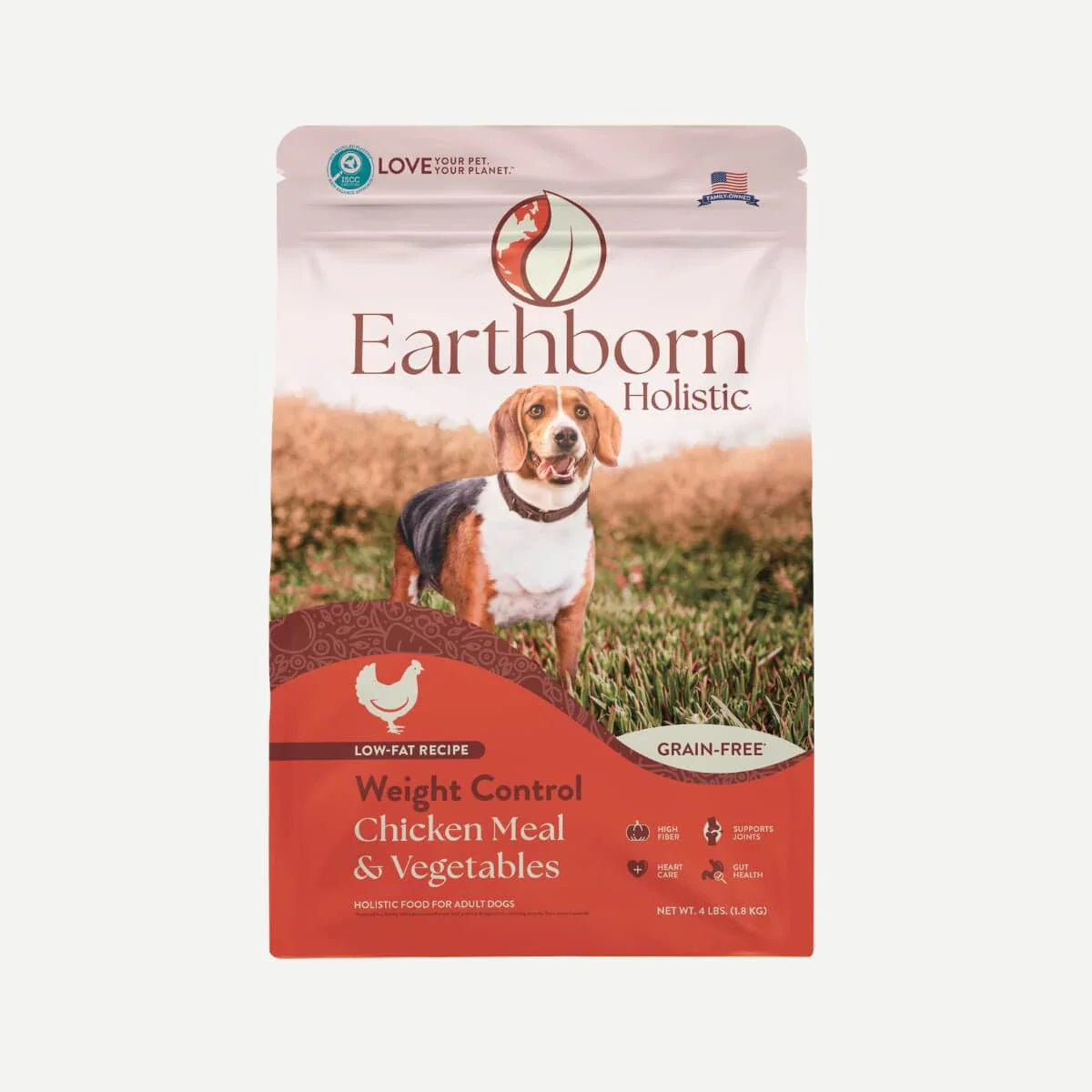
Example: a food with 10% moisture has 90% dry matter. A 24% protein guarantee becomes 24 ÷ 90 × 100, or about 27% protein on a dry matter basis. You can practice this on a real formula with a full guaranteed analysis, like our Earthborn Grain Free Weight Control Dry Dog Food.
| Label Value | As-Fed | Dry Matter Basis |
|---|---|---|
| Moisture | 10% | removed |
| Crude protein | 24% | about 27% |
| Crude fat | 12% | about 13% |
As-Fed
Moisture 10%
Crude protein 24%
Crude fat 12%
Your Dog Food Labels Template for a Store Aisle or Cart
Bring this checklist and you can compare any two bags in a couple of minutes. Work top to bottom, and don't skip a line.
- Confirm intended species and life stage
- Check the nutritional adequacy statement
- Note crude protein, fat, fiber, and moisture
- Convert protein and fat to dry matter basis
- Scan the first five ingredients for a named meat
- Check calories per cup for portion size
- Read feeding directions for your dog's weight
This dog food labels template turns a confusing panel into a repeatable routine.
Using a Dog Food Ingredients Checker Without Getting Fooled
Online ingredient checkers can help, but they only know what you type in. They can't judge your dog.
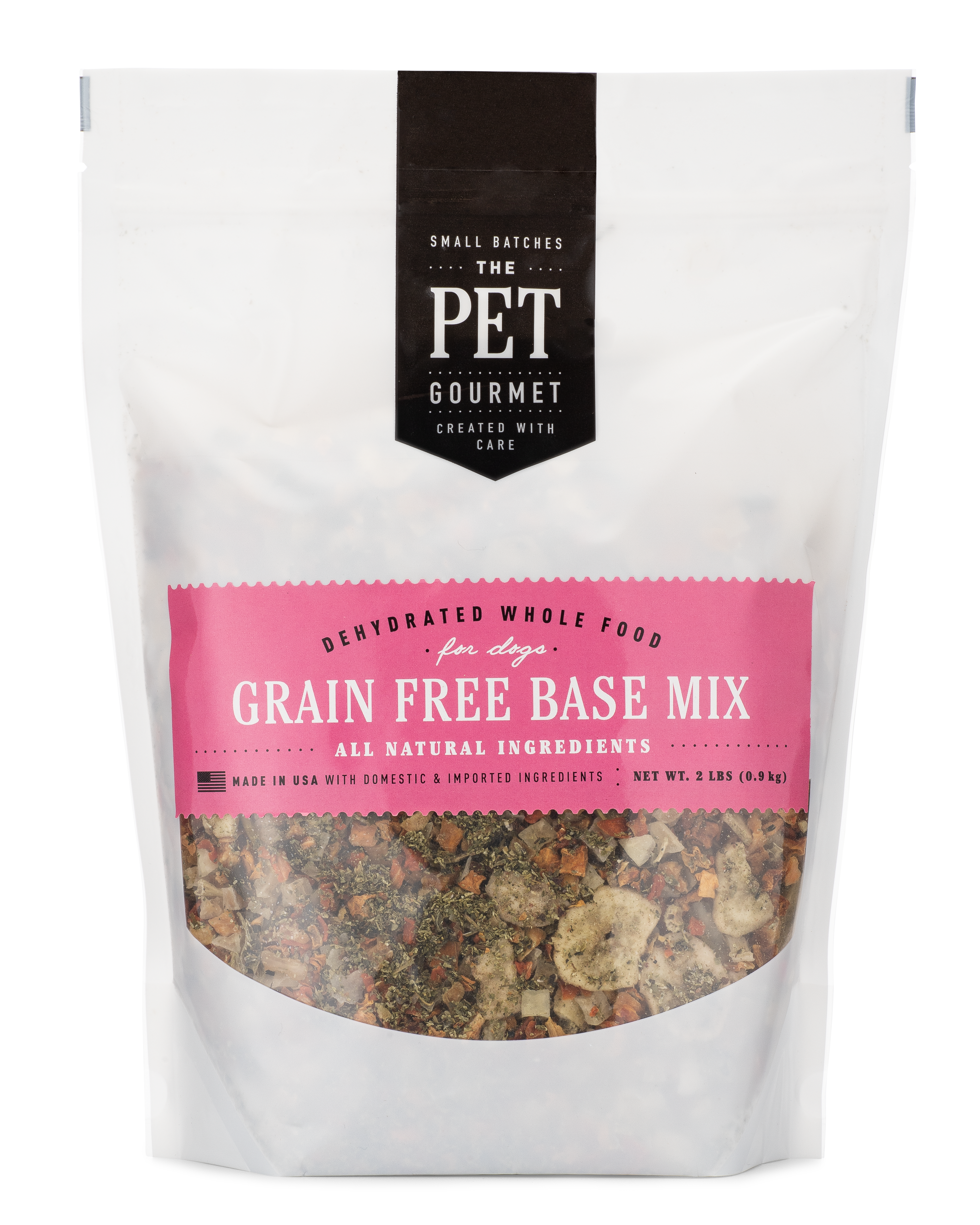
Use a checker to look up a term you don't recognize, then confirm it against the label itself. If you want to verify or build a recipe, our Grain Free Dog Food Premix shows what a premix supplies for the nutrients labels must guarantee.
Matching Label Details to Your Individual Dog
The label tells you what is in the food. Your dog tells you what works. Matching the two is the step most shoppers skip, and it is the one that turns label reading into a decision. The label gives you four levers to pull: life stage, calorie content, nutrient profile, and feeding directions. Your dog gives you age, activity, body condition, and health needs. Line them up before you commit to a bag.
Start With Life Stage, Then Read the Fine Print
The nutritional adequacy statement on the label will say something like "complete and balanced for adult maintenance," "for growth," or "for all life stages." Those phrases are not interchangeable.
A common pattern is a label that says "all life stages", that is a legitimate claim, but it means the food meets the higher growth standard, so it may be richer than an adult dog needs. If your dog is a healthy adult, an adult maintenance statement is usually the better fit.
Use Body Condition, Not Just the Scale
Calorie content on the label is listed as metabolizable energy, usually in kilocalories per kilogram and per cup or can. That number is the bridge between the bag and your dog's waistline. Two foods with the same protein percentage can differ by 100 or more kilocalories per cup, which means the same scoop delivers very different energy.
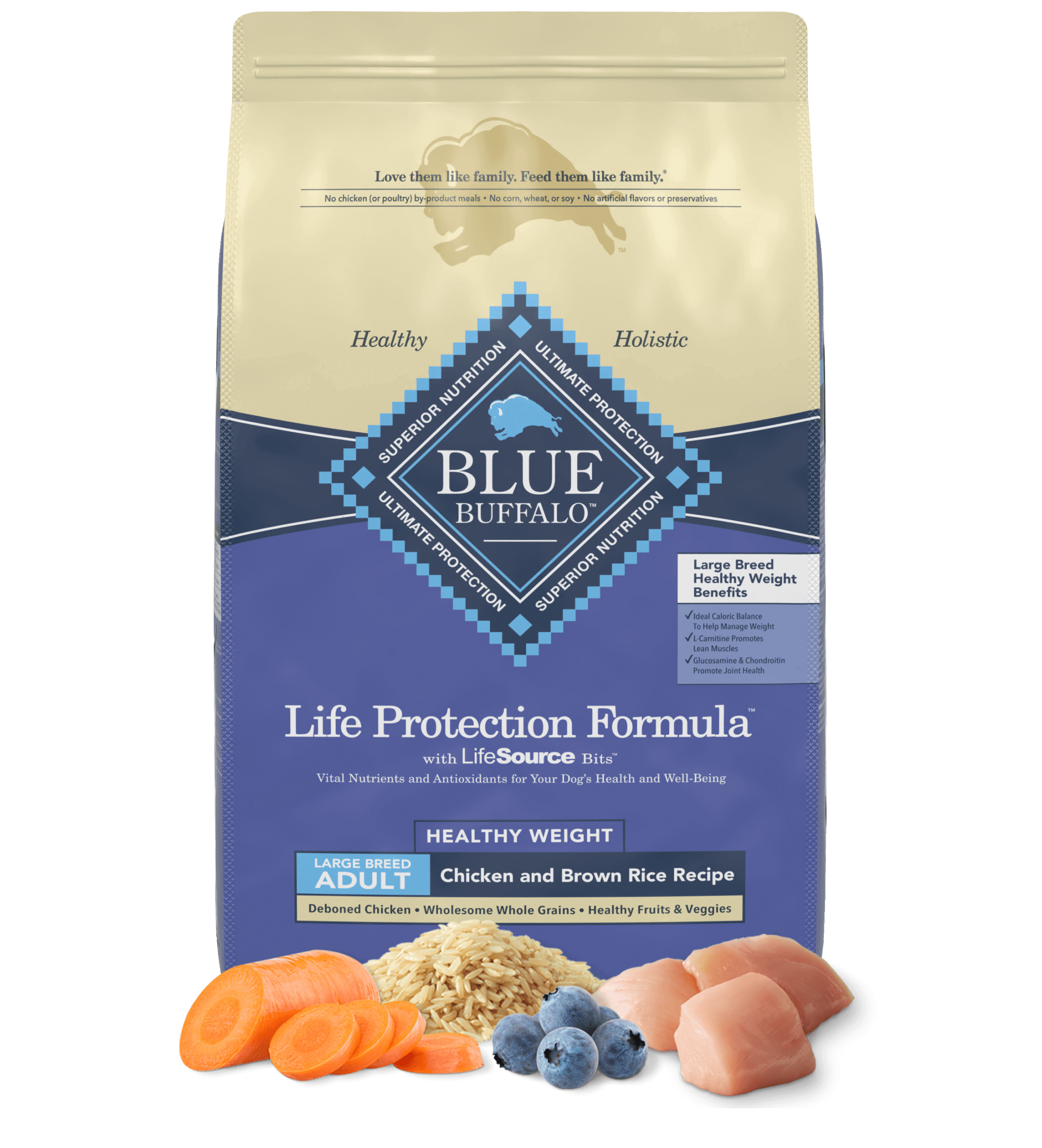
Body condition is the better gauge than the scale alone. Our Blue Buffalo Adult Large Breed Healthy Weight Chicken Brown Rice Dry Dog Food 30lb shows how label details map to a healthy-weight formula, including the calorie content you would use to set portions.
Factor In Activity and Health Needs
A working dog, a dog in agility training, and a couch companion of the same breed can have very different calorie needs. The feeding directions on the bag are a starting point based on weight, not a prescription. Most manufacturers publish a range, and the range exists because activity varies.
Health needs add another layer. If your dog has a diagnosed condition, kidney disease, diabetes, food allergies, pancreatitis, the right food may be a therapeutic diet that requires veterinary guidance. Those diets are formulated to manage a specific condition, and the label language around them is different from a maintenance food.
A Repeatable Match Routine
Work through this sequence for any dog in front of you:
- Confirm the life stage on the adequacy statement matches your dog's age and reproductive status
- Note the calorie content per cup or can and compare it to your dog's estimated daily need
- Check the guaranteed analysis for protein, fat, and fiber against your dog's needs, not against a marketing claim
- Read the feeding directions as a range, then adjust to body condition
- Flag any health condition and route therapeutic decisions to your veterinarian
That routine is what separates a label reader from a label shopper. The bag is a set of promises; your dog is the test.
Picking Your Next Bag at Walnut Creek Supply
Reading labels gets easier with practice, and the right bag is the one that fits your dog, not the flashiest front panel. If you want the broader case for premium options before you commit, read why premium pet food matters.
At Walnut Creek Supply, we're family-owned and USA-based, and we curate high-quality products with guidance to match. Our Merrick Kitchen Comforts recipes lead with real deboned beef, chicken, or salmon and include glucosamine and chondroitin for hip and joint support.
The challenge is simple: most shoppers never look past the front of the bag. Take the checklist above into your next order and compare two formulas side by side.
Frequently Asked Questions
What does the guaranteed analysis on dog food actually mean?
The guaranteed analysis lists minimum percentages for crude protein and crude fat and maximums for crude fiber and moisture. These are guaranteed minimums and maximums, not exact measurements, so two foods with identical numbers can still differ in quality. It also does not include carbohydrate content, which you estimate by subtracting protein, fat, fiber, moisture, and ash from 100. Always compare numbers on a dry matter basis when one food is canned and another is kibble.
How can I tell if a dog food is nutritionally complete?
Look for a nutritional adequacy statement on the label, usually worded as complete and balanced for a specific life stage such as adult maintenance, growth, or all life stages. That statement should reference either formulation to meet a nutrient profile or successful feeding trials. A food without that statement is likely intended for intermittent or supplemental feeding only, not as a sole diet.
What should I look for in the first ingredients of dog food?
Ingredients are listed in descending order by weight before cooking, so a named protein such as beef, chicken, or salmon at the top is a useful signal. But weight includes water, and fresh meat is heavy with moisture, so a food can list meat first and still contain less protein by weight than a food listing a meal second. Read the whole dog food ingredients list, not just the first line, and check the guaranteed analysis to confirm protein levels.
How do I compare two dog foods with different moisture levels?
Convert both to a dry matter basis. Subtract the moisture percentage from 100 to get dry matter, then divide each nutrient percentage by the dry matter and multiply by 100. A canned food at 78% moisture and 10% protein works out to roughly 45% protein on a dry matter basis, while a kibble at 10% moisture and 24% protein is about 27%. This is the only fair way to compare wet and dry foods side by side.


