


Liberate Your Lifestyle!

Is Freeze-Dried Dog Food Worth It for Your Dog
Is freeze-dried dog food worth it? Compare costs per serving, nutrition, and safety against kibble and raw, then decide what fits your dog and budget.

Last Updated: November 27, 2026
Quick Summary
Freeze-dried dog food is worth it for most dog owners when convenience, nutrient retention, and a raw-style diet matter more than cost. It is not worth it if you need a budget-friendly daily kibble replacement or have a dog with specific medical dietary needs.
- Freeze-drying removes moisture but does not reliably kill pathogens, so it is a preservation step, not a kill step.
- Rehydrating takes about five minutes: add warm water, stir, and let it absorb before serving.
- A 90-pound dog on the priciest patty runs over $60 a day, roughly $1,800 a month.
- Using freeze-dried as a topper for a 50-pound dog costs roughly $7 to $9 a day on top of kibble.
- Start with a smaller bag, transition slowly over a week, and watch your dog's stool and energy.
Ready to try freeze-dried food?Complete and balanced freeze-dried raw dog food, curated for your dog's size and taste.
Shop Freeze-Dried Dog Food
Table of Contents
- Is freeze-dried dog food worth it?
- Freeze-dried dog food pros and cons
- Freeze-dried dog food vs kibble
- Is freeze-dried raw dog food safe?
- How to rehydrate freeze-dried dog food
- What freeze-dried food actually costs per day
- Choosing the right freeze-dried food at Walnut Creek Supply
- Frequently Asked Questions
Is freeze-dried dog food worth it?
For most dog owners, freeze-dried dog food is worth it when convenience, nutrient retention, and a raw-style diet matter more than cost. It is not worth it if you need a budget-friendly daily kibble replacement or have a dog with specific medical dietary needs.
Freeze-dried dog food is raw or lightly cooked food that has been frozen and then dehydrated under low pressure, removing moisture while keeping most nutrients and flavor intact. That process is what separates it from standard kibble.
Below, we break down the real trade-offs, from cost per day to safety, so you can decide for your own dog rather than guess.
Freeze-dried dog food pros and cons
The biggest advantage is nutrient density. Because water is removed rather than cooked off at high heat, protein, fat, and many vitamins survive the process largely intact. Dogs also tend to find the aroma and texture highly palatable, which helps with picky eaters.
The drawbacks are real, though. Freeze-dried food costs more per serving than kibble, and some dogs need a slow transition to avoid loose stools. Portion control also matters more, since the food is calorie-dense and easy to over-scoop.
- Pros: high nutrient retention, strong palatability, lightweight and shelf-stable, no refrigeration until rehydrated
- Cons: higher price per serving, smaller bags go fast, requires careful portioning
If digestion and gut health are your main concern, a freeze-dried mixer like Instinct Raw Boost Freeze Dried Gut Health Dog Mixers is worth a look as a topper alongside your dog's current food.
Freeze-dried dog food vs kibble
Freeze-dried food and kibble differ most in processing. Kibble is cooked at high temperatures and extruded into shapes, which makes it shelf-stable and affordable but reduces some heat-sensitive nutrients. Freeze-dried food skips that high-heat step, which is why it is often described as retaining more of its original character.
| Feature | Freeze-Dried | Kibble | Raw |
|---|---|---|---|
| Processing | Low-heat freeze-dry | High-heat extrusion | None |
| Nutrient retention | High | Moderate | High |
| Cost per serving | Higher | Lowest | Highest |
| Shelf life | Long, no fridge | Long | Short, frozen |
| Prep time | Add water or serve dry | None | Thaw and portion |
Kibble wins on price and simplicity. Freeze-dried is often chosen for convenience compared with true raw. For many households it sits in a practical middle ground.
Is freeze-dried raw dog food safe?
The honest answer is that freeze-dried raw food is safe for most healthy dogs when handled like the raw product it is, but the popular assumption that freeze-drying sterilizes the food is wrong, and that misunderstanding is where most safety problems start.
Freeze-drying removes moisture by sublimation under low pressure. Removing water stops bacteria from multiplying, but it does not reliably kill the pathogens that may have been present in the raw ingredients. Salmonella, Listeria, and E. coli have all been documented in raw and freeze-dried pet foods, and the FDA has issued consumer advisories and product recalls for freeze-dried raw pet food tied to Salmonella contamination. In other words, freeze-drying is a preservation step, not a kill step. Cooking is a kill step; freeze-drying is not.
That distinction matters most for three groups: dogs who are immunocompromised, very young, or very old; households with young children who crawl on floors where food may drop; and households with immunocompromised people. For those households, the risk calculus is different, and a conversation with a veterinarian before switching is the right move.
For everyone else, the practical controls are straightforward and worth doing consistently:
- Wash hands with soap and water after handling the food, the bowl, and any utensils, every time, not just when the food feels wet.
- Use stainless steel or ceramic bowls rather than porous plastic, and run them through the dishwasher or wash with hot soapy water after each meal.
- Clean and sanitize countertops, scoops, and the sink area the food touched. Do not use the same scoop for freeze-dried raw and for your own food.
- Keep the food sealed and stored away from human food, and refrigerate or discard leftovers promptly once rehydrated.
- Do not let dogs lick the scoop, the counter, or the bowl before you have cleaned up.
The FDA guidance on safe handling of pet food covers these practices in more detail and is worth reading before your first bag.
Watch out: rehydrated freeze-dried food is a moist, protein-rich environment, and once water is added the clock starts. Serve it promptly, refrigerate what isn't eaten within about an hour, and discard refrigerated leftovers after a day rather than stretching them.
A common pattern among owners who feed freeze-dried raw long-term is to treat the kitchen routine as the safety system: dedicated bowls, a dedicated scoop, a wipe-down after every meal, and a consistent hand-washing habit. That same attention to clean handling can help keep treats in perspective, and The Pet Gourmet® connects the question of food safety with the choices owners make between meals.
How to rehydrate freeze-dried dog food
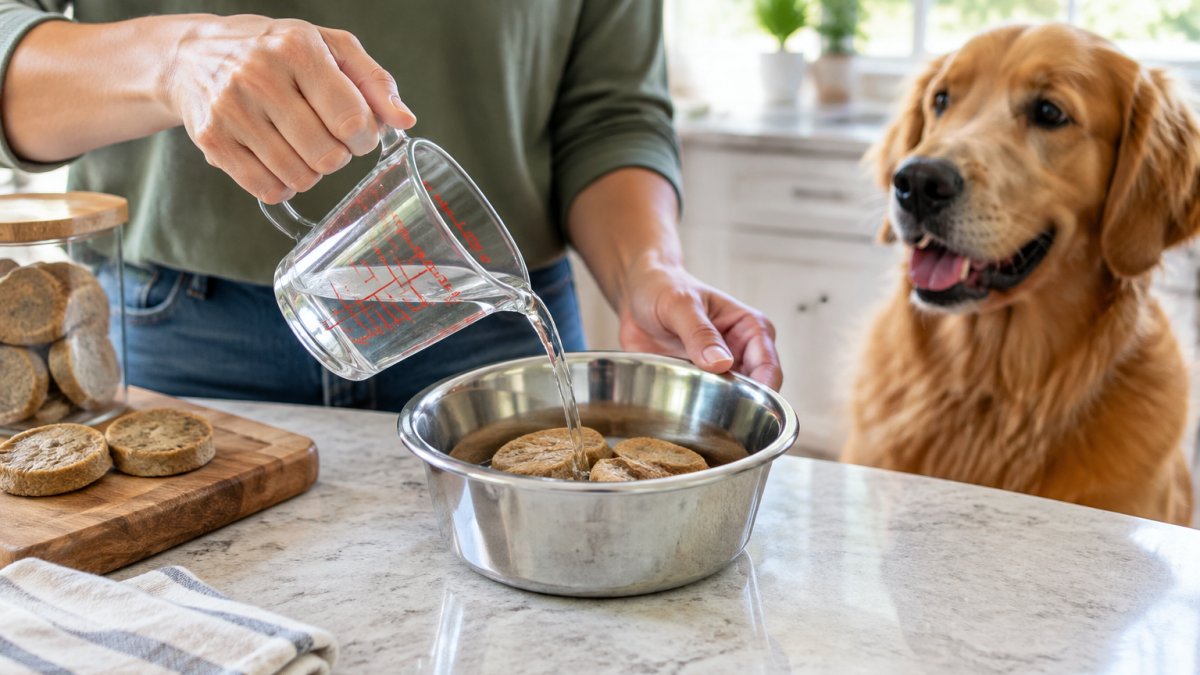
Rehydrating freeze-dried dog food takes about five minutes: add warm water to the food, stir, and let it absorb before serving. The exact ratio depends on the brand, so always check the package, but a common starting point is roughly one part water to one part food by volume.
Here is the process we recommend:
- Scoop the correct portion into a stainless steel or glass bowl
- Add warm, not boiling, water
- Stir and let it sit for a few minutes until softened
- Mash any firm patties and check the texture
- Serve immediately and refrigerate leftovers
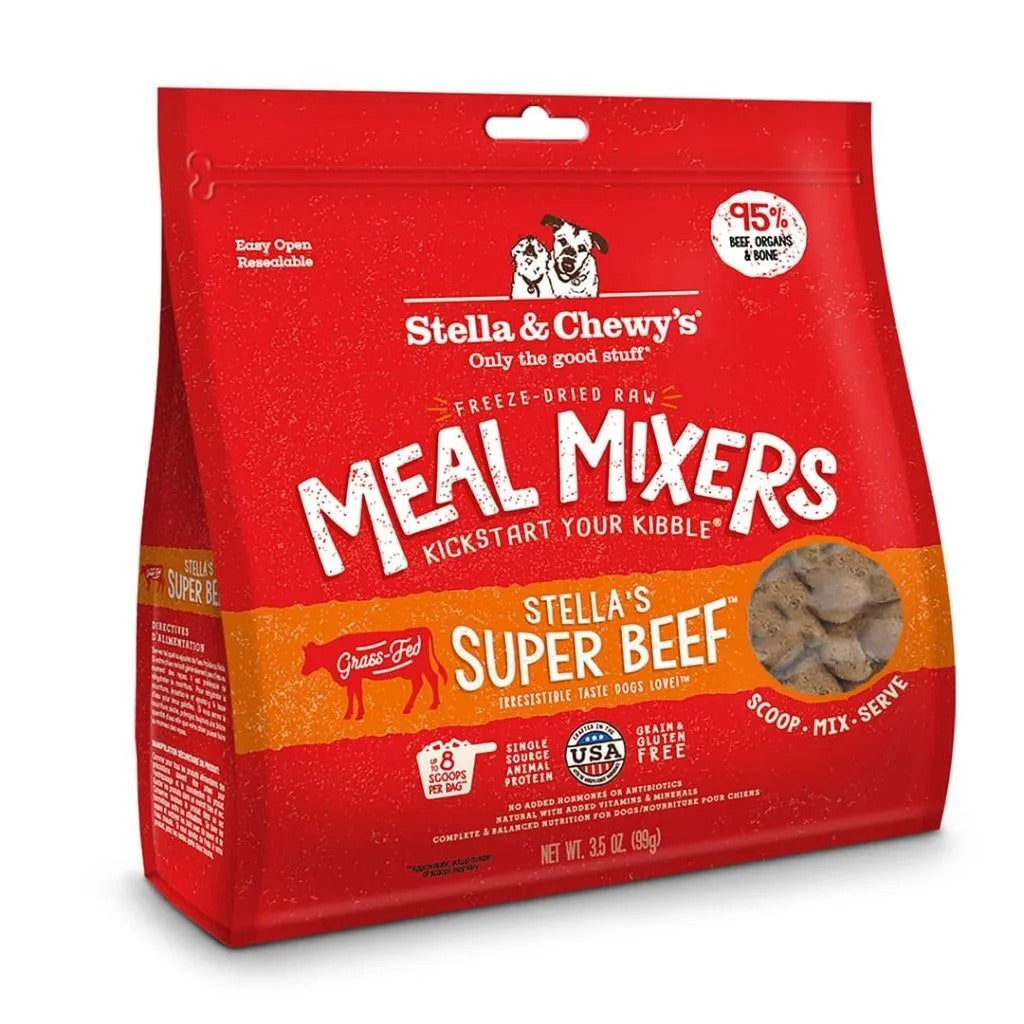
Many owners rehydrate as a topper rather than a full meal. A freeze-dried meal mixer like Stella & Chewy's Freeze Dried Meal Mixers Beef is built for exactly that, sprinkling over kibble to boost flavor and nutrition.
Watch out: adding too much water can turn patties into soup and dilute calorie density, so measure rather than eyeball it.
What freeze-dried food actually costs per day
Bag price tells you almost nothing about whether freeze-dried food fits your budget. The number that matters is cost per day at your dog's calorie needs, and that number swings widely by dog size, whether you feed freeze-dried as a complete diet or a topper, and whether you rehydrate (which adds no cost but does change how far a bag stretches by volume).
Here is the math most product pages skip. A dog's daily calorie need is roughly 30 calories per pound of body weight for a typical inactive-to-moderately-active adult, adjusted up or down for age, neuter status, and activity. A 10-pound dog needs about 300 calories a day; a 50-pound dog needs about 1,500; a 90-pound dog needs about 2,700.
| Product | Size | Price | Approx. calories per bag | Cost per 1,000 calories | 10-lb dog (300 cal/day) | 50-lb dog (1,500 cal/day) | 90-lb dog (2,700 cal/day) |
|---|---|---|---|---|---|---|---|
| Acana Freeze-Dried Patties Beef | 14 oz | $34.99 | ~1,900 | ~$18.40 | ~$5.50/day | ~$27.60/day | ~$49.70/day |
| Primal Freeze-Dried Duck | 14 oz | $43.99 | ~1,900 | ~$23.20 | ~$7.00/day | ~$34.80/day | ~$62.60/day |
| Instinct FreshDried Chicken Harvest | 23 oz | $68.99 | ~3,100 | ~$22.30 | ~$6.70/day | ~$33.40/day | ~$60.10/day |
| Primal Kibble in the Raw Beef | 9 lb | $168.99 | ~19,400 | ~$8.70 | ~$2.60/day | ~$13.10/day | ~$23.50/day |
| K9 Natural Lamb & Salmon | 8 lb | $309.99 | ~17,300 | ~$17.90 | ~$5.40/day | ~$26.90/day | ~$48.30/day |
Approx. calories per bag
Acana Freeze-Dried Patties Beef ~1,900
Primal Freeze-Dried Duck ~1,900
Instinct FreshDried Chicken Harvest ~3,100
Primal Kibble in the Raw Beef ~19,400
K9 Natural Lamb & Salmon ~17,300
Two things jump out. First, the per-calorie spread between the cheapest and priciest option here is more than 2.5x, so "freeze-dried is expensive" is too blunt. Second, the large-dog column is where freeze-dried as a complete diet usually breaks a household budget: a 90-pound dog on the priciest patty here runs over $60 a day, or roughly $1,800 a month.
That is why many owners use freeze-dried as a topper rather than a full diet.
Watch out: calorie density varies by formula and by whether the food is a complete diet or a mixer, and mixers are not formulated to be fed as a sole diet.
One more cost most comparisons miss: rehydration. Adding water doesn't change the price per calorie, but it changes how much volume you scoop, so owners who rehydrate often go through a bag faster than they expect if they portion by eye.
Choosing the right freeze-dried food at Walnut Creek Supply
The right freeze-dried food comes down to your dog's size, protein preference, and whether you want a complete meal or a topper. As a family-owned shop, we stock options across that range so you can match the food to the dog, not the other way around.
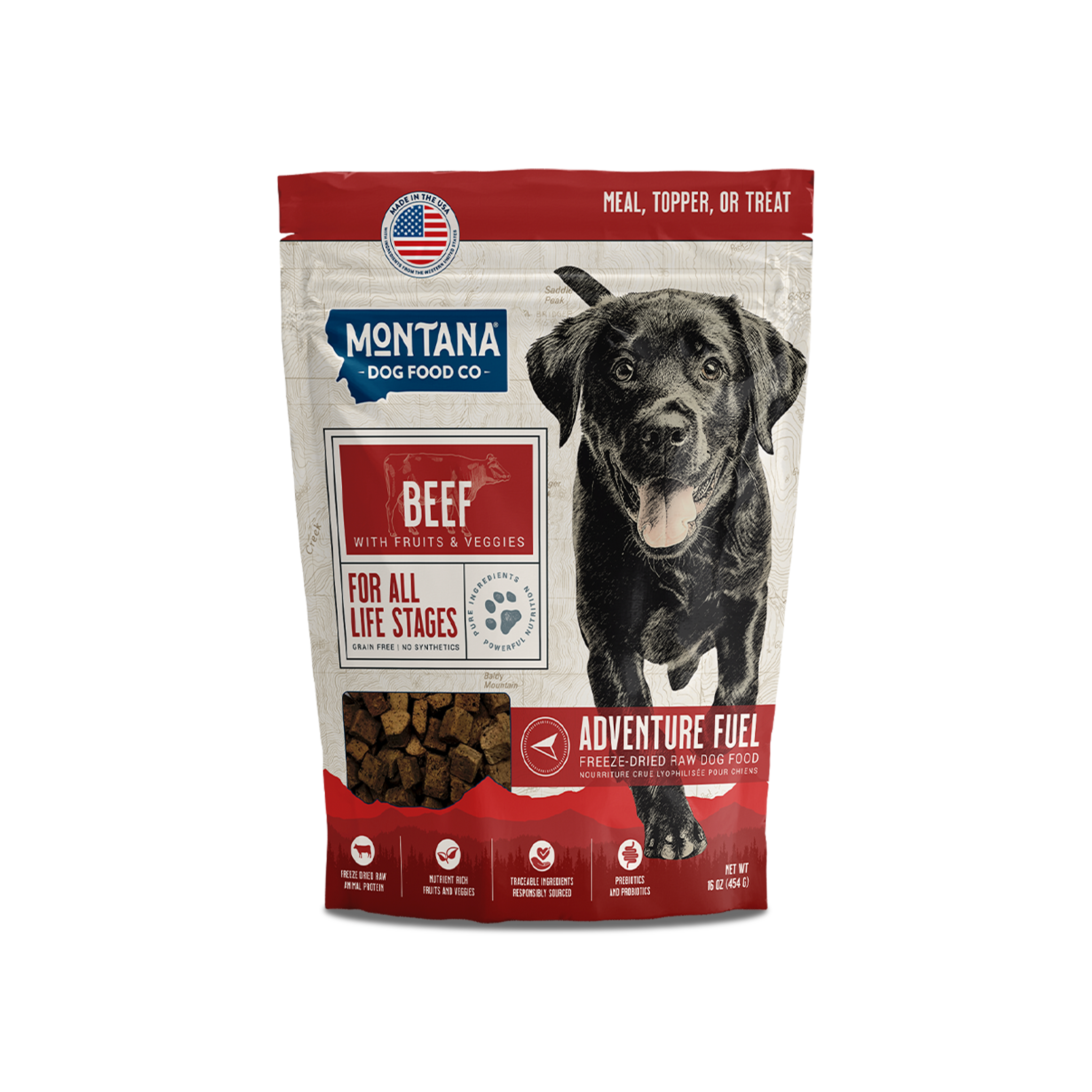
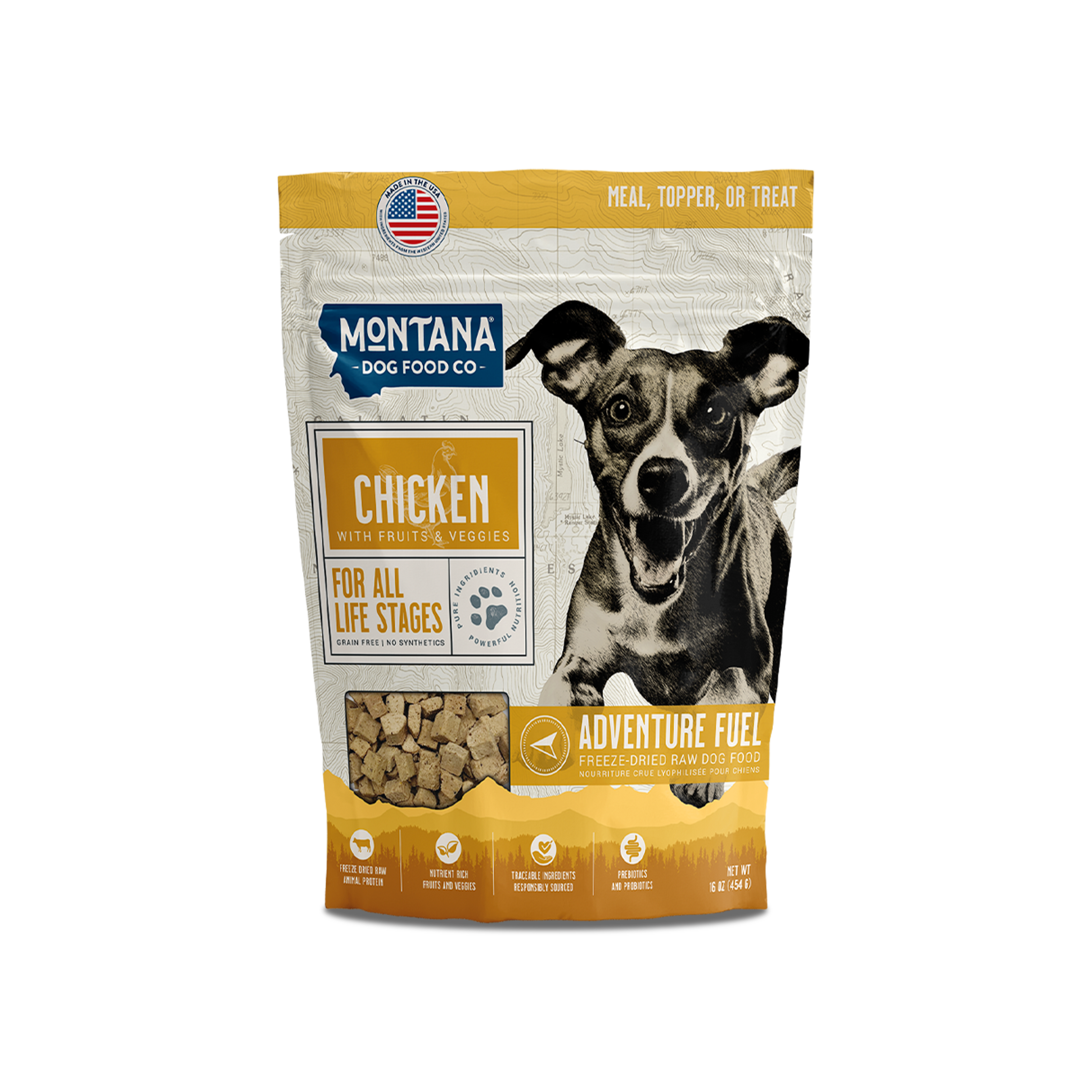
For a complete beef-based raw diet, the Grain Free Beef Freeze Dried Raw Adventure Fuel works as a full meal. Prefer poultry? The Grain Free Chicken Freeze Dried Raw Adventure Fuel covers the same ground with chicken. If you want a complete dinner patty in a novel protein, the Stella & Chewy's Freeze Dried Dinner Patties Rabbit is a solid pick for sensitive dogs.
Our advice: start with a smaller bag, transition slowly over a week, and watch your dog's stool and energy before committing to a bulk size. That trial period tells you more than any label.
Deciding whether freeze-dried food fits your dog is easier when you can compare real options side by side. At Walnut Creek Supply, we curate complete and balanced freeze-dried foods, offer guidance on portioning and transitioning, and stock both meal-size bags and toppers so you can start small. Browse our freeze-dried selection and find the right fit for your dog's size and taste.
Frequently Asked Questions
Is freeze-dried dog food worth the extra cost?
It depends on what you are paying for. Freeze-dried dog food costs more per serving than kibble because the process removes water rather than adding cheap filler, so you are buying concentrated meat and organs. If your dog has a sensitive stomach, you want a lightweight food for travel, or you are using it as a topper, the convenience and palatability can justify the price. If budget is tight, feeding it as a partial topper stretches a bag considerably.
Is freeze-dried dog food as nutritious as raw food?
Freeze-drying removes moisture at low temperatures, which preserves much of the nutritional value of the raw ingredients. Most freeze-dried dog food is rehydrated before serving, which restores the moisture content. The key difference is that freeze-dried food is shelf-stable and does not need refrigeration, while frozen raw food does. Check the guaranteed analysis and the complete and balanced statement on the bag to confirm nutritional adequacy for your dog's life stage.
Do you have to rehydrate freeze-dried dog food?
You do not have to, but rehydrating is recommended for most dogs. Adding water restores moisture, makes the food easier to eat, and supports hydration. Some dogs eat it dry as a treat or topper. If you rehydrate, use warm (not boiling) water, stir, and let it sit for a few minutes. Feed it within a short window and refrigerate any leftovers. Always provide fresh drinking water alongside the meal.
Can freeze-dried dog food be fed as a complete meal?
Yes, if the bag states it is complete and balanced for your dog's life stage. Check each product's packaging to confirm its intended use, and use the ACANA Freeze-Dried Patties as a meal or topper according to its feeding guidelines. Read the feeding guidelines on the packaging and adjust portion size based on your dog's weight, age, and activity level.
Is freeze-dried dog food better than kibble?
Better is the wrong question; different is more accurate. Freeze-dried dog food typically contains more meat and fewer processed carbohydrates than kibble, and many dogs find it more palatable. It is also lighter and shelf-stable, which helps with travel. Kibble is cheaper per serving and easier to store in bulk. The right choice depends on your dog's digestion, your budget, and how you plan to use the food.


