


Non-Toxic Cat Furniture Brands: What to Look For
Learn how to judge non-toxic cat furniture brands, what safety claims mean, and which materials to trust before you buy for your indoor cat.

Last Updated: November 11, 2026
Quick Summary
Non-toxic cat furniture avoids materials and finishes known to harm cats when they chew, scratch or lie on them. No federal rule defines the term, so check whether a brand names the substances tested, the independent lab, the test date and the specific product. Sisal and cotton rope are common natural scratching surfaces.
- No single federal regulation defines "non-toxic" for cat furniture, so each brand decides its meaning.
- A useful non-toxic claim names the tested substances, the test method and reporting threshold, and the batch tested.
- Check whether the brand names an independent testing lab and states the test date and product scope.
- Sisal and cotton rope are the most common scratching surfaces; the cotton rope mat is 100% natural cotton.
- Check whether removable covers can be washed before buying.
Which non-toxic scratcher suits your cat?Walnut Creek Supply lists materials and specs on every scratcher page, so you can compare before you buy.
Shop Non-Toxic Cat Scratchers
Table of Contents
- What Non-Toxic Actually Means for Cat Furniture
- Materials That Matter: Solid Wood, Sisal, Cotton Rope and Fabric
- Eco Friendly Non Toxic Cat Furniture: Recycled and Certified Materials
- Modern Cat Furniture That Fits a Living Room
- Luxury Cat Furniture Brands: Price, Construction and Value
- Non Toxic Cat Furniture Brands for Indoor Cats: How to Compare Them
- Choosing Your First Non-Toxic Scratcher at Walnut Creek Supply
- Frequently Asked Questions
What Non-Toxic Actually Means for Cat Furniture
Non-toxic cat furniture is a product that avoids materials and finishes known to harm cats when they chew, scratch or lie on them. Most shoppers read the label, see "non-toxic," and assume the matter is settled. It usually isn't. No single federal regulation defines "non-toxic" for cat furniture, so each brand decides what the word means. Each brand decides what it means, and the claim may refer to a single finish, a single component or the whole product.
A useful definition has three parts. First, it names the substances that were assessed, such as heavy metals in paints or coatings, formaldehyde in engineered wood, flame retardants in foam, or phthalates in vinyl and plastic trim. Second, it states the test method and the reporting threshold, which is the lowest level the laboratory could measure. A result reported as "not detected" at a high threshold means less than a result reported as "not detected" at a low one. Third, it says which product and which batch were tested, and when.
To tell verified testing from broad marketing, check these points on the listing or in the brand's documentation:
- Named substances: Does the brand list the chemicals it tested for, or only the word "non-toxic"?
- Laboratory: Is the testing lab named, and is it independent of the manufacturer?
- Date and scope: Does the report state when the test was run and whether it covers the specific model you are buying?
- Material statement: Does the brand separate the cover, frame, adhesive and finish, and give a description for each?
A brand that can answer all four is making a claim you can check. A brand that answers none of them is asking you to take the label on trust.
Cats are a special case. They chew, lick and rub their faces against what they scratch, so a finish that is inert on a shelf may still matter on a scratching post. Untreated natural fiber carries a different exposure profile from a painted or laminated board, and that difference is the reason the definition above matters more for cat furniture than for many other household products.
Materials That Matter: Solid Wood, Sisal, Cotton Rope and Fabric
Most cat scratchers are built from a handful of materials. Each one behaves differently under claws, teeth and weight.
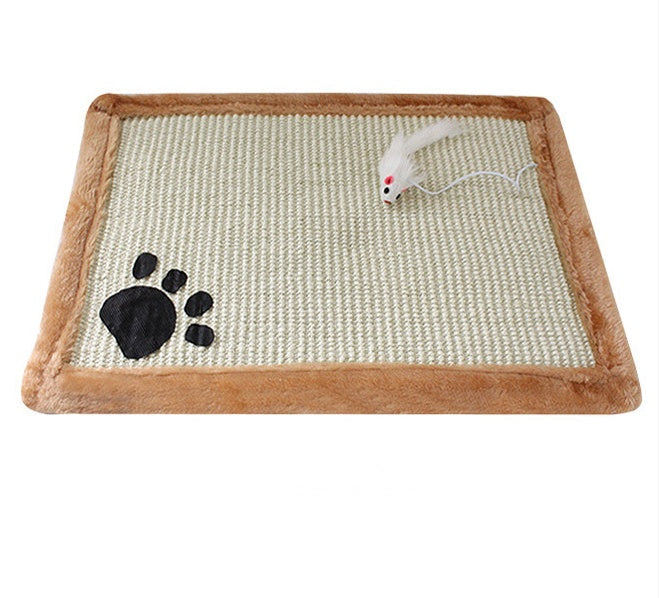
Sisal and cotton rope are the most common scratching surfaces. The Sisal Scratching Mat for Cats is made mostly from natural sisal with a small mouse-shaped toy attached, and its listing describes it as pet-safe. The Braided Cotton Rope Cat Claw Mat is hand-made from 100% natural cotton rope, which its listing describes as chemical-free. Both are useful for a cat that wants a vertical or flat surface to work on.
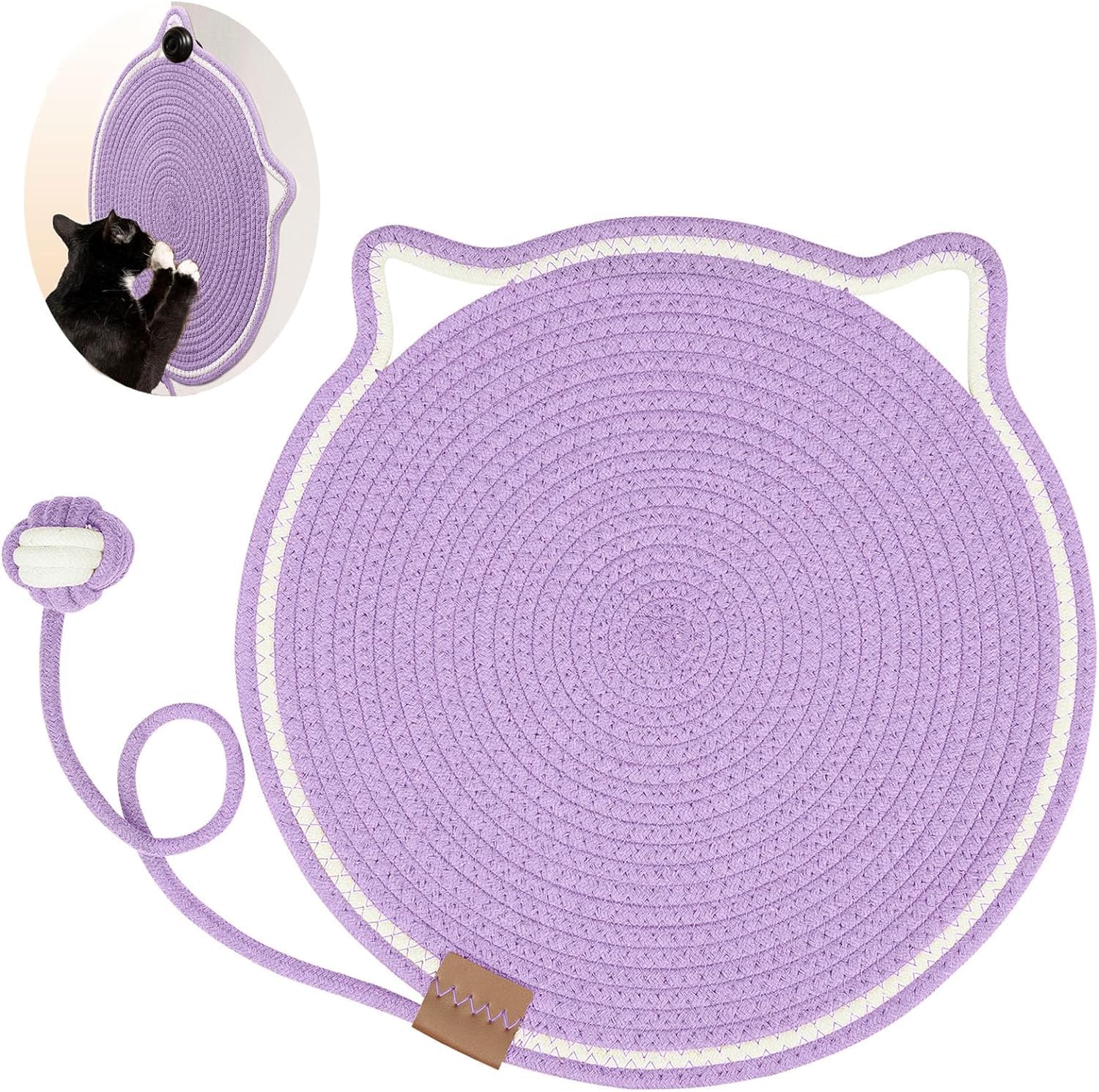
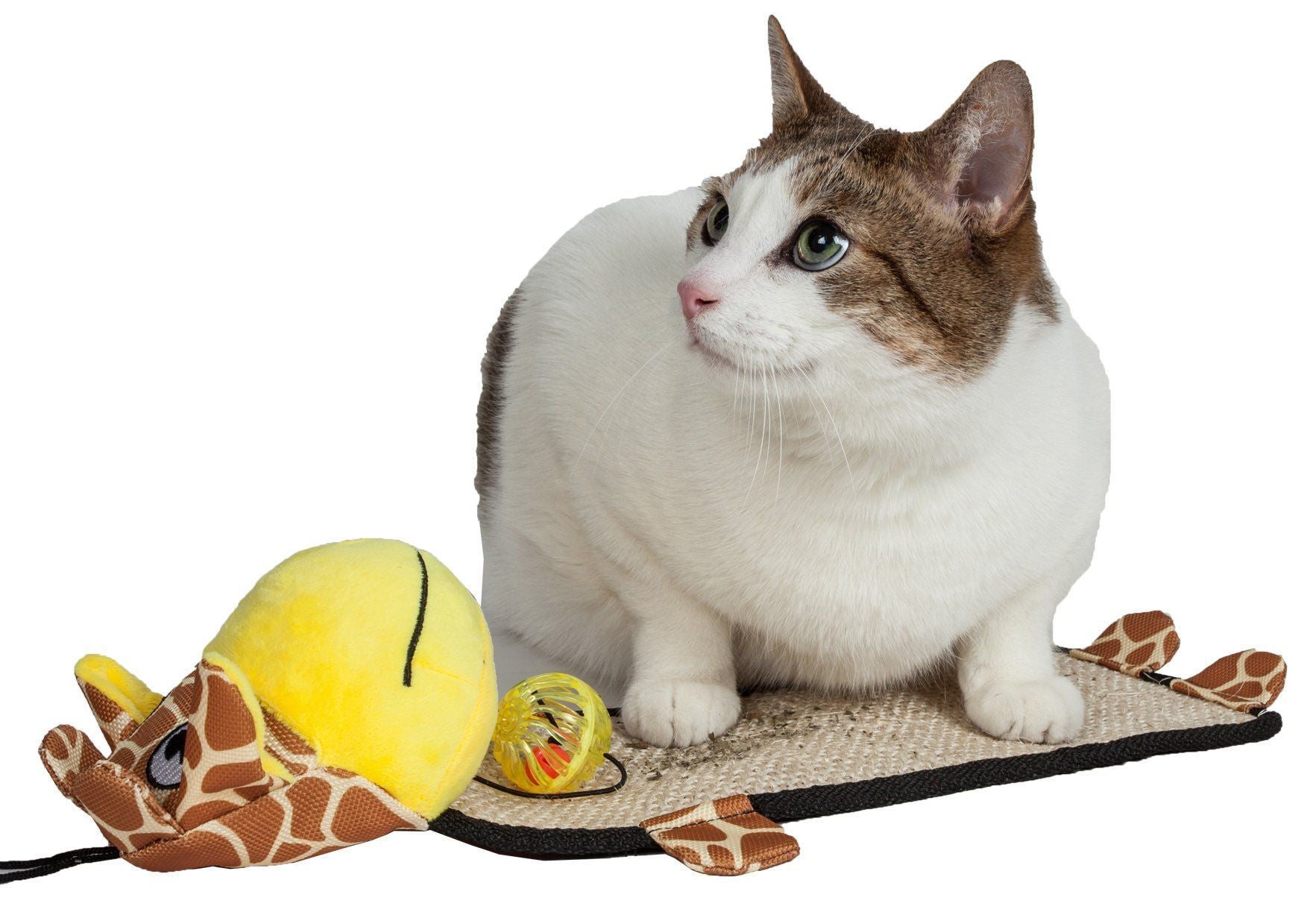
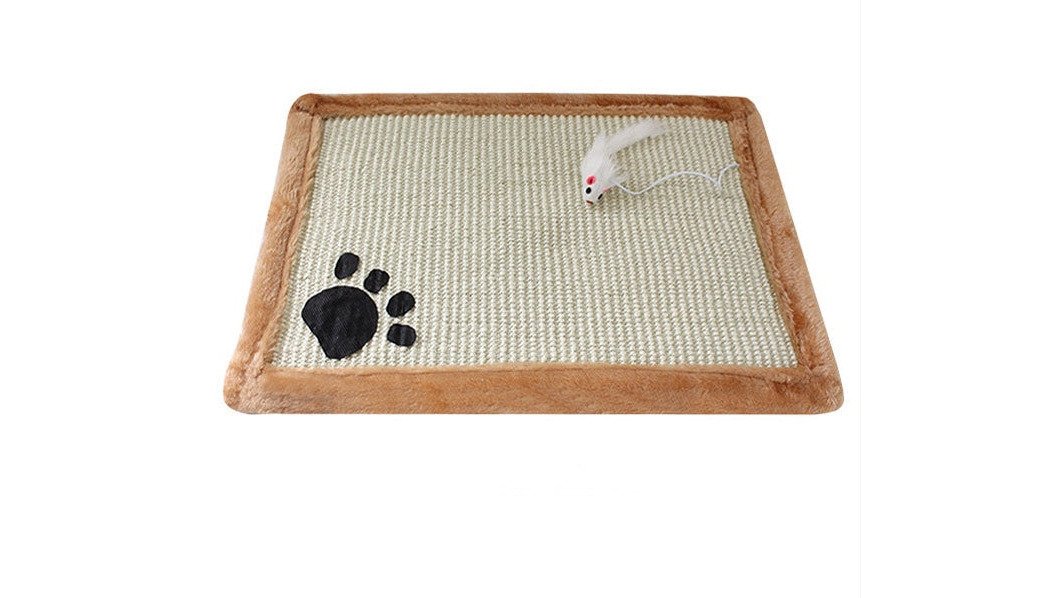
Solid wood is the choice for frames and bases. It resists wobbling better than thin panels, which matters once a cat starts climbing. Fabric covers and plush bedding are where finish quality varies most, so check whether the cover can be removed and washed.
The article compares the main materials used in cat scratchers and how each behaves under claws, teeth and weight.
| Material | Used for | Key point |
|---|---|---|
| Sisal | Scratching mats | Natural fiber; listed as pet-safe |
| Cotton rope | Scratching mats | 100% natural cotton; listed as chemical-free |
| Solid wood | Frames and bases | Resists wobbling better than thin panels |
| Fabric covers | Plush bedding | Check whether the cover is removable and washable |
Eco Friendly Non Toxic Cat Furniture: Recycled and Certified Materials
Eco-friendly claims are easy to make and hard to check. Recycled content, sustainable fiber and low-impact manufacturing all sound good, but each claim needs its own evidence. Ask whether the recycled content is stated as a percentage, whether the wood has a forest certification, and whether the textiles carry any recognised standard.
Whatever you choose, treat "eco-friendly" as a prompt to ask for specifics rather than as proof on its own.
Modern Cat Furniture That Fits a Living Room
Many cat owners want furniture that does not look like a cat zone. Modular designs help here. A scratcher that doubles as a lounger can sit in a living room without dominating it, and a clean silhouette makes it easier to place near a window or sofa.
Luxury Cat Furniture Brands: Price, Construction and Value
Premium cat furniture costs more, and the gap is not always justified. The better question is what the extra money buys. Look for stronger joinery, thicker base materials and covers that hold up to repeated use. A higher price with no clear difference in construction is a weak deal.
For a closer look at the value question, we suggest reading the product listing rather than relying on the word "luxury" alone.
Non Toxic Cat Furniture Brands for Indoor Cats: How to Compare Them
Indoor cats rely on furniture for almost all of their scratching, climbing and resting, so the stakes for material choice are higher than for an outdoor cat. When comparing non-toxic cat furniture brands, use the same checklist for each one:
- Materials: Which fibers, woods and fabrics are used?
- Finishes: Is any paint, lacquer or glue applied to surfaces the cat touches?
- Evidence: Does the brand state its materials clearly, and can it point to testing?
- Stability: Does the frame stay put when the cat jumps on it?
- Cover care: Can removable covers be washed?
A brand that answers all five clearly is easier to trust than one that relies on the word "non-toxic" alone.
Choosing Your First Non-Toxic Scratcher at Walnut Creek Supply
Start with the cat, not the catalog. Watch where your cat scratches now. A vertical scratch on a door frame points to a post that is tall enough to stretch along, while a horizontal scratch on the carpet points to a flat mat or a low board. Match the surface to that behavior before you consider material.
Next, check the physical fit. Measure the floor space you can give up, and check the stated weight limit and base footprint on the listing. A tall tower needs a broad, heavy base, or it will tip when a large cat jumps onto the top platform. A multi-cat home needs more than one scratching surface, placed where each cat can reach it without passing another cat's resting spot. Older cats and cats with joint problems need lower entry points and easy access to any lounger.
Material still matters. Sisal and cotton rope surfaces are a sensible first choice because they are plant-based, and the listings at Walnut Creek Supply describe them as chemical-free or pet-safe. Confirm this against the specifications on the page, not only the headline. A scratcher that combines a natural rope with a painted or glued frame has two materials to check, not one.
Plan for care from the start. Removable covers should be washable, and you should check the care label before washing, because some fabrics shrink or lose their backing. Do not use strong cleaning products on a scratcher the cat will lick; a damp cloth and time to air-dry is usually enough.
When you are ready, browse the full range at Walnut Creek Supply and compare the listing specifications against the checklist above before you order.
Frequently Asked Questions
What furniture brands are non-toxic?
No single brand can be called non-toxic on its own word. Look for specific material claims instead: solid hardwood, natural sisal, and 100% cotton rope are easy to describe and verify. Walnut Creek Supply's Braided Cotton Rope Cat Claw Mat is listed as made from 100% natural cotton rope, and its Sisal Scratching Mat is made mostly from natural sisal. Ask any brand which finishes, glues and fabrics it uses, and whether it has independent test reports for those components before you rely on the word non-toxic.
Is untreated wood safer for cat furniture?
Untreated solid wood avoids the surface coatings and finishes that can be the main chemical concern, so it is often the simplest choice. Check that the wood is solid rather than particleboard or MDF, which may use binding resins. Also check the finish: a plain oil or a food-contact-safe finish is a better sign than a glossy lacquer. Untreated wood still needs to be sanded smooth so it does not splinter under a cat's claws.
What should I look for in an eco-friendly cat tree?
Start with the materials list. Solid hardwood, natural sisal and recycled paper rope are straightforward. Then look for third-party certifications such as FSC for wood, GOTS for organic fabric, or OEKO-TEX for textiles, since these are verifiable rather than marketing terms. Check weight capacity and base stability as well, because a cat tree that tips is a safety problem regardless of its materials. A durable, well-built tree also lasts longer, which is itself a sustainability benefit.
How can I tell whether cat furniture uses pet-safe materials?
Read the product listing for named materials rather than general words like natural or eco. A listing that says cotton rope, sisal or solid wood gives you something to check. Ask the seller for test reports or certificates covering the fabric, glue and finish. If a brand cannot name its materials or will not share testing details, treat the non-toxic claim as unproven.


