


Liberate Your Lifestyle!

How Do You Set Up a Quiet Room for a New Rescue Cat?
Set up a quiet room for rescue cat success with a simple checklist, the 3-3-3 rule, and stress signals to watch. Get night one right.

Last Updated: November 20, 2026
Quick Summary
Set up a quiet room for rescue cat introductions by choosing a low-traffic space with a closing door, like a spare bedroom, office, or roomy bathroom, and stock it with food, water, a litter box, a bed, at least two hiding spots, and a scratching post before your cat arrives. Keep your cat in this base camp for at least one to two weeks, following the 3-3-3 rule of three days to decompress, three weeks to learn your routine, and three months to feel at home.
- Place food and water bowls on one side of the room, away from the litter box.
- Pour litter to a depth of 2-3 inches in a quiet corner with an easy exit.
- Every safe room needs at least two hiding places, such as a cardboard box or covered bed.
- Keep the room quiet and let your cat come to you rather than forcing interaction.
- Start short supervised visits to one more room once readiness cues appear.
Ready to set up your rescue cat's safe room?Shop quality litter, cat trees, and calming supplements at Walnut Creek Supply.
Shop Safe Room Supplies
Table of Contents
- Start With the Right Room and the 3-3-3 Rule for Rescue Cats
- Essential Supplies for a New Rescue Cat's Safe Room
- Setting Up Hiding Spots, Bedding, and Enrichment
- How Long to Keep a New Cat in the Safe Room
- Signs of Stress in New Rescue Cats and What to Do
- Noise, Scent, and Escape-Proofing the Room
- Tailoring the Room for Kittens, Seniors, and Cats With Medical Needs
- Stock Your Safe Room With Walnut Creek Supply
- Frequently Asked Questions
Start With the Right Room and the 3-3-3 Rule for Rescue Cats
Setting up a quiet room for rescue cat introductions gives your cat a small, safe space to decompress before facing the rest of your home. This single step can matter more than any toy or treat you can buy.
The 3-3-3 rule for rescue cats is a simple way to think about the timeline. Three days to decompress. Three weeks to learn your routine. Three months to feel at home.
Picking a Low-Traffic Space (Even Without a Spare Bedroom)
A spare bedroom is ideal. An office works. A bathroom is fine if it's roomy and you keep the toilet lid down. What matters is low foot traffic and a door that closes.
No spare room? A large walk-in closet or a quiet corner blocked with a baby gate can serve as a starter room. The point is a calm environment, not a perfect one.
What the 3-3-3 Timeline Actually Looks Like
- Days 1-3: The cat hides, eats little, and watches. Don't force interaction.
- Weeks 1-3: Your cat starts exploring the room and testing routines.
- Months 1-3: Trust builds and your cat claims territory. Gradual introduction to the rest of the home begins.
The 3-3-3 rule gives a simple timeline for what to expect as your rescue cat settles in.
| Phase | Timeframe | What to expect |
|---|---|---|
| Decompress | Days 1-3 | Cat hides, eats little, and watches; don't force interaction |
| Learn routine | Weeks 1-3 | Cat starts exploring the room and testing routines |
| Feel at home | Months 1-3 | Trust builds, cat claims territory, gradual home introduction begins |
Essential Supplies for a New Rescue Cat's Safe Room
Essential supplies for a new rescue cat come down to a short list: food, fresh water, a litter box, a bed, hiding spots, and something to scratch. Skip the extras until your cat settles.
Set the room up before your cat arrives. That way the first night feels calm instead of chaotic.
Food, Water, and Litter Box Placement
Place food and water bowls on one side of the room, away from the litter box. Cats dislike eating near where they eliminate. Keep the water bowl a little apart from the food bowl too.
For the litter box, pick a quiet corner with an easy exit. Our Okocat low-tracking clumping wood litter is ultra-soft and 99% dust-free, which suits a small closed room. If you're arranging bowls and want a space-saving option, a collapsible travel bowl set works well in tight corners. Stocking dry food? Pro Plan Adult Complete Essentials dry cat food is a solid staple, and Pro Plan wet food in gravy is easy to serve while your cat adjusts.


Setting Up Hiding Spots, Bedding, and Enrichment
Every safe room needs at least two hiding places. A cardboard box on its side, a covered cat bed, or a quiet spot under a chair all work. Hiding is not a bad sign.
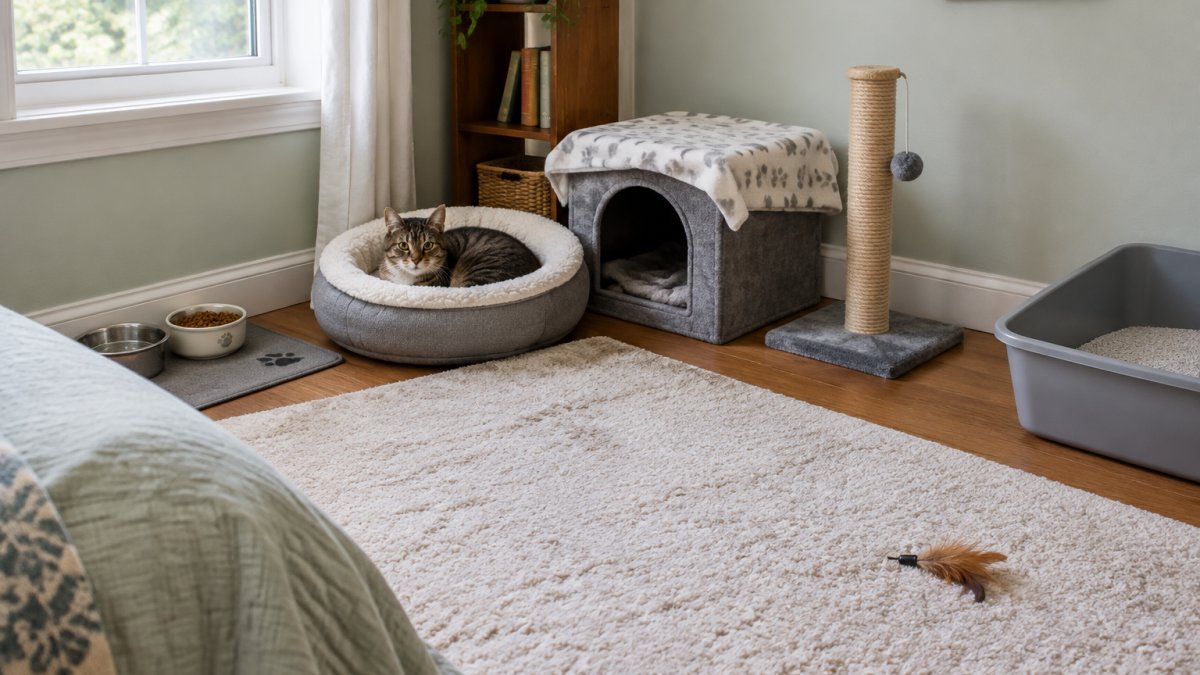
Add soft bedding, a scratching post, and a few toys. For a confined cat, a butterfly cat toy with auto shut-off gives your cat something to bat at without needing you there.
How Long to Keep a New Cat in the Safe Room
Plan on keeping your new cat in the safe room for at least one to two weeks. Some cats need closer to three. The room is not a cage, it's a base camp.
Watch for readiness cues before you open the door:
- Your cat eats and uses the litter box normally.
- Your cat explores the room when you're present.
- Your cat approaches you instead of hiding.
When those signs show up, start short supervised visits to one more room. Then extend access gradually. Patience beats speed every time.
Signs of Stress in New Rescue Cats and What to Do
Stress signals in a new rescue cat fall into two buckets: normal adjustment behavior that you should expect and leave alone, and concerning signs that warrant a call. Knowing which is which keeps you from over-handling a cat that just needs time, and from waiting too long when something is wrong.
Normal Adjustment Signals (Expect These)
For the first few days, most rescue cats hide, eat less than usual, and watch from a distance. A tucked tail, flattened ears, wide eyes, and a low crouch are fear signals, not defiance.
What to do: keep the routine steady, sit quietly in the room without reaching for the cat, and let the cat approach you. For extra support during the transition, you can try calming soft chews for dogs and cats.
Concerning Signs (Call Your Veterinarian)
Some signs cross from adjustment into a health concern. Contact your veterinarian promptly if you see any of the following:
- Not eating for more than 24 hours, or refusing all food and water for more than 12 hours.
- Straining in the litter box, crying while urinating, or producing little or no urine, especially in male cats, where a urinary blockage can become life-threatening within a day.
- Labored breathing, open-mouth breathing, or a persistent cough.
This is general guidance, not a diagnosis. Your veterinarian knows your cat's history and can tell you whether a symptom is urgent. A common pattern is for adopters to attribute everything to "stress" in the first week; a cat that stops eating or straining in the litter box needs a call, not more time.
When to Contact the Rescue Organization
Call the rescue or foster contact if your cat seems deeply shut down, not moving, not eating, not responding to gentle attempts to engage, or if you see signs of illness and want the cat's medical history before your vet visit. The rescue often knows the cat's baseline behavior and can tell you whether a behavior is new.
Readiness Cues for Expanding Access
Stress signals fading is your cue that the cat is ready for more space. Look for these signs together, not one at a time:
- The cat eats and uses the litter box normally without hiding while it does so.
- The cat explores the room when you are present, rather than freezing or retreating.
- The cat approaches you, sniffs your hand, or settles within a few feet of you.
When those cues show up, start short supervised visits to one more room, then extend access gradually. Patience beats speed every time, and a cat that is pushed too early often regresses to hiding.
Noise, Scent, and Escape-Proofing the Room
Quiet is the whole point of the room, but most guides stop at "pick a low-traffic space." The room itself needs sensory management: sound, light, smell, and escape risk all interact, and a cat that is startled by a garbage truck or a scented plug-in will not decompress no matter how nice the bed is.
Sound: Where the Room Sits and What Masks It
Walk the room at the times your household is loudest, morning rush, after work, trash pickup, dishwasher and laundry cycles.
Mask sudden sounds rather than trying to eliminate all sound.
Watch out: a white noise machine placed inside the room at high volume can itself become a stressor; test it from the cat's resting spot before you commit.
Light: Day-Night Cues and Glare
Cats settle faster with a predictable light cycle. Open curtains during the day and dim or close them at night so the room reads as day and night rather than a constant bright box. If the room faces a streetlight or a security light, a cheap blackout curtain or a blanket over the lower pane cuts glare without making the room cave-dark.
Scent: Shelter Smell First, Home Smell Later
Smell is how a cat reads territory, and a rescue cat arrives with the shelter's scent on its bedding. Ask the rescue organization for a small blanket or towel that has been in the cat's kennel, and put it in the hiding spot.
Skip plug-in air fresheners, scented candles, and heavily perfumed cleaners in and near the room. Cats have a far more sensitive sense of smell than people, and strong fragrances can make a small closed room unpleasant.
Escape-Proofing: The Five-Minute Check
A scared cat can fit through gaps that look too small. Before the cat arrives, do a pass around the room:
- Window screens: press on each screen; a loose screen is an escape route. Keep windows closed or open only a few inches with a sturdy screen and a window stop.
- Gaps under furniture: block the space under beds, dressers, and recliners with folded blankets or storage bins so the cat cannot wedge into a spot you can't reach.
- Cords and cables: bundle and tape down loose cords; a cat that chews a live cord is a veterinary emergency.
A common pattern is for adopters to focus on the cat's supplies and skip the room itself. The five-minute check above is the difference between a safe room and a room with a hidden escape route.
Tailoring the Room for Kittens, Seniors, and Cats With Medical Needs
Kittens need more enrichment and safer barriers. A tall tower like our teddy cat tree and condo gives a cat a vertical route to climb, scratch, and rest, and it is recommended for one cat under 10 lbs.
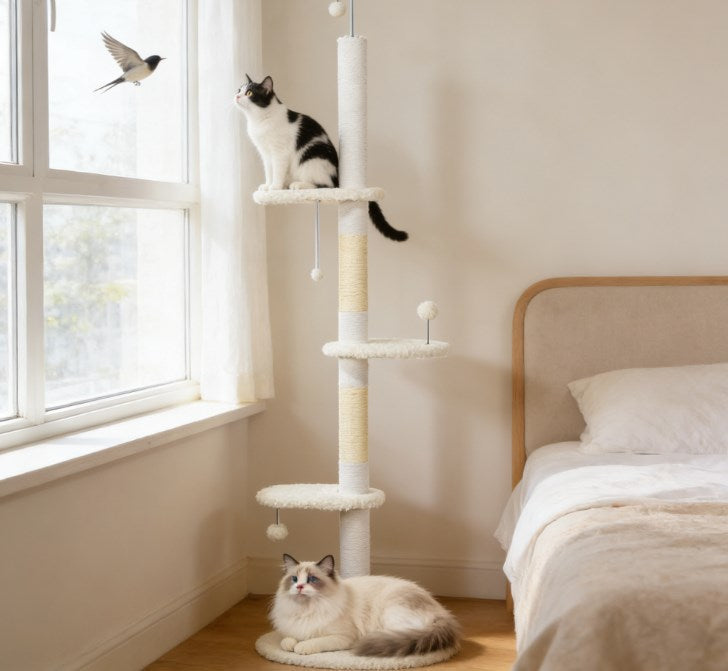
Seniors and cats with medical needs need easier access. Lower-sided litter boxes, soft bedding, and food and water within easy reach help. If your cat has mobility limits, keep everything on one level.
Cats with medical conditions may need medication, special food, or a quiet spot away from noise. Ask the rescue organization about your cat's history before setup day.
Stock Your Safe Room With Walnut Creek Supply
A well-planned quiet room for rescue cat setups does most of the work for you.
We carry products for a new rescue cat's safe room, including low-dust litter, a climbing tower, and a calming supplement for stressful days.
Get started with Walnut Creek Supply and give your new rescue cat the calm, safe start it deserves.
Adopting a rescue cat is exciting, but the first weeks can feel uncertain.
Frequently Asked Questions
Where should a cat sleep its first night in a new home?
Keep the cat in its quiet room overnight with the door closed. Set up a soft bed or folded blanket in a corner away from the litter box, plus at least one covered hiding spot the cat can retreat into. Many rescue cats will not use an open bed on night one and will choose a hiding place instead, which is normal. Resist the urge to pull the cat out. Place a worn T-shirt of yours near the bed so your familiar scent builds a sense of safety.
How long does it take for a rescue cat to adjust to a new home?
Most rescue cats need about three days just to decompress, three weeks to settle into a routine, and three months to feel fully at home. That is the 3-3-3 rule for rescue cats. Some cats move faster and some need longer, especially seniors or cats from hoarding situations. Judge progress by appetite, litter-box use, and whether the cat explores when the room is quiet rather than by a calendar.
What are the signs of stress in new rescue cats I should watch for?
Watch for hiding around the clock, refusing food for more than 24 hours, not using the litter box, flattened ears, a tucked tail, dilated pupils, hissing, or freezing when you enter. Mild wariness in the first few days is expected. Call your veterinarian if the cat stops eating or drinking, has diarrhea lasting more than a day, or shows labored breathing. Synergy Labs Pet Calm ($14.99) is labeled for settling nerves before events such as vet visits or introductions to new environments.
What essential supplies should be in a cat's safe room?
You need food and fresh water in separate bowls, a litter box with 2 to 3 inches of litter, a soft bed, at least one hiding place, a scratching post, and a few toys. Okocat Low Tracking Clumping Wood Cat Litter ($25.99 for 14 lb or $35.99 for 21.5 lb) is 99% dust-free, which suits a small closed room. A tall climbing option like the 100.5 Inch White Teddy Cat Tree ($116.99) adds vertical space and is recommended for one cat under 10 lbs.


