


How to Spot the Signs of Poor Quality Pet Food
Spot the signs of poor quality pet food before it harms your pet. Learn to read labels, check for spoilage, and know when to call your vet.

Last Updated: October 25, 2026
Quick Summary
The signs of poor quality pet food rarely show up on the bag; they appear in your pet as a dull coat, loose stool, or an ignored bowl. To catch it early, read the guaranteed analysis, adequacy statement, and ingredient list on the back, then monitor your pet for two weeks after switching.
- Convert nutrients to a dry-matter basis to compare canned and dry foods fairly.
- Words like natural, premium, and holistic carry little legal weight on their own.
- Ingredients are listed by weight before cooking, so fresh meat weighs more than meal.
- A food-quality problem tends to affect multiple pets eating the same food.
- Transition slowly by mixing 25% new food with 75% old for three days.
Table of Contents
- Why Poor Quality Pet Food Is Harder to Spot Than You Think
- How to Read Dog Food Labels Without Getting Fooled by Marketing
- Ingredient Lists: What Separates Quality Ingredients From Fillers
- Signs Dog Food Is Making Your Dog Sick
- How to Tell If Pet Food Has Gone Bad
- Food Quality vs. Food Intolerance: Telling the Difference
- A Step-by-Step Checklist for Assessing a Food and Monitoring Your Pet
- Choosing a Food You Can Trust at Walnut Creek Supply
- Frequently Asked Questions
Why Poor Quality Pet Food Is Harder to Spot Than You Think
The signs of poor quality pet food rarely show up on the bag.
That delay is the problem. A food can look premium, cost more, and still fall short on nutrition.
So how do you catch a bad food before it catches up with your pet? You learn to read the label, watch the bowl, and separate real problems from passing ones.
How to Read Dog Food Labels Without Getting Fooled by Marketing
The front of the bag sells the food. The back tells you what's in it. Most shoppers never flip the bag over, and that's exactly what the marketing counts on.
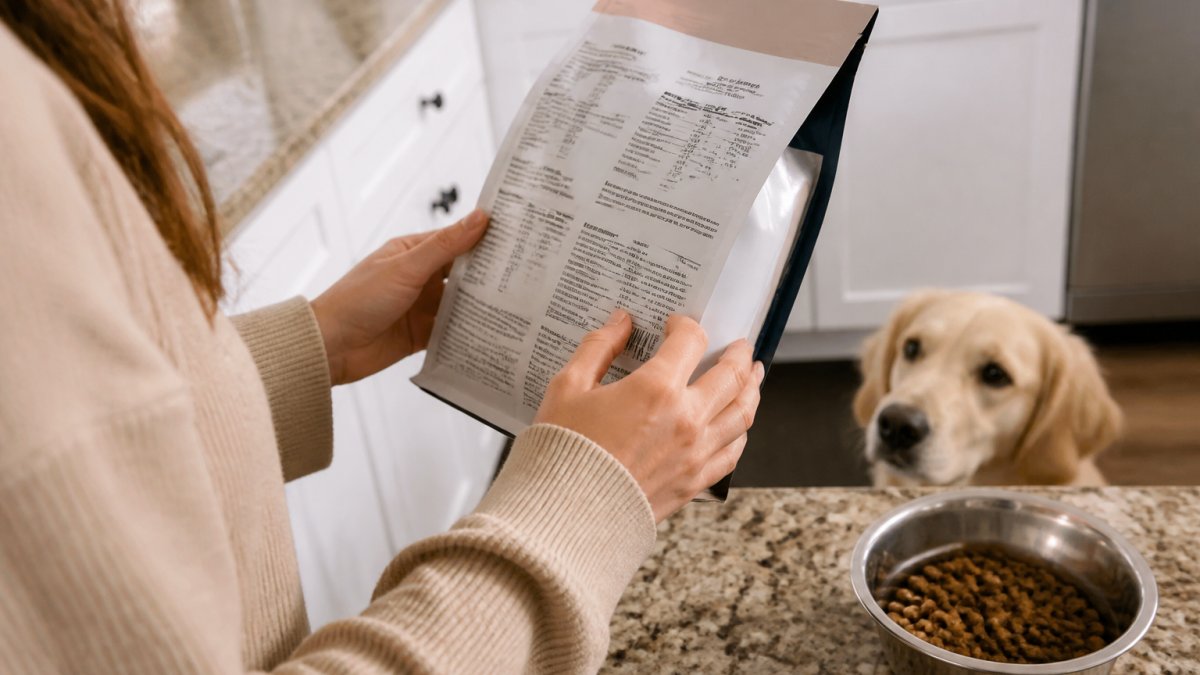
Learning how to read dog food labels comes down to three parts: the guaranteed analysis, the adequacy statement, and the ingredient list. Read them in that order, and judge each one on its own terms instead of letting the front panel set the mood.
Guaranteed Analysis and Nutritional Adequacy: What the Numbers Actually Mean
The guaranteed analysis lists minimums for crude protein and crude fat, and maximums for fiber and moisture. These are minimums, not exact amounts. A food can meet the minimum and still vary batch to batch.
Two mechanics matter more than the raw numbers:
- Moisture changes everything. A canned food at 78% moisture and a dry food at 10% moisture cannot be compared by the percentages printed on the label. To compare fairly, convert to a dry-matter basis: subtract the moisture percentage from 100, then divide the nutrient percentage by that remainder. A dry food listing 26% protein at 10% moisture is about 29% protein on a dry-matter basis; a canned food listing 9% protein at 78% moisture is about 41% on the same basis. Same word, very different food.
- "Crude" is a lab method, not a nutrient promise. Crude protein measures nitrogen, not usable protein. Crude fiber lumps together fermentable and non-fermentable fiber. The numbers are a starting filter, not a verdict.
Look for a statement that says the food is "complete and balanced" for a specific life stage. That phrase means the recipe meets a recognized nutrient profile, in practice, a statement tied to the AAFCO Dog Food Nutrient Profiles or a feeding trial following AAFCO protocols.
Pro Tip
If two foods look similar but one is far cheaper, compare them on a dry-matter basis and on a per-calorie basis before deciding. A bag that costs less per pound but delivers more calories per cup can be the better value, and a bag that costs more per pound but is mostly moisture is the worse one.
Marketing Claims vs. Evidence: Decoding the Front of the Bag
Words like "natural," "premium," and "holistic" carry little legal weight on their own. They sound reassuring and tell you almost nothing about the nutrient profile.
A few claims do have defined meaning, and knowing which is which keeps you from over-trusting the front panel:
- "Complete and balanced" is the claim that actually matters, and it belongs on the back with a life-stage qualifier.
- "Natural" generally refers to ingredients from plant, animal, or mineral sources that haven't been chemically synthesized, but it says nothing about nutritional adequacy or quality.
- "Organic" is a certification claim with its own rules; it is not a synonym for complete or balanced.
A common mistake is trusting the front panel photo of a salmon and assuming salmon leads the recipe. Flip the bag. The ingredient list settles it. The same goes for "with real chicken" versus "chicken flavor", the first implies an ingredient is present, the second can mean a flavoring with no meaningful chicken content.
Key Takeaway
The front panel is advertising. The guaranteed analysis, the adequacy statement, and the ingredient list are the evidence. Judge the food on the evidence, and treat every buzzword as a question to verify on the back of the bag.
Ingredient Lists: What Separates Quality Ingredients From Fillers
Ingredients are listed by weight before cooking. That rule trips up a lot of shoppers.
Fresh chicken weighs more than chicken meal because it holds water. After cooking, that water is gone.
Here's what to look for:
- A named protein source near the top
- Named fats, like chicken fat or salmon oil
- Whole grains or legumes rather than a long list of splits and by-products
Fillers aren't always harmful, but they dilute nutrition. If the list is mostly corn, wheat, and unnamed meat meals, the food is built to fill a bowl cheaply.
For a concrete example of a quality-ingredient recipe, see our Open Farm Salmon & Oatmeal Skin & Coat Dry Dog Food, which lists salmon first and adds salmon oil for skin support.

Signs Dog Food Is Making Your Dog Sick
A food problem usually shows up in the bowl before it shows up anywhere else. Knowing the signs dog food is making your dog sick helps you act fast instead of waiting months. But the symptoms themselves are ambiguous, the same loose stool, itching, or weight change can come from a poor-quality food, an individual intolerance, or an illness with nothing to do with diet.
Digestive Clues: Stool Quality, Vomiting, and Diarrhea
Stool is your cheapest diagnostic tool. Healthy stool is firm, formed, and easy to pick up.
Watch for:
- Soft stool or diarrhea that lasts more than a few days
- Vomiting shortly after meals
- Excessive gas or loud stomach gurgling
Occasional soft stool happens. A pattern is different. If your dog has loose stool on one food and firm stool on another, the food is the likely culprit. If the stool is loose on every food, or comes with blood, black tarry color, or repeated vomiting, that points away from food quality and toward a veterinary workup.
Skin, Coat, and Body Condition Changes
Skin and coat problems often trace back to diet. Look for dry skin, itchy skin, a dull coat, or repeated ear infections.
Body condition matters too. Run your hands along your dog's ribs. You should feel them easily without pressing. Unexplained weight loss or weight gain on a steady diet points to a nutrient problem or a portion problem, but it can also point to a thyroid issue, dental pain, or another medical cause.
Food Quality vs. Intolerance vs. Illness: Reading the Pattern
This is the distinction most guides skip, and it changes what you do next.
Nutro Natural Choice Large Breed Adult Chicken Dry Dog Food (30lb) →
- A food-quality problem is a flaw in the food itself, an inadequate nutrient profile, a rancid batch, or a recipe that doesn't deliver what the label implies. It tends to affect multiple pets eating the same food, and it often shows up as a cluster of symptoms rather than one.
- A food intolerance is an individual pet's reaction to a specific ingredient. One pet reacts while others on the same food do fine, and the reaction typically eases when the trigger is removed.
- An illness can mimic both. Persistent vomiting, weight loss despite a good appetite, or skin disease that doesn't improve on any diet warrants a veterinary exam rather than another food switch.
Ask yourself:
- Did the problem start after a food change?
- Does it clear up when you switch back?
- Do other pets in the home eat the same food without issue?
If one pet reacts and others don't, intolerance is more likely. If every pet reacts, look hard at the food. And if symptoms are severe or persistent, call your veterinarian. Nutrition advice can't replace a diagnosis.
Watch Out
Do not keep switching foods to chase a symptom. Repeated rapid changes can cause their own digestive upset and make the pattern harder to read. Change one variable at a time, give it a fair trial, and involve your veterinarian if the problem doesn't resolve.
A Simple Monitoring Log
Before you change anything, start a two-week log so the pattern is visible instead of remembered:
- Stool: firm, soft, or loose, and how many times a day
- Appetite: eager, picking, or refusing
- Vomiting: none, once, or repeated
A written log turns a vague worry into a clear decision and gives your veterinarian something concrete to work from.
How to Tell If Pet Food Has Gone Bad
Knowing how to tell if pet food has gone bad protects your pet from more than stale kibble.
Check for these red flags:
- A sour, sharp, or paint-like smell
- Visible mold or clumping
- Oily or greasy kibble
Store dry food in its original bag inside an airtight container. Keep it cool and dry. Wash the bowl often, because old crumbs breed bacteria.
Watch out: a food can be perfectly safe and still be poor quality.
Check for these red flags before you keep feeding a bag.
| Red flag | What to look for |
|---|---|
| Smell | Sour, sharp, or paint-like odor |
| Mold | Visible mold or clumping |
| Texture | Oily or greasy kibble |
| Packaging | Bag torn, damp, or past best-by date |
Food Quality vs. Food Intolerance: Telling the Difference
Not every bad reaction means bad food. This is the distinction most guides skip.
A food intolerance is an individual pet's reaction to a specific ingredient. A quality problem is a flaw in the food itself.
Ask yourself:
- Did the problem start after a food change?
- Does it clear up when you switch back?
- Do other pets in the home eat the same food without issue?
If one pet reacts and others don't, intolerance is more likely. If every pet reacts, look hard at the food. And if symptoms are severe or persistent, call your veterinarian.
A Step-by-Step Checklist for Assessing a Food and Monitoring Your Pet
Use this checklist before you buy, and again after you switch. It turns a vague worry into a clear decision.
Before buying:
- Confirm the label says "complete and balanced" for your pet's life stage
- Check that a named protein leads the ingredient list
- Scan the guaranteed analysis for crude protein, fat, fiber, and moisture
After switching, monitor for two weeks:
- Stool quality: firm and formed?
- Appetite: eating eagerly?
- Energy: normal activity?
Transition slowly. Mix 25% new food with 75% old for three days, then shift the ratio every few days over about a week. A fast switch can cause diarrhea that looks like a food problem when it's really just a rushed change.
Choosing a Food You Can Trust at Walnut Creek Supply
A label you can read and a bowl you can watch will catch most problems early. The last step is picking a food that holds up to both.
We're a family-owned shop, and we carry foods we'd feed our own animals. For large breeds, our Nutro Natural Choice Large Breed Adult Chicken Dry Dog Food leads with chicken and brown rice and includes glucosamine and chondroitin. For sensitive stomachs, the Taste of the Wild Adult Pacific Stream Salmon Canine Food uses salmon first and adds species-specific probiotics for digestive support. Cat owners can start with our Pro Plan Adult Complete Essentials Salmon & Rice Formula Dry Cat Food, which lists real salmon first and includes live probiotics.


If you want to go deeper on why quality matters, read our guide on why premium pet food matters. Then check the back of the bag, watch the bowl, and let your pet's condition be the final vote.
Frequently Asked Questions
How can you tell if pet food is poor quality?
Start with the label. Look for a named meat source in the first few ingredients, a complete and balanced nutritional adequacy statement, and a guaranteed analysis with clear percentages. Vague terms like meat meal or animal by-product, heavy reliance on fillers, and missing life stage statements are red flags. Then watch your pet: dull coat, soft stool, weight loss, or reduced appetite after a food change can signal poor quality pet food or an intolerance.
Can poor-quality pet food cause digestive problems?
Yes. Low-quality ingredients, sudden formula changes, or spoiled food can trigger vomiting, diarrhea, gas, and soft stool. If digestive issues appear within a week of switching foods, transition back slowly over 7 to 10 days by mixing increasing amounts of the new food with the old. If symptoms last more than 48 hours or your pet stops eating, contact your veterinarian.
How do you know if dog food has gone bad?
Check for a rancid or sour smell, visible mold, moisture clumps, or insects in the bag. Dry food past its best-by date or stored in warm, humid conditions loses nutritional value and can grow mold. Wet food that bulges, sprays when opened, or smells off should be discarded. Store dry food in a sealed container in a cool, dry place and use it within six weeks of opening.
When should you contact a veterinarian about symptoms after a food change?
Call your vet if vomiting or diarrhea lasts more than 48 hours, if you see blood in stool, if your pet refuses food for more than 24 hours, or if weight loss, lethargy, or skin problems appear. Bring the food label and note when symptoms started. Your vet can rule out illness and help you decide whether the food itself is the problem or whether your pet needs a different formula.
Most pet parents only learn a food was wrong after weeks of loose stool or a dull coat. You don't have to wait that long. Walnut Creek Supply curates high-quality foods and shares plain-language guidance so you can judge a bag before it reaches the bowl. Browse our selection, read the labels with confidence, and get started with Walnut Creek Supply to feed your pet with certainty.


