


Liberate Your Lifestyle!

Best Cat Food for Sensitive Stomachs: A Vet-Informed Guide
Choosing cat food for sensitive stomachs starts with the right protein and fiber. Compare wet and dry options and follow a step-by-step elimination diet.

Last Updated: November 17, 2026
Quick Summary
The best cat food for sensitive stomachs is a highly digestible formula with a named animal protein first, a stated fiber level, and an AAFCO complete and balanced statement. Our top dry pick is Hill's Science Diet Adult Sensitive Stomach & Skin Chicken & Rice Recipe at $29.99, and our top wet pick is Hill's Science Diet Sensitive Stomach & Skin Chicken & Vegetable Entrée at $2.39 per 2.9 oz can.
- Call your vet immediately if vomiting lasts more than 24 hours or diarrhea lasts longer than two days.
- Iams Proactive Health Sensitive Digestion & Skin Turkey is a budget-friendly dry option at $16.99.
- Look for fiber between roughly one and four percent to support stool quality.
- Transition to a new food over seven to ten days by mixing it into the old food.
- Judge a new food over two to four weeks, tracking stool firmness, vomiting, appetite, and coat.
Not sure which food suits your cat?We stock sensitive-stomach dry and wet foods plus single-ingredient treats, with guidance to help you choose.
Shop Sensitive Stomach Cat Food
Table of Contents
- How to Tell a Sensitive Stomach From Something Serious
- The Best Dry Cat Food for Sensitive Stomachs
- The Best Wet Cat Food for a Sensitive Stomach
- Vet Recommended Cat Food for a Sensitive Stomach: What the Label Should Prove
- Best Cat Food for Sensitive Stomach Diarrhea and Soft Stool
- Running a Practical Elimination Diet at Home
- How to Assess Whether the Food Is Actually Working
- Building Your Cat's Sensitive Stomach Feeding Plan
- Frequently Asked Questions
How to Tell a Sensitive Stomach From Something Serious
A sensitive stomach in cats is a pattern of recurring mild digestive upset, such as soft stool, occasional vomiting, or gas, that improves with diet changes and does not come with lethargy, pain, or weight loss. A serious digestive problem is different: it escalates, persists, or arrives with warning signs that need a veterinarian the same day.
The distinction matters because a sensitive-stomach food only helps a cat whose problem is genuinely food-related. Feeding a sensitive-stomach formula to a cat with a blockage or organ disease delays real treatment.
Symptoms That Need a Vet Today
Call your veterinarian immediately if your cat shows any of the following:
- Repeated vomiting in a single day, or vomiting that continues for more than 24 hours
- Diarrhea lasting longer than two days, or diarrhea with blood or black, tarry stool
- Refusing food for more than 24 hours, especially in an overweight cat
- Straining in the litter box with little or nothing produced
- Hiding, yowling, or reacting painfully when the belly is touched
- Visible weight loss, dehydration, or sunken eyes
- Mucus in stool combined with lethargy or fever
These signs point away from simple food intolerance and toward obstruction, pancreatitis, kidney disease, hyperthyroidism, or inflammatory bowel disease. The Cornell Feline Health Center's digestive disease resources outline why prompt examination matters for cats, who hide illness well.
Milder, recurring signs, such as intermittent soft stool, occasional hairballs, or gassiness after treats, are the ones a diet change can reasonably address.
The Best Dry Cat Food for Sensitive Stomachs
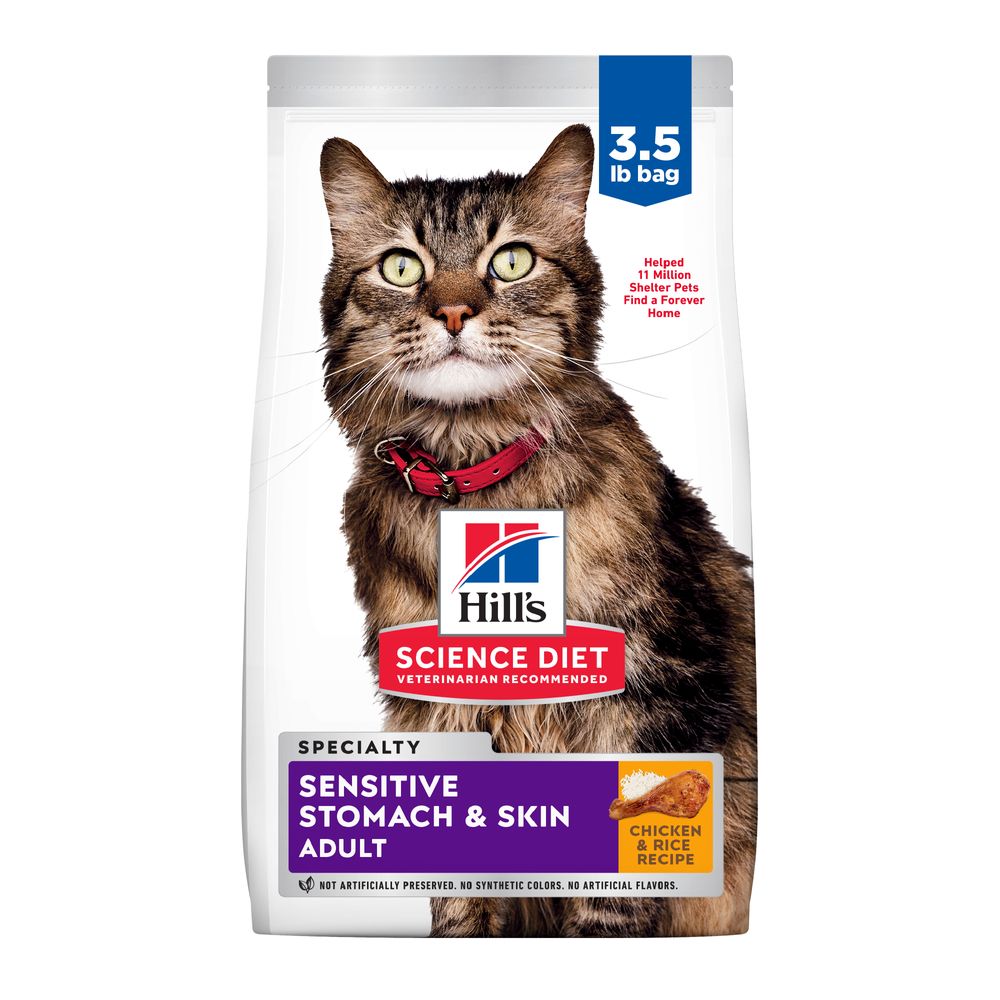
Our top dry pick is Hill's Science Diet Adult Sensitive Stomach & Skin Chicken & Rice Recipe, $29.99.
If you suspect chicken is the trigger, Wholesomes Sensitive Skin & Stomach with Salmon Protein, $26.99 for a 10 lb bag, swaps the protein source and builds fiber from ancient grains like brown rice, oatmeal, and barley.
| Dry Food | Price | Protein | Key Digestive Feature | Best For |
|---|---|---|---|---|
| Hill's Sensitive Stomach & Skin | $29.99 | Chicken | Prebiotic fiber (FOS) | First-time diet switchers |
| Iams Proactive Health | $16.99 | Turkey | Prebiotics and beet pulp | Budget-conscious homes |
| Wholesomes Sensitive Skin & Stomach | $26.99 | Salmon | Ancient grain fiber | Cats avoiding chicken |
Price
Hill's Sensitive Stomach & Skin $29.99
Iams Proactive Health $16.99
Wholesomes Sensitive Skin & Stomach $26.99
Best for: adult cats with mild, recurring soft stool or gassiness. Skip if: your cat is a kitten or pregnant; these formulas are labeled for adults only.
You can shop the Hill's Science Diet dry formula directly if you already know chicken and rice suits your cat.
The Best Wet Cat Food for a Sensitive Stomach
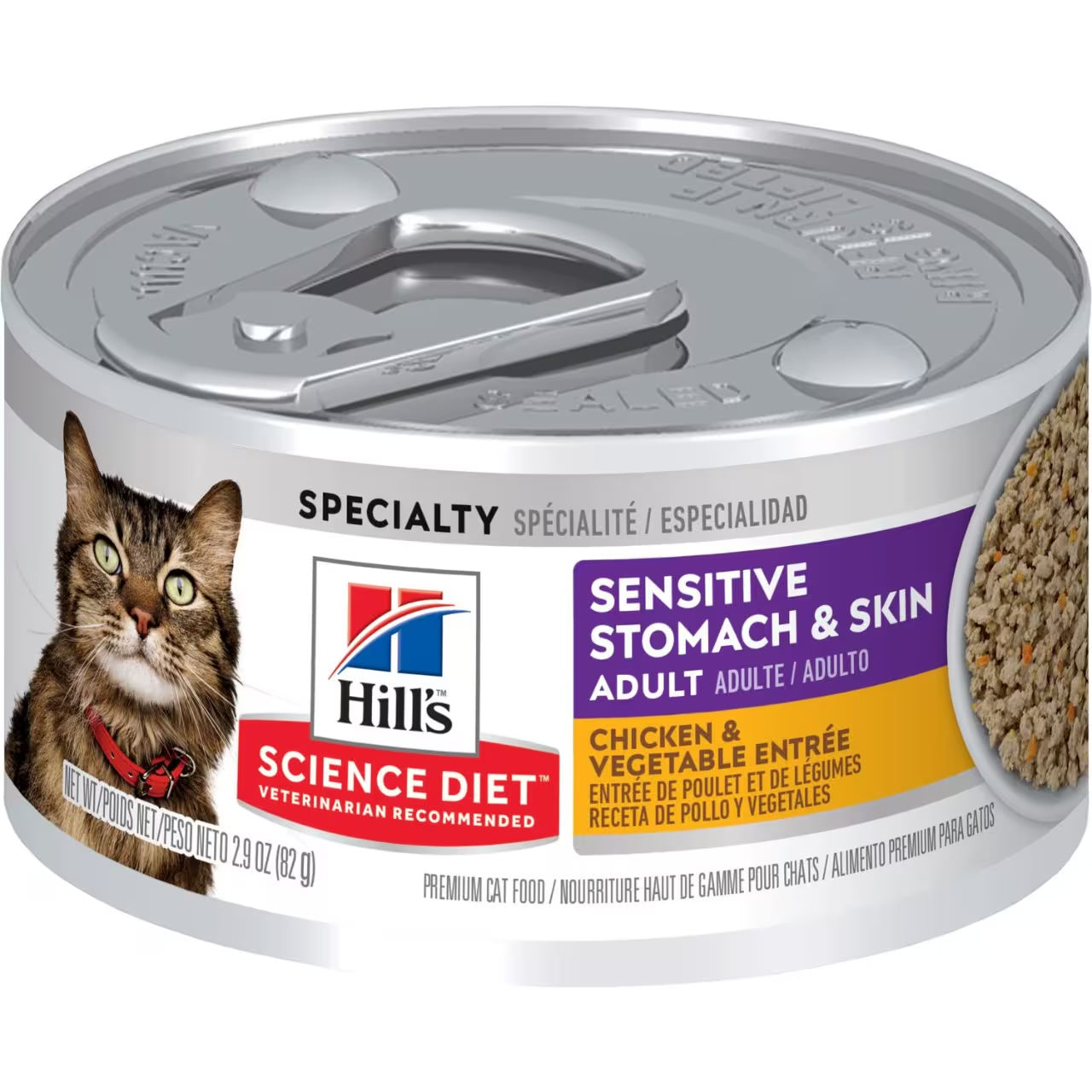
For wet food, our first choice is Hill's Science Diet Sensitive Stomach & Skin Chicken & Vegetable Entrée, $2.39 per 2.9 oz can.
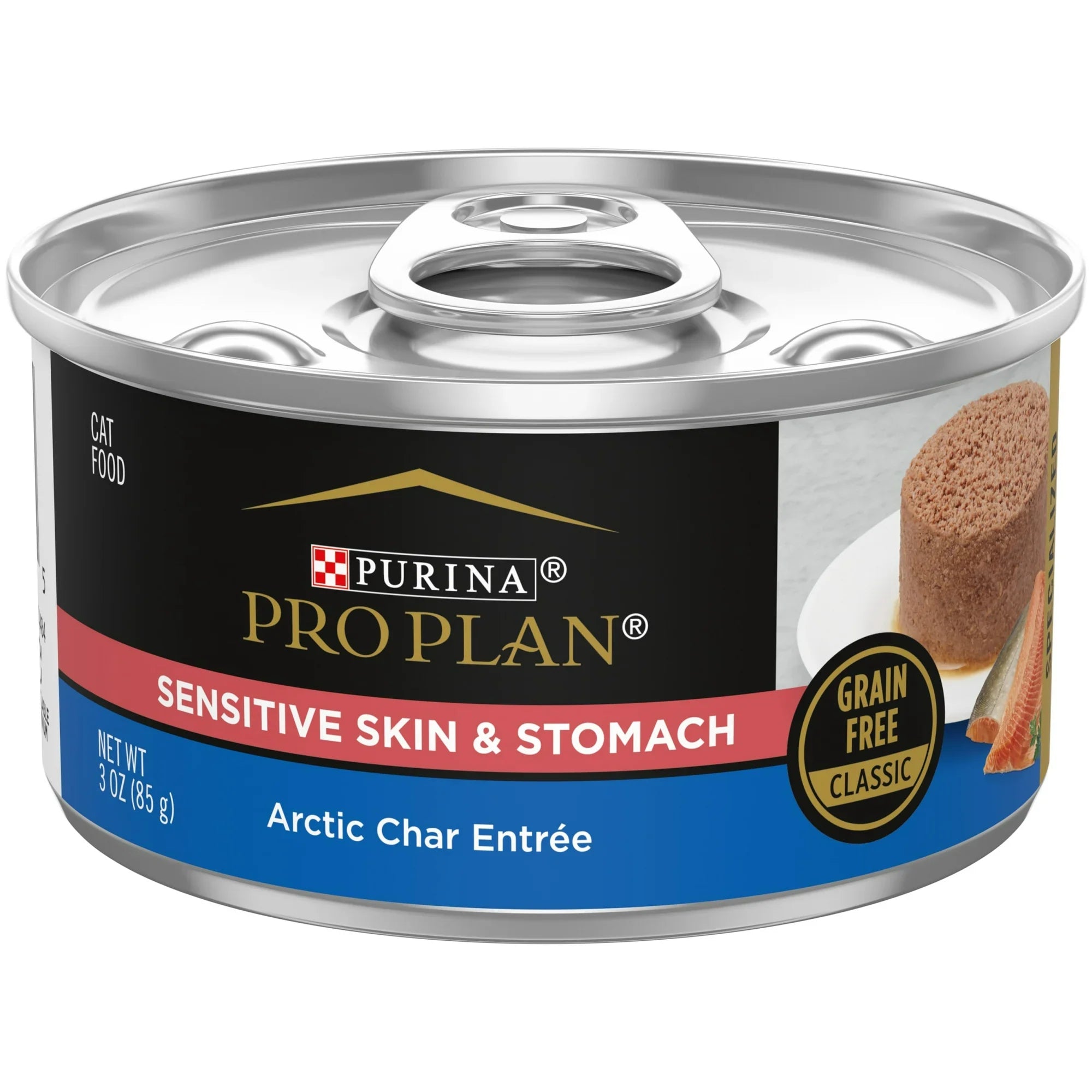
Two more wet options earn a place here. Pro Plan Sensitive Skin & Stomach Arctic Char Entrée, $2.29 per 3 oz can, is grain-free and high in protein from Arctic char, made without corn, wheat, soy, or artificial colors, with natural prebiotic fiber. For suspected food allergies, Koha Limited Ingredient Grain Free Venison Pâté, $73.99 for a case of 24, uses a single novel animal protein with pumpkin for digestive support and no potatoes, corn, soy, wheat, or carrageenan.
Wet food also adds hydration for cats who drink little.
Best for: picky eaters and cats who need more moisture in their diet. Skip if: you need a single-protein diet and the formula contains more than one animal source.
Vet Recommended Cat Food for a Sensitive Stomach: What the Label Should Prove
A vet-recommended sensitive stomach food should prove three things on its label: a named animal protein first, a guaranteed analysis with a stated fiber level, and a complete and balanced nutritional adequacy statement. Anything less is marketing.
Reading the Ingredient List and Guaranteed Analysis
Start with the first three ingredients. A named protein, such as chicken, turkey, salmon, or venison, should lead. Then look at the guaranteed analysis for crude protein, crude fat, crude fiber, and moisture. Fiber between roughly one and four percent supports stool quality without overloading a sensitive gut.
The AAFCO nutritional adequacy statement tells you the food meets minimum nutrient profiles for a given life stage.
What most guides miss is the fiber type. Fermentable fiber, such as FOS or beet pulp, feeds gut bacteria. Insoluble fiber adds bulk. A sensitive-stomach formula usually needs the first kind.
If you want to sharpen your label-reading, our guide on how to spot the signs of poor quality pet food walks through red flags ingredient by ingredient.
Best Cat Food for Sensitive Stomach Diarrhea and Soft Stool
Diarrhea and soft stool are the most common reasons owners search for a sensitive-stomach food, and also the easiest problem to misread.
For the dietary side, aim for a highly digestible formula with a single familiar or novel protein, a modest fat level, and a gentle fiber source.
Bland support foods like plain cooked rice or plain pumpkin are not complete diets. Use them only briefly and return to a complete diet, and check with your veterinarian first.
Stool quality is your scorecard, and it helps to score it the same way every day rather than eyeballing it:
- Firm and pick-up-able: ideal; log it as a 1.
- Soft but formed, leaves residue on the scoop: mild; log as a 2.
- Pudding-like, loses shape: moderate; log as a 3.
- Watery, no shape: significant; log as a 4.
- Any blood, black tarry appearance, or mucus with lethargy: stop tracking and call your vet.
Watery stool persisting past two days, any blood, or diarrhea paired with vomiting, refusal to eat, or hiding means a vet visit rather than another bag of food. Dehydration is the quiet risk, so watch for tacky gums, skin that stays tented when gently pinched, and reduced urine in the litter box.
Watch out: switching foods repeatedly during an active diarrhea episode makes it impossible to tell whether the food helped or the gut simply settled on its own.
Running a Practical Elimination Diet at Home
Ask your veterinarian what trial length suits your cat before you start. Ask your vet which timeline fits your cat before you start, because restarting a trial is expensive and frustrating.
Here is how to run it so the result actually means something:
- Pick a single novel protein your cat has never eaten, such as venison, rabbit, or duck, or a hydrolyzed formula if your vet recommends one. Confirm the label lists only that animal source.
- Remove every other food, treat, and flavored supplement for the full trial, including dental chews, pill pockets, flavored heartworm preventives, and the other cat's bowl in a multi-cat home.
- Account for treats inside the trial. If you use treats, they must be single-ingredient and match the trial protein. Farm to Pet Turkey Crumbles, $12.95, contain only dehydrated turkey breast, so they fit a novel-protein trial without adding fillers, but only if turkey is your trial protein.
- Keep a daily log of stool score, vomiting, appetite, scratching or skin signs, and body weight if you can weigh the cat.
- After the trial, reintroduce one former food at a time, about a week apart, and note which reintroduction brings symptoms back.
- Avoid that ingredient going forward and confirm with your vet whether the reaction pattern points to allergy or intolerance.
Watch out: a "grain-free" label does not make a food elimination-friendly. Many grain-free formulas still contain chicken or fish, which are common triggers, and "sensitive stomach" formulas often blend several animal proteins.
Watch out: flavored medications are the most common silent trial-breaker.
Tracking matters as much as the food. Note the date of each change, the stool score, and any vomiting so you can compare fairly instead of relying on memory.
How to Assess Whether the Food Is Actually Working
Judge a new food over two to four weeks, not two days. Track four markers: stool firmness, vomiting frequency, appetite, and coat condition.
Cats are individuals, and a formula that transforms one cat's digestion may do nothing for another. That is normal, not a failure of the food.
Building Your Cat's Sensitive Stomach Feeding Plan
A feeding plan for a sensitive stomach rests on three habits: a gradual transition, a consistent schedule, and portion control matched to body weight.
Transition over seven to ten days by mixing increasing amounts of the new food into the old. Our step-by-step guide on how to transition pet food safely without stomach upset gives you the exact day-by-day ratios. Feed at the same times daily, and measure portions rather than free-feeding, since sudden overeating triggers upset in sensitive cats.
Hydration belongs in the plan too. Wet food, water fountains, and added moisture all help the digestive tract.
If you are ready to build the plan around a specific formula, you can browse the sensitive stomach wet food options and compare the grain-free wet alternative in our shop.
Sorting out a sensitive stomach takes patience, the right food, and a plan you can stick to.
Frequently Asked Questions
What is the best cat food for a sensitive stomach?
There is no single best food, because sensitive stomachs have different triggers. Start with a highly digestible recipe built around one animal protein, then look for added fiber such as prebiotics or pumpkin for digestive support. A limited-ingredient wet food like a single-protein venison pate suits cats with suspected food sensitivities, while a chicken and rice dry formula with prebiotic fiber works well for cats with soft stool. Judge any food by stool quality and appetite over two to four weeks, not by the first few days.
Is wet or dry cat food better for a sensitive stomach?
Wet food adds moisture, which supports hydration and is often easier on cats who vomit or eat quickly. Dry food is more economical and some formulas pair prebiotic fiber with highly digestible ingredients for stool quality. Many owners feed both: a measured portion of dry food plus a wet topper. If your cat has diarrhea, wet food with a single protein and no carrageenan is a reasonable starting point, and a probiotic paste can settle occasional upset while you transition.
How should I transition my cat to a new food?
Switch gradually over seven to ten days. Mix about 25 percent new food with 75 percent old for the first three days, move to a 50/50 split for the next three, then 75 percent new, and finish on the new food alone. Slow transitions matter most for sensitive stomachs, because a sudden change can trigger diarrhea even when the new food is gentler. Keep a simple log of stool quality and appetite each day so you can spot which ratio caused a problem.
When should I take my cat to the vet for stomach problems?
Call your vet the same day if your cat is vomiting repeatedly, has diarrhea lasting more than 24 to 48 hours, stops eating, or shows lethargy. Blood in the stool, black tarry stool, abdominal pain, or vomiting after every meal also warrant urgent care. A cat that stops eating for more than a day risks liver problems, so do not wait. Chronic soft stool or intermittent vomiting over weeks deserves a workup, since food intolerance is only one possible cause.
Can a food allergy cause digestive problems in cats?
Yes. Food allergies and intolerances both show up as vomiting, soft stool, and sometimes itchy skin or coat problems. The difference is that a true allergy involves the immune system, while an intolerance is a digestive reaction. Either way, the practical test is the same: feed a single novel protein with a short ingredient list for several weeks and watch whether symptoms ease. A limited-ingredient diet with venison, salmon, or turkey is a common starting point before trying a prescription veterinary diet.


