


Liberate Your Lifestyle!

Is Wet or Dry Food Better for Kittens?
Choosing kitten food wet or dry starts with the right nutrition. Compare top brands, feeding schedules by age, and transition tips for a healthy kitten.

Last Updated: November 26, 2026
Quick Summary
For most growing kittens, we recommend kitten food wet as the foundation of the diet, with dry food used as a supplement. Wet food delivers the animal protein, fat, and moisture a young cat needs during rapid growth, and it is easier for small mouths to eat.
- Wet kitten food is about 75-78% moisture, while dry kibble sits near 10%.
- Look for an AAFCO statement confirming the food is complete for kittens or all life stages.
- Most kittens move from milk replacer to solid food around four weeks of age.
- Switch kitten food over five to seven days, starting at 75% old and 25% new.
- Reduce dry food by 1/4 cup for every 1 can of wet food when mixed feeding.
Wet or dry for your new kitten?Shop grain-free kitten pate with DHA and taurine for healthy growth.
Shop Kitten Wet Food
Table of Contents
- Is Wet or Dry Food Better for Kittens?
- Wet vs. Dry Kitten Food: Nutritional Comparison
- Best Wet Kitten Food: Top Picks for Hydration and Protein
- Best Dry Kitten Food: Top Picks for Convenience and Dental Health
- Kitten Feeding Schedule by Age: From Weaning to First Year
- How to Transition Kitten Food Safely
- Mixed Feeding: Combining Wet and Dry for Balanced Nutrition
- Choosing the Right Kitten Food for Your Pet
- Frequently Asked Questions
Is Wet or Dry Food Better for Kittens?
The answer depends on the kitten, but for most growing cats we recommend kitten food wet as the foundation of the diet, with dry food used as a supplement. Wet kitten food delivers the animal protein, fat, and moisture a young cat needs during rapid growth, and it is easier for small mouths to eat.
Kittens grow fast. Their bodies demand more calories and nutrients per pound than adult cats, and their teeth and jaws are still small. That shapes every feeding decision you make in the first year.
Below, we break down the wet versus dry debate, name our favorite kitten foods, and show you exactly how to transition between them without upsetting a sensitive stomach.
Wet vs. Dry Kitten Food: Nutritional Comparison
Wet and dry kitten food differ most in moisture, calories per ounce, and texture. Canned food is typically around 75-78% moisture, while kibble sits near 10%, which changes how much your kitten eats and drinks.
Here is how the two compare on the details that matter during growth:
| Feature | Wet Kitten Food | Dry Kitten Food |
|---|---|---|
| Moisture content | About 75-78% | About 10% |
| Protein source | Animal protein, high inclusion | Animal protein plus plant binders |
| Calorie density | Lower per ounce | Higher per ounce |
| Cost per meal | Higher | Lower |
| Storage | Refrigerate after opening | Shelf-stable |
| Dental effect | Minimal | Some mechanical scraping |
| Best for | Hydration, picky eaters, small jaws | Convenience, budget, free-feeding |
Both styles can be complete and balanced. The label, not the texture, tells you whether a food meets life-stage nutrition for growth. Look for an AAFCO nutritional adequacy statement on the can or bag confirming the food is complete for kittens or all life stages.
Best Wet Kitten Food: Top Picks for Hydration and Protein
Our top wet pick is the Wellness Complete Health Kitten Chicken Pate. It is grain-free, made with chicken and chicken liver, and adds DHA for brain development plus taurine for eye health.
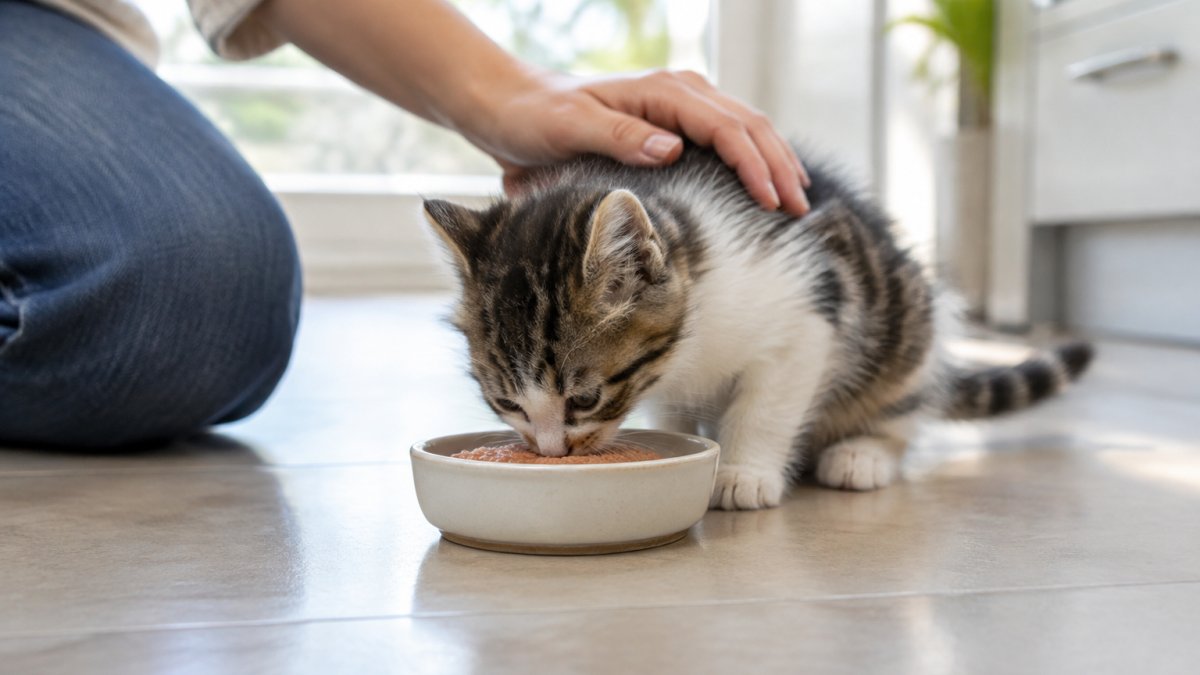
The rest of our wet lineup covers different textures and budgets:
- Wellness Complete Health Kitten Whitefish Tuna Pate (case of 24, $25.99): a fish-based option for kittens that turn up their nose at chicken.
- Wellness CORE Kitten Chicken Salmon Pate (case of 12, $33.99): higher fat and protein for growing kittens, with 113 kcal per can.
- Tiki Cat Baby Pate Chicken Salmon (case of 12, $26.99): designed for kittens four weeks and older, with a smooth pate texture that helps weaning kittens move to solid food.
- Instinct Original Kitten Chicken (5.5 oz, $3.39): a larger can with real chicken, beef liver, and salmon for protein variety.
You can shop the Wellness kitten pate or compare the Tiki Cat pate option directly on our site.
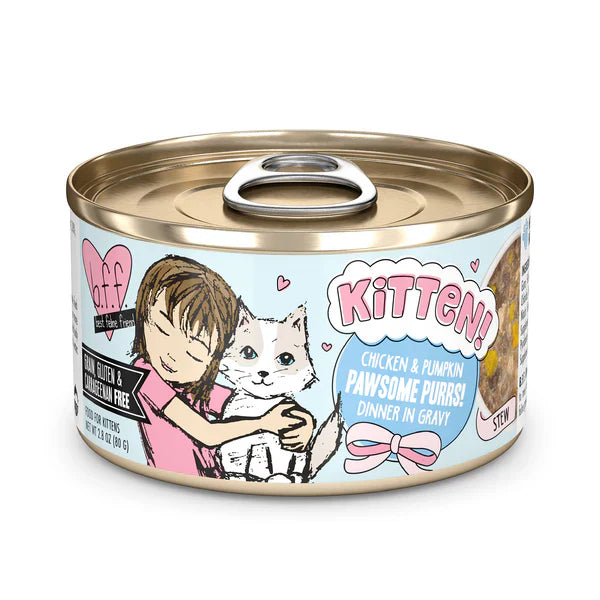
Watch out: pate left out for more than about 30 minutes at room temperature should be discarded, and any unused portion needs refrigeration.
Best Dry Kitten Food: Top Picks for Convenience and Dental Health
Our top dry pick is Stella and Chewy's Raw Coated Kitten Cage-Free Chicken. The kibble is coated in a freeze-dried raw meat coating, and it is specifically formulated for kittens. A 2.5 lb bag costs $17.99.
Kitten Chow Naturals at $11.99 for 3.15 lb lists real chicken as a highlighted ingredient and includes DHA for brain and vision development.
Two premium alternatives round out the list:
- Acana First Feast Kitten (7 lb, $37.99): 70% animal ingredients, with taurine, EPA, and DHA for cognitive and retinal function.
- Instinct Original Rabbit (4.5 lb, $39.99): an all-life-stages formula with rabbit as the first ingredient and guaranteed probiotics for digestive health.
You can browse the Stella and Chewy's kitten kibble or check the Acana First Feast formula to compare bag sizes.
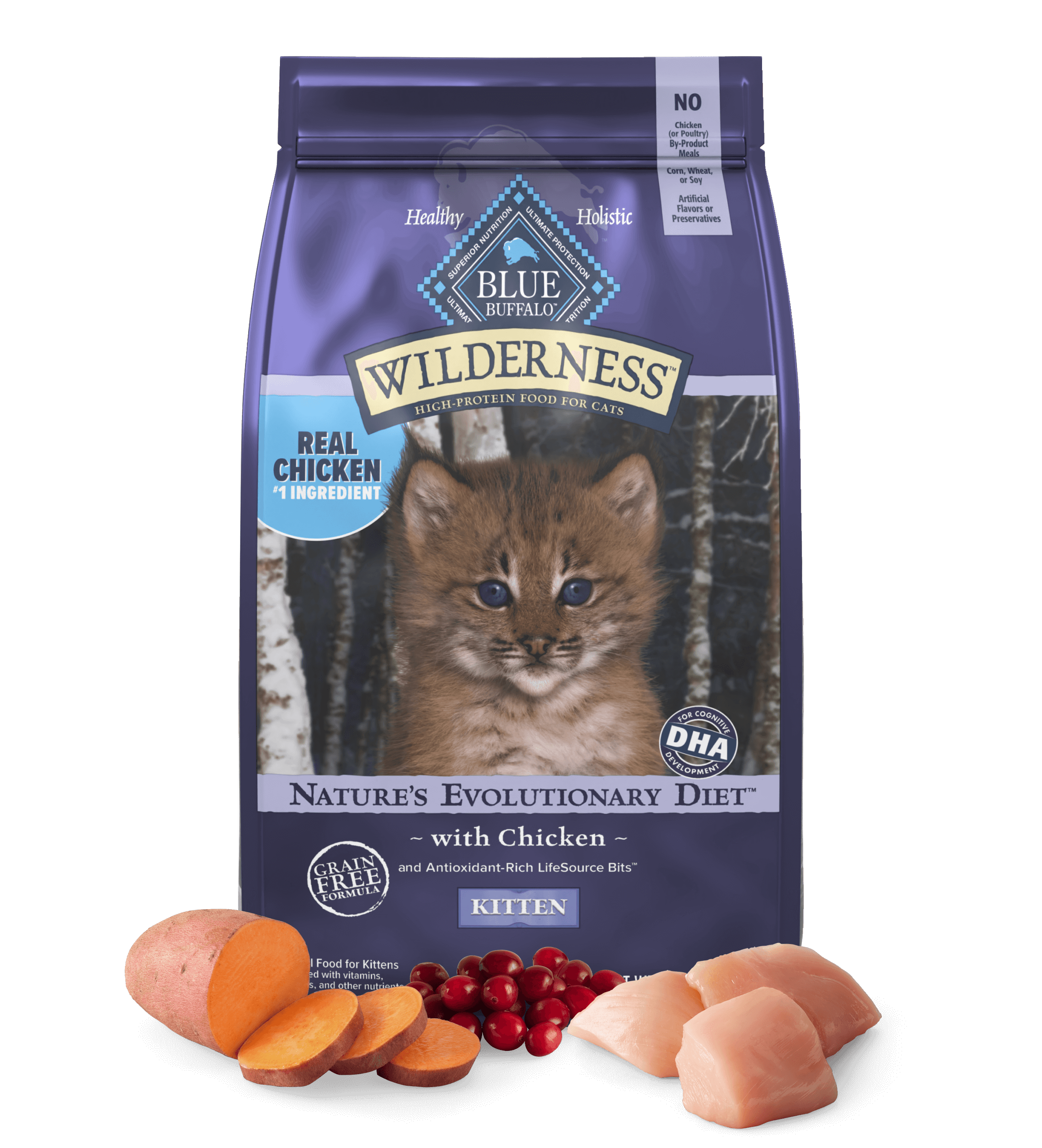
Dry food involves chewing, which can offer some mechanical action on the teeth. It is not a substitute for regular dental care, so ask your veterinarian about dental health.
Kitten Feeding Schedule by Age: From Weaning to First Year
A kitten's feeding schedule changes roughly every few months as its stomach capacity, jaw strength, and calorie needs shift. Most kittens move from milk replacer to solid food around four weeks, then eat three to four small meals a day through about six months.
Here is a practical timeline that tracks texture and nutrition, not just meal count:
- 0-4 weeks: mother's milk or a commercial kitten milk replacer only. Do not offer solid food; the digestive system is not ready.
- 4-6 weeks: introduce wet pate mixed with milk replacer into a thin gruel. Offer food three to four times daily. The goal is texture exposure, not calories from solid food.
- 6-11 weeks: move to a soft pate or finely minced wet food, and offer meals until the kitten is full, three to four times a day. This is the window when most kittens learn to chew; a smooth pate is easier than chunky textures.
- 11-26 weeks: about 3/4 can of wet food per pound of body weight daily, split across meals. Growth is fastest here, so protein and fat matter more than volume. If you add dry food, introduce small kibble only after the kitten is reliably eating wet food.
- 26-52 weeks: about 1/2 can per pound of body weight daily as growth slows. Appetite often drops in this window, so watch body condition rather than forcing portions.
- 12 months: transition to adult maintenance food. Do not stay on kitten food indefinitely; the higher calorie density can lead to weight gain once growth stops.
These figures come from the feeding directions on our Wellness kitten cans. Always confirm against the specific product label, because calorie density varies between brands.
Watch out: a kitten that refuses food for more than 24 hours at any stage needs veterinary attention, because young kittens cannot fast safely.
How to Transition Kitten Food Safely
Switch kitten food wet or dry over five to seven days, mixing a little more of the new food into the old each day. A sudden swap is the most common cause of vomiting and loose stools in young cats.
A simple transition schedule:
- Days 1-2: 75% old food, 25% new food
- Days 3-4: 50% old, 50% new
- Days 5-6: 25% old, 75% new
- Day 7: 100% new food
Watch for signs of intolerance: repeated vomiting, diarrhea lasting more than a day, scratching at the ears, or refusal to eat. Mild soft stool in the first day or two is common and usually settles. If a kitten stops eating entirely for more than 24 hours, call your veterinarian, because young kittens cannot fast safely.
The Cornell Feline Health Center guidance on feeding kittens is a useful reference if you want a veterinary second opinion on transition timing.
Mixed Feeding: Combining Wet and Dry for Balanced Nutrition
Mixed feeding means offering wet and dry food in the same day, and it works well for most kittens when the portions are calculated.
Start with the calorie target. Most kitten food labels state calories per can or per cup, usually as kcal per can or kcal per cup.
A simple three-step method:
- Find the daily calorie target from the label feeding directions for your kitten's current weight and age.
- Assign calories to wet food first. Multiply the number of cans by the kcal per can. Most of our Wellness kitten cans state the ratio directly: reduce dry food by 1/4 cup for every 1 can of wet food.
- Fill the remainder with dry food. Divide the remaining calories by the kcal per cup on the bag to get the dry portion. Round down rather than up when in doubt.
A worked example for a 4 lb kitten at 20 weeks:
- Target: roughly 3 cans of 3 oz wet food per day based on the label
- Split: 2 cans wet plus 1/4 cup less dry than the bag recommends
- Meals: three wet meals plus one measured dry portion
Best for: kittens that need extra hydration but also enjoy crunch, and owners who want the convenience of leaving dry food out during the day.
Skip if: your kitten has a sensitive stomach that reacts to frequent diet changes, or your vet has prescribed a single-protein diet.
Measure both sides against the same calorie target.
Choosing the Right Kitten Food for Your Pet
Start with the nutritional adequacy statement, then match texture and portion to your kitten's age and appetite.
Our buying checklist:
- AAFCO statement confirms the food is complete for kittens or all life stages
- Named animal protein is the first ingredient
- DHA is listed for brain and eye development
- Taurine appears in the ingredient list
- Portion guidance matches your kitten's current weight and age
- Texture suits your kitten's jaw size and chewing ability
If your kitten is a picky eater, our guide to wet food picks for choosy cats goes deeper on palatability and texture.
At Walnut Creek Supply, we aim to offer kitten food with clear labels and named proteins. As a family-owned business, we are happy to help you think through your kitten's age and eating style.
Choosing kitten food gets easier once you stop treating wet and dry as rivals. Build the diet around wet food for hydration and protein, use dry for convenience and cost control, and transition slowly between any two foods.
Frequently Asked Questions
Is wet or dry food better for kittens?
Neither is universally better; the right choice depends on your kitten's needs. Wet food provides higher moisture, which supports hydration and urinary health, and is often more palatable for picky eaters. Dry food is convenient, cost-effective, and can help with dental health through chewing. Many experts recommend a mix of both to balance benefits. Always choose a complete and balanced formula for growth, and consult your veterinarian for personalized advice.
Can kittens eat both wet and dry food?
Yes, kittens can eat both wet and dry food. Mixed feeding can provide the hydration benefits of wet food alongside the convenience and dental benefits of dry kibble. When feeding both, adjust portions to avoid overfeeding: reduce dry food by about 1/4 cup for every 1 can of wet food, as directed on many labels. Introduce the combination gradually and monitor your kitten's weight and digestion.
When can kittens start eating dry food?
Kittens can start eating dry food around 4 to 6 weeks of age, when they are weaning from their mother's milk. At first, moisten the kibble with warm water or kitten milk replacer to make it easier to chew. By 8 weeks, most kittens can handle dry kibble on its own. Always provide fresh water and choose a dry food specifically formulated for kittens to ensure complete nutrition.
How often should you feed a kitten wet food?
Kittens under 6 months old should be fed wet food 3 to 4 times per day, as their small stomachs require frequent small meals. From 6 to 12 months, you can reduce to 2 to 3 meals per day. Follow the feeding guidelines on the product label, which often base amounts on age and body weight, and adjust based on your kitten's appetite and growth. Always consult your veterinarian for a tailored schedule.
How do I transition my kitten to a new food?
Transition slowly over 5 to 7 days to avoid digestive upset. Start by mixing 25% new food with 75% old food for 2 to 3 days, then increase to 50/50 for another 2 to 3 days, then 75% new for 2 to 3 days, finally 100% new. Watch for signs of intolerance such as vomiting, diarrhea, or refusal to eat, and slow down if they occur. This gradual approach helps your kitten adjust to the new texture and ingredients.


