


What Is the Best Bedding for a Gerbil Cage?
Choosing gerbil bedding comes down to safety, dust, and burrow structure. Compare paper, aspen, pine, and hemp options, plus depth and cleaning schedules.

Last Updated: November 4, 2026
Quick Summary
Paper-based gerbil bedding wins for most households, with Carefresh reclaimed fiber offering high absorbency and low dust. Aspen and kiln-dried pine suit deep diggers, while hay, shredded paper, and cardboard work best as mix-ins rather than standalone substrate.
- Aim for a settled bedding depth of at least 6 to 8 inches, mounded to 10 to 12 inches in one corner.
- Spot-clean soiled patches every two to three days and do a full substrate change every two to three weeks.
- Never use cedar, fresh untreated pine, scented bedding, dusty sawdust, or clumping cat litter.
- A 36-by-18-inch tank at 8 inches settled depth needs about 85 liters of loose bedding.
- Mix a few handfuls of clean used bedding into the new layer on full-change day so it smells familiar.
Table of Contents
- Quick Comparison: Best Gerbil Cage Bedding Options
- Safe Bedding Materials for Gerbils
- Carefresh Gerbil Bedding: What the Reclaimed Fiber Option Offers
- Hemp Bedding for Gerbils: Absorbency, Dust, and Cost
- Best Gerbil Bedding for Tunnels and Burrows
- Unsafe Bedding Materials to Avoid
- How Often to Change Gerbil Bedding
- Build Your Gerbil's Bedding Setup at Walnut Creek Supply
- Frequently Asked Questions
Quick Comparison: Best Gerbil Cage Bedding Options
Gerbils are burrowers by instinct, and the right bedding is the foundation of a healthy enclosure. This guide ranks the best gerbil cage bedding options by safety, absorbency, dust level, and value. The short answer: paper-based bedding wins for most households, aspen and kiln-dried pine suit deep diggers, and hay, shredded paper, and cardboard work best as mix-ins.
| Bedding | Best For | Absorbency | Dust Level | Watch Out For |
|---|---|---|---|---|
| Carefresh reclaimed fiber | Most gerbils, all-round use | High | Low | Costs more per liter |
| Hemp bedding | Odor control, low dust | High | Very low | Harder to find locally |
| Aspen shavings | Deep burrows, structure | Medium | Moderate | Heavier to spot-clean |
| Kiln-dried pine | Ventilated enclosures | Medium | Moderate | Only kiln-dried, never fresh |
| Hay, shredded paper, cardboard | Nesting and mix-ins | Low alone | Varies | Not a standalone substrate |
Carefresh is a paper-based option made from 100% reclaimed natural fiber and is listed for small animals including gerbils. Below, we break down each option, the materials to avoid, and how often to change gerbil bedding.
Safe Bedding Materials for Gerbils
Safe gerbil bedding falls into two families: paper-based products and properly processed wood. Anything that crumbles into dust, carries strong aromatic oils, or compacts into a hard brick is a risk. Gerbils spend most of their lives nose-down in substrate, so respiratory safety matters more than color or scent.
Paper-Based Bedding
Paper bedding is a soft, absorbent option for gerbils, made from reclaimed fiber in the case of the Carefresh line. Look for reclaimed or recycled fiber and avoid added fragrance. Soiled patches clump and lift out easily, so spot-cleaning doesn't collapse the burrow system.
Aspen and Kiln-Dried Pine
Aspen and kiln-dried pine are the two wood options we recommend, with a caveat. Aspen's low aromatic oil content makes it the safer shaving choice. Pine is only acceptable when kiln-dried, since the heat treatment drives off most volatile oils that irritate small animal lungs. Never use fresh, untreated pine, and never use cedar at all.
Hay, Shredded Paper, and Cardboard
Hay, shredded paper, and cardboard are commonly used as nesting materials rather than full substrates. Layer them on top of a proper substrate and replace them whenever they get damp.
Carefresh Gerbil Bedding: What the Reclaimed Fiber Option Offers
Carefresh is a paper bedding made from 100% reclaimed natural fiber, and the product listing notes it is designed for small pets including gerbils. The fiber is described as pillowy and ultra absorbent.
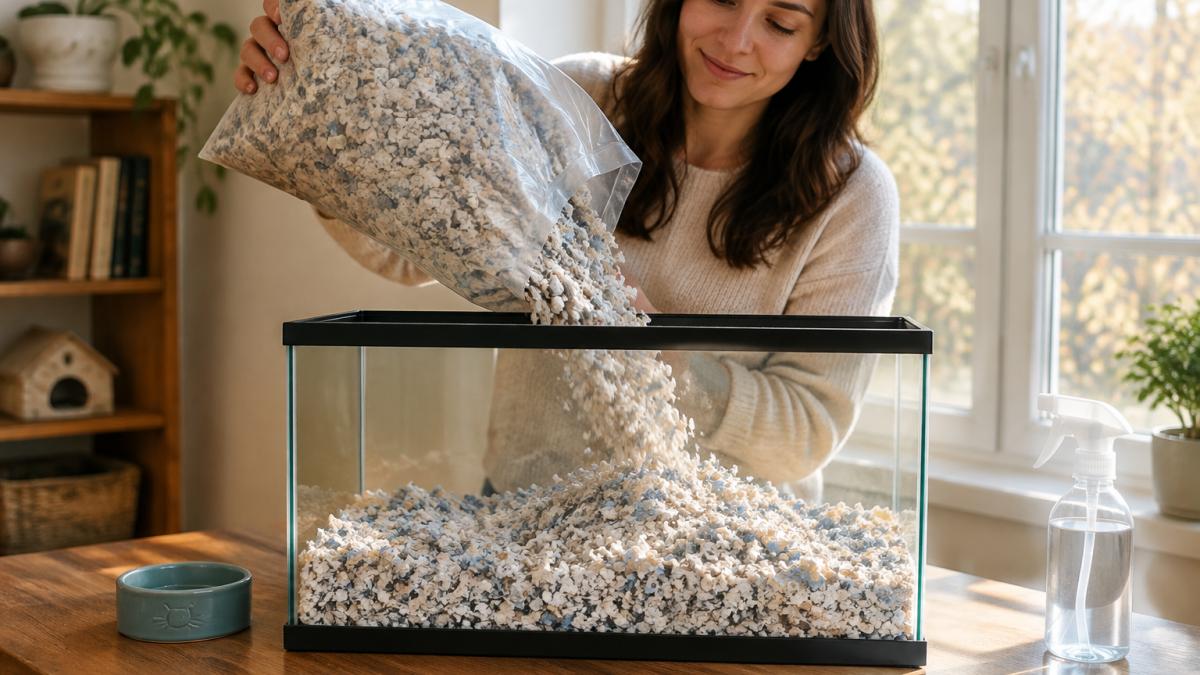
The Special Edition line adds colorful themes to the bedding.
The trade-off is cost, since a deep bed uses a fair amount of bedding. You can shop the Carefresh Special Edition small animal bedding in the 10L size to test it before committing to a larger bag.

Hemp Bedding for Gerbils: Absorbency, Dust, and Cost
The drawbacks are availability and price: hemp is sold in fewer stores and costs more per bag in most cases. Its chunkier pieces also need a deeper layer to hold tunnel shape. Many owners blend hemp on the base with paper in the nesting chamber, combining odor control with soft structure.
Best Gerbil Bedding for Tunnels and Burrows
The best gerbil bedding for tunnels is a deep layer of paper-based substrate, packed loosely enough to dig but firmly enough that walls hold. Depth matters more than material: a shallow tray of any bedding collapses the moment a gerbil digs, and a gerbil that cannot burrow will pace the glass and chew the bars instead.
How deep should gerbil bedding be?
Aim for a settled depth of at least 6 to 8 inches across most of the floor, with one corner mounded to 10 to 12 inches where the main burrow will run. Settled depth is what matters: paper bedding compresses by roughly a third once tunneled through, so a 12-inch pour settles to about 8 inches. Measure after a day of digging, not on setup day.
Calculating how much bedding you need
Bedding is sold by volume in liters, and enclosure volume is easy to estimate. Multiply the tank's length by width by the target settled depth in inches, then divide by 61 to convert cubic inches to liters.
| Enclosure footprint | Target settled depth | Loose bedding to buy (approx.) |
|---|---|---|
| 24 x 12 in | 6 in | 30 L |
| 30 x 18 in | 8 in | 70 L |
| 36 x 18 in | 8 in | 85 L |
| 48 x 24 in | 10 in | 190 L |
These are starting estimates. Buy extra for the mound corner and first spot-clean top-ups, and keep one unopened bag on hand so a mid-week soiled patch never forces a thin layer.
Building a burrow that holds
Build the setup in layers. Start with a base of paper bedding across the whole floor at the target depth, then add the mound in one corner. Mix in a handful of hay or shredded paper so the walls knit together, and press the mound down lightly with your palm.
The Prevue Pet Products Grass Hut is hand-woven from natural grass, and its listing notes it satisfies a small animal's instinct to burrow, explore, and nest. For more setup ideas beyond bedding, our guide to ferret cage enrichment ideas covers tunnel and hide arrangements that translate well to small animal housing.
CareFRESH Special Edition Small Animal Bedding Tutti Frutti 10L →
Maintaining the burrow between full changes
Spot-clean by lifting soiled clumps from the toilet corner only. Do not stir or turn the rest of the substrate, because that collapses tunnels gerbils spent days building. When topping off a low spot, sprinkle fresh bedding in a thin layer rather than dumping a pile, and press it down so it blends into existing walls.
Watch out: a wheel, water bottle, or heavy hide sitting on deep bedding will sink and tip once gerbils tunnel underneath. Set heavy items on a solid shelf or on the tank floor with bedding packed around them, not on top of the loose layer.
Unsafe Bedding Materials to Avoid
Many owners avoid cedar and fresh, untreated pine because of their aromatic oils, and gerbils spend much of their time in substrate. If you notice sneezing or wheezing, consult a veterinarian.
Why the pine advice conflicts, and how to read a bag
The reason recommendations disagree is processing, not species. Fresh pine and kiln-dried pine are the same wood, but kiln drying heats it enough to drive off most volatile aromatic oils that irritate airways, so one guide says pine is fine and another says never use it because they mean different products.
A bag labeled simply "pine" tells you nothing about how it was processed. If the packaging does not say kiln-dried, treat it as untreated and leave it on the shelf. If it says kiln-dried but smells strongly of pine when you open it, return it; a properly processed bag should smell faintly of wood, not like a cleaning product.
The full avoid list
- Cedar shavings: strong aromatic oils, not safe for small animals
- Fresh or untreated pine: same oil concern; only kiln-dried pine is acceptable
- Scented or dyed bedding: added fragrance irritates airways
- Dusty, fine sawdust: clogs the nose and coats the lungs
- Clumping cat litter: expands and hardens if ingested
- Newspaper with glossy print: ink and coating are not appropriate for chewing
- Corncob bedding: hard pieces and a high dust level, and it molds quickly when damp
- Cotton or synthetic fluff nesting material: fibers can wrap around limbs and block the gut if swallowed
Dust, allergies, and warning signs
Pouring new bedding into a bucket outdoors or over a sink before adding it to the tank can help reduce airborne dust. If anyone in the house sneezes or itches after a bedding change, or a gerbil develops a persistent wheeze, switch to a low-dust paper or hemp product and reassess. A gerbil that stops digging, sits hunched, or breathes with visible effort should be seen by a veterinarian.
Watch out: mixing a small amount of cedar or untreated pine into an otherwise safe substrate does not dilute the risk. The oils are still present in the layer the gerbil is breathing in, so keep those materials out of the enclosure entirely.
How Often to Change Gerbil Bedding
Spot-clean soiled patches every two to three days, and do a full substrate change every two to three weeks for a typical cage. Gerbils are relatively clean and tend to use one corner as a toilet, which makes spot-cleaning fast. Deep burrow systems can last longer if the bedding stays dry, but never stretch a change past the point where odor lingers.
Frequency depends on cage size, how many gerbils you keep, and bedding depth: a larger enclosure with a deep paper layer holds longer than a small tank with a thin sprinkle, and hemp tends to last slightly longer than paper thanks to its odor control.
Build Your Gerbil's Bedding Setup at Walnut Creek Supply
Getting bedding right comes down to three decisions: choose a safe material, give it enough depth, and replace it on a steady schedule. Paper-based bedding covers most gerbils well, aspen and kiln-dried pine suit deep diggers in ventilated cages, and hemp is the pick when odor and dust are your main concern.
Walnut Creek Supply carries Carefresh Special Edition small animal bedding in 10L, 23L, and 50L sizes, along with the Prevue Pet Products Grass Hut, and our team is here to help you choose bedding for your gerbils.
Get started with Walnut Creek Supply and give your gerbils a deep, low-dust home they can dig into.
Frequently Asked Questions
What bedding do gerbils prefer?
Gerbils are burrowers, so they prefer a soft, hold-shape substrate they can dig into and tunnel through. Paper-based gerbil bedding and aspen shavings both pack well enough to hold a tunnel wall. Depth matters as much as material: a layer of roughly 20 to 30 cm (about 8 to 12 inches) gives them room to dig, nest, and create separate chambers. Mixing a soft paper layer with a rougher wood layer gives them both structure and a comfortable nest.
How often should I change the bedding in my gerbil cage?
Spot-clean soiled spots two to three times a week and do a full bedding change every two to four weeks, depending on cage size and how many gerbils you keep. A larger enclosure with deep bedding holds longer between full changes. If you smell ammonia when you open the lid, the change is overdue. Keep a small handful of clean used bedding to mix back in so the cage still smells familiar to your gerbils.
Is hemp bedding safe for gerbils?
Hemp bedding for gerbils is generally considered safe when it is plain, dust-extracted, and free of added oils or scent. It absorbs well and holds shape for tunneling. The trade-offs are cost and texture: hemp tends to cost more per liter than paper bedding and is chunkier, so many owners mix it with a softer paper layer for nesting. Introduce it gradually and watch for sneezing or scratching.
Can gerbils use Carefresh bedding?
Yes. Carefresh bedding is made from 100% reclaimed natural fiber and is listed as suitable for small pets including gerbils. It is described as soft and absorbent. The 10L Tutti Frutti size is $10.99, and the 50L Tutti Frutti and Sea Glass sizes are $30.99.
What bedding should you avoid for gerbils?
Avoid cedar and any strongly scented wood shavings, because the aromatic oils are a respiratory risk for small animals. Skip clumping cat litter, sawdust, and any bedding that produces visible dust clouds when you pour it. Cotton wool and similar fluffy synthetic nesting materials can wrap around limbs and should stay out of the cage. Also avoid soiled or damp bedding left too long, since ammonia buildup irritates the airways.


