


Holistic Health Tips for Senior Dogs: A Daily Wellness Guide
Holistic health tips for senior dogs start with a daily routine. Learn nutrition, mobility, enrichment, and dementia care that keep aging dogs comfortable.

Last Updated: November 8, 2026
Quick Summary
Holistic health tips for senior dogs center on five daily pillars: nutrition, mobility, mind, mouth, and monitoring. Build a steady routine with measured senior food, short frequent walks, enrichment games, dental care, and weekly body checks. Small daily habits beat occasional grand gestures for aging dogs.
- Senior dog nutrition shifts toward fewer calories and higher-quality protein after age seven.
- Two or three gentle walks beat one long outing for senior dog mobility.
- Ten minutes of nose work tires a senior dog more than a fast lap around the block.
- Add one new supplement at a time and give it two to four weeks before judging.
- Score body condition 1 to 5 monthly and bring your weekly log to every vet appointment.
What does your senior dog need daily?Walnut Creek Supply stocks senior-specific supplements and guidance to build a simple daily routine.
Shop Senior Dog Care
Table of Contents
- Building a Whole-Dog Daily Wellness Routine for Senior Dogs
- Senior Dog Nutrition: What Changes After Age Seven
- Senior Dog Exercise and Mobility: Keep Them Moving Safely
- Senior Dog Enrichment: Low-Impact Activities for Body and Mind
- How to Care for a Senior Dog with Dementia
- Evaluating Supplements and Natural Remedies Safely
- Tracking Progress at Home and Knowing When to Call the Vet
- Stocking Your Senior Dog's Wellness Shelf at Walnut Creek Supply
- Frequently Asked Questions
Building a Whole-Dog Daily Wellness Routine for Senior Dogs
Holistic health tips for senior dogs start with one idea: small daily habits beat occasional grand gestures. A whole-dog routine covers food, movement, mind, mouth, and monitoring.
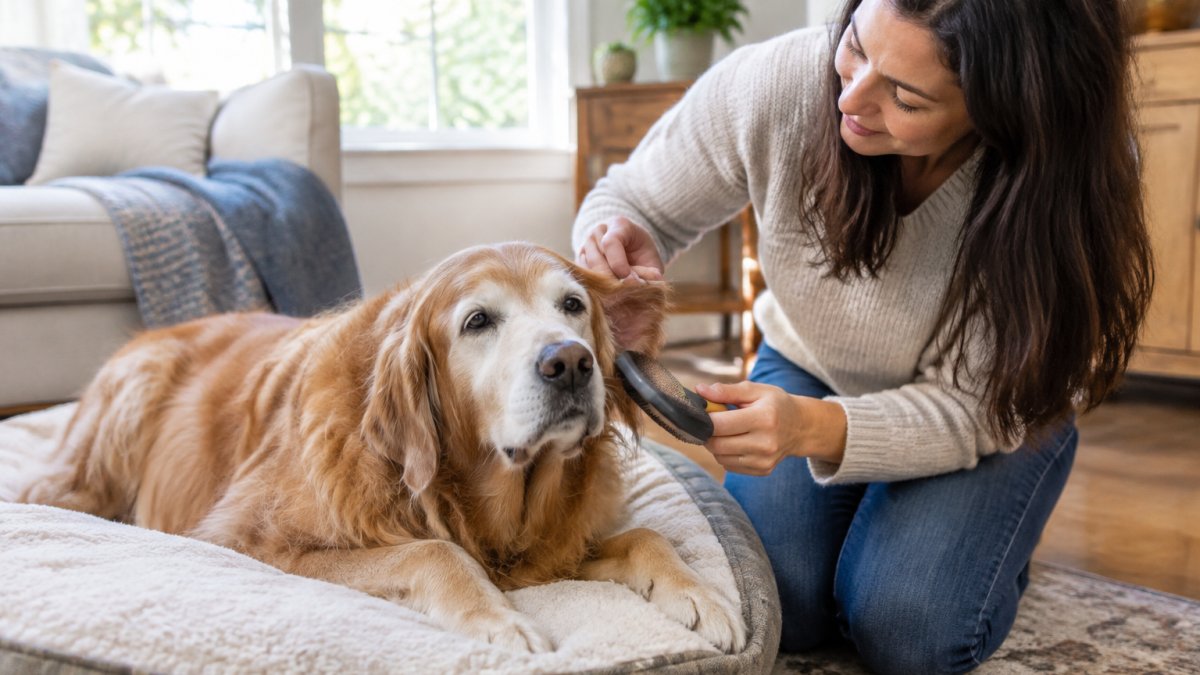
Senior years arrive quietly. One day your dog clears the stairs without a thought. The next, they pause at the bottom. A steady routine helps you catch those shifts early, while they are still small.
The Five Pillars of Senior Dog Wellness
- Nutrition: senior dog food matched to weight, muscle, and digestion
- Mobility: gentle activity that keeps joints and muscle strength up
- Mind: enrichment and cognitive health support
- Mouth: dental care that protects oral health
Miss one pillar and the others work harder. Skip mobility, for example, and weight management gets tougher.
A Sample Daily Schedule You Can Adapt
- Morning: offer fresh water and a short, slow walk.
- Breakfast: measured senior dog food, plus any supplements.
- Midday: a sniff walk or indoor enrichment game.
- Afternoon: quiet rest in a comfortable, draft-free spot.
- Evening: another gentle walk and a body check.
- Night: dental chew or brushing, then lights out.
Keep the order stable. Dogs relax when they know what comes next.
Senior Dog Nutrition: What Changes After Age Seven
Senior dog nutrition shifts toward fewer calories and higher-quality protein. Aging dogs burn less energy but still need muscle strength. So portions shrink while nutrient density matters more.
Three nutrients earn extra attention:
- High-quality protein to slow muscle loss
- Fiber for digestion and steady appetite
- Omega-3 fatty acids and antioxidants for joint and brain support
Watch hydration too. Older dogs often drink less, so keep bowls fresh and easy to reach.
Reading a Senior Dog Food Label
Start with the guaranteed analysis, then check the ingredient list. Look for a named protein source near the top. Check calories per cup so you can adjust portions as energy levels drop.
For a deeper walkthrough, read our guide on how to identify high quality pet food on the label. Switching foods? Follow our safe food transition steps to avoid stomach upset.
Senior Dog Exercise and Mobility: Keep Them Moving Safely
Senior dog exercise and mobility work best in short, frequent bursts. Two or three gentle walks beat one long outing.
A common mistake is stopping walks entirely once a dog slows down. In practice, that speeds up stiffness and weight gain.
For joint support, our advanced joint care chew tablets for dogs and cats combine glucosamine HCL, chondroitin sulphate, and MSM for joint support.

Recognizing Pain Before It Slows Them Down
Pain signs hide in small changes. Watch for:
- Hesitation on stairs or furniture
- Stiffness after rest
- Shorter walks or lagging behind
- Licking one joint
Catch these early and call your vet. AAHA senior care guidelines offer a useful framework for age-related screening.
Senior Dog Enrichment: Low-Impact Activities for Body and Mind
Senior dog enrichment keeps the brain busy without stressing the body. Sniff games, food puzzles, and gentle training all count. Ten minutes of nose work tires a senior dog more than a fast lap around the block.
Try these indoor activities:
- Scatter kibble in a snuffle mat
- Hide treats under cups
- Practice easy cues like "touch" or "find it"
- Rotate two or three toys weekly
Mental stimulation supports cognitive health and eases behavior changes.
How to Care for a Senior Dog with Dementia
Caring for a senior dog with dementia means keeping life predictable. Cognitive decline shows up as confusion, pacing, nighttime restlessness, and house accidents. None of these are disobedience.
Practical steps that help:
- Keep furniture and feeding spots in the same place
- Add night lights along common paths
- Set a fixed schedule for meals, walks, and sleep
- Use baby gates to block unsafe stairs
For brain support, our Memory & Brain Support for senior dogs combines DHA and EPA omega-3 fatty acids with other brain-support ingredients.

Evaluating Supplements and Natural Remedies Safely
A safer framework sorts every product into three questions: what is the evidence, what could it interact with, and how will you know it is working?
Start With the Evidence Tier, Not the Label
Supplements for dogs fall into rough tiers of support. Knowing which tier a product sits in keeps expectations honest.
Read the Label Like an Editor
A useful label answers four questions without guesswork:
- Is the active ingredient named and quantified? "Proprietary blend" hides amounts. You cannot judge a dose you cannot see.
- Is there a guaranteed analysis or supplement facts panel? This is where amounts per serving should appear.
- Is the serving size weight-appropriate? A 10-pound terrier and a 90-pound retriever do not share a dose.
- Is there a lot number and contact information? Reputable manufacturers can trace a batch.
Screen for Interactions Before You Add Anything
Senior dogs often take prescription medications for arthritis pain, heart disease, thyroid, or seizures. Some supplements can compound or interfere with those drugs. A few common patterns are worth raising with your veterinarian:
Bring the actual bottles, or photos of the labels, to your appointment. Your vet can check the total daily intake across everything your dog receives, including treats and food.
Introduce One Variable at a Time
What most guides miss is timing. If you start three products in the same week and your dog improves, or develops loose stool, you cannot tell which change is responsible.
A practical sequence:
- Add one new supplement at a time.
- Give it for two to four weeks at the label dose before judging.
- Log appetite, stool quality, energy, and mobility during that window.
- Change only one thing at a time, including food and treats.
Know When to Stop
Discontinue and call your vet if you see vomiting, diarrhea lasting more than a day, itching or hives, lethargy, or any behavior change that starts after a new product.
Supplements are support, not treatment. Review any stack with your veterinarian.
Tracking Progress at Home and Knowing When to Call the Vet
A senior dog's health changes in small increments. A weekly log turns those increments into a pattern you can act on, and into observations your veterinarian can actually use. The goal is not to diagnose at home. It is to arrive at appointments with specifics instead of impressions.
Measure the Same Way Every Time
Consistency matters more than precision. Pick one method and repeat it.
- Weight: use the same scale, ideally at the vet's office or a pet-store scale, at the same time of day. Monthly is enough unless your vet advises otherwise.
- Body condition: run a hands-on check. You should be able to feel the ribs under a thin fat layer without pressing hard, see a waist from above, and feel a tuck at the belly. Score it 1 to 5 (1 = very thin, 5 = obese) and write the number down.
- Mobility: count the stairs your dog takes without hesitation, or time a familiar walk route. A stopwatch is more honest than memory.
- Appetite and water: note skipped meals and any sudden increase in drinking, which can signal several conditions worth a vet visit.
A Simple Weekly Log
| What to Track | How Often | What to Record | Warning Sign |
|---|---|---|---|
| Weight | Monthly | Pounds on the same scale | Unexplained gain or loss |
| Body condition | Monthly | 1-5 score | Score moving toward either extreme |
| Appetite | Daily | Meals finished or skipped | Skipping more than one meal |
| Water intake | Daily | Roughly how much | Sudden increase or decrease |
| Mobility | Weekly | Stairs, walk time, stiffness | New limping or reluctance |
| Sleep | Weekly | Restlessness, pacing | Night waking that is new |
| Behavior | Weekly | Confusion, withdrawal | Disorientation or house accidents |
Keep the log where you will see it, on the fridge or in a phone note. Bring it to every appointment. A month of entries is far more useful to your vet than "he seems slower lately."
Recognize Pain Before It Becomes Obvious
Dogs hide pain well. The signs are often behavioral rather than vocal.
- Hesitation on stairs, furniture, or the car
- Stiffness after rest that eases with movement
- Lagging on walks or refusing the usual route
- Licking or chewing one joint or paw
A common pattern is a dog who is fine on the walk but stiff an hour later. That is worth a call, not a wait-and-see.
Know Your Escalation Thresholds
Some changes can wait for a scheduled visit. Others cannot.
Call your veterinarian promptly for:
- Sudden appetite loss lasting more than a day
- Labored breathing, coughing, or a new heart murmur sound
- Collapse, weakness, or inability to rise
- Signs of pain that do not settle with rest
Seek emergency care for: difficulty breathing, pale or blue gums, uncontrolled bleeding, a distended abdomen with retching, seizures, or heat exposure. The AVMA's pet owner resources explain what counts as urgent and how to reach an emergency clinic.
Share the Log, Not Just the Complaint
When you call, lead with the data: "Her weight is down two pounds since last month, she has skipped three breakfasts this week, and she is pacing at night." That gives your vet a starting point and often shortens the path to the right test. Tracking is not a substitute for veterinary care, it is how you make that care faster and more precise.
Stocking Your Senior Dog's Wellness Shelf at Walnut Creek Supply
A wellness shelf saves you from scrambling when something changes. Build it around the five pillars so you always have the basics on hand.
Our Senior Support Chews target brain, heart, and vision for dogs seven and older. Pair them with a joint formula and a brain supplement, and you have a simple daily stack.

Senior care asks for patience and consistency more than perfection. Start with one pillar this week, then add the next.
Frequently Asked Questions
What are signs that a senior dog is healthy?
A healthy senior dogs usually keeps a steady appetite, stable weight, and consistent energy for its age. Watch for clear eyes, a shiny coat, and steady movement without stiffness after rest. Your dog should recognize you and follow familiar routines. Body condition matters too: you should feel ribs easily without seeing them sharply. Any sudden change in appetite, sleep, thirst, or behavior is worth a vet call, since early detection of chronic conditions makes them easier to manage.
How often should a senior dog see a veterinarian?
Most vets recommend a checkup every six months once a dog passes age seven. Senior dogs change faster than young ones, and twice-yearly visits catch weight shifts, dental disease, and joint changes before they become painful. Bring a simple log of appetite, activity, and any behavior changes to each visit. Ask about baseline bloodwork, since it helps track trends over time.
What exercise is safe for an older dog?
Short, frequent walks on soft ground beat one long outing. Two or three 15-to-20 minute walks a day suit most senior dogs, plus gentle stretching and sniffing time. Skip high-impact jumping, stairs, and hard surfaces if your dog shows stiffness. Swimming and flat, shaded paths work well in warm weather. Watch for heavy panting, lagging behind, or stiffness the next day, and scale back. Your vet can flag breed- and size-specific limits if your dog has joint or heart concerns.
How can I care for a senior dog with dementia?
Keep routines predictable: same feeding times, same walking routes, same sleeping spot. Add night lights so your dog can find its way after dark, and block off stairs or pools. Mental stimulation helps too, like food puzzles and short training sessions using familiar cues. Senior dog enrichment that engages smell works well when eyesight fades. Ask your vet whether any underlying conditions, like pain or thyroid issues, could be driving the behavior changes.


