


Liberate Your Lifestyle!

How to Reduce Litter Tracking in a Small Apartment
Stop litter tracking in a small apartment with low-tracking litter, the right mat, and smart box placement. Learn the setup that keeps floors clean.

Last Updated: November 16, 2026
Quick Summary
Reduce litter tracking in a small apartment by starting with a low-tracking litter, such as a walnut pellet litter, and placing a textured litter tracking mat at every exit your cat uses. Add a high-sided or enclosed box, keep litter two to three inches deep, and sweep daily.
- Pellet litter made from walnut shells is larger and firmer, so it does not stick to paws like fine clay granules.
- Shake out litter tracking mats daily and vacuum or rinse them once a week to keep them trapping.
- A high-sided or enclosed litter box is the single biggest upgrade for a tracking problem.
- Blend old and new litter over a week when switching so your cat does not avoid the box.
- Run a two-week test, changing one fix at a time, to find what actually reduces scatter.
Tired of litter on your apartment floors?We carry low-tracking litter, enclosed boxes, and mats to keep your small space clean.
Shop Litter Boxes
Table of Contents
- Start With a Low-Tracking Cat Litter
- Put a Litter Tracking Mat at Every Exit
- Choose a High-Sided or Enclosed Box for Tight Spaces
- How to Keep Cat Litter Off the Floor DIY
- Ways to Hide a Litter Box in a Small Apartment
- Troubleshoot Tracking With a Two-Week Test
- Build Your Apartment Litter Setup With Walnut Creek Supply
- Frequently Asked Questions
Start With a Low-Tracking Cat Litter
Litter tracking is the scatter of litter granules that cling to a cat's paws and get carried out of the box onto your floors.
Cat owners in tight spaces often ask about this problem. The fix starts with what goes in the box, not the vacuum.
Here is the good news.
Start with litter. A low-tracking cat litter is your first line of defense.
Pellet Litter vs. Clumping Clay for Tracking
Pellet litter and clumping clay fail in different ways, and the right pick depends on your cat.
Pellet litter, like our Naturally Fresh Non Clumping Pellet Litter, is made from 100% natural walnut shells.
Clumping clay is the more familiar choice. Fine granules can cling between toes, especially after a cat digs deep.
A low-tracking clumping option, like our Odorlock Maxcare Clumping Cat Litter, is designed to reduce dust paw prints even in a multi-cat home.
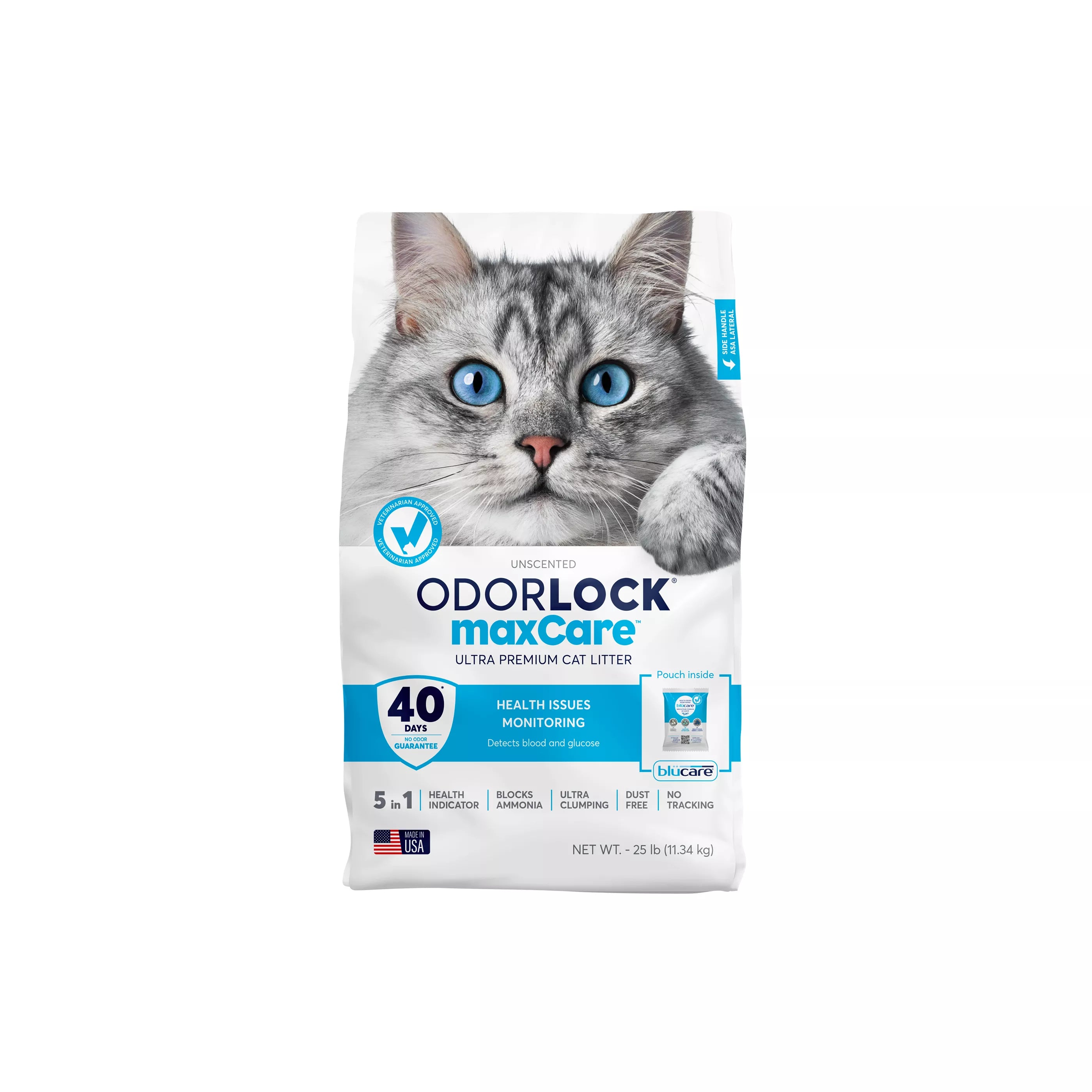
Quick comparison:
| Litter Type | Tracking Risk | Best For | Watch Out |
|---|---|---|---|
| Walnut pellet | Low | Mess-averse homes, cats with sensitive lungs | Some cats need time to adjust |
| Low-tracking clumping clay | Low to medium | Easy scooping, odor control | Fine granules can still cling |
Watch out: switching litter suddenly can cause a cat to avoid the box.
Put a Litter Tracking Mat at Every Exit
A litter tracking mat is a textured mat placed just outside the box that traps granules from your cat's paws before they reach your floors.
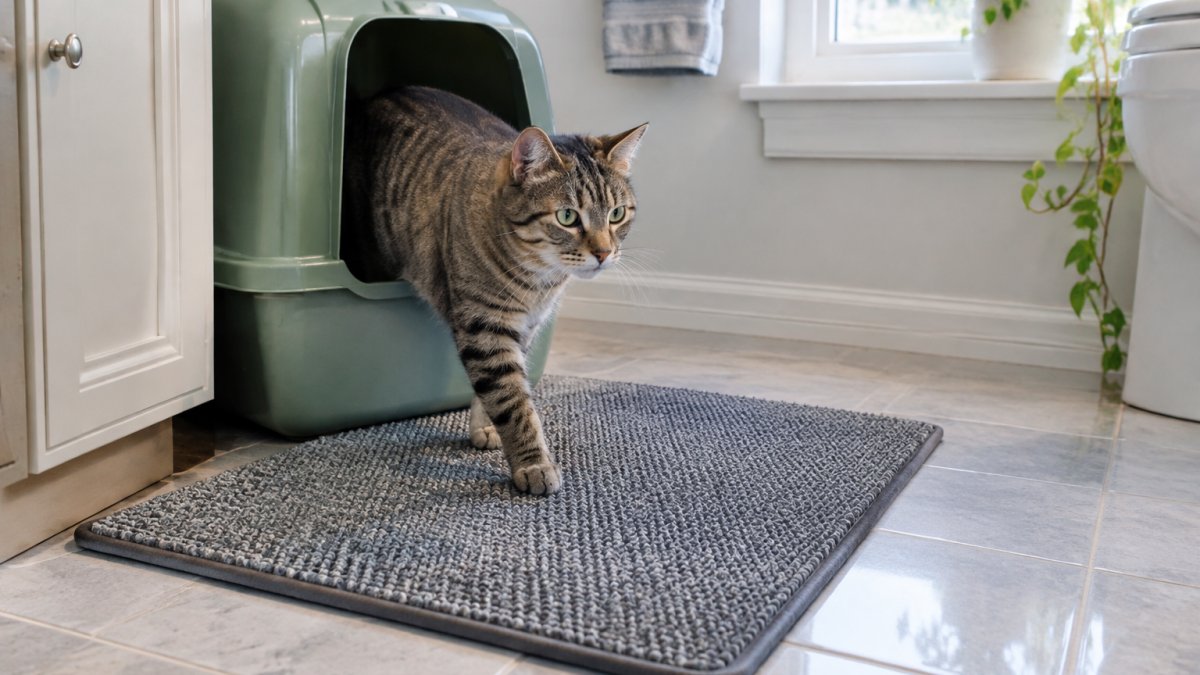
Place a mat at every exit your cat uses. If the box has a top door and a side door, that means two mats.
Look for a mat with a woven or honeycomb texture. Flat rugs let granules roll right off. Deep grooves hold them.
How Often to Clean a Litter Tracking Mat
Shake the mat out daily into the trash, not the sink. A quick shake keeps trapped granules from being tracked back out.
Vacuum or rinse the mat once a week. Most mats are easy to hose off and air dry. Skipping this step lets dust build up, and a dusty mat stops trapping.
Replace the mat when the texture flattens. A worn mat is just a doormat at that point.
Choose a High-Sided or Enclosed Box for Tight Spaces
A high-sided or enclosed litter box is the single biggest upgrade for a tracking problem. Walls stop litter at the source.
Our Fully Enclosed Cat Litter Box has a closed shell designed to keep litter from spilling onto the floor.
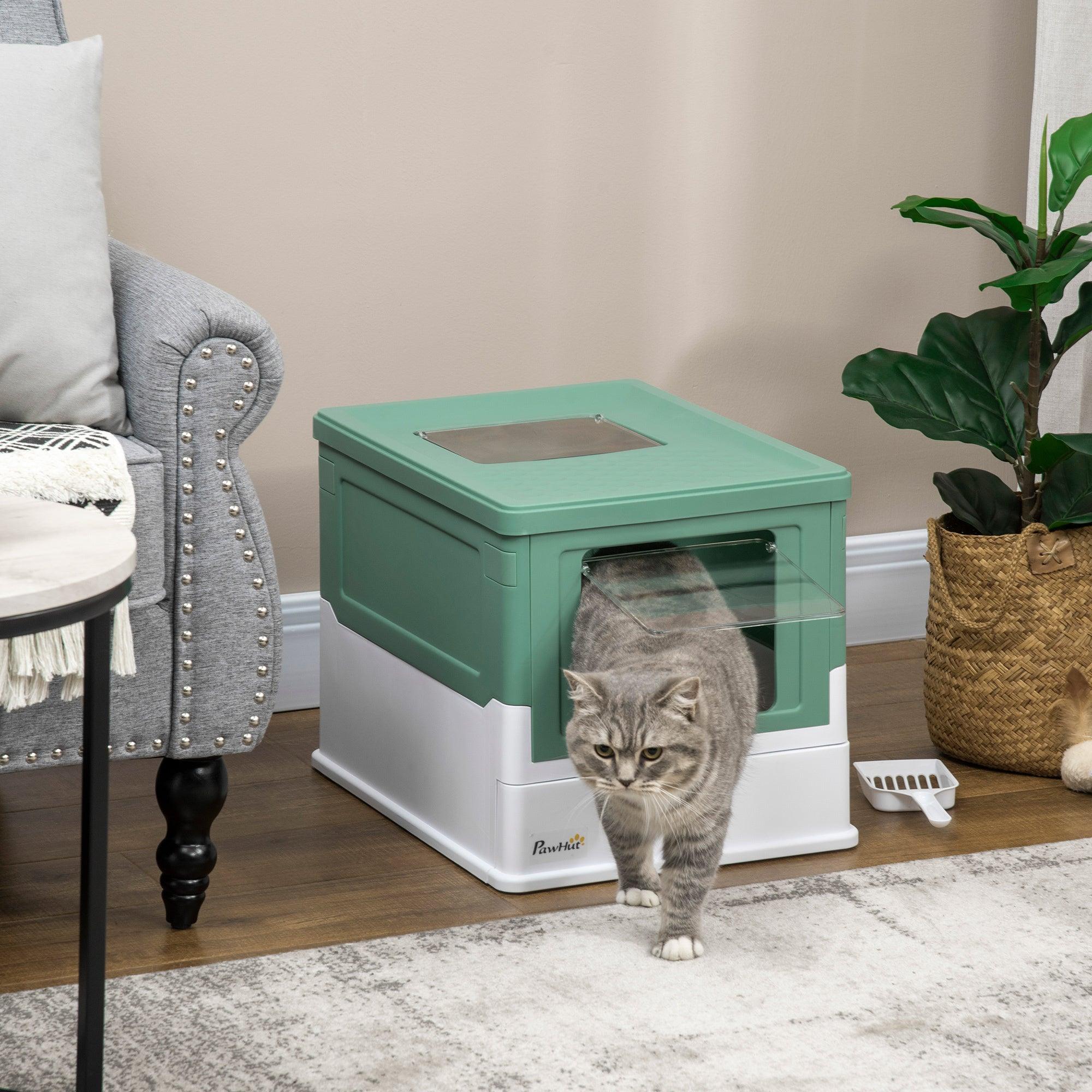
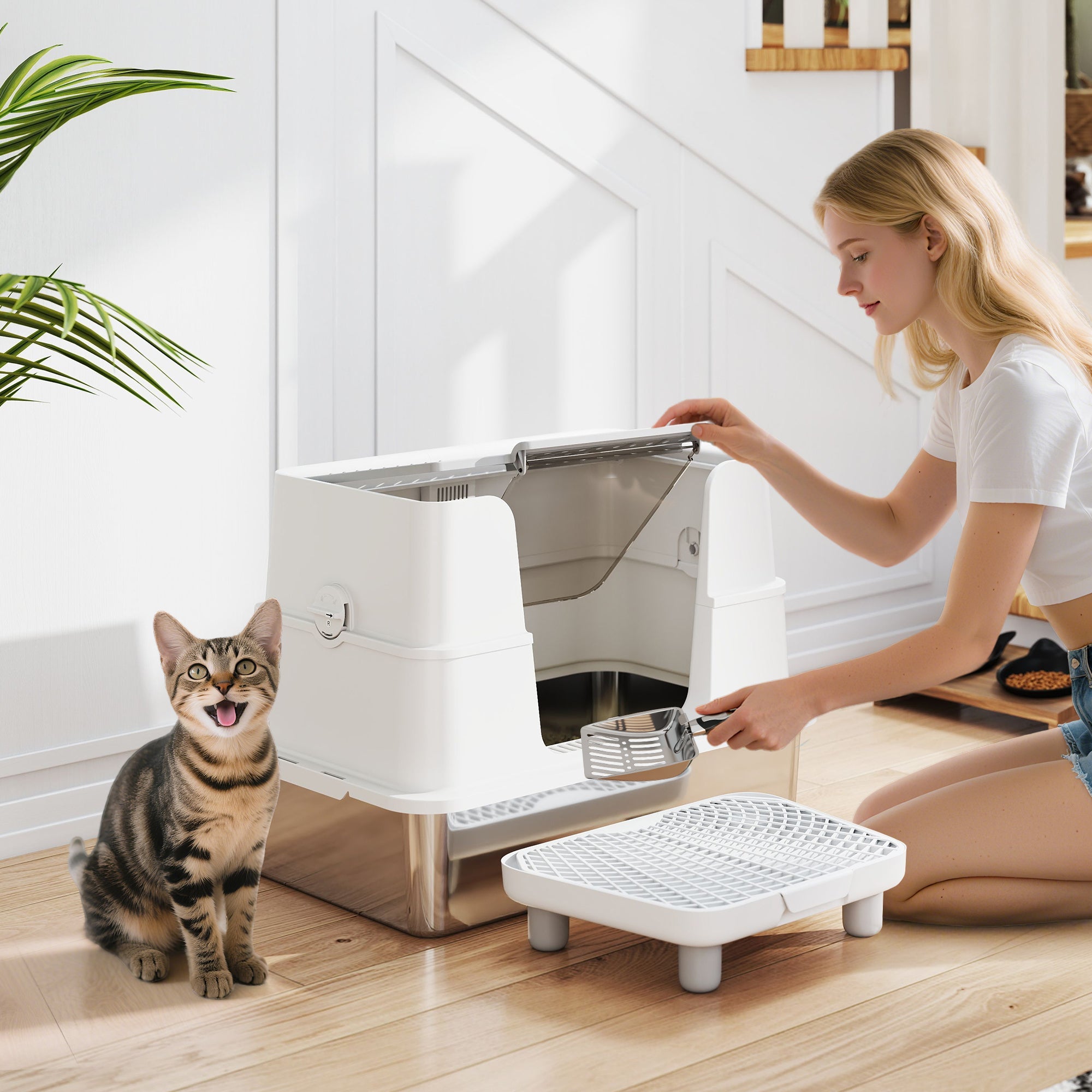
For a durable pick, our Stainless Steel Durable Enclosed Cat Litter Box is built from 201 stainless steel and can be set up as open, semi-enclosed, or fully enclosed.
How to Keep Cat Litter Off the Floor DIY
You do not need to buy anything to cut tracking. A few household moves do real work, but in a small apartment the layout matters as much as the supplies. The goal is to create a short, controlled exit path so granules fall off before your cat reaches open floor.
Map the exit path first
Walk from the litter box door to the nearest walkway, bed, or sofa. That path is where tracking shows up. Count the steps: most cats take three to six strides from box to rug, and each stride can drop granules. Your job is to shorten that path or cover it.
Try these free fixes, in order of impact:
- Add a second mat layer. A cheap woven doormat under the litter mat catches what the top mat misses. Overlap them by at least two inches so there is no gap for granules to slip through.
- Trim the mat to fit. A mat that covers the full exit path traps more. Measure the width of the box opening and add six inches on each side.
- Raise the box slightly. A low step or brick in front makes cats pause, and litter falls off. A one- to two-inch rise is enough; anything taller can deter a senior cat.
Small-apartment layout plans
Different floor plans need different setups.
Studio with one open room. Put the box in the bathroom if you have one, with the mat running parallel to the door.
One-bedroom with a hallway. Place the box at the end of the hallway, not in the middle.
Open-plan living and kitchen. Keep the box at least six feet from food prep areas and place it against a wall with a clear approach. Do not tuck it behind a sofa where your cat has to squeeze past furniture; squeezing causes cats to bolt, and bolting cats scatter litter. A folding screen two feet from the box creates a short corridor that contains scatter without blocking access.
Here is a simple checklist to compare free fixes against store-bought ones:
- Do I have a mat at every box exit?
- Is the mat textured, not flat?
- Is the box high-sided or enclosed?
If you checked three or more boxes and still see scatter, the litter type is likely the culprit.
Ways to Hide a Litter Box in a Small Apartment
Hiding the box is not just about looks. A tucked-away box in a quiet spot can also reduce tracking, because cats shake off litter before they walk far. But hiding a box badly can create a new problem: a cat that cannot get in and out comfortably may avoid the box or bolt out of it, and bolting spreads litter.
Try these placement ideas:
- Bathroom corner. Low traffic, easy to wipe floors, close to plumbing.
- A closet with the door cracked. Keeps the box out of sight and contains scatter. Leave at least eight inches of door opening so your cat has a clear entry.
- Behind a sofa with a screen. A folding screen hides the box and blocks the exit path.
If you are shopping for a piece to conceal the box, read our guide to non-toxic cat furniture brands first. Materials matter in a small, closed space.
Cat comfort and accessibility trade-offs
Hiding a box works only if your cat can use it comfortably. Top-entry and covered boxes are popular for containing litter, but they are not right for every cat.
- Kittens and small cats. A top-entry door can be too high to climb. Keep a side entry open or choose a low-entry box until your cat is full grown.
- Senior cats and cats with arthritis. Climbing into a high-sided or top-entry box can be painful. A low-sided box with a mat in front is easier on joints, even if it contains less litter.
- Large cats. A standard covered box may be too small to turn around in. Measure your cat from nose to tail base and choose a box at least one and a half times that length.
A common pattern is that a cat who suddenly avoids a hidden box is telling you the setup is uncomfortable, not that the cat is being difficult. Watch for a cat that enters the box and leaves without digging, or one that eliminates just outside the opening.
Renter-friendly and low-cost hiding options
You do not need to drill, build, or spend much to hide a box in a rental. These options leave no permanent changes:
- A tension rod and curtain. Hang a short curtain in a closet or doorway to hide the box. No holes, and the curtain contains some scatter.
- A storage bench with a cut opening. Many benches have a removable back panel; cut a cat-sized opening in the panel and replace it when you move out.
- A cardboard or fabric screen. A folding screen costs little and can be moved or folded away.
Watch out: a hidden box in a closed cabinet or closet can trap odor and dust. Leave ventilation gaps and check the space daily so your cat does not avoid it.
Troubleshoot Tracking With a Two-Week Test
If tracking persists, stop guessing. Run a controlled test.
Here is the plan:
- Week one: change one thing. Pick a single fix, like adding a mat or switching to pellet litter. Do not change anything else.
- Track what you see. Sweep the same area each evening and note how much litter you collect.
- Week two: change a second thing. Add the next fix on top of the first.
- Compare. If scatter drops after a change, keep it. If not, revert and try the next option.
One change at a time tells you what actually works. Changing everything at once leaves you guessing.
Also watch your cat. If a cat suddenly tracks more, or starts missing the box, talk to your vet if the behavior is new.
Build Your Apartment Litter Setup With Walnut Creek Supply
A clean apartment with a cat is not a fantasy. It takes the right litter, a box with walls, and a mat at the door.
Walnut Creek Supply is a family-owned, USA-based shop focused on high-quality supplies and educational guidance for pet owners.
Here is where to start:
- Naturally Fresh Non Clumping Pellet Litter for low tracking and a dust-free box
- Fully Enclosed Cat Litter Box to contain scatter and odor in a small room
- Stainless Steel Durable Enclosed Cat Litter Box for a durable, easy-clean option
Small changes add up. Start with one fix this week, then build from there.
Tracking litter in a small apartment comes down to three moves: pick a low-tracking litter, add walls to the box, and trap granules at the exit. Walnut Creek Supply carries the litter and boxes to make each step simple. Our enclosed boxes contain scatter, our walnut pellet litter resists sticking to paws, and our team is here to help you choose. Get started with Walnut Creek Supply and build a cleaner litter setup this week.
Frequently Asked Questions
How do you stop litter tracking everywhere in a small apartment?
Attack it in three layers: litter, mat, and box. Switch to a low-tracking litter such as a pellet formula that does not cling to paws, place a litter tracking mat at every box exit, and use a high-sided or enclosed box so cats cannot kick litter over the rim. Add a quick daily sweep around the box and a weekly mat rinse. Most apartments see a clear drop in litter spread within two weeks of making all three changes together rather than one at a time.
What type of litter mat works best for tracking?
Look for a mat with a textured, grid-like or looped surface that traps granules as paws step across it, plus a waterproof backing so urine never reaches your floor. Size matters more than most people expect: the mat should extend at least a full cat length beyond the box opening so both front and back paws contact it. A mat that is too small lets cats hop over it entirely. Rinse and vacuum the mat weekly, because a mat packed with old litter stops catching new granules.
Does changing cat litter reduce tracking?
Yes, and it is often the single biggest lever. Fine clumping clay lodges between toe pads and travels across a room. Pellet litters made from walnut shells or similar materials stay on the surface of the paw and drop off within a step or two. If you switch, mix old and new litter over about a week so your cat adjusts. Also avoid overfilling the box: litter deeper than roughly 2 to 3 inches gives paws more material to carry out.
Where should you place a litter box in a small apartment?
Pick a quiet spot with a hard floor, away from the cat's food and water, and not against a wall that traps odor in a bedroom. A bathroom or laundry nook usually works best because cleanup is easy and the box stays out of living space. Leave clearance on the exit side for a mat, and avoid tucking the box into a closet without ventilation. If you use a litter box enclosure or furniture piece, confirm your cat can turn around inside it comfortably.


