


Liberate Your Lifestyle!

How to Clean a Hamster Wheel Without Harsh Chemicals
Learn how to clean a hamster wheel without harsh chemicals with a simple 1:3 vinegar mix for urine and odor, plus daily spot-cleans and a weekly wash.

Last Updated: November 15, 2026
Quick Summary
To learn how to clean a hamster wheel without harsh chemicals, use plain warm water for routine messes, diluted white vinegar (1 part vinegar to 3 parts water) for urine and odor, and unscented soap for greasy buildup. Scrub gently, rinse thoroughly, and dry completely before reassembly.
- Spot-clean the wheel every day or two and do a full wash once a week.
- Mix one part white vinegar with three parts water for urine and odor.
- Never mix vinegar and soap in the same bottle, as it leaves sticky residue.
- Keep bearings and axles dry, since water washes out the lubricant.
- Never soak a wooden wheel in water, because it warps the track.
Need a wheel that's easy to clean?Shop quality hamster wheels and small pet supplies at Walnut Creek Supply.
Shop Hamster Wheels
Table of Contents
- Why Chemical-Free Cleaning Matters for Your Hamster
- Step 1: Disassemble and Remove Loose Debris
- Step 2: Choose a Safe Cleaning Solution
- Step 3: Scrub, Rinse, and Dry the Running Surface
- How to Clean a Wooden Hamster Wheel Without Damage
- How to Remove Hamster Urine From a Wheel
- How Often to Clean a Hamster Wheel
- Reassembly and Final Safety Checks
- Frequently Asked Questions
Why Chemical-Free Cleaning Matters for Your Hamster
A hamster wheel gets dirty fast. Hamsters run for miles each night, and their feet carry bedding, fur, and waste across the running surface. Harsh cleaners leave behind fumes and residue that a small animal breathes and grooms off its paws.
That is why learning how to clean a hamster wheel without harsh chemicals matters. A clean wheel helps protect sensitive airways and keeps a hamster running comfortably.
Here is the good news: you do not need strong products. Plain water, white vinegar, and unscented soap handle almost every mess. Below, we walk through each step, from taking the wheel apart to the final safety check.
Vinegar and soap work because they help break down oils and residue, and they rinse away cleanly. Strong bleach or scented sprays can linger in plastic pores and metal joints, which is a risk for a pet that lives inches from the surface. For more on choosing safe supplies overall, this guide to buying organic hamster food online pairs well with a chemical-free cleaning routine.
Step 1: Disassemble and Remove Loose Debris
Start by taking the wheel out of the cage. Remove the stand, the axle cap, and any wheel tubes or connectors. Most plastic wheels snap apart without tools. Wooden wheels often need a screwdriver for the axle bolt.
Lay the parts on a towel near the sink. Keep small pieces like washers and caps in a bowl so they do not roll away.
Removing the Wheel From the Enclosure
Lift the wheel straight up and out. Do not tilt it, or loose bedding will spill into the cage. Check the wheel track for stuck-on residue before you move it.
Dry-Brushing Bedding, Fur, and Droppings
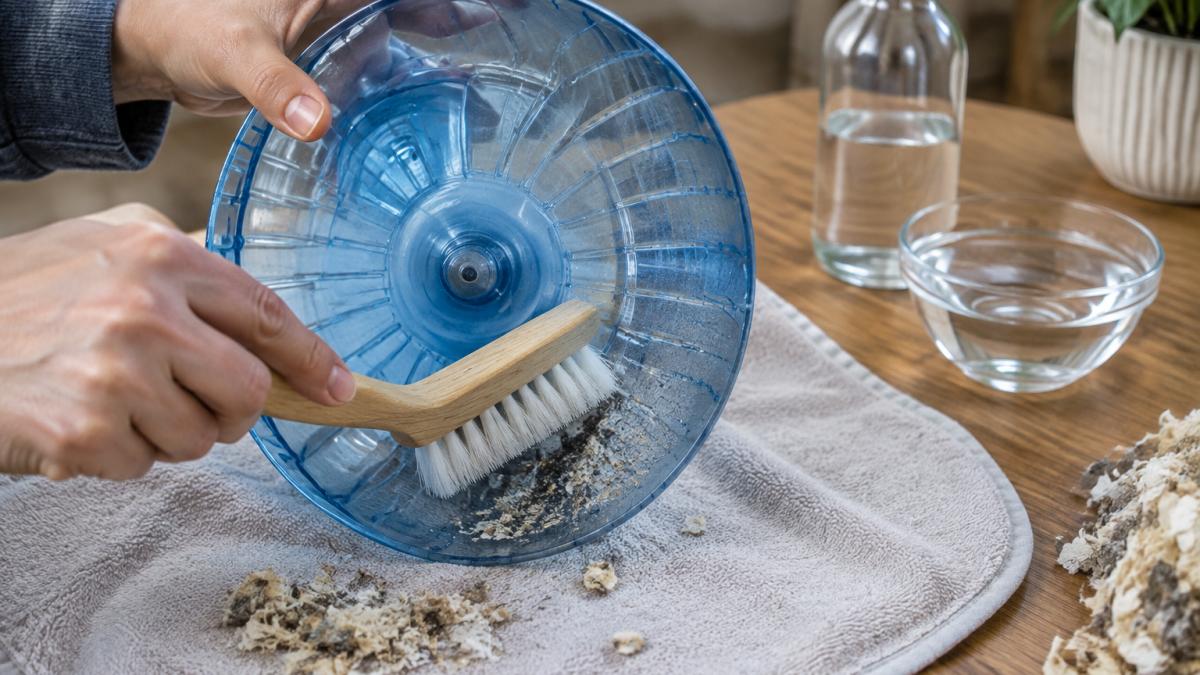
A soft brush or dry toothbrush lifts most debris before water touches the wheel. Brush along the running surface and into the wheel track. Dry-brushing first means less scrubbing later.
While you clear bedding from the track, it is a good moment to check what your pet sleeps on. Our guide to the best bedding for a gerbil cage explains which materials stay clean and safe for small pets.
Step 2: Choose a Safe Cleaning Solution
The safest cleaner for a hamster wheel is plain warm water for routine messes, diluted white vinegar for urine and odor, and unscented soap for greasy buildup. Each option suits a different job, and none leaves harsh fumes behind. The key is matching the cleaner to the mess and knowing how to dilute it so residue rinses away completely.
Here is how the three compare:
| Cleaner | Best For | Dilution | Residue Risk | Rinse Required? |
|---|---|---|---|---|
| Plain water | Light dust and daily wipe-downs | None | None | No, but wipe dry |
| White vinegar | Urine, odor, stuck-on residue | 1 part vinegar to 3 parts water | Low; odor fades when dry | Yes, with warm water |
| Unscented soap | Greasy buildup on plastic and metal | A few drops in warm water | Soap film traps debris | Yes, until water runs clear |
Plain Water vs. Diluted Vinegar vs. Unscented Soap
Plain water handles fresh debris and a quick wipe, and it is a gentle option. Use it for daily spot-cleaning when you see bedding dust or a few droppings on the running surface.
Diluted white vinegar is the workhorse for odor. Mix one part vinegar with three parts water in a spray bottle. Vinegar can help break down urine residue and leave a surface with little lingering scent once dry. Do not use vinegar on unsealed wood, because the acid can raise the grain and leave a lingering smell that a hamster may find irritating.
Unscented soap, such as a mild dish soap, cuts grease from food and fur oils. Use a few drops only in a bowl of warm water. Scented soaps and harsh chemicals leave perfume and residue that a hamster will breathe in. Soap needs the most thorough rinse of the three because a film can trap bedding and odor over time.
Watch out: Never mix vinegar and soap in the same bottle. The acid can break down the soap and leave a sticky residue that is hard to rinse from wheel grooves.
For more on choosing safe supplies overall, this guide to buying organic hamster food online pairs well with a chemical-free cleaning routine.
Step 3: Scrub, Rinse, and Dry the Running Surface
Scrub the running surface gently with a damp sponge or soft brush. Work along the wheel track and into any grooves where droppings collect. Do not use steel wool or rough scouring pads on plastic, because scratches trap bacteria.
Rinse thoroughly under warm running water. Soap residue and vinegar both need a full rinse. Wipe down the frame and the wheel tubes, then check hidden joints for leftover debris.
Dry completely before the wheel goes back. Towel-dry the big parts, then air-dry the rest in a well-ventilated spot. A damp wheel grows mildew fast, and mildew is far harder to remove than bedding.
How to Clean a Wooden Hamster Wheel Without Damage
A wooden hamster wheel needs a different approach than plastic. Wood is porous, so soaking it warps the track and cracks the joints. Learning how to clean a wooden hamster wheel without damage comes down to speed and restraint. The method also depends on whether the wood is sealed or unsealed, because each finish reacts differently to moisture and cleaners.
Sealed vs. Unsealed Wood
Sealed wood has a finish that resists water. You can wipe it with a damp sponge and a little diluted vinegar, then dry it immediately. Unsealed wood absorbs liquid, so skip soap and vinegar entirely. Use a barely damp cloth with plain water, and dry the surface within a minute or two. If urine has soaked into unsealed wood, a light sanding after drying removes the stain, but sanding too often thins the running surface and changes the wheel's balance.
- Never soak a wooden wheel in water
- Wipe the running surface with a damp sponge and a little diluted vinegar on sealed wood only
- Dry immediately with a towel, then air-dry fully
- Skip soap on unsealed wood, since it soaks in
- Sand lightly if urine has stained the surface, then wipe clean
Drying Checks for Wooden Wheels
Wood traps moisture in end grain and joints, so a towel-dry is not enough. After wiping, stand the wheel on its edge in a well-ventilated spot and let it air-dry for at least a few hours. Check the axle hole and the stand connection with a dry cotton swab; if the swab comes out damp, keep drying. Reassemble only when the wood feels dry to the touch and the wheel spins without a soft, damp sound.
Watch out: If a wooden wheel still smells musty after drying, mildew has started in the grain. Sanding may remove the surface stain, but a musty smell that persists means the wheel should be replaced rather than reused.
Protecting Bearings, Axles, and Hidden Joints
The bearing and axle are the parts most often ruined by water. Keep them dry. Wipe the axle with a barely damp cloth and dry it right away. Water pushed into a sealed bearing washes out the lubricant, and the wheel starts to squeak. Hidden joints trap moisture too. Use a soft brush or a cotton swab to clear debris from the wheel tubes and connectors. If a bearing feels stiff after cleaning, a tiny drop of pet-safe lubricant restores smooth spinning.
How to Remove Hamster Urine From a Wheel
Urine is the toughest mess on any wheel. The fix is a short soak in diluted vinegar, then a gentle scrub.
Follow these steps for stubborn urine spots:
- Spray the spot with the one-to-three vinegar mix
- Let it sit for a few minutes
- Scrub gently with a soft brush
- Rinse thoroughly
- Dry completely before reassembly
For persistent odor, repeat the vinegar treatment. Avoid ammonia-based cleaners, since strong fumes can irritate a small animal's airways. If urine has soaked into wooden parts, a light sanding after drying removes the stain.
How Often to Clean a Hamster Wheel
Spot-clean the wheel every day or two, and do a full wash once a week. A hamster that runs hard and tracks bedding will need more frequent cleaning. A tidy pet with a large cage may stretch to every ten days.
Use this schedule as a guide:
| Task | Frequency | Time Needed |
|---|---|---|
| Remove droppings and loose bedding | Daily | 1-2 minutes |
| Wipe the running surface | Every 2-3 days | 2 minutes |
| Full wash with vinegar or soap | Weekly | 10-15 minutes |
| Deep clean wooden wheels | Monthly | 15-20 minutes |
Time Needed
Remove droppings and loose bedding 1-2 minutes
Wipe the running surface 2 minutes
Full wash with vinegar or soap 10-15 minutes
Deep clean wooden wheels 15-20 minutes
Cleaning too often strips familiar scent from the wheel, which can stress a hamster. Balance is key: keep the running surface clean, but do not scrub the whole wheel every day.
Reassembly and Final Safety Checks
Put the wheel back together once every part is bone dry. Reattach the axle, cap, and stand, then spin the wheel by hand. It should turn smoothly with no wobble or squeak.
Run through this checklist before it goes back in the cage:
- All parts are completely dry
- The axle spins freely
- No soap residue or vinegar smell remains
- The wheel locks securely to the stand
- No cracks or sharp edges on the track
A loose axle or a cracked track can injure a running hamster, so check these every time. Once the wheel is back, do a quick pass on the rest of the cage. Our guide to safe pet toys for dogs, cats and small pets helps you confirm every item in the enclosure is safe to chew and touch.
A simple routine with water, vinegar, and unscented soap keeps the wheel clean without harsh fumes. At Walnut Creek Supply, we focus on high-quality supplies and caring guidance for small pets. Continue shopping with Walnut Creek Supply for small pet supplies.
Frequently Asked Questions
Can you use vinegar to clean a hamster wheel?
Yes, white vinegar is a safe option when diluted with water, typically one part vinegar to three parts water. It cuts through urine residue and odor without leaving toxic fumes. Avoid soaking wooden wheels in vinegar, since it can warp unsealed wood. After cleaning, rinse thoroughly and let the wheel air-dry completely before returning it to the enclosure.
Is Dawn dish soap safe for cleaning a hamster cage?
Dawn and other scented dish soaps are not ideal for hamster accessories. Their fragrances and degreasers can linger on surfaces and irritate a hamster's sensitive respiratory system. Use an unscented, gentle soap instead, and rinse every trace away. For routine cleanings, plain warm water or diluted white vinegar is usually enough to keep the wheel clean.
How long should a hamster wheel dry before it goes back in the cage?
Let the wheel air-dry completely, which usually takes several hours, or towel-dry it first to speed things up. Any leftover moisture can encourage mildew, especially on wooden wheels and in hidden joints. Spin the wheel after drying to check that the bearing moves freely and no water is trapped inside the mechanism.
How often should you clean a hamster wheel?
Spot-clean the running surface every few days and do a full wash weekly. Hamsters often urinate while running, so a short rinse may be needed more often. Wooden wheels need a monthly deep clean and should be checked for odor or soft spots. Replace the wheel if it stays smelly after cleaning or shows cracks.


